

TL;DR:
- Implementing a structured, goal-oriented process ensures you find a language tutor who fits your learning needs and safety requirements.
- Trial sessions, clear filtering, and regular progress reviews are essential to establishing an effective, long-term tutoring relationship.
Finding a great language tutor sounds simple until you actually try it. Sorting through dozens of profiles, guessing at teaching styles, and hoping a stranger's credentials are genuine can turn an exciting decision into an exhausting one. The good news is that a clear step by step matching tutors process takes the guesswork out of it entirely. This guide walks you through everything from setting your learning goals to evaluating your first trial session, so you spend less time searching and more time actually learning a language you love.
Table of Contents
- Key takeaways
- Getting prepared: what to do before you start
- Step by step: how to match with the right tutor
- Common mistakes to avoid when matching tutors
- What results to look for and how to track progress
- What I've learned about matching tutors well
- Find your perfect language tutor with Tutoroo
- FAQ
Key takeaways
| Point | Details |
|---|---|
| Prepare before you search | Define your language goals, level, and schedule before browsing any tutoring match services. |
| Use trial sessions first | Always book a trial lesson before committing to avoid wasted time and money on a poor fit. |
| Verify safety credentials early | Request background check documentation during matching, not after, especially for younger learners. |
| Measure progress every four weeks | Regular reviews using specific goals reveal whether your tutor is genuinely moving you forward. |
| Switch early if the fit is wrong | Staying with a mismatched tutor slows progress. Reassess after two or three sessions and act accordingly. |
Getting prepared: what to do before you start
The most common reason tutor searches fail is not a lack of options. It is starting the search without a clear picture of what you actually need. Before you open a single tutor profile, take 20 minutes to answer a few honest questions about your learning situation.
Define your goals and current level. Are you learning Spanish for an upcoming trip, working towards a job interview in Mandarin, or helping your child build French confidence before a school exchange? Your goal shapes everything: the type of tutor you need, the session length that makes sense, and whether formal grammar instruction or conversational practice serves you better. Write it down in one or two sentences.
Decide on format and availability. Whether you prefer face-to-face lessons or online vs in-person tutoring matters enormously for filtering your search. Be specific about your schedule too. Three evenings per week is very different from one Saturday morning, and a tutor who cannot consistently meet your window will create friction before long.
Prepare questions to ask tutors. Good questions to have ready include:
- What is your teaching approach for my level?
- How do you track student progress between sessions?
- Do you have experience teaching my specific language goal?
- What qualifications or credentials do you hold?
- What is your cancellation and rescheduling policy?
Understand the safety layer, especially for younger learners. If you are arranging tuition for a child or a vulnerable adult, safety verification is non-negotiable from the very start. Background checks for tutors vary widely across platforms and hiring contexts. School-contracted tutors typically require extensive screening including fingerprinting, while independent tutors sourced privately often have no centralised screening at all, placing the responsibility firmly on the parent or guardian. The National Tutoring Authority recommends integrating identity and background check verification as part of the matching decision itself, not as an afterthought once you have already agreed to lessons.
Choose your platform thoughtfully. A good tutoring match service should offer video calling, interactive whiteboards, and file sharing built into the platform. Integrated platform tools prevent the confusion of juggling multiple third-party apps and keep your sessions focused on learning rather than troubleshooting technology.
Step by step: how to match with the right tutor
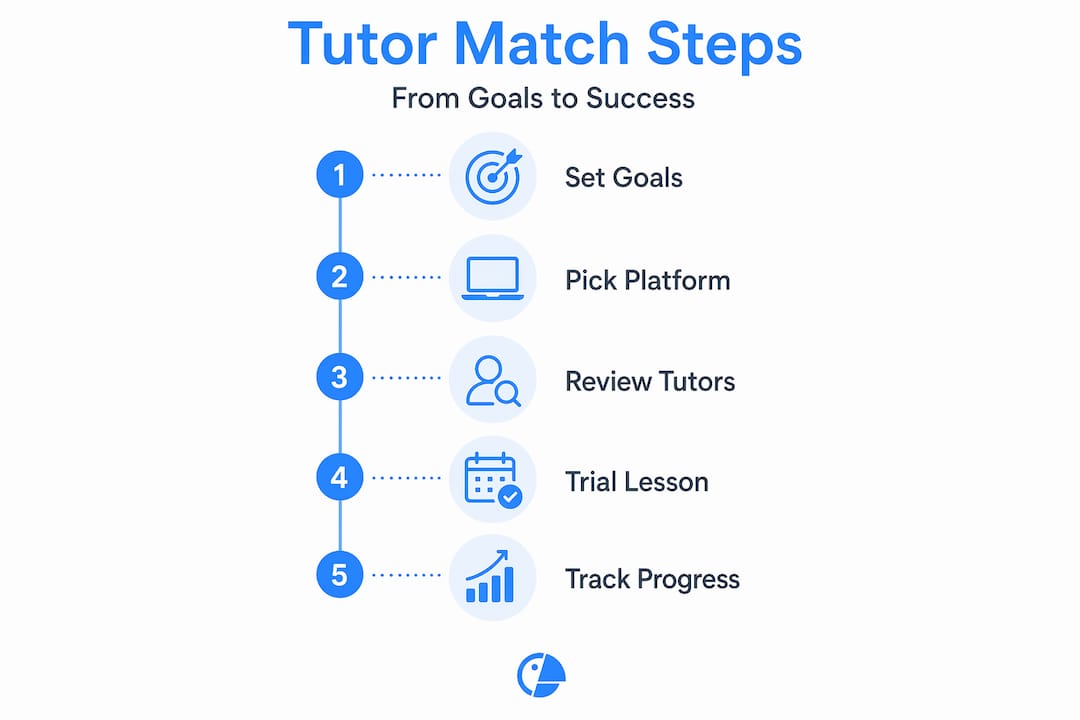
Once you are prepared, the matching process itself becomes far more manageable. Here is a practical workflow you can follow from first search to confirmed booking.
-
Search and filter by specific criteria. Use platform filters to narrow by language, proficiency level, teaching style, and availability. Most quality tutoring match services allow you to filter by native speaker status, formal qualifications, and years of experience. Do not skip this step and scroll through hundreds of profiles manually. It wastes time and creates decision fatigue.
-
Read tutor profiles with intention. A profile tells you far more than a photo and a star rating. Look for specific detail in a tutor's self-description. Phrases like "I specialise in business English for professionals" or "I use communicative methods with absolute beginners" signal a tutor who thinks deliberately about their approach. Vague profiles that simply say "I love teaching" offer little useful information. Pay close attention to student reviews as well. Patterns across multiple reviews reveal more truth than a single glowing testimonial.
-
Make contact and ask your prepared questions. Send a brief, clear message introducing your goal and asking one or two key questions. The quality and speed of a tutor's response tells you something meaningful about how they communicate. A tutor who replies with genuine engagement and tailored answers is demonstrating what your sessions will likely feel like.
-
Arrange a trial session. This is the most important step in the entire process. Booking a trial session first, before any long-term commitment, protects you from the biggest risk in tutor matching: committing too early to someone who is not the right fit. During the trial, notice how the tutor explains concepts, how they respond when you make mistakes, and whether the session energy feels encouraging or flat.
-
Evaluate with a short checklist after the trial. Ask yourself: Did the tutor tailor the content to my stated goal? Did I feel comfortable asking questions? Was the session paced well for my level? Could I see myself working with this person regularly? Your gut response after a trial is usually reliable, and it is far less costly to act on it early than after several weeks of sessions.
-
Set measurable goals and lock in a schedule before committing. Once you decide on a tutor, agree on specific goals for the first four to six weeks and settle on a recurring session time. Consistent weekly sessions consistently outperform irregular or crammed learning schedules for language acquisition. Many platforms schedule sessions in structured increments. For example, 30-minute appointment blocks with limits on back-to-back sessions are common, and working within these constraints actually helps learners stay focused rather than fatigued.
Pro Tip: When you message a prospective tutor, include one specific detail about your learning goal, not just "I want to learn French." Say "I want to hold a 10-minute conversation in French within three months." A tutor's response to that level of specificity tells you immediately how well they listen and personalise.
Common mistakes to avoid when matching tutors
Even with a solid process, certain patterns consistently derail language learners during the matching stage. Knowing them in advance gives you a genuine advantage.
- Skipping the trial session. This is the single most costly mistake. Committing without a trial is one of the biggest risks in tutor matching, as it often leads to wasted time, money, and motivation.
- Ignoring safety verification. If you are finding a tutor for a child, do not assume the platform has handled this. Ask directly what screening has been completed and request documentation.
- Overlooking communication style. A tutor with impressive credentials who communicates in a way that leaves you confused or disengaged will not help you learn. Style fit matters as much as subject expertise, particularly for language learning where rapport accelerates progress.
- Choosing based on price alone. The cheapest option is rarely the best value. A well-matched tutor at a slightly higher rate will move you forward far faster than a poor match at a budget price.
- Failing to clarify cancellation policies upfront. Surprises around fees for missed or rescheduled sessions create unnecessary friction. Ask about this before your first session, not after.
A strong matching process balances teaching quality assessment with safety and communication style fit. Getting all three right is what separates a tutor you book from a tutor you stick with.
Pro Tip: If a tutor is not the right fit after two or three sessions, switch early. Most learners wait far too long out of politeness. Switching at session three costs you three sessions. Waiting until session twelve costs you much more.
What results to look for and how to track progress
Knowing what to expect after you match with a tutor helps you assess whether the relationship is actually working. Progress in language learning is sometimes subtle in the early weeks, and that is normal.

Early signs of genuine progress typically appear within the first three to four weeks. These include better understanding, growing confidence, and improved ability to complete exercises or homework independently. More concrete gains, such as measurably improved conversation fluency or formal assessment results, usually take six to eight weeks to emerge clearly.
Use a simple review structure to keep yourself honest about progress:
- Every two weeks: Note one specific thing you can do now that you could not do before lessons began.
- Every four weeks: Review your original goals with your tutor and assess where you stand. Are you on track? Do the goals need adjusting?
- At eight weeks: Make a deliberate decision about whether to continue, adjust the approach, or explore a different tutor if progress is stalling.
Student confidence and genuine engagement are two of the most reliable early indicators that a match is working. If you look forward to sessions and feel energised rather than drained afterward, that is meaningful data. If sessions feel like a chore after several weeks, something needs to change, whether that is the teaching approach, the session structure, or the tutor themselves.
One practical method for tracking progress is keeping a short weekly language journal. Even two or three sentences noting what you practised and what felt difficult creates a record that makes progress visible over time. Share it with your tutor so they can adjust their approach based on what is and is not landing.
What I've learned about matching tutors well
I've seen thousands of language learners go through the matching process, and the pattern that separates those who thrive from those who give up is not about finding the "perfect" tutor. It's about having a clear enough picture of their own needs to recognise a good fit when they see one.
Trial sessions are not optional extras. They are the foundation of an honest matching process. What I've found is that learners who treat the trial as a real evaluation, with specific questions and a deliberate assessment afterward, find the right tutor in two or three attempts. Those who treat it as a formality often spend months in the wrong match.
Safety checks, in my view, are the piece most often treated as someone else's responsibility. They are not. When tutoring involves a younger or vulnerable learner, background verification needs to be confirmed before the first session, full stop.
Technology has made the best matching tutors online far more accessible than they were even five years ago. But the human side of matching, the judgement call about communication chemistry and teaching instinct, still requires your attention and cannot be outsourced to an algorithm.
My honest take: the learners who move fastest are the ones who go into the process with clear goals, a willingness to evaluate honestly, and the confidence to switch if something is not working. That combination is more powerful than any platform feature.
— TUTOROO
Find your perfect language tutor with Tutoroo
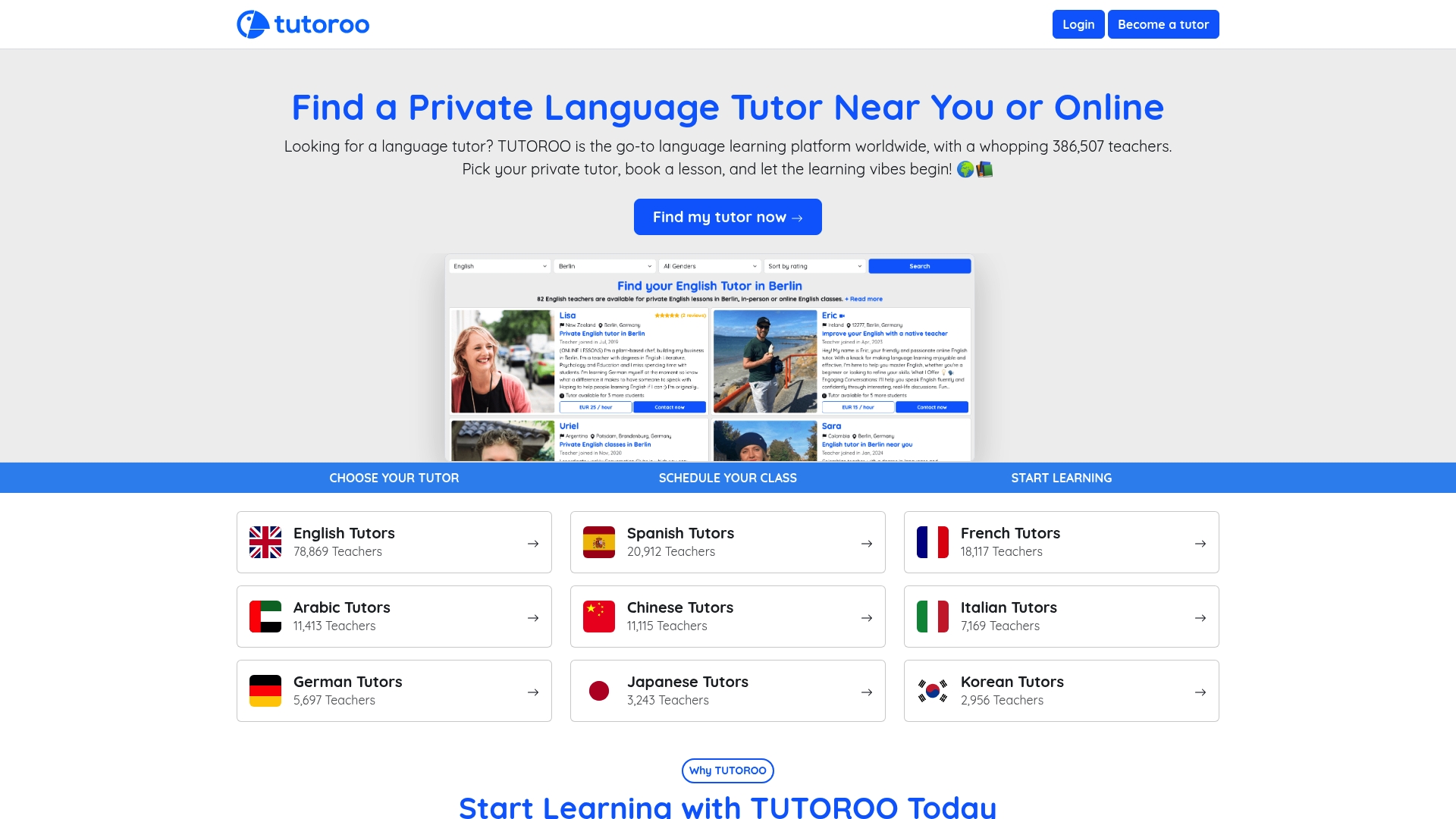
Tutoroo takes the complexity out of finding a qualified language tutor, whether you are learning online or in person. With a global community of over 386,000 language teachers across dozens of languages, from English and Spanish to Arabic and Cantonese, the platform makes it straightforward to filter, browse, and connect with tutors who match your specific goals and schedule.
Every tutor profile on Tutoroo includes detailed credentials, student reviews, and messaging tools so you can evaluate and communicate with potential tutors before committing to a single session. For learners ready to start with a specific language, Tutoroo's dedicated pages for English tutors and Cantonese tutors make it even easier to find the right match quickly. Flexible scheduling, trial lesson options, and direct payment to your chosen tutor put you in control of your learning from day one.
FAQ
What is step by step matching tutors?
Step by step matching tutors refers to a structured process for finding a language tutor, moving through defined stages: setting goals, filtering profiles, contacting tutors, completing a trial session, and then committing based on a clear evaluation. It reduces guesswork and improves the likelihood of a successful long-term match.
How many trial sessions should I do before committing?
One well-structured trial session is usually enough to assess communication style and teaching approach. If you are unsure after one session, a second trial with the same tutor is reasonable, but switching early after two or three sessions is far less costly than continuing with a poor fit for weeks.
Do online tutoring match services verify tutor backgrounds?
Verification practices vary significantly across platforms. School-linked services typically require formal screening, while independent platforms may not conduct centralised checks. Always ask directly what safety screening has been completed, particularly when arranging tuition for children or vulnerable learners.
How soon will I see results from language tutoring?
Early improvements in understanding and confidence typically appear within three to four weeks of consistent sessions. More measurable gains in fluency or formal results generally take six to eight weeks, provided sessions are regular and goals are clearly defined from the start.
How do I know if my tutor match is actually working?
The clearest signs are growing confidence, the ability to do things you could not do before lessons began, and looking forward to sessions rather than dreading them. Conduct a formal goal review every four weeks with your tutor to assess progress honestly and adjust the approach if needed.