

TL;DR:
- Developing all four language skills is essential for academic success and career readiness. Frameworks like CEFR and ACTFL provide measurable goals that guide effective language learning.
Listening, speaking, reading, and writing are the four must-have language skills for students at every academic level. These skills form the foundation of all communication, from understanding a lecture to writing an exam essay. Internationally recognised frameworks like CEFR (Common European Framework of Reference for Languages) and ACTFL (American Council on the Teaching of Foreign Languages) use these four domains to measure and validate language ability. Students who develop all four skills gain not just academic confidence, but transferable career skills like intercultural communication and analytical reasoning that employers actively seek.
1. Must-have language skills for students: why all four domains matter
Balanced skill instruction across all four language domains supports student academic tasks and overall proficiency. Omitting any single domain creates hidden gaps. A student who reads well but struggles to speak confidently will underperform in oral assessments and group projects. A student who speaks fluently but writes poorly will lose marks on written assignments. The four skills are not separate subjects. They are interconnected channels that reinforce one another, and the strongest learners treat them that way.
Language proficiency frameworks like CEFR and ACTFL exist precisely because isolated skill development is not enough. CEFR organises ability into bands from A1 (beginner) through to C2 (mastery), with specific can-do descriptors for each skill at every level. ACTFL uses a parallel scale from Novice to Distinguished. Both frameworks give students measurable targets rather than vague goals. Knowing you need to "reach B2 reading" is far more useful than being told to "read more."
2. Listening: the skill that feeds everything else
Listening is the first language skill most people develop, and it remains the most used throughout life. Students who listen well absorb vocabulary, sentence patterns, and pronunciation naturally. They follow instructions accurately, understand lectures more deeply, and engage more meaningfully in class discussions.
Listening also acts as the primary input channel in language acquisition. Receptive and productive skills work in a cycle: listening and reading feed speaking and writing. When students hear rich, varied language regularly, their speaking and writing improve as a direct result. This is why immersive environments, whether a classroom, a language exchange, or a session with a native-speaking tutor, accelerate progress so effectively.
Strong listening skills also support mental well-being. Students who understand what is happening around them feel less anxious and more confident. That confidence spills into every other area of academic life.
- Listen to authentic content: podcasts, films, and news broadcasts in the target language.
- Practise note-taking during lectures to sharpen active listening.
- Replay recordings and check comprehension rather than just passively hearing.
Pro Tip: After listening to any audio in your target language, summarise what you heard in two or three sentences. This forces active processing and reveals exactly where your comprehension breaks down.
3. Speaking: confidence built one conversation at a time
Speaking is the skill most students find most daunting, and it is the one that pays off most visibly. Clear oral communication is required for class presentations, group discussions, oral exams, and job interviews. Students who speak well project confidence and are perceived as more capable, regardless of the subject.

CEFR can-do descriptors define speaking ability at each level with precision. At B1, for example, a student can handle most situations likely to arise while travelling in an area where the language is spoken. At C1, they can express ideas fluently and spontaneously without much obvious searching for expressions. These benchmarks give students a clear picture of where they stand and what they need to practise next.
ACTFL credentials validate speaking ability for career and technical education pathways. ACTFL assessments measure what learners can do with language in real-world contexts, making them trusted by employers and institutions alike. A student who earns an ACTFL credential alongside a technical qualification has a genuine competitive advantage.
- Join conversation groups or language exchange programmes.
- Record yourself speaking and listen back critically.
- Work with a private tutor who can give structured, personalised feedback.
Pro Tip: Practise speaking on topics you already know well in your first language. Familiarity with the subject removes one layer of difficulty, letting you focus entirely on the language itself.
4. Reading: the gateway to academic knowledge
Reading comprehension is the skill that underpins academic success across every subject. A student who reads well can access textbooks, research papers, exam questions, and online resources independently. A student who struggles to read is dependent on others for information, which limits both learning and assessment performance.
Vocabulary knowledge is a strong predictor of reading comprehension and academic success. Students with wider vocabularies decode unfamiliar texts faster and retain information more effectively. Explicit teaching of academic and content-specific vocabulary, across all subjects, is one of the highest-impact strategies a student or teacher can apply.
Reading also builds writing ability. Students who read widely absorb sentence structures, argument patterns, and vocabulary that they later reproduce in their own writing. This is not coincidence. It is how language acquisition works. The more varied and challenging the reading material, the stronger the writing that follows.
- Read texts slightly above your current comfort level to stretch comprehension.
- Keep a vocabulary journal and review new words in context.
- Use CEFR-graded readers to match reading material to your current level.
5. Writing: the skill that proves what you know
Writing is how students demonstrate understanding in almost every academic context. Essays, reports, exam answers, and research projects all require clear, structured written expression. A student who cannot write clearly will underperform even when their knowledge is strong.
Writing is a productive skill that draws directly on reading and vocabulary. Students who read widely write with greater fluency and accuracy. CEFR writing descriptors quantify this progression. At B2, a student can write clear, detailed text on a wide range of subjects. At C1, they can write well-structured, detailed text on complex topics, showing controlled use of organisational patterns and cohesive devices.
Improving writing clarity requires deliberate practice. Drafting, revising, and seeking feedback are the three steps that separate average writers from strong ones. Working with a tutor who can identify recurring errors and explain the underlying grammar rules accelerates this process considerably. You can find language practice strategies that make writing practice more engaging and effective.
- Write regularly, even informally, in a journal or blog format.
- Focus on one aspect of writing at a time: structure, vocabulary, or grammar.
- Ask for specific feedback rather than general comments.
6. How CEFR and ACTFL frameworks guide skill development
CEFR and ACTFL are the two most widely recognised language proficiency frameworks in the world. Both translate language ability into measurable, comparable terms that students, teachers, and employers can all understand.
| Feature | CEFR | ACTFL |
|---|---|---|
| Scale | A1 to C2 (six levels) | Novice to Distinguished (ten levels) |
| Skill coverage | Listening, speaking, reading, writing | Listening, speaking, reading, writing |
| Descriptor style | Can-do statements | Performance descriptors |
| Primary use | Europe and international education | North America and career pathways |
| Credential value | Widely accepted in academia | Legally defensible credentials for employers |
CEFR's can-do descriptors offer practical, measurable objectives. A student targeting B2 in listening knows exactly what tasks they should be able to complete. ACTFL credentials are trusted by employers and education institutions, and they complement technical certifications in career and technical education pathways. This "double credentialing" gives students a documented communication advantage alongside their subject-specific qualifications.
Tutor credentials matter when students are working toward these frameworks. A tutor familiar with CEFR or ACTFL benchmarks can align lessons to specific targets, track progress accurately, and prepare students for formal assessments.
Key takeaways
Strong language skills in all four domains are the single most reliable predictor of academic success and career readiness for students at every level.
| Point | Details |
|---|---|
| Four skills, not one | Listening, speaking, reading, and writing must all be developed together for genuine proficiency. |
| Vocabulary drives reading | Explicit vocabulary learning is the highest-impact strategy for improving reading comprehension. |
| Frameworks set clear goals | CEFR and ACTFL give students measurable targets for each skill, removing guesswork from progress. |
| Speaking builds confidence | Oral practice with tutors or peers accelerates fluency and reduces exam anxiety. |
| Writing proves knowledge | Clear written expression is how students demonstrate understanding across all academic assessments. |
Tutoroo's view: balance is the skill most students overlook
Students almost always have a favourite skill and a skill they avoid. Readers who dislike speaking. Speakers who never write. This imbalance feels comfortable in the short term, but it creates real problems when assessments demand the full range. An oral exam will not forgive weak speaking just because the student reads beautifully.
What Tutoroo has observed across thousands of learning interactions is that students who set goals using CEFR or ACTFL benchmarks progress faster than those who study without a framework. The reason is simple. Frameworks force students to confront the skills they are avoiding. A can-do descriptor does not care about your preferences. It tells you what you can and cannot do, and that clarity is motivating rather than discouraging.
The other pattern worth noting is that language learning builds far more than language ability. Critical thinking, self-confidence, and independent learning all strengthen alongside the four core skills. Students who commit to genuine language development are not just preparing for a language exam. They are building the kind of mind that performs well in any complex, high-stakes environment.
The practical advice Tutoroo offers is this: identify your weakest skill, find a framework-aligned target for it, and practise that skill deliberately for four weeks. The improvement will be visible, and it will motivate you to tackle the next gap.
— Tutoroo
Private tutoring that targets your language goals
Students who want to develop all four language skills with clear, personalised guidance have a direct path forward with Tutoroo.
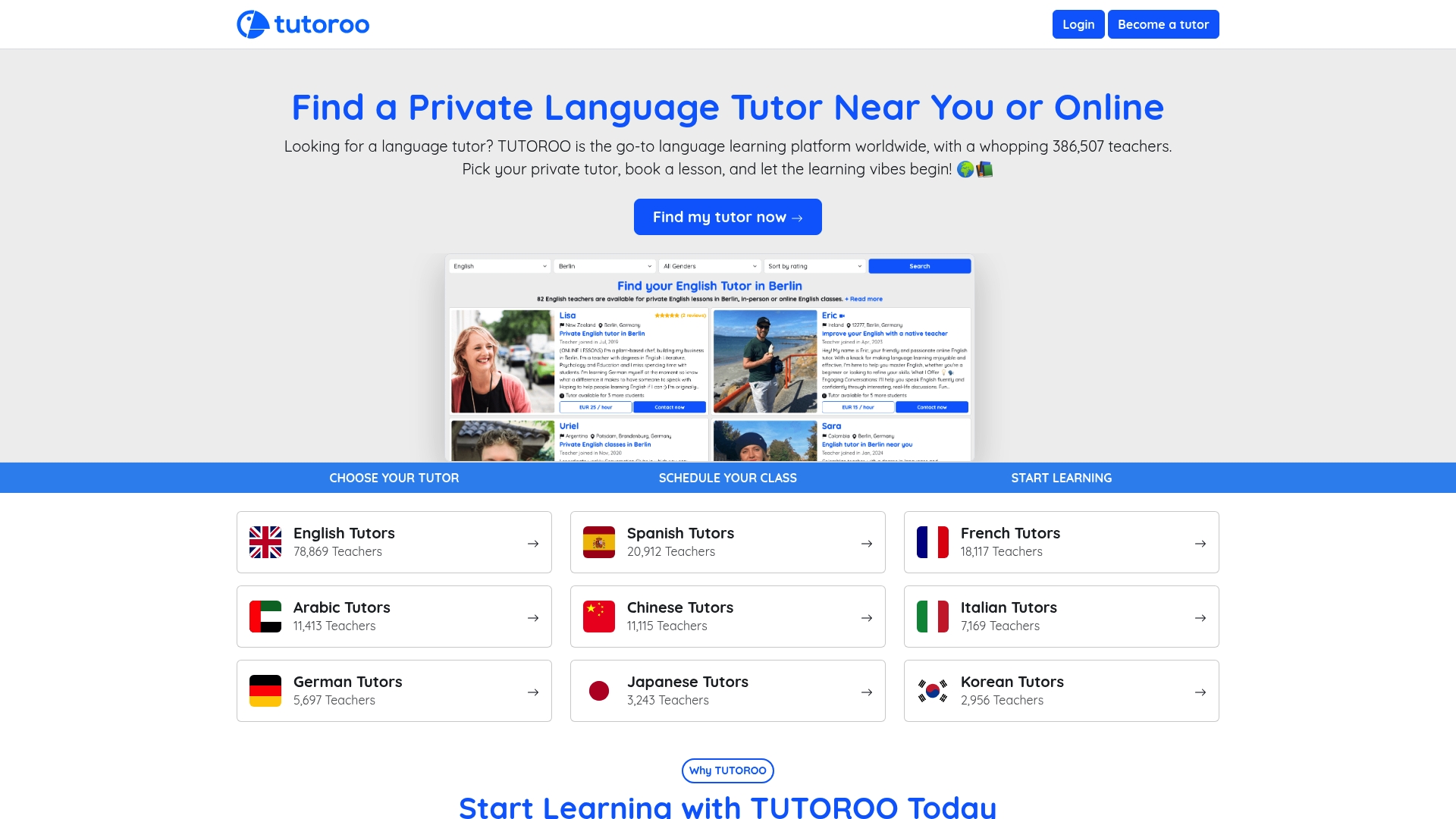
Tutoroo connects students with over 386,000 private language tutors worldwide, covering languages including English, Spanish, French, Arabic, and Chinese. Lessons are available online or in person, and tutors can align sessions to CEFR or ACTFL targets so every lesson moves you toward a measurable goal. Whether you need to sharpen your writing before an exam or build speaking confidence for a job interview, find a private tutor on Tutoroo and get feedback that is specific to your needs, your level, and your timeline.
FAQ
What are the four must-have language skills for students?
The four must-have language skills are listening, speaking, reading, and writing. These cover all language domains and are required for academic performance and real-world communication.
What is the CEFR and why does it matter for students?
CEFR is the Common European Framework of Reference for Languages, which uses can-do descriptors across six levels from A1 to C2. It gives students measurable targets for each of the four language skills.
How do ACTFL credentials help students' career prospects?
ACTFL credentials are legally defensible and trusted by employers, making them valuable alongside technical qualifications. They demonstrate real-world language ability rather than just classroom performance.
How can students improve their reading comprehension quickly?
Vocabulary knowledge is the strongest predictor of reading comprehension, so explicit vocabulary study delivers the fastest gains. Reading texts slightly above your current level and reviewing new words in context accelerates progress further.
Is working with a private language tutor worth it?
A private tutor who knows CEFR or ACTFL frameworks can target your specific weak skills and track progress against measurable benchmarks. That personalised focus produces faster results than general classroom instruction alone.