

TL;DR:
- Explainer guides help language learners by making target concepts more noticeable and understandable.
- They are most effective when paired with active tasks like self-explanation, pretesting, and retrieval practice.
Explainer guides are defined as structured instructional resources that make target language concepts visible, memorable, and usable. The role of explainer guides in language learning goes well beyond delivering information. Research published in may 2026 confirms that glosses aid vocabulary retention by highlighting lexical items during reading, making new words more noticeable and therefore more likely to stick. The key insight is this: explainer guides work not because learners read them, but because well-designed guides force learners to think. Pair that with techniques like pretesting and translanguaging, and you have one of the most effective language study techniques available today.
How do explainer guides facilitate language acquisition?

Explainer guides facilitate language acquisition by making target language input more salient. The Input Enhancement Hypothesis, a recognised framework in second language acquisition research, holds that learners acquire new forms more readily when those forms are made visually or cognitively prominent. Glosses, annotations, and highlighted grammar notes all do exactly that.
Active engagement is what separates effective use from passive reading. Self-explanation is a technique where learners pause and articulate, in their own words, what a rule or word means and why it works. A 2026 study on self-explanation found this method improves long-term retention and helps learners apply language rules across new contexts. That means fewer errors over time, not just better quiz scores.
The Noticing Hypothesis, proposed by applied linguist Richard Schmidt, argues that learners cannot acquire what they do not consciously notice. Explainer guides operationalise this idea by drawing attention to forms that might otherwise be skipped. A learner reading a Spanish text with glossed subjunctive forms is far more likely to notice and internalise that structure than one reading without any support.
Active learning tasks that follow an explainer guide deepen this effect further. These include:
- Retrieval practice: Closing the guide and recalling the rule or vocabulary from memory
- Error correction tasks: Reading flawed sentences and identifying what the explainer guide just taught
- Self-explanation prompts: Writing one sentence explaining the rule in plain language before moving on
- Application exercises: Using the new word or grammar point in an original sentence immediately after reading
Pro Tip: After reading any explainer guide section, close it and write three sentences using the new concept before checking your work. This single habit dramatically reduces the illusion of understanding.
What pitfalls should learners avoid with explainer guides?
The illusion of understanding is the most common trap in explainer guide use. Studies in 2026 found that learners who watch or read explainer content without follow-up tasks overestimate how well they have understood the material. They feel confident but cannot apply the concept when tested. This gap between perceived and actual knowledge is the illusion of understanding.
Passive consumption is the root cause. Reading an explanation of French subjunctive triggers a sense of familiarity. That familiarity feels like learning. It is not. Real learning requires effort, and explainer guides work best when learners struggle productively during engagement, meaning the guide provokes genuine cognitive effort rather than comfortable recognition.
Standalone explainer videos carry the same risk. A well-produced video on Mandarin tones can feel highly informative. Without a task attached, the learner retains the feeling of having learned without the actual knowledge to show for it.
Avoid these common mistakes when using explainer guides:
- Watching or reading without pausing. Stop at each new concept and test yourself before continuing.
- Skipping the practice phase. An explainer without a follow-up exercise is half a lesson.
- Revisiting the same guide repeatedly. Returning to a guide you already understand is comfort, not progress.
- Using guides as a substitute for speaking or writing. Guides build knowledge. Only real use builds fluency.
- Ignoring confusion. If a concept in a guide confuses you, that confusion is productive. Work through it rather than moving on.
Pro Tip: Build a "check for understanding" habit. After every explainer guide session, write down the three things you just learned without looking at the guide. If you cannot, you need to re-engage more actively, not re-read passively.
How do pretesting and translanguaging amplify explainer guides?
Pretesting and translanguaging are two techniques that multiply the impact of explainer guides when used together. Pretesting means attempting to answer a question or use a word before seeing the explanation. A 2026 study from NUS confirms that guessing before learning strengthens word recall better than passive study alone, even when the initial guess is wrong. The act of guessing primes memory to notice and retain the correct answer when it arrives in the guide.
Translanguaging is the strategic use of a learner's first language (L1) alongside the target language. It is not a crutch. Used deliberately, it is a tool for clarifying complex concepts that would otherwise remain opaque. Recent pedagogical research recommends L1 as a bridge and critique tool, not a replacement for target language practice. A Japanese learner studying English conditionals, for example, benefits from a brief L1 explanation of the concept before engaging with English examples.
Combining both techniques with explainer guides creates a three-step process that accelerates comprehension:
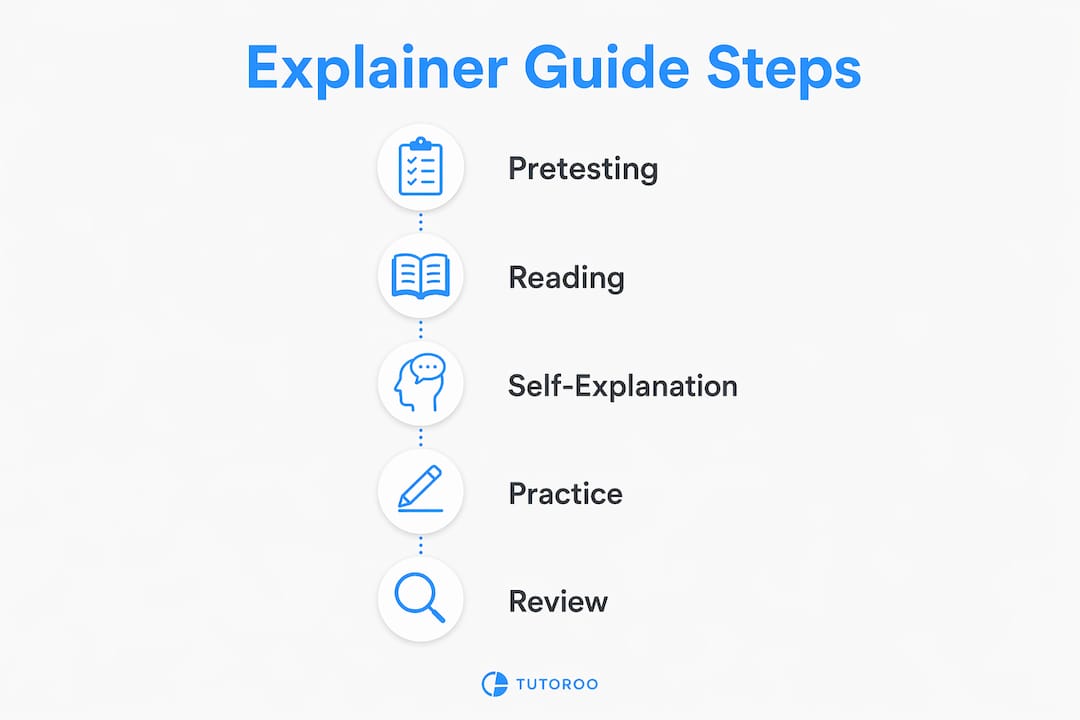
- Step 1: Pretest. Attempt the concept before reading the guide. Write a sentence using the grammar point or guess the meaning of a new word.
- Step 2: Engage with the guide. Read or watch the explainer with your pretest attempt in mind. Notice where you were right, wrong, or close.
- Step 3: Translanguage to consolidate. Briefly explain the concept to yourself in your L1, then immediately produce an example in the target language.
The table below shows how these two techniques compare in their primary function:
| Technique | Primary function | Best used when |
|---|---|---|
| Pretesting | Primes memory before the guide | Starting a new grammar or vocabulary topic |
| Translanguaging | Clarifies complex concepts via L1 | The target language explanation alone is unclear |
| Combined approach | Activates prior knowledge and confirms understanding | Tackling abstract grammar rules or dense vocabulary sets |
One caution applies here. Translanguaging should support target language use, not replace it. Learners who default to L1 explanations for every concept slow their acquisition of the target language's natural patterns. Use it selectively, then return to the target language as quickly as possible. For practical guidance on teaching multiple languages, combining these approaches with structured lesson plans produces the strongest results.
How do explainer guides apply across different proficiency levels?
Explainer guides serve learners at every stage, but the way they are used should shift as proficiency grows. Beginners need guides that explain foundational vocabulary and basic grammar with clear visual support. Intermediate learners benefit most from guides that address specific error patterns and introduce nuanced grammar. Advanced learners use guides selectively to resolve gaps in idiomatic use or register.
The table below maps guide types to proficiency levels and learning goals:
| Proficiency level | Guide type | Primary learning goal |
|---|---|---|
| Beginner | Vocabulary glosses, basic grammar explainers | Build core word bank and sentence structure |
| Intermediate | Grammar rule guides, reading technique explainers | Reduce persistent errors, expand vocabulary range |
| Advanced | Idiom and register guides, discourse structure explainers | Refine naturalness and contextual accuracy |
| All levels | Self-explanation prompts, pretesting tasks | Deepen retention and transfer to real use |
Pairing explainer guides with spaced repetition strengthens long-term retention across all levels. Spaced repetition systems, such as those used in flashcard applications, schedule review at intervals that match how memory fades. When a learner encounters a glossed word in a guide and then reviews it through spaced repetition, retention improves significantly compared to a single reading. You can explore specific vocabulary learning techniques that pair well with explainer guides for a structured approach.
Retrieval practice works alongside guides in a similar way. After reading an explainer on German case endings, a learner who immediately attempts to recall and apply those endings without looking at the guide encodes the information far more deeply. The effort of retrieval, even when it produces errors, strengthens the memory trace.
Explainer guides also function differently depending on the learning context. In a classroom, a teacher can assign a guide as pre-reading and then use class time for application tasks. In self-study, the learner must create their own follow-up tasks. In a tutoring session, a guide can serve as a shared reference point that the tutor then builds on with targeted exercises. Experts advise that learners should discard guides once mastery is reached and shift focus to immersive, real-world practice. The guide is a scaffold, not a permanent structure.
Key takeaways
Explainer guides accelerate language learning only when paired with active tasks like pretesting, self-explanation, and retrieval practice, not passive reading alone.
| Point | Details |
|---|---|
| Glosses make input salient | Highlighted vocabulary and grammar notes increase noticing, which is the first step to acquisition. |
| Illusion of understanding is real | Learners who read without follow-up tasks overestimate their knowledge and underperform when tested. |
| Pretesting primes retention | Guessing before reading a guide strengthens recall of the correct answer, even when the guess is wrong. |
| Translanguaging clarifies, not replaces | Strategic L1 use helps learners grasp complex concepts but must give way to target language practice quickly. |
| Guides are temporary scaffolds | Once a concept is mastered, move to real-world use rather than returning to the guide for reassurance. |
Tutoroo's take on making explainer guides actually work
Explainer guides are genuinely useful. We have seen learners at every level benefit from a well-structured grammar note or a glossed reading passage. The problem is not the guides themselves. The problem is how most learners use them.
The pattern we see most often is this: a learner reads an explainer, feels confident, and moves on. Two weeks later, they cannot produce the structure they studied. That is the illusion of understanding in action. The fix is not more guides. It is better habits around the guides you already have.
The learners who make the fastest progress treat explainer guides as a starting point, not an endpoint. They pretest before reading, self-explain after reading, and then practise the concept in real conversation or writing before returning to any guide. The 2026 NUS research on pretesting confirms what experienced tutors have known for years: the struggle before the answer matters as much as the answer itself.
One more thing worth saying directly. The best sign that an explainer guide has done its job is that you no longer need it. When a grammar rule feels automatic and a vocabulary item comes to mind without effort, the guide has served its purpose. Put it down and go use the language. That is where real proficiency lives.
— Tutoroo
Personalised tutoring to complement your explainer guides
Explainer guides give you the concepts. A skilled tutor gives you the feedback, correction, and real conversation that turn those concepts into fluent use. Tutoroo connects learners with over 386,000 private language tutors worldwide, covering languages from English and Spanish to French, Arabic, and Chinese.
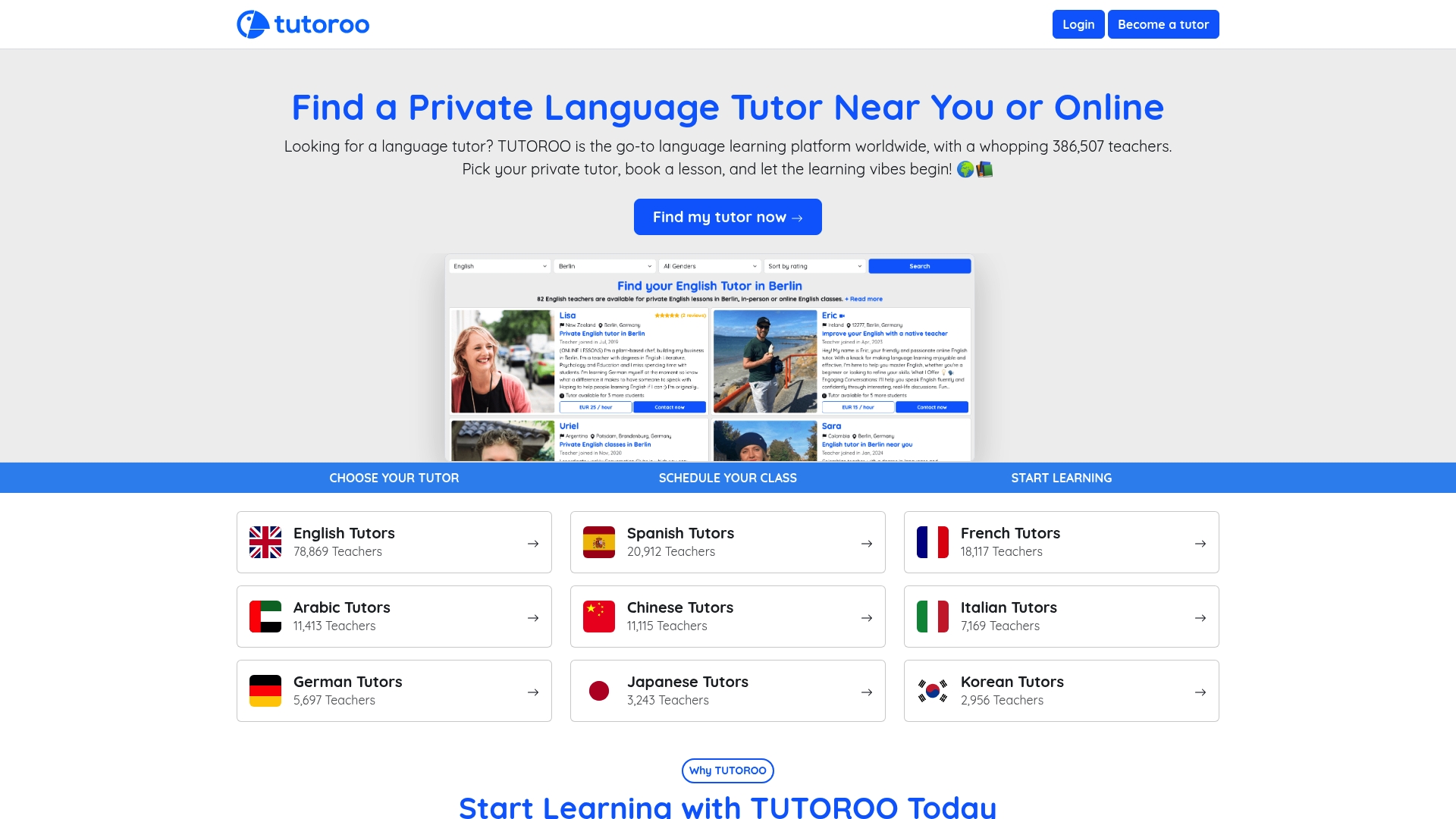
Whether you are a beginner building your first vocabulary bank or an advanced learner refining your grammar, a private language tutor can design sessions that pick up exactly where your explainer guides leave off. Learners studying Southeast Asian languages can also find dedicated Malay tutors online for personalised, one-on-one support. Combine the clarity of a great explainer guide with the depth of expert tuition, and your progress accelerates in ways that self-study alone cannot match.
FAQ
What is the role of explainer guides in language learning?
Explainer guides make target language forms more noticeable and understandable, which is the foundation of acquisition. They are most effective when paired with active tasks like self-explanation and retrieval practice rather than used passively.
What is the illusion of understanding in language learning?
The illusion of understanding occurs when learners feel they have grasped a concept after reading or watching an explainer, but cannot apply it when tested. Adding follow-up tasks after explainer content directly reduces this effect.
How does pretesting improve explainer guide effectiveness?
Pretesting primes memory by activating prior knowledge before the explanation arrives. Research confirms that guessing before learning strengthens recall of the correct answer compared to passive study.
What is translanguaging and when should learners use it?
Translanguaging is the deliberate use of a learner's first language to clarify complex target language concepts. It works best for abstract grammar rules and should be used briefly before returning to target language practice.
When should a learner stop using explainer guides?
Learners should move away from a guide once they can produce the target concept accurately without referring to it. Continued reliance on a guide after mastery slows the shift to natural, independent language use.