

Expect to pay varying rates for a Japanese tutor, with conversational partners usually cheaper and certified teachers and JLPT specialists more expensive. Group lessons often reduce the per-person cost roughly by half. Conversation learners often find rates toward the lower end, JLPT candidates pay a moderate price, and business Japanese learners see rates toward the higher end.
TL;DR:
- Conversation partners are typically the cheapest option at $10 to $20 per hour, but lack formal teaching credentials and structured lesson plans.
- Certified teachers and JLPT specialists usually charge between $35 and $70 an hour, especially for exam prep or business Japanese.
- Group lessons can cut costs by about half per person, making them a cost-effective choice for consistent practice.
- Longer sessions, such as 60-minute lessons, offer better value and are recommended for exam or business preparation, while short-term intensive programs can exceed $600 per month.
- Booking trial lessons with multiple tutors and combining free resources, lower-cost sessions, and specialist help helps optimize budget without slowing progress.
Table of Contents
- How much does a Japanese tutor cost per lesson?
- Why do different Japanese tutors charge different rates?
- What should you budget for your specific learning goal?
- How can you lower your Japanese lesson costs without slowing progress?
- Where do you find a Japanese tutor and what should you ask first?
- What does Tutoroo's tutor network show about real Japanese lesson pricing?
- Does it cost more to learn from a native Japanese tutor?
- Our take on balancing price and progress
- Ready to compare Japanese tutor rates and book a trial?
- Sources
How much does a Japanese tutor cost per lesson?
Hourly figures only tell half the story. What matters is how that rate plays out across a real session, because a $30 hourly rate looks very different once you're booking 30 minutes versus 60.
At the entry level, casual conversation partners, often university students or hobbyist native speakers, charge somewhere between $10 and $20 an hour. These aren't trained teachers. They're native or fluent speakers happy to chat, correct your grammar on the fly, and help with pronunciation. Tofugu's guide to finding a Japanese tutor makes the point plainly: conversation partners are usually the cheapest option, while certified teachers charge more because they bring structure, lesson planning, and exam expertise to the table.
Typical online private tutoring tends to range from lower to mid-level rates, with in-person lessons in major cities generally costing more due to travel and overhead. Premium and specialist tutors, especially those with JLPT or business Japanese expertise, charge a higher rate.
Here's how session length affects cost using a mid-range online hourly rate:
- 30-minute lessons cost about half the hourly rate, suitable for brief practice.
- 45-minute lessons offer a balance common for regular progress.
- 60-minute lessons provide better per-minute value and fit exam or business prep.
- Trial lessons, typically 15 to 30 minutes, are often discounted or free to test compatibility.
Packages change this math further. Some tutors and schools offer bulk discounts, five or ten lesson bundles that shave 10% to 20% off the per-session price, while others run monthly subscriptions with a fixed number of sessions included. The Japan Society's private tutoring program illustrates this well, listing per-class pricing alongside membership and package options that lower the effective cost once you commit to a longer run. Always check whether a quoted "hourly rate" already reflects a package discount or is the standalone casual price. That distinction alone can shift your monthly total by $50 or more.
Why do different Japanese tutors charge different rates?
Price differences rarely come down to randomness. Four factors explain almost all the variation you'll see when comparing tutor profiles.
Qualifications separate conversation partners from certified teachers. A native speaker with no teaching background can hold a great conversation but may struggle to explain why a grammar point works the way it does. A certified teacher, often with a CELTA-style qualification or formal Japanese-teaching credential, charges more because they can diagnose your specific weaknesses and build a curriculum around them. Deep knowledge from Tofugu notes that price alone is a weak signal of teaching quality. Native fluency is often enough for conversation practice, but structured learning benefits from genuine pedagogical training.
Lesson goal drives preparation time, and preparation time drives price. A tutor prepping you for the JLPT needs to build practice tests, track your weak vocabulary areas, and mark written work between sessions. That prep work rarely shows up as a separate line item, but it's baked into the hourly rate.
Other factors worth weighing:
- Format and logistics. In-person lessons cost more than online ones because of travel time, and peak evening slots often carry a premium over daytime availability.
- Demand and reputation. Tutors with strong reviews or niche specialisations (business Japanese, anime and manga literacy, dialect coaching) can charge above the local average simply because they're booked out.
- Platform versus freelance pricing. Agencies and language schools often add administrative overhead to their rates, while independent tutors working directly with students on marketplaces tend to price more competitively.
Pro Tip: Ask a prospective tutor how they'd structure your first month before you book anything. A vague answer usually means a vague lesson plan, regardless of what they charge.
What should you budget for your specific learning goal?
The right hourly rate depends entirely on what you're trying to achieve. Here's how to think about budgeting by goal rather than by a generic price list.
- Casual conversation. Budget $15 to $25 an hour and aim for two sessions a week. Consistency matters more than intensity here, and a native conversation partner is often all you need to build fluency and confidence.
- JLPT or exam preparation. Expect $35 to $50 an hour, since preparation costs from creating materials and marking practice tests typically raise the effective rate. Three sessions weekly across a three to six month runway is a realistic cadence for N3 to N2 level candidates.
- Business Japanese. Budget $40 to $70 an hour. That premium buys roleplay scenarios, keigo (formal speech) coaching, and industry-specific vocabulary you won't get from a general conversation partner.
- Intensive short-term study. If you're prepping for a trip or a job transfer in four to six weeks, expect to pay more overall simply because you're compressing months of progress into weeks. Daily 30 to 45 minute sessions at $25 to $40 an hour can easily push a monthly total past $600, but the acceleration is often worth it for a hard deadline.
How can you lower your Japanese lesson costs without slowing progress?
Cost control isn't about finding the cheapest tutor. It's about spending your budget where it actually moves the needle.
Packages and subscriptions genuinely reduce per-lesson cost when you're committed to a long-term schedule, but they backfire if your availability is unpredictable. A ten-lesson bundle you only use six times isn't a discount, it's a loss.
- Mix formats: a low-cost conversation partner for daily practice, paired with an occasional specialist session for grammar or exam strategy.
- Combine cheap conversation practice with periodic specialist lessons rather than paying premium rates for every single session.
- Use free resources, podcasts, graded readers, language exchange apps, between paid lessons to stretch the value of each one.
- Ask politely about off-peak pricing or a trial package before committing to a full bundle.
Pro Tip: Book a 30-minute trial with two different tutors before committing to a package. The $15 you spend testing fit can save you from a $300 bundle you regret.
Where do you find a Japanese tutor and what should you ask first?
Four main channels dominate the search, each with a different cost and vetting trade-off.
- Language marketplaces connect you directly with tutors worldwide, usually with transparent hourly pricing and trial lesson options.
- Local language schools offer structured curricula but often bundle in admission fees, materials, and administrative costs that push the real total well above the advertised hourly rate.
- University language centres sometimes offer discounted tutoring through graduate students, a solid budget option if you're near a campus.
- Community conversation groups are usually free or donation-based, ideal for supplementing paid lessons rather than replacing them.
Before booking, run through a short checklist:
- What are your qualifications or teaching experience?
- Can you share a sample lesson plan for someone at my level?
- Do you provide your own materials, or should I source my own?
- Is a trial lesson available, and what's your cancellation policy?
- How much homework or self-study do you expect between sessions?
Comparing two tutors by their answers to these questions, rather than by hourly price alone, is the fastest way to spot who actually delivers value.
What does Tutoroo's tutor network show about real Japanese lesson pricing?
There are many language tutors worldwide, which gives a useful cross-section of how Japanese lesson pricing actually plays out once tutors set their own rates rather than following a fixed institutional scale.
A few patterns hold consistently across that network:
- Rates cluster heavily around the $20 to $40 hourly band for online private lessons, matching the broader market ranges seen elsewhere.
- Tutors with JLPT coaching experience or business Japanese specialisation price noticeably above generalist conversation tutors.
- Filtering by price, availability, and specialisation makes it far easier to shortlist tutors who match your actual goal rather than scrolling blind.
If you're comparing Japanese tutors online, it's worth reading through a practical checklist for choosing a tutor who fits your goals before you commit to a package. The trade-offs between a community tutor and a professional teacher are worth understanding upfront too, since that single decision affects your budget more than almost anything else.
Does it cost more to learn from a native Japanese tutor?
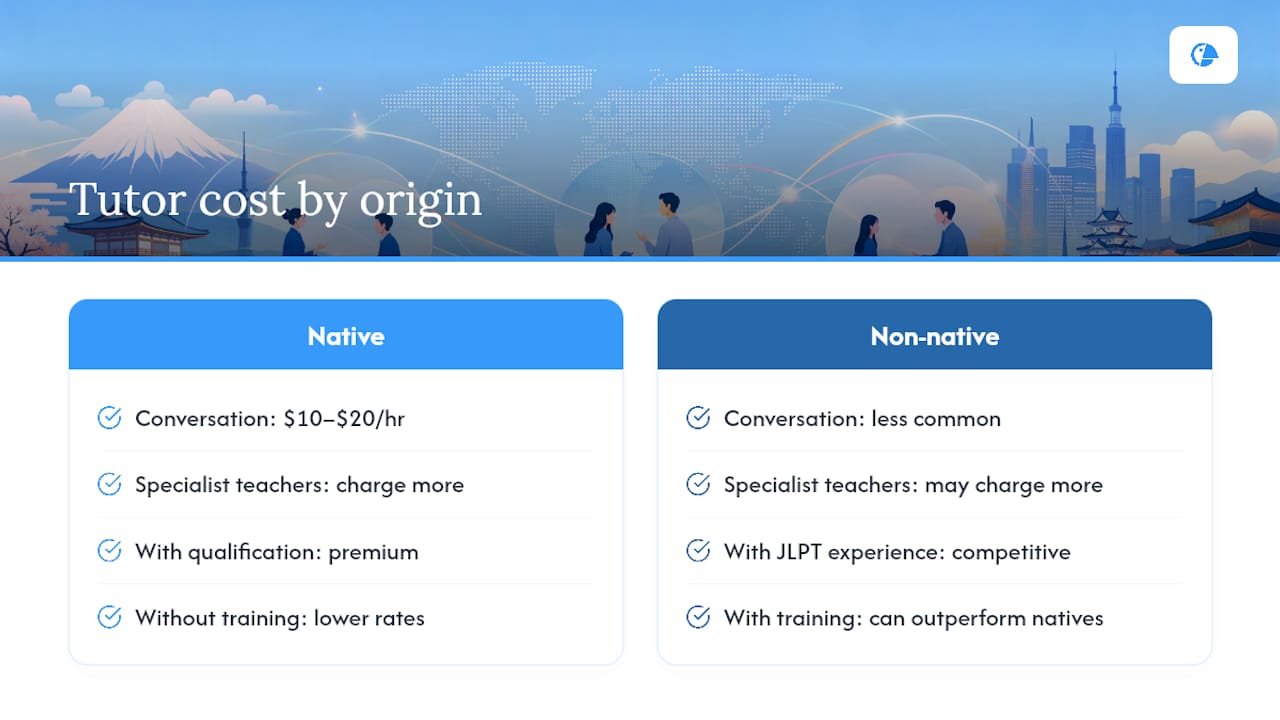
Not automatically, and this trips up a lot of new learners. Nationality alone doesn't set the price. Native Japanese speakers dominate the conversation-partner end of the market precisely because native fluency is the main qualification needed for casual chat practice, which keeps those rates low, often $10 to $20 an hour.
Where native speakers do command a premium is in specialised or certified teaching roles. A native Japanese tutor with a formal teaching qualification and JLPT prep experience will typically charge more than a non-native tutor with similar credentials, largely because native-level cultural and linguistic nuance carries real value for exam-level or business-level instruction. Non-native tutors who've been through the JLPT themselves, though, often bring a genuine advantage: they understand exactly where English-speaking learners get stuck, and some price themselves competitively as a result.
The practical takeaway is to judge tutors on teaching credentials and specialisation rather than nationality by itself. A non-native tutor with strong pedagogical training can outperform a native speaker with none, and pricing across tutor networks reflects that. Qualification and lesson goal move the price far more than passport does.
Our take on balancing price and progress
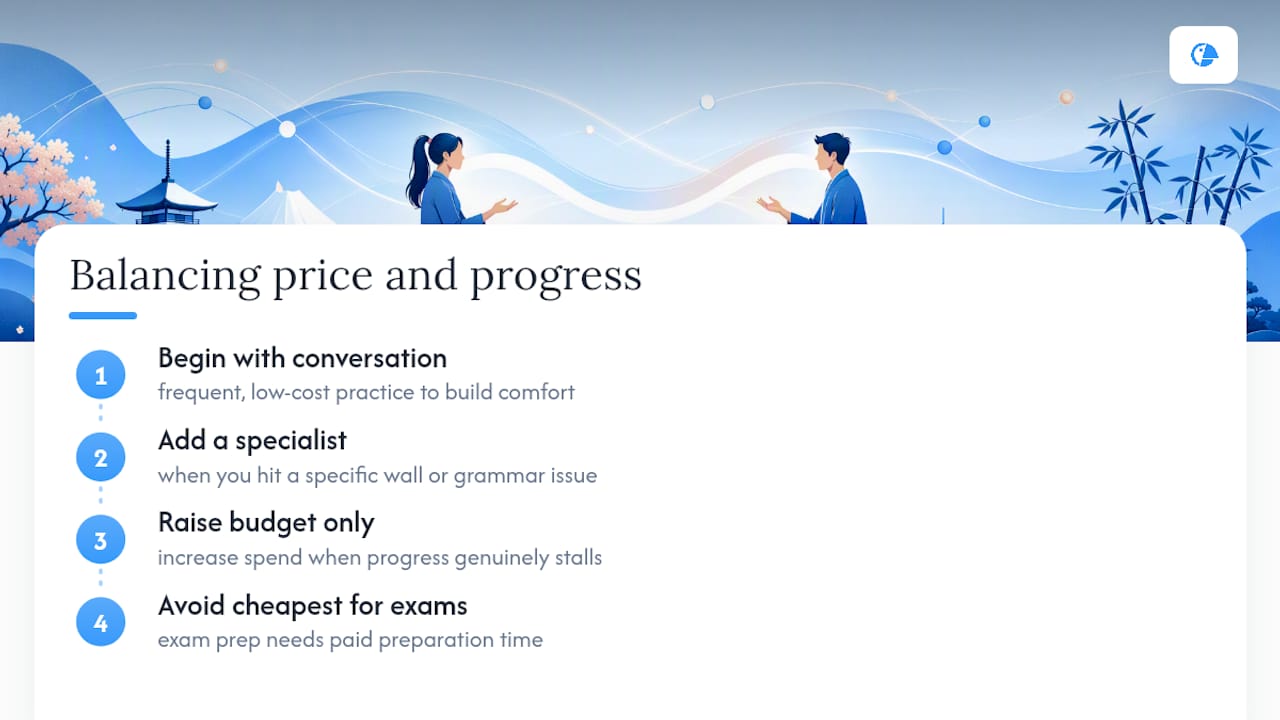
Most learners get the sequencing backwards. The smarter pattern is to start with frequent, low-cost conversation practice to build comfort and vocabulary, then add a specialist tutor once you hit a specific wall, grammar you can't self-correct, or an exam deadline on the calendar. Raise your budget when progress genuinely stalls, not before. One habit worth avoiding: chasing the cheapest possible rate for exam prep, where preparation time is exactly what you're paying for.
Ready to compare Japanese tutor rates and book a trial?
You've seen the ranges. The faster way to find where you actually land in them is to compare real tutor profiles side by side instead of guessing from averages. Some platforms let you filter tutor communities by price, availability, and specialisation, so you can shortlist conversation partners and JLPT specialists in the same search rather than juggling separate schools and marketplaces.
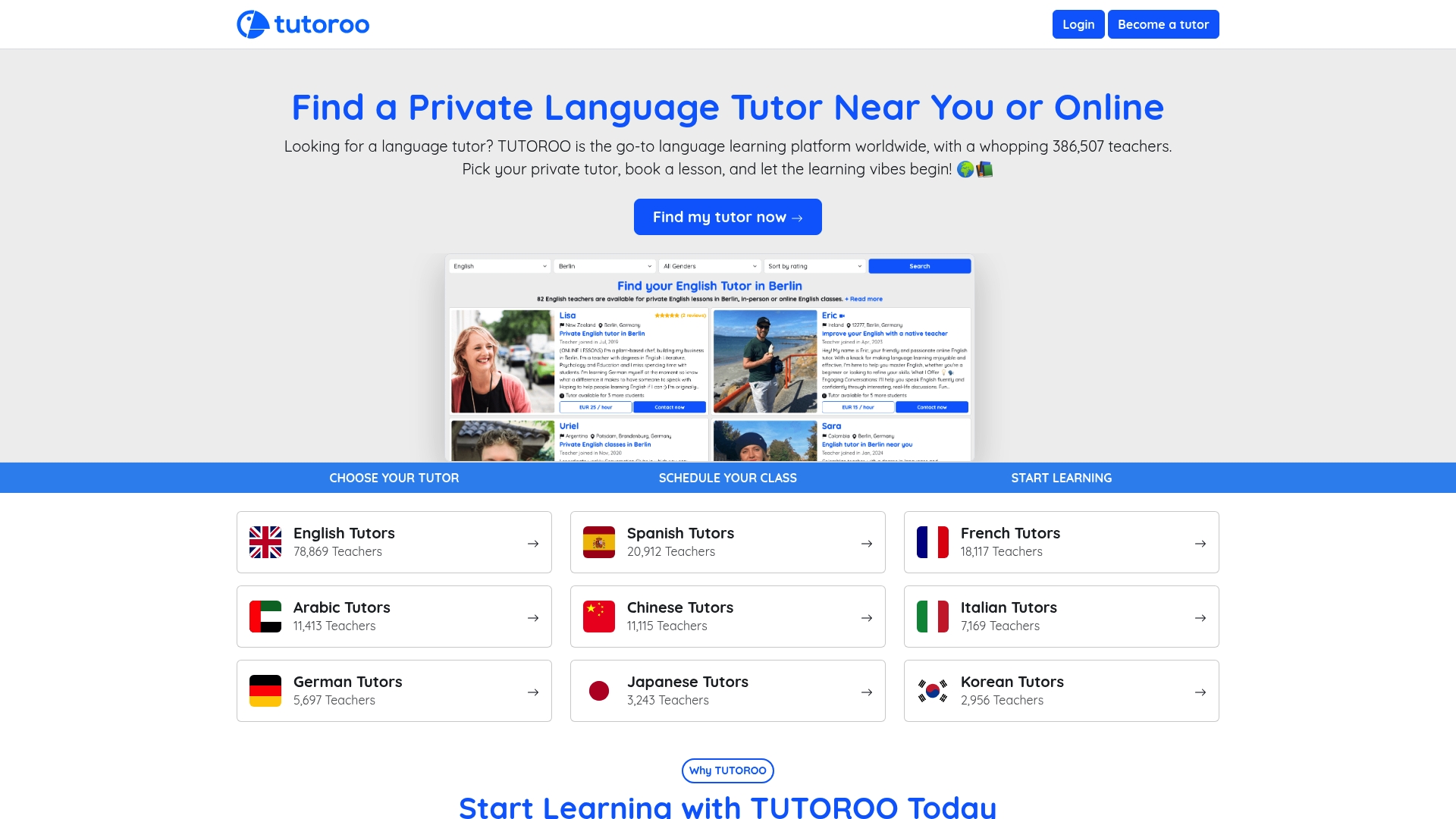
Start by setting your budget range in the search filters, then book trial lessons with two or three tutors who fit your goal before committing to any package. Comparing a certified JLPT coach against a native conversation partner side by side, on the same platform, makes the price-to-value trade-off obvious fast. Head to Tutoroo to filter Japanese tutors by rate and availability, and book your first trial lesson today.
Sources
- How and why to find a Japanese tutor: a practical guide — Tofugu
- Private Japanese Tutoring — Japan Society (USA)
- How much does Japanese tutoring cost? — JPLT DialogPlus
- Are Japanese language school tuition fees expensive? — Kudan Institute