
TL;DR:
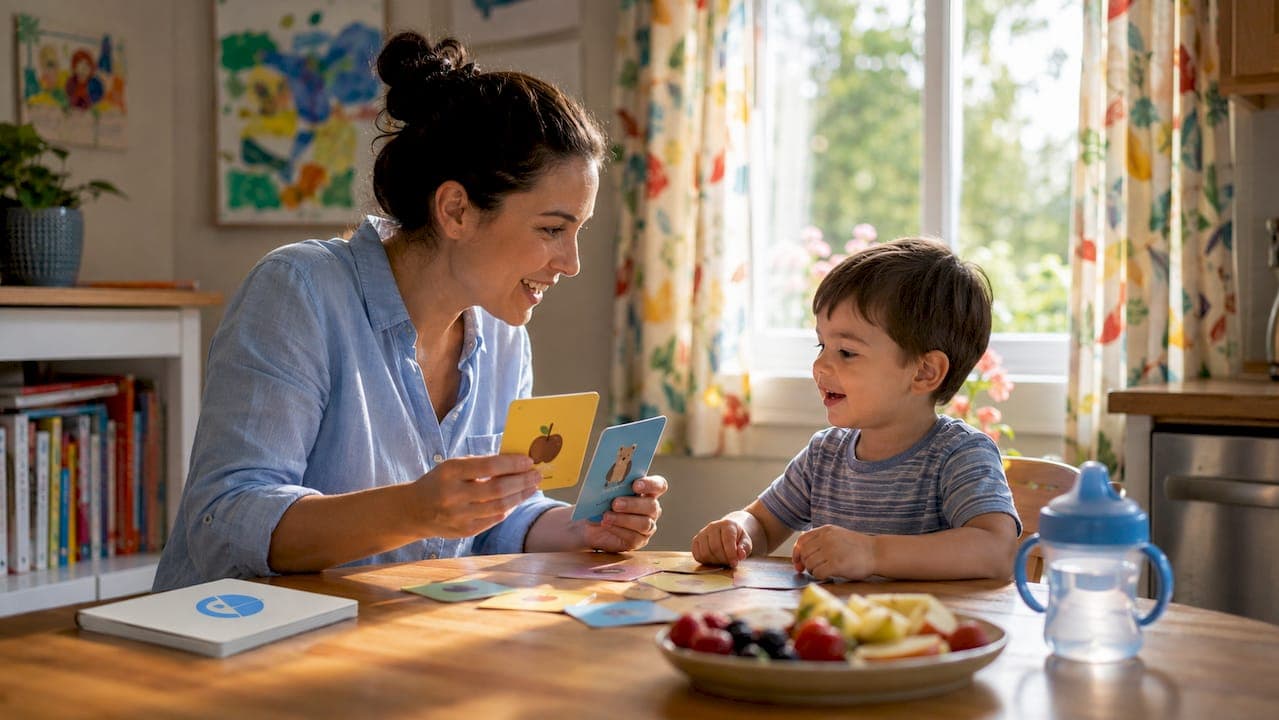
- A family language learning workflow is a structured system of rules, routines, and interactions that foster consistent language exposure at home. Building predictable habits around activities like bedtime stories and short daily practice can significantly enhance children's language acquisition and motivation. Regular review and emotional safety are key to sustaining progress and creating a supportive multilingual environment.
A language learning workflow for parents is a structured, repeatable process that combines clear family language rules, emotionally safe routines, and consistent daily exposure to support children's language acquisition at home. The most effective approach is not about drilling grammar or buying expensive programmes. It is about building small, predictable habits that fit naturally into family life. This guide draws on research from Multilingual Family Hub, Language Teaching Lab, and Dinolingo to give you a practical system you can start this week.
What is a language learning workflow for parents?
A language learning workflow for parents is the organised sequence of decisions, rules, and daily practices a family uses to create consistent language exposure at home. The industry term for this approach is structured home language planning, and it sits at the heart of successful bilingual and multilingual family strategies.
The core insight is simple: systems beat goals. A goal like "I want my child to speak French" gives you nothing to do on a Tuesday morning. A system like "we read one French picture book at bedtime every night" gives you a clear action. That shift in thinking is what separates families who see progress from those who feel stuck.
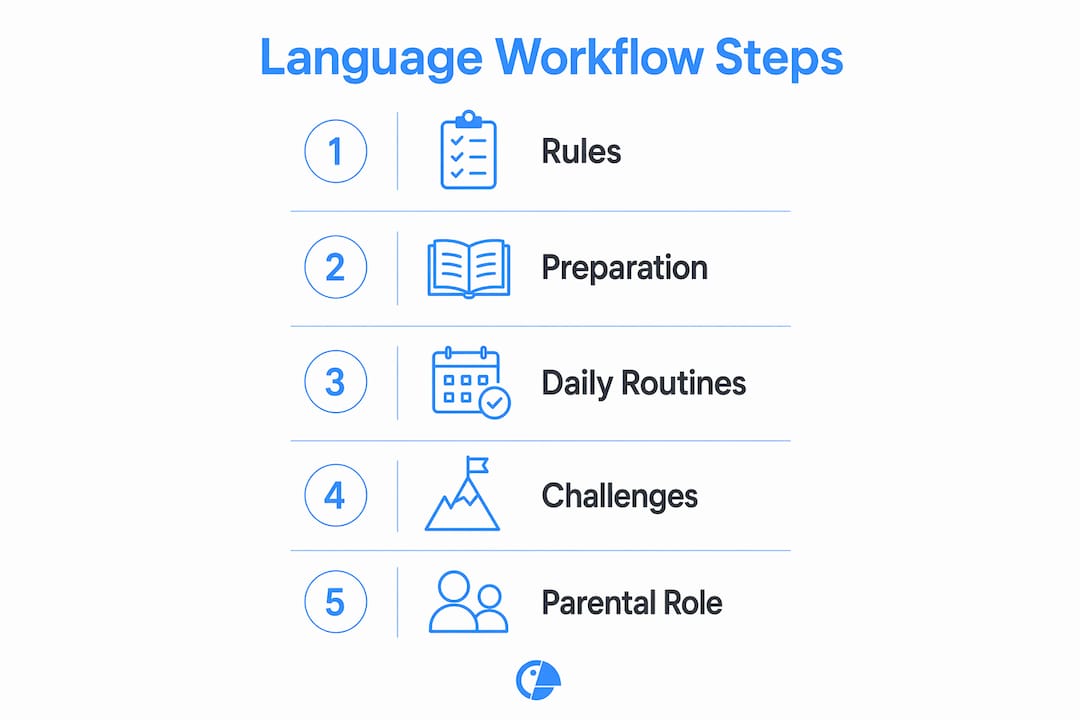
A well-built workflow covers three layers. First, the rules layer: which language is spoken by whom and when. Second, the routine layer: the fixed daily moments where language exposure happens. Third, the response layer: how parents react when children mix languages or resist. Getting all three layers right reduces friction and keeps the whole family on the same page.
What do parents need before starting?
Strong preparation separates a workflow that lasts from one that collapses after a fortnight. Before you schedule a single activity, make three decisions upfront.
Decide your family language strategy. The most widely used approach is One Parent, One Language (OPOL), where each parent consistently speaks their own language to the child. Other families use a time-based rule, such as Spanish before lunch and English after. Either works. What matters is that every adult in the home knows the rule and follows it without negotiation.
Write a short SOP. An SOP (standard operating procedure) sounds corporate, but for families it is simply a one-page document that answers: what do we do when our child replies in the wrong language? A practical family language SOP might read: listen patiently, recast the child's sentence in the target language with warmth, invite gentle repetition, then move on. Writing this down removes the in-the-moment guesswork that causes arguments.
Gather your core resources. A solid language learning checklist for parents includes:
- Age-appropriate storybooks in the target language (physical and digital)
- Audio materials such as songs, podcasts for kids, and narrated stories
- Simple visual aids like labelled household objects or picture dictionaries
- A short list of apps suited to family use
The table below compares four commonly used apps for family language learning:
| App | Best For | Key Feature | Age Range |
|---|---|---|---|
| Dinolingo | Young children (2–8) | Themed songs, stories, and games | 2–8 years |
| Duolingo | Older children and parents | Gamified daily lessons | 6+ years |
| Lingokids | Pre-schoolers | Play-based English activities | 2–8 years |
| MeloLingua | Story-based input | Comprehensible input audio | 4–12 years |
Pro Tip: Pick one fixed daily moment before you choose any app. The moment creates the habit. The app fills the moment.
How can parents build daily language routines at home?
The most effective home language activities are short, consistent, and emotionally positive. Five focused minutes daily beats a 45-minute session once a week. Dinolingo's Family Learning Month challenge stages vocabulary themes across 31 days, proving that short, themed sessions compound into real progress.

Start by anchoring language practice to something your family already does. Bedtime is the single most powerful window. One fixed daily input window such as a bedtime story in the target language builds a predictable repertoire that children find comforting and cognitively rich. Car rides, breakfast, and bath time are equally strong anchors because they happen without negotiation.
When choosing stories and songs, apply the comprehensible input principle. Stories at the "i+1" level mean the child understands most of the meaning but encounters a handful of new words. This is the sweet spot for acquisition. Choosing material that is too hard produces anxiety; too easy produces boredom. Aim for 15–30 minutes of this kind of input across the day, spread across natural moments.
Here is a sample weekly routine plan:
| Day | Activity | Duration | Goal |
|---|---|---|---|
| Monday | Bedtime story in target language | 10 min | Vocabulary exposure |
| Tuesday | Target-language songs during breakfast | 5 min | Phonics and rhythm |
| Wednesday | Naming household objects during dinner prep | 5 min | Practical vocabulary |
| Thursday | Watch a short cartoon together in target language | 15 min | Listening comprehension |
| Friday | Simple word game or flashcard activity | 10 min | Recall and play |
| Weekend | Family outing with target-language narration | 20 min | Real-world context |
When your child replies in the wrong language, recast rather than correct. If your child says "I want agua," you respond warmly: "Oh, you want water! Here is your water." You have modelled the target form without stopping the conversation or making the child feel wrong. This technique keeps emotional safety intact, which research consistently links to stronger long-term acquisition.
Pro Tip: Rotate who leads the activity each week. When an older sibling runs the vocabulary game, younger children pay closer attention and parents get a break.
What challenges arise and how do you fix them?
Every family hits resistance. Knowing the most common obstacles in advance means you can respond with a plan rather than frustration.
Child resistance and language switching. Children often switch to the dominant community language because it is easier and their peers use it. This is normal, not a failure. The fix is not stricter rules. It is making the target language the path to something the child wants: a favourite story, a game, a song they love. Motivation follows enjoyment, not obligation.
Parental fatigue. Sustaining a workflow across months is genuinely tiring. The most realistic commitment is one anchor activity per day, not five. If you miss a day, you have not broken the system. You pick up the next morning. Perfectionism is the most common reason families abandon their language learning checklist for parents entirely.
Over-correction. Heavy correction early on undermines emotional safety and reduces how much children are willing to speak. Children understand far more than they produce. Your job is to keep the input flowing warmly, not to run a grammar class. Save explicit correction for older children who ask for it.
Scattered input. Trying five different apps, three different books, and two different methods in the same week creates confusion, not progress. Consistency of input matters more than variety. Pick one story, one song, and one game per week and repeat them until they are familiar.
Quick fixes when the workflow stalls:
- Drop back to one activity per day for two weeks
- Reintroduce a favourite story or song from an earlier stage
- Involve a grandparent or family friend who speaks the target language
- Check your language lesson preparation approach to make sure sessions have a clear focus
- Celebrate any target-language word or phrase your child uses, no matter how small
Pro Tip: Review your workflow every four weeks. Ask one question: is my child producing more than last month? If yes, stay the course. If no, simplify.
How does parental involvement connect to broader language education?
Parental involvement in language education is not a supplement to formal schooling. It is the foundation that formal schooling builds on. UNESCO's 2026 multilingual education guidance is direct: multilingual programmes work best when they actively build on learners' home language and engage families in learning design. Parents are not passive supporters. They are co-architects of the language environment.
The role parents play differs depending on family context. Research on parental involvement in language development shows that bilingual families need heritage language scaffolding, where parents consciously maintain the minority language against the pull of the dominant community language. Monolingual families introducing a second language benefit from meaning-focused practices with planned fading, where support is gradually reduced as the child gains independence.
The table below summarises how parental roles shift across different language learning contexts:
| Context | Primary Parental Role | Key Strategy |
|---|---|---|
| Heritage language maintenance | Language guardian | OPOL, community events, cultural media |
| Second language introduction | Input provider | Comprehensible input, apps, tutor support |
| Multilingual school alignment | Home reinforcer | Mirror school vocabulary at home |
| Community language revival | Cultural connector | Storytelling, elder engagement, local groups |
School-community links are underused by most families. Sharing your home workflow with your child's teacher opens the door to aligned vocabulary themes, shared reading lists, and coordinated cultural celebrations. This kind of multilingual teaching strategy is far more powerful than either home or school working alone.
Lifelong language motivation grows from cultural identity, not test scores. Children who connect their target language to family stories, food, music, and relationships are far more likely to maintain it into adulthood. Build those connections deliberately into your workflow from the start. For practical ideas on keeping sessions engaging, the best language practice activities resource is worth bookmarking.
What Tutoroo has learned about family language workflows
After working with thousands of families across dozens of languages, one pattern stands out clearly: the families who succeed are not the ones with the most resources. They are the ones with the clearest system.
Parents often come to Tutoroo feeling guilty that they are not doing enough. They have downloaded four apps, bought a stack of books, and still feel like the language is not sticking. The problem is almost never effort. It is architecture. Without a clear workflow, effort scatters. With one, even 10 minutes a day compounds into something real.
The other thing worth saying plainly: emotional safety is not a soft consideration. It is the mechanism. Children who feel safe making mistakes speak more. Children who speak more acquire faster. A warm recast beats a grammar correction every single time. The families who understand this stop worrying about whether their child said the sentence perfectly and start celebrating that they said anything at all.
Realistic expectations matter too. A six-year-old will not become fluent in six months. But a six-year-old who hears a bedtime story in Spanish every night for a year will have a vocabulary and an accent that no classroom can replicate later. Small wins, consistently celebrated, build the identity of a language learner. That identity is what carries children through the harder years ahead.
— Tutoroo
How Tutoroo supports your family's language learning journey
Building a home workflow is the first step. Pairing it with a skilled private tutor takes it further.
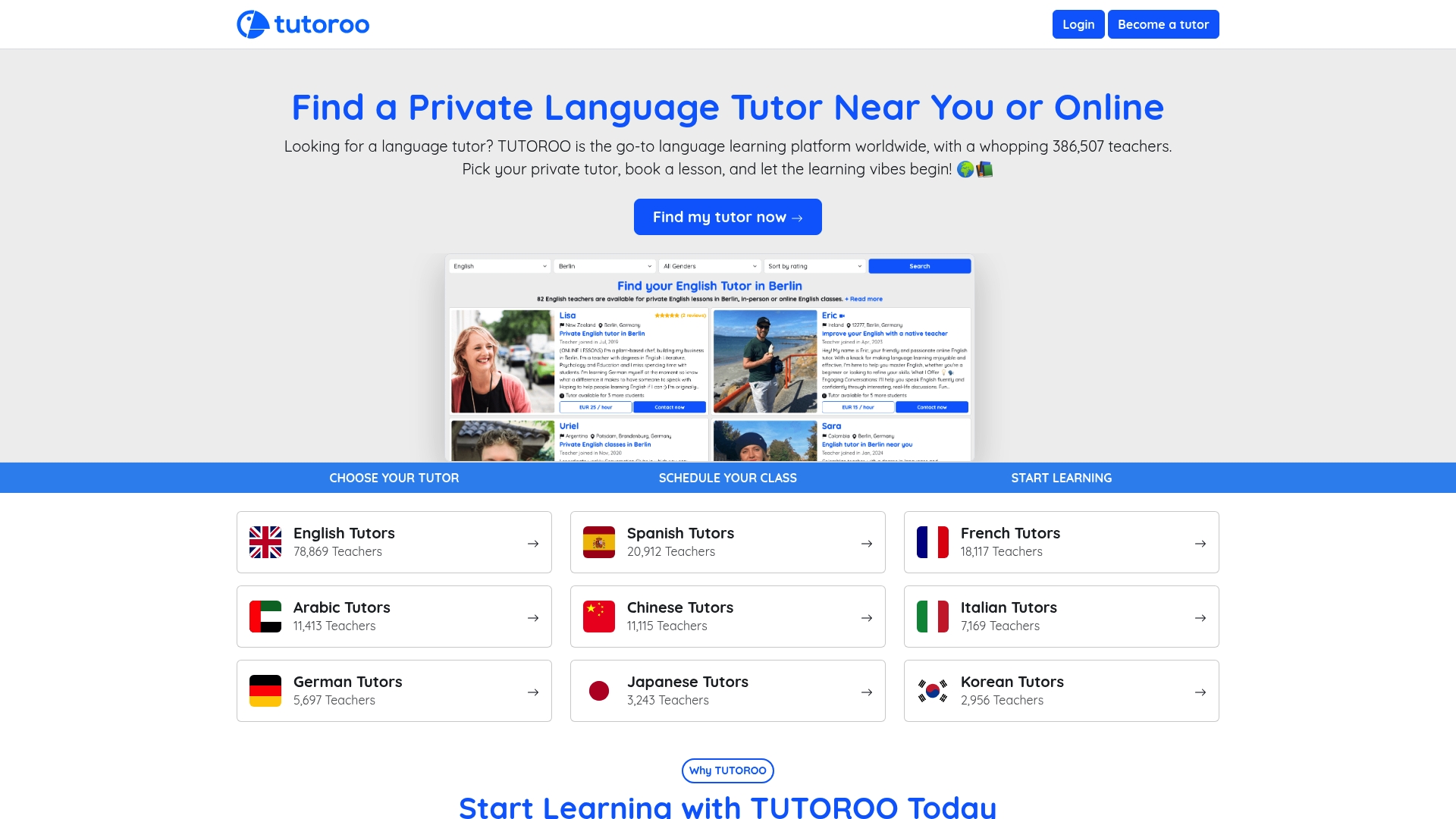
Tutoroo connects families with over 386,000 private language tutors across the world, covering languages from Spanish and French to Arabic, Cantonese, and English. Whether you need a tutor who can reinforce your home workflow in weekly sessions or a native speaker to bring authentic cultural connection into your child's learning, Tutoroo makes finding the right match straightforward. Sessions run online or in person, fitting around busy family schedules. Explore private language tutors on Tutoroo and find someone who complements the routines you have already built at home.
FAQ
What is a language learning workflow for parents?
A language learning workflow for parents is a structured, repeatable system of rules, routines, and daily language activities that creates consistent exposure for children at home. It typically includes a family language strategy, a written SOP for language interactions, and fixed daily practice moments.
How long should daily language practice be?
Five focused minutes daily is enough to build momentum, especially for young children. Consistency matters far more than duration, so one short daily session beats a long weekly session every time.
What is the OPOL method?
OPOL stands for One Parent, One Language, a strategy where each parent consistently speaks their own language to the child. It is one of the most widely used effective parental strategies for raising bilingual children because it creates clear, predictable language boundaries.
How do i handle it when my child refuses to speak the target language?
Avoid forcing or over-correcting. Instead, make the target language the path to something enjoyable, such as a favourite story or game. Recasting with warmth rather than correcting keeps emotional safety intact and encourages more spontaneous use over time.
When should parents involve a private tutor?
A private tutor adds the most value when a parent wants to reinforce a home workflow with structured input, or when neither parent is a native speaker of the target language. Tutoroo's network of over 386,000 tutors makes it easy to find someone who aligns with your family's specific language goals and schedule.
Key takeaways
A structured home language workflow, built on clear rules, consistent daily routines, and emotionally safe interactions, is the most effective way for parents to support children's language acquisition at home.
| Point | Details |
|---|---|
| Systems over goals | Write a one-page family language SOP before choosing any app or activity. |
| One fixed daily window | A bedtime story in the target language beats five scattered activities across the week. |
| Comprehensible input | Choose stories and tasks where children understand most meaning but meet a few new words. |
| Recast, do not correct | Respond to language mixing with warm modelling, not grammar explanations. |
| Review every four weeks | Simplify the workflow if progress stalls rather than adding more activities. |