

TL;DR:
- Most learners lack a clear plan before starting language lessons, leading to slow progress.
- Preparation transforms passive participants into active learners, maximizing tutor time and effectiveness.
- Engaging in daily practice, setting goals, and bringing specific questions to lessons accelerates language acquisition significantly.
Most learners show up to their first language lesson with good intentions but no real plan. They sit down, wait for the tutor to lead, and wonder why progress feels slow. Knowing how to prepare for language lessons changes everything. It shifts you from passive participant to active learner, and it means every minute with your tutor counts. This guide walks through the exact steps to get ready for personalised, one-on-one lessons, whether you are just starting out or pushing toward fluency.
Table of Contents
- Understand your learning goals and materials
- Build daily practice routines before lessons
- Prepare for your first lesson and needs analysis
- Bring homework and specific challenges to your lessons
- Embrace mistakes and active guessing during self-study
- Our perspective: preparation is the lesson most learners skip
- Find a tutor who meets you where you are
- Frequently asked questions
Key Takeaways
| Point | Details |
|---|---|
| Set clear goals | Clarify your language objectives before lessons to focus your preparation and learning. |
| Organise resources | Gather and organise study tools like notebooks and apps to support effective practice. |
| Build daily habits | Practice language skills for 15–30 minutes daily to prepare your brain for tutoring. |
| Communicate needs | Complete needs analyses fully and share preferences to personalise your lessons. |
| Bring specific work | Bring homework or problem points to lessons for targeted tutor feedback and faster progress. |
Understand your learning goals and materials
Starting your preparation with clear goals and the right materials gives you focus and confidence for lessons. Without this foundation, even the best tutor cannot help you efficiently.
The first question to answer honestly is: why are you learning this language? Travel, career, family connection, cultural curiosity — your reason shapes everything, from the vocabulary you prioritise to the pace you set. A learner preparing for a business trip to Japan needs different goals than someone learning Spanish to connect with a partner's family. Be specific. "I want to hold a five-minute conversation at a restaurant in French" is far more useful than "I want to speak French."
Once your goals are clear, gather and organise your materials. You do not need to spend a fortune. The essentials are:
- A dedicated notebook for vocabulary, grammar rules, and lesson notes
- A reliable dictionary app (bilingual and monolingual if possible)
- A language learning app for daily practice between sessions
- A planner or calendar to track lesson dates and self-study time
- A folder or digital space for saving tutor feedback and exercises
Reviewing fundamentals like the alphabet, basic greetings, and common phrases daily supports readiness for language courses, especially at the beginner level. Even 15 to 30 minutes of daily review builds the mental scaffolding your tutor can build on. Pairing this with private tutoring best practices and exploring top language learning methods will sharpen how you study between sessions.
| Material | Purpose | Recommended option |
|---|---|---|
| Notebook | Record vocabulary and grammar | Physical or digital |
| Dictionary app | Quick word lookups | Bilingual and monolingual |
| Language app | Daily practice and gamification | Multiple free options |
| Planner | Track lessons and study time | Digital calendar or paper |
| Grammar reference | Self-check exercises | Gramanator for basics |
Pro Tip: Create a dedicated study space, even a small corner of a desk, free from your phone and background noise. Your brain links environment to behaviour, so the same spot every day signals "it is time to focus."
Build daily practice routines before lessons
With clear goals and materials in place, building daily practice habits accelerates your progress ahead of tutoring. The key word here is daily, not marathon weekend sessions.
Research shows that 15 to 20 minutes of daily language practice using apps or simple routines like writing a grocery list in your target language is more effective than cramming. Your brain retains language through repetition spread over time, not through intensity.
Here is a simple daily structure that works well before lessons:
- Vocabulary review (5 minutes): Use flashcards or a language app to revisit words from your last lesson.
- Listening practice (5 minutes): Play a short podcast, song, or dialogue in your target language.
- Speaking or writing practice (5 to 10 minutes): Write a few sentences about your day, or say them aloud.
- Grammar drill (optional, 5 minutes): Work through one grammar pattern you found confusing.
To keep practice engaging, language learning apps are genuinely useful. Gamified tools make vocabulary drills feel less like homework, which matters when motivation dips. Mix these with more practical language practice activities like narrating what you are doing as you cook dinner or labelling household objects with sticky notes.
- Write a short journal entry in your target language, even three sentences counts
- Listen to a children's story or beginner podcast while commuting
- Shadow a native speaker by repeating phrases immediately after hearing them
- Change your phone language settings to the language you are studying
Pro Tip: Shadow native audio during your daily practice. Play a sentence, pause it, and repeat it out loud, matching the rhythm and pronunciation as closely as you can. It feels awkward at first, but speaking confidence grows faster this way than through any other single exercise.
A consistent routine does something subtle but powerful: it primes your brain to absorb new material during lessons rather than processing basics for the first time. Your tutor can go deeper because you have already warmed up.

Prepare for your first lesson and needs analysis
After practising daily, preparing for your first lesson's needs analysis ensures lessons start with clear focus. This first session is not just a hello. It is a structured conversation that shapes everything to follow.
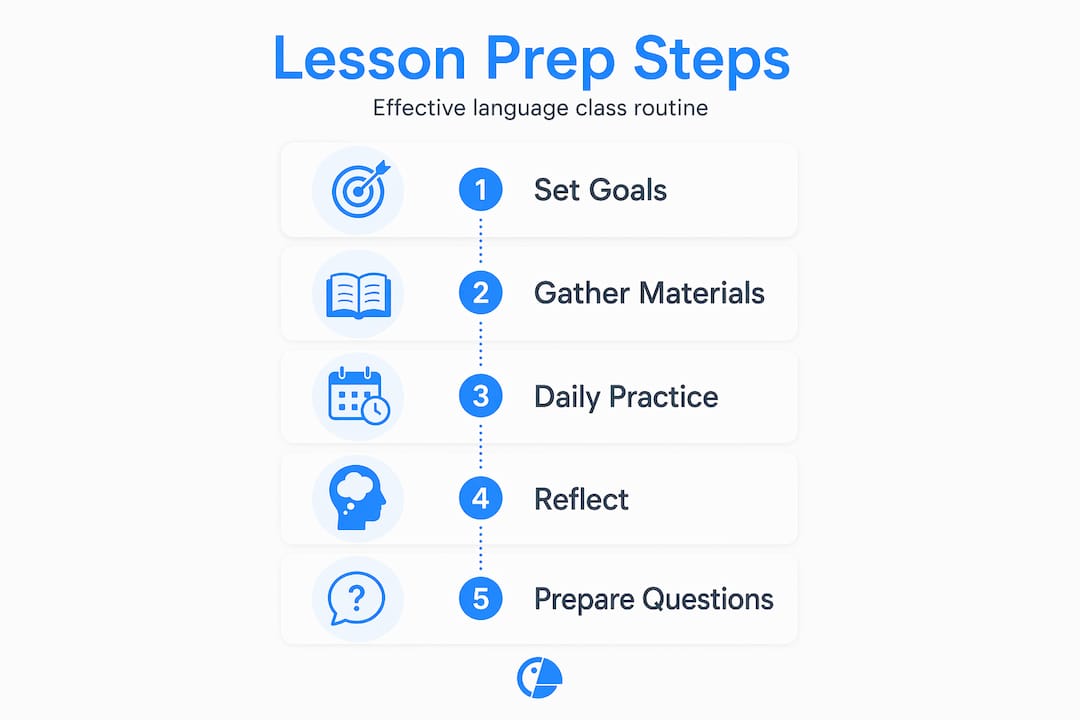
Most experienced tutors conduct a needs analysis in the first lesson. This covers your learning goals, which skills you want to prioritise (speaking, writing, listening, reading), your current level, your availability, and any challenges you face. A well-structured first lesson includes a needs analysis covering goals, skills focus, and scheduling, with students completing a short pre-lesson form with three to four key questions. Many online platforms, including TUTOROO, prompt tutors to gather this information before your first session.
Here is how to prepare for it:
- Complete any pre-lesson forms promptly and thoughtfully, not in five seconds before the call
- Write down two or three specific objectives you want to reach in the next three months
- Note which skill feels weakest and which feels most urgent to improve
- Be honest about your schedule so your tutor can recommend realistic practice loads
- Mention any emotional challenges, such as speaking anxiety, fear of making mistakes, or past negative experiences with language classes
That last point matters more than most learners realise. Tutors who understand your emotional relationship with the language can pace lessons to build trust gradually. Telling your tutor "I freeze when I have to speak spontaneously" is not a weakness — it is information that helps them design better lessons.
Exploring the language tutoring process in detail before your first session will also help you understand what to expect in language lessons and arrive with realistic expectations.
Pro Tip: Jot down three questions you genuinely want answered in your first lesson. It signals to your tutor that you are engaged, and it ensures you leave with something concrete even if the session is mostly introductory.
Bring homework and specific challenges to your lessons
Building on the needs analysis, bringing actual work to lessons maximises the tutor's ability to help you efficiently. This is one of the most underused strategies in language learning.
Bringing attempted homework or specific problems to tutoring reveals thinking errors faster and saves 10 to 15 minutes per session. That time adds up. Over a month of weekly lessons, it is the equivalent of gaining an extra full session.
- Attempt all exercises before the lesson, even if you are unsure of your answers
- Mark the sentences or vocabulary items that confused you so your tutor can find them instantly
- Bring written drafts, audio recordings of your speaking practice, or screenshots of app exercises
- Be specific: "I don't understand when to use the subjunctive in Spanish" is far more actionable than "grammar is hard"
- Share your notes or drafts directly with your tutor rather than describing problems vaguely
"Specific problem sets save 10 to 15 minutes per session, speeding overall progress significantly."
Pro Tip: Organise your session around one or two concrete problems rather than trying to cover everything. A focused lesson where your tutor digs into exactly why you keep making a particular mistake will move you forward more than a broad, surface-level review. Check out these better tutoring preparation tips for more on how to structure this effectively.
Embrace mistakes and active guessing during self-study
Understanding how to learn from mistakes reinforces practice, preparing you mentally for lesson improvements. This is where many learners accidentally hold themselves back.
Guessing words incorrectly before feedback in apps activates better memory retention than passive study alone. When you guess wrong and then receive the correct answer, your brain creates a stronger memory trace than if you had simply read the answer passively. This is known as the "errorful learning" effect, and it is well supported in cognitive research.
Here is how to apply it practically:
- When you encounter an unfamiliar word, guess its meaning from context before looking it up.
- Use flashcard apps set to prompt you for the answer before revealing it.
- After making a mistake, write the correct form three times and use it in a sentence.
- Review your error log before each lesson so patterns become visible over time.
- Use spaced repetition flashcard apps that force you to guess before showing the answer
- Keep a running "mistake log" in your notebook and revisit it weekly
- Celebrate getting things wrong during self-study — it means you are in the right zone of difficulty
- Analyse why an error occurred, not just what the correct answer was
"Guessing with immediate feedback significantly improves vocabulary memory compared to passive reading alone."
Pro Tip: Treat your self-study sessions like a game where wrong answers are actually points, not penalties. The goal is to find the edges of your knowledge. That is where growth happens. For more on this approach, these expert language learning tips go deeper into evidence-backed strategies.
Our perspective: preparation is the lesson most learners skip
There is a pattern we see consistently among learners who progress fastest. They do not necessarily spend the most time studying. They study the right way, and they show up ready. The learners who struggle most are not the ones with the least talent — they are the ones who treat their tutor as the only source of learning, rather than as a guide who amplifies what they have already been doing.
Here is the uncomfortable truth about language lessons: your tutor cannot give you fluency. They can correct your errors, explain concepts, and model authentic speech. But the acquisition happens in the hours between sessions, in the quiet moments when you guess a word wrong and figure out why. Preparation is not about doing more work before lessons. It is about showing up with enough momentum that lessons become a catalyst rather than a starting line.
Most guides on preparing for language classes focus on having the right materials or completing homework. Those things matter. But the deeper shift is psychological: deciding that your active participation — your guessing, your risking mistakes, your specific questions — is what makes tuition valuable. A tutor working with a prepared learner can spend the entire session on what actually challenges that person. That is where the real breakthrough happens.
Find a tutor who meets you where you are
Knowing how to prepare for language lessons is only half the equation. The other half is having a tutor who knows how to respond to a well-prepared learner.
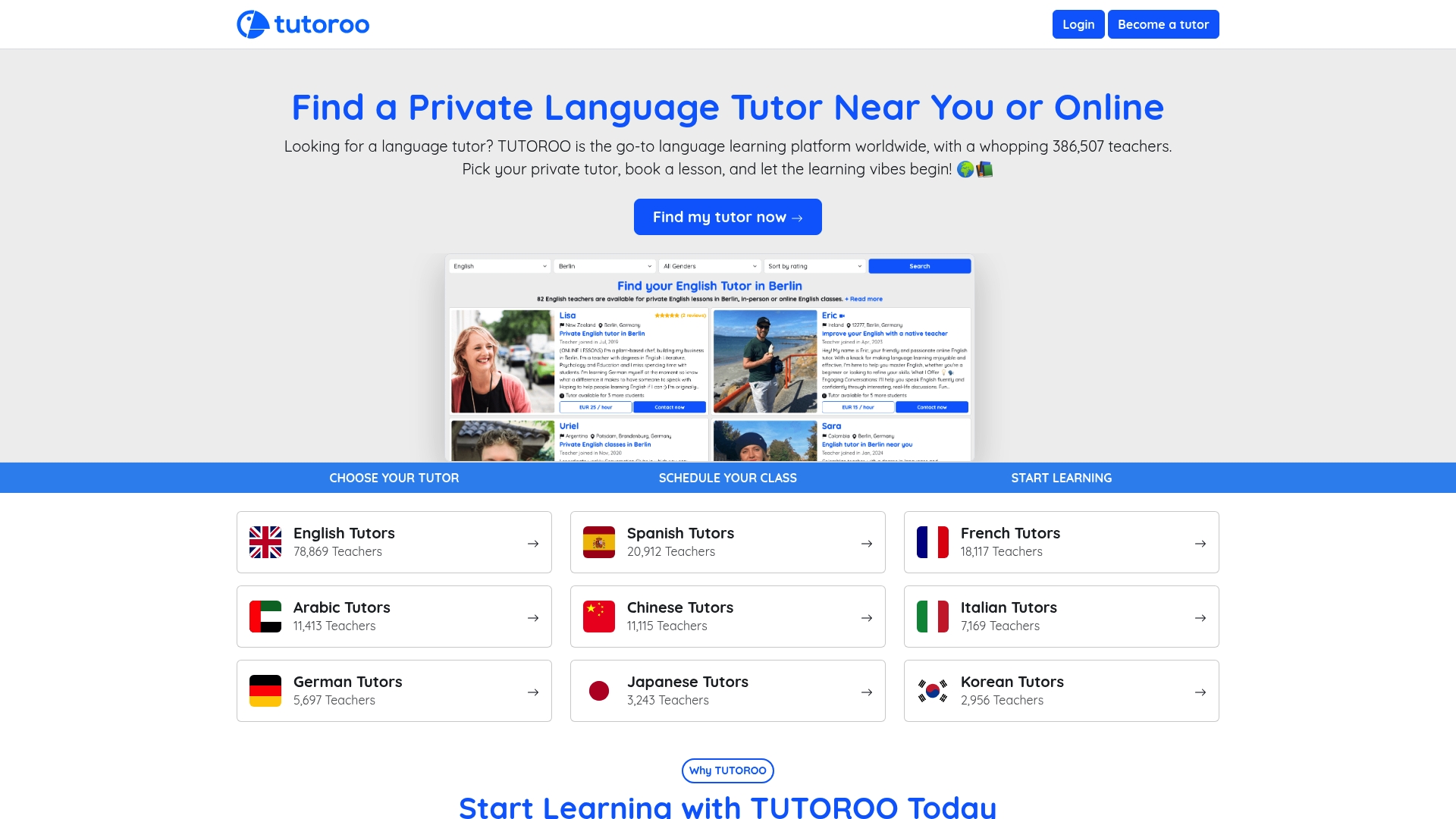
At TUTOROO, you can connect with over 386,000 private language tutors across dozens of languages, from Spanish and French to Arabic, Chinese, and beyond. Every tutor on the platform offers personalised, one-on-one lessons tailored to your goals, level, and schedule, whether online or in person. When you arrive prepared, your tutor can focus on exactly what you need. Find your tutor at TUTOROO and turn your preparation into real, lasting progress.
Frequently asked questions
How long should I practise before each language lesson?
Aim for 15 to 20 minutes of focused practice daily using apps or practical routines to build habits that enhance your lessons. Consistency matters more than duration.
What is the purpose of a needs analysis in language lessons?
A needs analysis identifies your goals, skill priorities, and emotional challenges so tutors can personalise lessons for faster progress and reduced anxiety from the very first session.
How can I make my language lessons more effective?
Bring specific homework or problems you struggled with to your lesson so your tutor can correct errors and tailor support immediately, saving time and speeding progress significantly.
Why is it helpful to guess answers when practising vocabulary with apps?
Guessing before feedback activates stronger memory retention than passive study, making learning more efficient even when your initial answer is wrong.
What should I prepare before my first private language lesson?
Complete any pre-lesson forms honestly about your goals and availability, and be ready to discuss your learning preferences, weakest skills, and any emotional challenges with your tutor.