

A first language lesson is a one-on-one introductory tutoring session, held online or in person, where the tutor establishes your current level, clarifies your goals and sets out clear next steps. You should leave knowing where you stand and what happens next, not with a finished skill. Completing a pre-lesson form beforehand, something some tutoring platforms build into their booking process, helps the tutor use that time well.
TL;DR:
- Filling out a pre-lesson form and setting specific short-term goals improves the tutor’s ability to tailor the lesson effectively.
- The diagnostic activity is a conversational tool, not a test, and helps the tutor identify gaps for personalized planning.
- Online or in-person lessons require technical checks and punctuality to maximize usable time during the needs analysis phase.
- Asking specific questions about a tutor’s approach, assessment methods, and progress tracking helps ensure they match your learning expectations.
- Consistent scheduling of one or two lessons weekly offers the best balance for making steady progress and tracking improvement.
Table of Contents
- What happens in your first language lesson?
- How to prepare before your first lesson
- How tutors assess your level and plan ahead
- Choosing the right tutor: what to ask before you commit
- What happens after your first lesson
- Common challenges in a first lesson, and how to get past them
- Etiquette and communication tips for a smooth first lesson
- Why the first lesson sets the tone for everything after
- Ready to book your first lesson?
- Sources
What happens in your first language lesson?
Most introductory sessions follow a similar shape, whether you are booking a beginner language class in Spanish or brushing up on business English. Knowing the sequence in advance means you can relax into it rather than wondering what comes next.
The lesson typically opens with introductions and some easy rapport building. Tutors use this stretch to gauge your comfort level and confirm the basics: why you are learning, what timeframe you are working with, and whether you have studied the language before. This part matters more than it looks. A tutor who skips straight to grammar drills without asking about your goals is missing a step that a first tutoring lesson normally includes: a proper needs discussion before any teaching starts.
From there, a first lesson generally moves through:
- Needs analysis — clarifying your target level, timeline and any urgent tasks (a work trip, an exam, a family visit).
- Diagnostic activity — a short speaking exchange, a reading passage or a brief written task that reveals your real starting point.
- Feedback and plan — the tutor summarises what they observed and proposes a focus for the next few lessons.
The diagnostic step is where a lot of learners get surprised, usually pleasantly. It is not a test with a pass mark. It is closer to a conversation with a purpose, designed to surface gaps quickly rather than catch you out. A tutor experienced in personalised one-on-one learning will often adjust the activity mid-lesson once they sense where you are strong and where you are shaky.
By the end, you should have a rough map: what you will work on, roughly how often, and what materials or practice habits will support that.
How to prepare before your first lesson
Preparation is what separates a first lesson that feels like small talk from one that gives you real direction. It does not take long, but it changes what the tutor can offer you in that first hour.
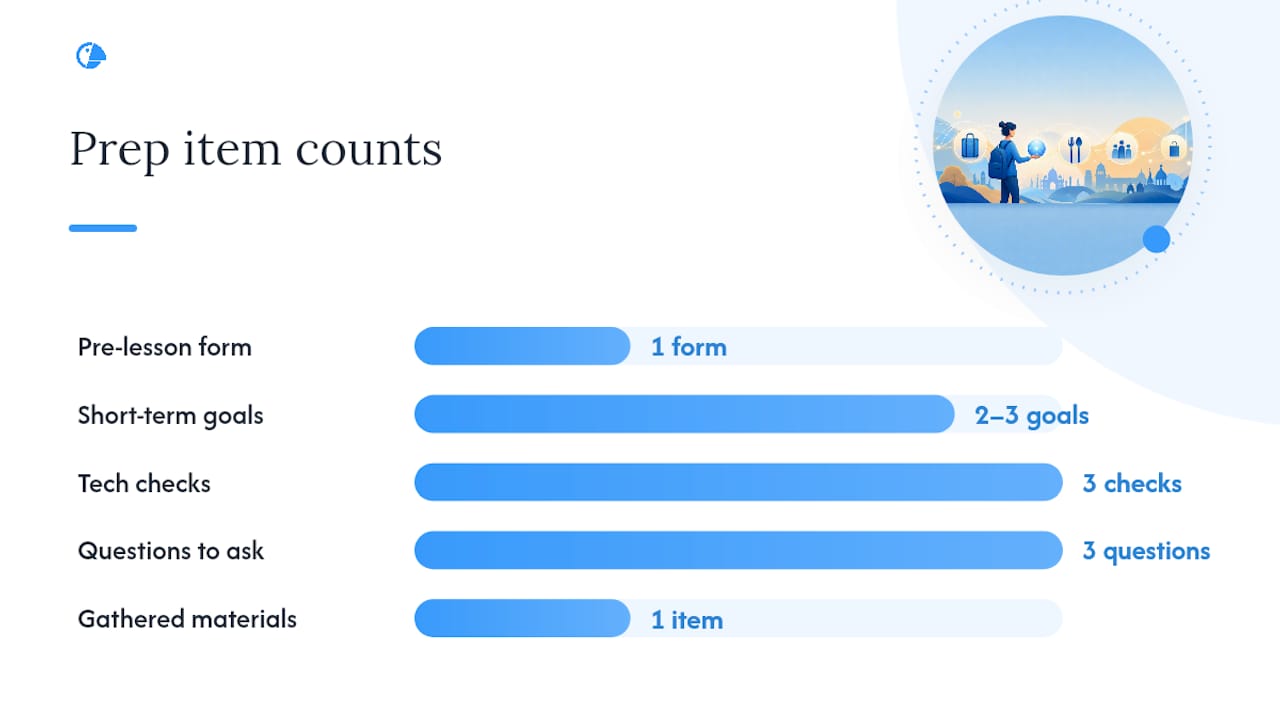
- Fill out any pre-lesson form the tutor or platform sends, and write down two or three measurable short-term goals (for example, "hold a five-minute conversation about my job" rather than "get better at Spanish").
- Gather anything relevant — recent schoolwork, an exam syllabus, a work email you struggled to write, or a specific grammar point that keeps tripping you up.
- Sort your tech or your space. For online lessons, test your internet connection, camera and microphone in a quiet spot beforehand. For in-person lessons, confirm the address, parking and what materials to bring.
- Write down three questions you want answered by the end of the session, covering things like teaching style, homework expectations or how progress gets tracked.
Doing this groundwork isn't just tidy admin. Completing a pre-lesson form and listing concrete goals gives the tutor something specific to plan around instead of guessing during the first ten minutes.
Pro Tip: Bring your three questions written down, not just remembered. Nerves and a new language often push a mental list clean out of your head the moment the lesson starts.
If you are deciding between formats, it is worth reading up on local versus online tutoring before you book, since the prep differs slightly between the two.
How tutors assess your level and plan ahead
Tutors rarely rely on one method to work out where you sit. A guided conversation reveals fluency and confidence. A handful of targeted exercises expose specific gaps in tense use or vocabulary. A short written check, even a few sentences, shows how you structure the language when you are not under time pressure to speak. Combined, these three give a tutor a rounded picture in well under an hour.
What matters more than the assessment itself is what happens with it. A competent tutor turns that evidence into a realistic four to eight week focus rather than a vague promise of fluency. That might look like:
- Two lessons a week concentrating on past tense forms before moving to conditional structures.
- A vocabulary target of 15 to 20 new words per week tied to your actual context (travel, work, family).
- Weekly five-minute recorded speaking tasks to track pronunciation and confidence over time.
Small-scale comparative research on tutoring formats found that one-to-one tuition gives rapid, targeted feedback that group classes and self-study struggle to match, largely because the tutor can correct errors the moment they appear rather than weeks later. That immediacy is the real advantage of paying for a private lesson instead of joining a class. It is also why the plan a tutor proposes after lesson one should feel specific to you, not like a generic syllabus pulled off a shelf.
Choosing the right tutor: what to ask before you commit
Picking a tutor well the first time saves you from restarting the diagnostic process with someone new a few weeks later. A handful of criteria matter more than the rest: relevant qualifications or native-level fluency, actual teaching experience (not just speaking the language), a teaching style that suits how you learn, realistic availability that matches your schedule, and clear pricing with no hidden extras.
Nine questions worth asking in your first exchange with a prospective tutor:
- What is your usual approach to a first lesson?
- How do you assess a new student's level?
- What materials or resources do you use?
- How will you track my progress over time?
- How often do you recommend lessons for my goals?
- What is your cancellation or rescheduling policy?
- Do you set homework, and how much?
- Have you taught students with a similar goal to mine before?
- How do we communicate between lessons if I have a question?
The answers tell you plenty on their own, but so does the way they are delivered. Watch for red flags: a tutor with no clear plan for lesson two, anyone pushing package deals before you have even met, or vague answers about how they will measure progress. A good tutor talks specifics. A mediocre one talks in generalities and hopes you don't ask a follow-up question.
What happens after your first lesson
Once the first lesson wraps up, the practical side kicks in: booking a rhythm that actually gets you somewhere. Most learners settle into one or two lessons a week, since that cadence balances real practice time against forgetting curves better than a single monthly session ever could.
Payment structures vary depending on how you found your tutor. On a marketplace model, you typically pay a one-off introduction fee to connect with your chosen tutor, then pay them directly for lessons going forward, without extra platform charges on each session.
Tracking progress does not need to be complicated. Useful, low-effort checks include:
- A two-minute recap at the end of each lesson covering what was learned and what is next.
- A running vocabulary count or list you review weekly.
- A simple confidence rating (out of 10) you note down every few lessons to see the trend.
Common challenges in a first lesson, and how to get past them
Nerves are the most common hurdle, and they show up even in people who are confident in every other part of life. Speaking a new language out loud to a stranger, even a friendly one, triggers a kind of stage fright that has nothing to do with actual ability. The fix isn't complicated: tell your tutor upfront that you are nervous. A decent tutor will slow down and build in more low-pressure warm-up before pushing you into anything demanding.
Mismatched expectations cause the second most common problem. Some learners walk in expecting to hold a full conversation by the end of lesson one, then feel deflated when that doesn't happen. A first lesson's job is to plan a path, not deliver fluency, and knowing that going in prevents a lot of unnecessary disappointment.
Overestimating or underestimating your own level trips people up too. Plenty of learners either inflate their ability out of pride or downplay it out of nerves, and both distort the diagnostic activity. Answer honestly, including "I don't know" when that is the truth. A tutor can only build an accurate plan from accurate information.
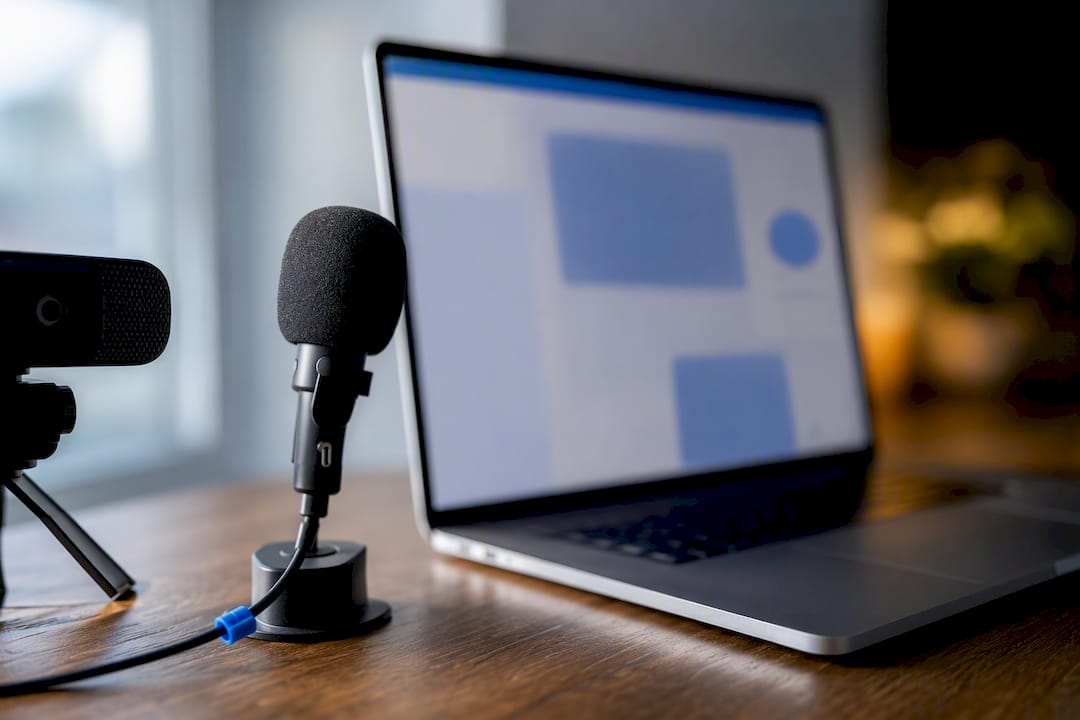
Technical friction, particularly for online lessons, derails more first sessions than it should. Test your microphone and camera the night before, not five minutes beforehand, and have a backup messaging option ready in case the video call drops out.
Etiquette and communication tips for a smooth first lesson
Punctuality matters more in a first lesson than in later ones, simply because a tutor plans that opening block tightly, and a late start eats into the needs analysis before you have even begun. Log on or arrive five minutes early rather than exactly on time.
If a technical issue does hit mid-lesson, whether that is a dropped connection or a frozen screen, say so immediately rather than trying to muddle through and pretend you followed everything. Tutors deal with this constantly and would rather pause for thirty seconds than teach half a lesson to someone who missed the middle of it.
Basic communication courtesies go further than people expect. Tell your tutor early if you need to reschedule, rather than leaving them guessing five minutes past the start time. If English is not your tutor's first language either, or if you are both working across accents, ask them to repeat or slow down rather than nodding along and hoping it clicks later. Most tutors welcome the honesty far more than they welcome polite confusion.
Finally, treat the first lesson as a two-way interview, not an exam you need to impress your way through. You are assessing fit as much as they are assessing your level, and saying so at the start tends to relax both sides of the call.
Why the first lesson sets the tone for everything after
We built Tutoroo around the idea that matching matters as much as teaching. With a community of over 386,000 tutors across dozens of languages, the first lesson is where fit gets tested, not just level. Our preparation guidance exists because a well prepped first session tends to predict a good ongoing one.
— TUTOROO
Ready to book your first lesson?
Comparing tutors one by one across scattered listings and social media groups wastes hours you could spend actually learning. Some platforms give you access to a global network of private tutors in one place, with built-in messaging to sort scheduling and expectations before you book, and a straightforward path from first contact to ongoing lessons without needing multiple apps.
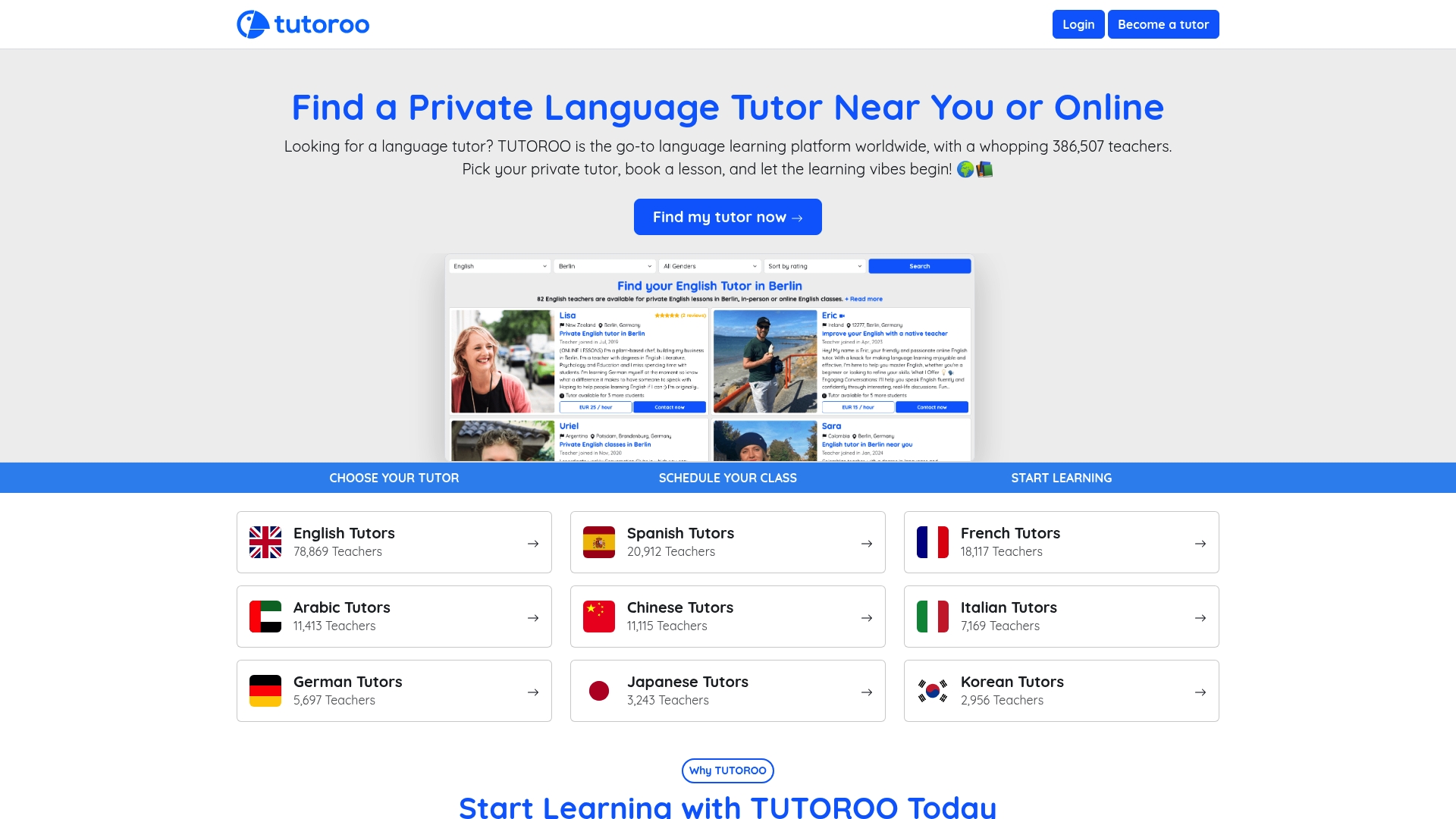
Our booking process is built around exactly the prep steps covered above: pre-lesson forms, clear goals and a tutor matched to your availability and language. Whether you are after a general conversation partner or something specific like a Malay tutor, you can browse profiles, message a few candidates about their approach, and lock in a first lesson within a day. Head to Tutoroo and search tutors by language and availability to get your first session on the calendar.
Sources
- What To Expect From A First Tutoring Lesson - National Learning Group
- Andy Sampson — small-scale comparative study (2021)