

The fastest way to choose a Chinese tutor is to run several short trial lessons and pick whoever gets you speaking the most, gives feedback you can act on, and fits your schedule without a fight. Sample at least a handful before committing. Fluency in Mandarin isn't decided by a tutor's résumé alone. It's decided by whether you're doing most of the talking by minute ten. An online language tutoring platform can help you find and trial several tutors in the same week.
TL;DR:
- The most effective Chinese tutors are those who prioritize getting you to speak and provide balanced immediate and delayed feedback during lessons.
- Online platforms allow you to quickly compare multiple tutors based on specialization, availability, and teaching style, streamlining the trial process.
- Running several short trial lessons with varied tutors helps identify who keeps you talking, corrects appropriately, and adapts to your learning needs before making a long-term commitment.
- Typical private tutor rates range from $35 to $59 per hour in the US, so budgeting should focus on teaching quality and compatibility rather than price alone.
- Sampling roughly a third of your shortlisted tutors before choosing is recommended, with emphasis on progress, consistency, and rapport rather than credentials alone.
Table of Contents
- What matters most when choosing a Chinese tutor
- Where to find a Chinese tutor: online, local and community routes
- How to run a trial lesson that actually tells you something
- How many tutors should you try before deciding?
- What does a Chinese tutor cost, and how should you budget?
- Why a bigger tutor pool changes how you choose
- Ready to trial a Chinese tutor?
- Sources
- FAQ
What matters most when choosing a Chinese tutor
Credentials look reassuring on a profile page, but they don't predict whether you'll speak Mandarin confidently in six months. What predicts that is a specific set of behaviours you can actually observe in a lesson.
The single biggest indicator of an effective tutor is whether they get you talking. A tutor who lectures for forty minutes and asks you to repeat phrases isn't building conversational fluency, no matter how many years they've taught. If a demo session feels like a monologue with you nodding along, that's a real problem, not a quirk of style.
Experience matters too, but the right kind of experience. A tutor who has spent years prepping students for HSK exams brings different value than one who specialises in business Mandarin for client meetings in Shanghai. Match the background to your actual goal, not the other way round.
Feedback style separates good tutors from average ones. The strongest teachers know when to correct instantly (pronunciation drills, tone practice) and when to hold back and let you finish a thought, saving the correction for a summary at the end. That balance, immediate for mechanics and delayed for flow, tends to produce faster conversational progress than constant interruption.
Rapport and reliability round out the list:
- Patience with mistakes, without hovering or rushing you to the "correct" answer
- Genuine adaptability when a lesson plan clearly isn't working
- Consistent availability that matches your week, not just their calendar
- Shared interests or teaching topics that keep sessions engaging rather than mechanical
Pro Tip: If a tutor corrects every single mistake mid-sentence during casual conversation practice, that's often a sign they're teaching to impress rather than teaching to build fluency.
Where to find a Chinese tutor: online, local and community routes
Online marketplaces give you the widest pool and the fastest way to compare teaching styles side by side. You can filter by specialisation, price, and availability, then message several candidates in one sitting rather than chasing down local contacts one by one.
Local options still have a place, particularly if in-person immersion matters to you. University Chinese departments often have graduate students happy to tutor for extra income, and language schools or community meet-ups can connect you with native speakers who prefer face-to-face teaching over video calls.
A smaller but growing group of specialist teachers and content creators also take on private students, often bringing a distinct teaching angle (regional dialect coaching, business Mandarin, or exam-focused prep) that's harder to find through generic listings.
Whichever route you choose, the platform's features determine how quickly you can move through candidates:
- Search filters that let you narrow by region, specialisation, or price
- In-platform messaging so you're not swapping personal contact details before you've even had a trial
- Direct trial scheduling that skips the back-and-forth of finding a time that works
If you're weighing whether to stay local or go fully online, it's worth reading a breakdown of local versus online tutoring before you commit to one lane.
How to run a trial lesson that actually tells you something
A trial lesson is a diagnostic tool, not a courtesy chat, so treat it like one. Here's a checklist to run through in every 20 to 45 minute session:
- Set one specific aim before the lesson starts. Tell the tutor you want to focus on speaking practice, pronunciation, or a role play scenario, not a general "see how it goes" session.
- Track who's talking. If you're not speaking Mandarin for the majority of the lesson, that's a red flag regardless of how friendly the tutor is.
- Test the correction style. Notice whether they correct constantly mid sentence or let you finish and give notes after, and decide which style actually helps you learn.
- Ask about materials and tracking. A tutor with a rough plan for homework and progress tracking is easier to stick with long term than one improvising every session.
- Watch for adaptability. If you stumble on a topic and the tutor pivots to explain it differently, that's a stronger signal than a tutor who ploughs through a fixed script.
Pro Tip: Ask the tutor to speak only Mandarin for the last five minutes of the trial, even if you're a beginner. How they handle your confusion tells you more about their teaching instinct than the first thirty minutes combined.
For a more detailed rundown on structuring these evaluations, the guide on evaluating private language teachers is worth a look before your first booking.
How many tutors should you try before deciding?
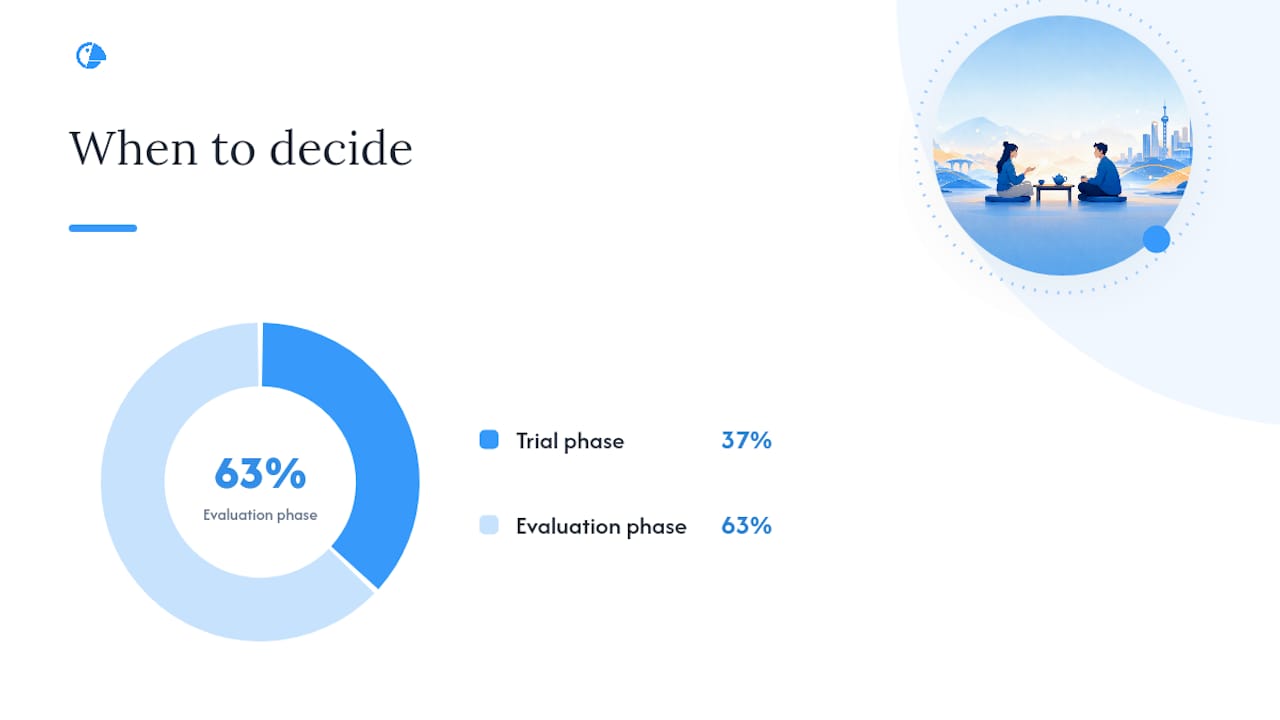
Try more than one, and treat the first couple of trials as calibration, not decisions. One widely cited guideline in language learning circles is the 37% sampling heuristic: if you're planning to sample a batch of candidates, trialling roughly the first third before you start seriously evaluating gives you a workable sense of what "good" looks like before you commit to anyone.
Watch for these signals across your trials:
- Keep: measurable progress in getting you to speak, clear homework or follow-up tasks, consistent scheduling, and a rapport that makes you want to show up
- Drop: a passive lesson structure where the tutor talks more than you do, little or no corrective feedback, and repeated cancellations or rescheduling
If you're genuinely torn between two strong candidates after multiple trials, run them concurrently for a week or two rather than agonising over a single choice. The difference usually becomes obvious fast. For a structured approach to comparing finalists, the step-by-step hiring guide walks through a simple decision framework.
What does a Chinese tutor cost, and how should you budget?
Private Chinese tutoring rates vary widely depending on experience, specialisation, and platform fees, with one US tutoring marketplace reporting typical hourly rates between $35 and $59. That's a wide enough range that price alone tells you little about quality.
A tutor charging near the top of that range isn't automatically better than one charging near the bottom. Trial both anyway. Rate and teaching fit don't always move together.
A simple budgeting method: multiply your target lesson frequency by the hourly rate, then check that total against your short-term goal. Two sessions a week for three months adds up fast, so it's worth confirming a tutor is worth that commitment before locking it in.
- Check for trial discounts or a first-lesson guarantee before paying full price upfront
- Weigh cost against demonstrated teaching quality, not against the number on the profile
- Budget for a slightly higher rate if the tutor's specialisation exactly matches your goal (business Mandarin, HSK prep, regional dialect)
For a fuller breakdown of what drives pricing up or down, see what a Chinese tutor typically costs.
Why a bigger tutor pool changes how you choose
A marketplace works because it removes the friction between "I want to try someone new" and actually doing it. Tutoroo's community includes more than 386,000 language teachers across dozens of languages, including Chinese, which means you're rarely stuck comparing two or three profiles and hoping for the best.
That scale matters most at the sampling stage. Messaging and scheduling tools built into the platform can let you line up several trial lessons in a single week rather than emailing tutors individually and waiting days for replies. The lessons themselves stay personalised and one-to-one, whether you're learning locally or entirely online, which is the part that actually moves your Mandarin forward.
— TUTOROO
Ready to trial a Chinese tutor?
Forget scrolling through endless profiles hoping one stands out. Some platforms offer large, global pools of tutors you can message and book trial lessons with quickly.
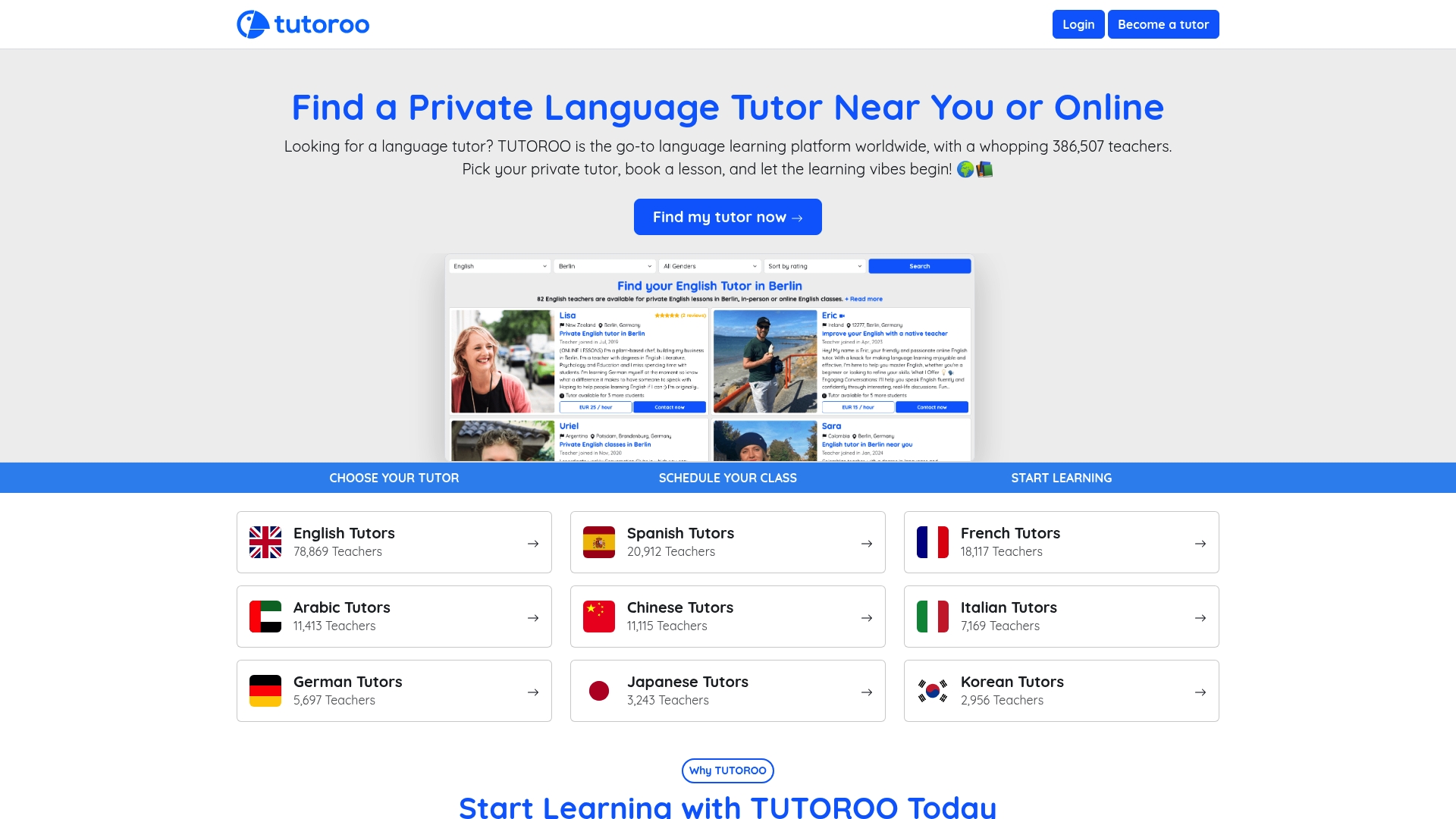
Search the platform's Chinese and Mandarin listings, filter by specialisation or availability, and send a quick message to two or three tutors who look like a fit. Book short trial lessons with each, apply the checklist above, and compare who actually gets you talking. When you're ready to start, visit the Chinese and Mandarin tutors page and book your first trial lesson today.
Sources
For readers who want to go deeper on evaluating tutors and structuring trial lessons, these guides informed this article:
- How to find a great Chinese tutor online or elsewhere - Mandarin Companion
- How to find the perfect Mandarin tutor for you: A complete guide | Hacking Chinese
FAQ
How many tutors should I try before choosing one?
Most learners benefit from trialling several candidates rather than settling on the first one, since sampling helps you calibrate what strong teaching actually looks like. A useful guideline is the 37% sampling heuristic, trialling roughly a third of your shortlist before making a serious decision.
What should I look for in a Chinese tutor trial lesson?
Watch whether you're speaking Mandarin for the majority of the lesson, since a tutor who dominates the talking time isn't building real conversational skill. Also test their correction style and ask about homework or progress tracking before you commit.
How much does a private Chinese tutor cost?
Rates vary by experience and specialisation, with one US marketplace reporting typical hourly rates between $35 and $59. Tutoroo's current tutor pricing is listed on each tutor's profile on the site rather than fixed platform-wide.
Is online or in-person Chinese tutoring better?
Neither is universally better. Online tutoring gives you a far wider pool and easier scheduling, while in-person lessons suit learners who want local immersion, and the right choice depends on your goals and location.
Does a Chinese tutor need to be a native speaker?
Not necessarily. Native speakers offer natural pronunciation and idiom, but a skilled non-native tutor with strong teaching technique and clear feedback can be just as effective, particularly for grammar-heavy stages of learning.