

Choose a conversation-focused native speaker if fluency is your goal, a certified teacher if you need structured grammar and JLPT preparation, and a specialist coach if business Japanese is the target. Shortlist two or three candidates in that category, book a trial lesson with each, and score them against a simple checklist before committing to a course of lessons. Tutoroo lists tutors across all three categories, so it's a practical starting point for that shortlist.
TL;DR:
- Clearly define your language goal before selecting a tutor to ensure the appropriate category and lesson plan, whether for conversation, exams, or business Japanese.
- Use a structured vetting process, including a trial lesson, to assess the tutor’s experience, teaching style, and alignment with your specific milestones.
- Expect prices to vary widely based on credentials and format, with pay-per-lesson, packs, and subscriptions offering flexible payment options; always verify cancellation and refund policies.
- Track your progress with measurable milestones every four to six weeks by reviewing vocabulary, grammar, or fluency, and adjust your approach if goals are not being met.
- Prioritize platforms like Tutoroo for streamlined goal setting, messaging, and trial booking to accelerate your search and comparison process.
Table of Contents
- Decide what you want to achieve before you choose a Japanese tutor
- Where do you find a Japanese tutor?
- How do you vet a Japanese tutor before you pay?
- What does a Japanese tutor cost, and what should the payment terms look like?
- Your first trial lesson: what to check before you commit
- Making tutoring work long term
- Why Tutoroo makes this whole process easier
- A learner's quick checklist for choosing well
- Ready to find your tutor? Here's how to start with Tutoroo
- Sources
Decide what you want to achieve before you choose a Japanese tutor
The single biggest mistake learners make when they choose a Japanese tutor is skipping this step entirely. They book whoever has the most reviews or the friendliest profile photo, then wonder three months later why lessons feel aimless. Clarifying the specific outcome you want before you contact anyone changes everything downstream, from which tutor category suits you to how often you should meet.
Outschool's guidance for parents choosing online tutors makes this the very first move: define the problem tutoring needs to solve before you even start browsing profiles. The same logic applies whether you're a teenager cramming for the JLPT or a professional relocating to Osaka for work.
Your goal shapes almost every other decision. Someone chasing conversational fluency for an upcoming trip needs a native speaker who can hold a natural, unscripted chat. Someone sitting the JLPT N3 in six months needs a tutor who understands the test's grammar points, kanji lists, and listening format cold. Someone preparing for a secondment to a Tokyo office needs business vocabulary, keigo (formal speech), and email etiquette, not casual slang.
Here's how outcomes typically map to tutor type and lesson frequency:
- Conversational fluency: a native-speaking conversation partner, two to three sessions a week, minimal formal grammar drilling.
- JLPT preparation: a certified teacher familiar with the specific level's kanji and grammar syllabus, one to two structured sessions weekly plus self-study homework.
- Business Japanese: a tutor with professional or corporate teaching experience, weekly sessions built around real workplace scenarios.
- Reading and kanji: a tutor comfortable teaching literacy specifically, often paired with a kanji app for repetition between lessons.
Before you message a single tutor, run through this checklist:
- What specific outcome do I want in three months? Six months? A year?
- How many hours a week can I realistically commit, including homework?
- Do I need JLPT-specific experience, or general conversation ability?
- Is my budget hourly, or do I want a package with a fixed number of lessons?
- Do I prefer video lessons, in-person meetings, or a mix of both?
Timelines matter more than most learners expect. Reaching conversational comfort from scratch typically takes six months to a year of consistent weekly practice. Passing JLPT N3 from a solid N4 base usually needs three to six months of focused study alongside tutoring, not just the lessons themselves.
Pro Tip: Write your goal down in one sentence and send it to every tutor you contact before booking a trial. Their reply tells you almost as much as the lesson itself, since a tutor who asks clarifying questions about your goal is already thinking like a teacher, not just a chat partner.
Where do you find a Japanese tutor?
Once your goal is clear, the search channel matters less for finding a tutor and more for finding the right one. Four categories dominate, and each comes with a different trade-off between choice, structure, and cost.
Online marketplaces and independent tutor platforms offer the widest selection by far. You can filter by price, availability, specialisation, and review score, and compare dozens of tutors in the time it would take to have one conversation with a local school. The trade-off is variability: some platforms list community tutors with no formal teaching credential alongside fully certified instructors, and vetting standards differ sharply from platform to platform. That's not a flaw exclusive to any one site. It's simply the nature of a marketplace, and it means the vetting work sits with you.
Language schools and academies trade choice for structure. You get a set curriculum, often building on established frameworks, and continuity if your regular teacher is away. Established Japanese language schools with staged curricula suit learners who want a proven progression path rather than ad-hoc conversation practice. University and community-college Japanese programs sit in a similar category. They're slower to enrol in and less flexible on timing, but they benchmark against recognised standards, similar in spirit to the reference curricula the U.S. Department of State uses for its own language training.
Community tutors, language-exchange partners, and local cultural centres round out the picture, particularly for learners who want face-to-face practice. A Japanese cultural centre or a university's international student association often has native speakers happy to trade conversation practice for help with English, sometimes for free or a nominal fee. This suits conversational goals well but rarely delivers the structure needed for exam preparation.
Reading Rockets' advice on finding tutors for children applies just as well to adult learners: search local resources like schools, community boards, and cultural centres alongside online platforms, because combining channels usually produces the better match than relying on just one.
- Choose remote lessons when your schedule is unpredictable, you travel, or your ideal tutor doesn't live in your city.
- Choose in-person lessons when you're an early beginner who benefits from reading body language and handwriting practice, or when local cultural immersion is part of the appeal.
- A hybrid approach, weekly video lessons plus occasional in-person conversation meetups, works well for many intermediate learners.
Pro Tip: Don't limit yourself to one channel just because it's the one you tried first. A marketplace tutor for structured grammar and a free conversation partner from a local cultural centre often complement each other better than either alone.
How do you vet a Japanese tutor before you pay?
This is the step most learners rush, and it's the one that separates a productive six months from a frustrating one. A structured approach to hiring, defining your goal, checking credentials, running a trial, and then monitoring progress, consistently produces better outcomes than grabbing the first available tutor with a decent profile photo.
Start with a short screening message or call. Ask these questions before you book anything paid:
- What's your teaching background, and how long have you taught Japanese specifically?
- Have you worked with students at my level, aiming at my specific goal (JLPT, conversation, business)?
- What does a typical lesson structure look like with you?
- What materials or textbooks do you use, and do I need to buy anything?
- How do you track progress, and how often do you check in on it?
- What's your cancellation and rescheduling policy?
The answers matter less for their content than for how directly they're given. A tutor with genuine experience answers question three in specifics: warm-up conversation, review of homework, new grammar point, practice exercises, wrap-up. A tutor who says "we'll just see how it goes" hasn't taught with structure before, which is fine for casual conversation practice but a poor fit for exam preparation.
Beyond the questions themselves, confirm a handful of operational details:
- A trial lesson is available, ideally at a reduced rate or free.
- The cancellation window is stated clearly, not left vague.
- Payment happens through a traceable method, not a direct bank transfer to an unverified account.
- The tutor can point you to reviews, a portfolio, or references from past students.
Watch for these red flags, because they show up more often than you'd expect:
- A bio that's vague on specifics, no mention of years teaching, qualifications, or specialisation.
- Pressure to prepay for a large block of lessons before you've had a single trial.
- No willingness to offer any kind of trial or introductory session at all.
- Evasive or generic answers to direct questions about teaching method.
- Reviews that all read like the same template, which sometimes signals they were written in a batch rather than by genuine students.
Reviews deserve a closer read than most people give them. A handful of five-star reviews with no detail tells you less than two or three reviews that mention specifics: "helped me pass N4," "patient with my terrible pronunciation," "always sent a lesson summary afterward." Detail beats volume every time.
Pro Tip: Ask a prospective tutor how they'd structure your first month of lessons based on the goal you sent them. A specific, sequenced answer, "week one covers X, week two builds on it with Y," is worth more than any star rating.
What does a Japanese tutor cost, and what should the payment terms look like?
Prices vary enormously depending on the tutor's category, credentials, and location, but a few patterns hold across most platforms. Casual conversation partners and community tutors, particularly those without formal certification, tend to sit at the lower end of the market. Certified teachers with structured curricula and exam-preparation experience charge more, and specialist academies or business-Japanese coaches often sit at the top of the range.
That spread exists for a reason. Vetting standards differ so widely between platforms that price alone tells you almost nothing about quality, a cheap tutor might be an excellent native speaker building a client base, or an inexperienced hobbyist. The only way to know is to check credentials and run a trial, not to assume price maps neatly to competence.
Three common pricing models show up across the market:
- Pay-per-lesson: maximum flexibility, no commitment beyond the next booking, useful while you're still evaluating fit.
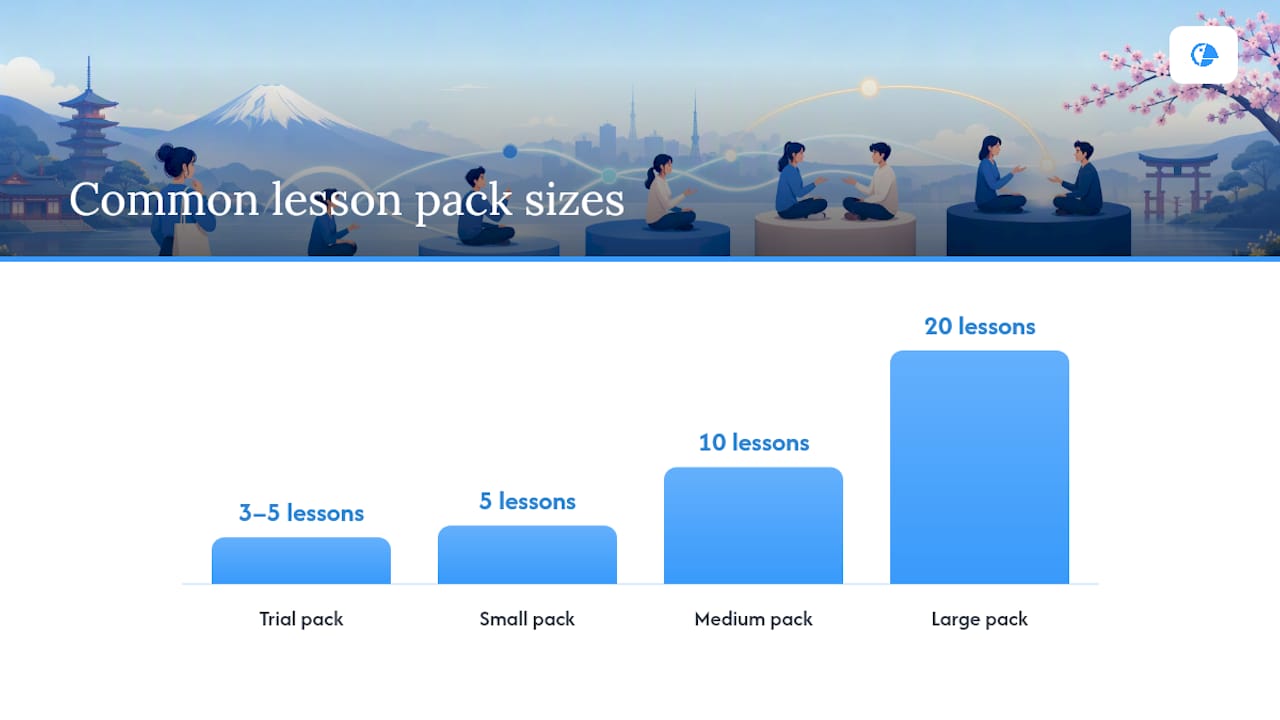
- Lesson packs: a discounted rate for buying five, ten, or twenty lessons upfront, sensible once you know a tutor works for you.
- Monthly subscriptions: a fixed number of sessions billed regularly, common with academies and structured programs.
Before agreeing to any package, confirm the policy details that protect you if things don't work out. Ask about the cancellation window (24 hours is standard; anything requiring a week's notice is worth questioning), whether refunds apply to unused lessons in a pack, and whether lessons are recorded for you to review afterward. How payment systems shape the tutoring experience is worth understanding before you commit to any subscription model, since the payment structure often reveals how much flexibility you'll actually have if your schedule changes.
Negotiating a package sensibly means asking for a small trial pack, three to five lessons, rather than committing to twenty upfront. Most tutors offering genuine value are happy to prove it before you commit financially, since it works in their favour too.
Your first trial lesson: what to check before you commit
A trial lesson is where theory meets reality. Everything you read in a profile or heard on a screening call gets tested in real time over roughly 30 to 60 minutes, and a good checklist stops you from mistaking charisma for genuine teaching skill.
Before the lesson starts, send the tutor your specific goal in writing and confirm the tech setup, whether that's Zoom, a platform's built-in video tool, or an in-person meeting spot. Agree on timing and what materials, if any, you should have ready.
During the lesson itself, watch for this rough shape:
- First 10 minutes: a genuine diagnostic. A good tutor asks about your current level, tests a few phrases or kanji, and adjusts on the fly rather than launching straight into a pre-set script.
- Middle 20 to 30 minutes: sample teaching on your actual goal. Watch how they correct mistakes, gently and clearly, not dismissively, and whether they explain why something is wrong, not just that it is.
- Final 5 to 10 minutes: a concrete plan. Does the tutor suggest a lesson frequency, homework, or a rough roadmap toward your stated goal?
Immediately after the lesson, score the fit against five quick questions, a rubric built around diagnosis, engagement, clarity, planning, and logistics:
- Did they accurately diagnose my current level?
- Did I stay engaged, or did my attention drift?
- Were their explanations clear, not just correct?
- Did they leave me with a specific plan for next steps?
- Was the logistics side, booking, tech, timing, smooth and professional?
If the trial falls flat, you have three sensible options: request a refund if the platform offers one, move to the next tutor on your shortlist, or, if the issue was minor, have a direct conversation about what you need differently and give one more session a chance.
Making tutoring work long term
Booking the right tutor solves maybe half the problem. The other half is building a routine that turns individual lessons into steady, compounding progress, and this is where most learners either succeed quietly or stall without quite noticing.

Session frequency should match your goal. Conversational fluency benefits from two to three shorter sessions a week, since speaking regularly matters more than any single long lesson. JLPT preparation often works better with one or two longer, more structured sessions weekly, paired with daily self-study using tools like WaniKani for kanji retention between lessons. A short, consistent cadence combined with targeted self-study tends to outperform intensive but irregular sessions, even when the total hours end up similar.
Track progress deliberately rather than trusting how a lesson felt. A few habits make this concrete:
- Keep a running notes document of new vocabulary and grammar points after every lesson.
- Record sessions where possible and re-listen to catch details you missed live.
- Set a short-term milestone every four to six weeks, a specific kanji count, a mock JLPT section, a five-minute unscripted conversation, and check it honestly.
That last point matters more than it sounds. It's worth treating tutoring the way you'd evaluate hiring any teacher, prioritising structure and measurable outcomes over how pleasant the lessons feel, because charisma alone doesn't guarantee your kanji recall is actually improving.
Know when to adjust course. If four to six sessions in you're not making the progress your milestone check reveals, it's worth having a direct conversation with your tutor before assuming the fit is wrong. If the conversation doesn't lead to a change in approach, that's your signal to look elsewhere rather than persist out of loyalty.
Pro Tip: Every fourth or fifth lesson, ask your tutor to run an unscripted five-minute conversation with no prep on either side. It's the fastest gut check for whether your actual fluency is moving, not just your comfort with rehearsed material.
Why Tutoroo makes this whole process easier
Everything covered so far, defining goals, comparing categories, vetting candidates, running a trial, applies whether you search independently or through a platform. Tutoroo exists to make each of those steps faster without cutting corners on the vetting itself.
The platform connects learners with tutors from a global community of over 386,000 language teachers, which means the marketplace-style breadth described earlier, wide choice, flexible hours, visible reviews, applies directly here. Detailed tutor profiles let you check teaching background and specialisation before you ever send a message, and the built-in messaging system means the screening questions from earlier in this guide can happen naturally, in writing, before you commit to a trial.
A few practical tips for using it well:
- State your specific goal (conversational fluency, JLPT level, business Japanese) in your very first message, exactly as recommended earlier.
- Shortlist two or three tutors with relevant experience rather than messaging the first profile you see.
- Ask directly about trial availability and lesson structure before booking anything paid.
Pro Tip: Treat your first message to a Tutoroo tutor as a mini version of the screening call from earlier in this guide. The clearer your goal, the more useful their reply.
A learner's quick checklist for choosing well
Three things matter more than anything else once you've done the groundwork above: insist on a trial lesson before paying for anything else, write your goal down before contacting a single tutor, and review progress honestly every few weeks rather than assuming things are working.
The sequence that's served me best is simple: decide the goal, shortlist two tutors, run a trial with each, then properly review after four sessions rather than after one. Four sessions is enough to see a pattern; one session only tells you whether the tutor is likeable.
None of this is complicated, and that's the point. The learners who make steady progress aren't the ones who found some secret tutor. They're the ones who were honest about their goal, patient enough to run a proper trial, and disciplined enough to check their own progress rather than just their enjoyment of the lessons.
— TUTOROO
Ready to find your tutor? Here's how to start with Tutoroo
Tutoroo cuts out the guesswork of cold-emailing independent tutors or waiting on a school's enrolment cycle. You create a request stating your goal, availability, and budget, and matching tutors respond directly through the platform's messaging system, so the screening conversation from earlier in this guide can happen before you spend a cent.
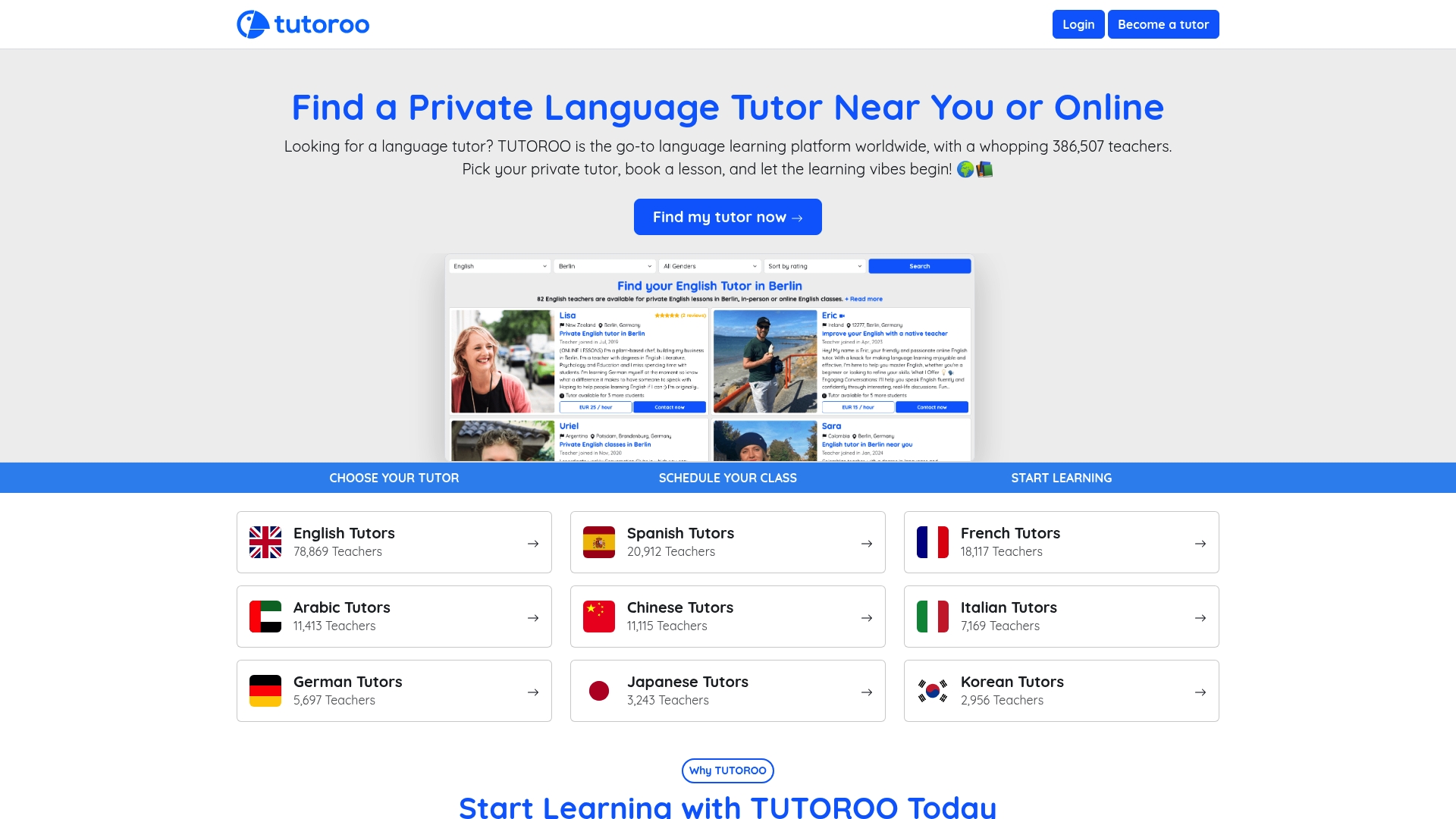
Payments run through the platform rather than informal transfers, and profiles show teaching background and specialisation upfront, so the credential checks and red-flag screening covered above are easier to run from the first message. Once you've shortlisted two or three tutors, requesting a trial lesson costs little and tells you more than a dozen more profiles ever will.
Head to the Japanese tutors page on Tutoroo to browse current profiles, send your goal and availability, and book a trial with the tutor who answers your screening questions the way a genuine teacher would.
Sources
- How and Why to Find a Japanese Tutor: A Practical Guide
- Care
- How to choose an online tutor: parent checklist | Outschool
- Four steps to finding an excellent tutor for your child
- Foreign language training (U.S. Department of State)