

The fastest, lowest risk way to choose a Russian tutor is to use a vetted tutor marketplace like TUTOROO and book a short trial lesson that tests fit and scheduling before you commit to anything longer. Success looks like this: within a day or two, you have a trial booked with someone whose teaching focus matches your goal, whose availability suits your week, and whose price sits comfortably in your budget.
Apply three filters straight away:
- Availability — confirm the tutor has slots that match your time zone and preferred days before you look at anything else.
- Teaching focus — match their speciality (conversation, grammar, exam prep, business Russian) to your actual goal.
- Price — check the hourly rate against your budget and whether packages or a trial discount are on offer.
Pro Tip: Book two trial lessons with different tutors in your first week rather than one. Comparing two live lessons tells you more about fit than reading twenty profiles ever will.
Key Takeaways
Choosing a Russian tutor well comes down to matching a clear goal to a tutor's teaching speciality, then confirming that fit through a structured trial lesson before paying for anything longer.
| Point | Details |
|---|---|
| Match goal to speciality first | Conversational, grammar, exam prep, and business Russian each need a different teaching style. |
| Read reviews for substance | Prioritise detailed, recent reviews describing outcomes over a bare star rating. |
| Budget by frequency, not guesswork | Multiply your target weekly lessons by the hourly rate to set a realistic monthly spend. |
| Use the trial to test rapport and pace | Structure it as 20 minutes of teaching and 10 minutes discussing next steps. |
| Start with a vetted marketplace | TUTOROO lets you filter over 386,000 tutors by availability, focus, and price, then book a trial directly. |
Useful sources for further reading
- Russian Tutors Online - TUTOROO — start a search and book a trial
- How reviews help you choose the right language tutor
- Step-by-step guide to hiring the right language tutor
- Trustpilot — italki reviews — for broader marketplace review context
Table of Contents
- How to choose a Russian tutor: the decision criteria that matter
- What does a Russian tutor typically cost?
- What lesson formats and tech should you expect?
- Vetting profiles and reviews: a checklist that actually predicts outcomes
- Making the most of trial lessons and guarantees
- Where to actually look for a Russian tutor
- How TUTOROO helps you find the right match
- Start your search and book a trial today
How to choose a Russian tutor: the decision criteria that matter
Choosing a Russian tutor gets easier once you stop treating every profile the same way and start sorting by what you actually need. A learner prepping for a Russian citizenship interview has almost nothing in common, tutor wise, with someone who wants to read Dostoevsky in the original or negotiate contracts in Moscow. Match your goal to a speciality first, and the rest of the search narrows fast.
1. Define your goal category. Conversational fluency, grammar foundations, exam preparation (TORFL, for instance), or business Russian each call for a different teaching style. A tutor brilliant at casual conversation practice may be the wrong pick for someone who needs structured grammar drills before a university placement test.
2. Scan the profile for these five items, in order:
- Certifications or formal teaching qualifications (TEFL equivalents, language degrees, or Russian-specific teaching credentials)
- Years of teaching experience, not just years of speaking Russian
- Sample lesson descriptions or a short intro video showing actual teaching style
- Other languages spoken (useful if you want instruction partly in English early on)
- Specific, described outcomes from past students, not just a star rating
3. Read reviews for substance, not just stars. A profile with 40 reviews all mentioning "patient with beginners" or "helped me pass my exam" tells you far more than a 5.0 average with generic one liners. Watch for reviews that are all suspiciously similar in phrasing, that can be a red flag for inflated ratings.
4. Check scheduling fit before you fall in love with a profile. Lesson length (30, 45, or 60 minutes), weekly frequency, and time zone overlap decide whether this relationship survives past week three. A fantastic tutor eight hours out of sync with your evenings will not last.
A short list of first contact questions saves you from awkward trial lessons:
- "What's your approach to correcting mistakes mid conversation?"
- "Can you tailor lessons around a specific goal, like an upcoming exam or trip?"
- "How do you usually structure a 45 or 60 minute lesson?"
- "What materials or homework do you assign between sessions?"
- "Are you a native speaker, and have you taught non-native adults before?"
- "What's your cancellation or rescheduling policy?"
Pro Tip: Ask about mistake correction style before anything else. Tutors who over-correct beginners kill confidence fast, and it's the single biggest reason new learners quit within a month.
Tutoroo's own step-by-step guide to hiring the right language tutor backs this sequence: goal first, teaching style second, native-speaker status third, because approach tends to matter more for early progress than accent alone.
What does a Russian tutor typically cost?
Russian lesson prices vary with experience, credentials, and whether the tutor is a native speaker with formal teaching training. Marketplaces commonly display price ranges and tutor counts directly on listings, so you can compare rates before you ever message anyone.
A newer tutor building a reputation will usually charge less than someone with years of classroom experience and recognised certification, and that gap is often where beginners find real value. If you're starting from zero, a less experienced but enthusiastic tutor can be a perfectly good fit, while advanced learners prepping for exams or professional use tend to get more out of paying for specialised experience.
Pricing models generally fall into a few patterns:
- Hourly rate — pay per lesson, most flexible for testing tutors
- Lesson packs — bundles of 5 or 10 lessons, often at a slight discount
- Subscription — regular weekly billing for ongoing learners
- Discounted trial — a reduced first-lesson rate to lower the barrier to trying someone new
A rough rule of thumb: accept a lower rate when you're building foundational vocabulary and grammar, where enthusiasm and consistency matter more than polish. Pay more for advanced conversation practice, exam coaching, or business Russian, where a tutor's specific experience directly shapes your results.
Before you commit to a schedule, sketch a quick budget:
- Decide your weekly lesson frequency (once, twice, or more)
- Multiply by your target hourly rate to get a monthly figure
- Add buffer for the occasional extra session before a test or trip
- Check if a lesson pack brings the effective rate down enough to lock in early
What lesson formats and tech should you expect?
Most online Russian tuition happens one-to-one, though some tutors and platforms offer small group lessons at a lower per-person cost. One-to-one gives you full attention and a pace matched to you; group lessons trade some of that personalisation for a cheaper rate and peer interaction, which suits confident beginners who like a bit of social pressure to practise.

Lesson length typically runs 30, 45, or 60 minutes. Shorter sessions suit tight schedules or younger learners; a full hour works better once you're deep into a topic like verb aspect or case endings, where momentum matters.
Expect standard video call software, a shared document for notes and vocabulary, and sometimes a virtual whiteboard for writing out the Cyrillic alphabet or sentence structures live.
Run through this checklist the day before your first lesson:
- Test your webcam and microphone in the actual video platform, not just your device settings
- Confirm your internet connection can handle video without lagging
- Have a notebook or shared doc open and ready for vocabulary
- Check headphones if you're in a noisy environment
Pro Tip: Do a five-minute tech test call with a friend the night before your trial lesson. Discovering your microphone doesn't work mid-lesson wastes a session and creates a bad first impression that's hard to shake.
Homework and progress tracking vary by tutor, but most send a short recap or vocabulary list after each lesson, and some use a shared document that builds into a running record of what you've covered.
Vetting profiles and reviews: a checklist that actually predicts outcomes
Reading twenty tutor profiles in a row starts to blur together fast. A tight checklist cuts through that faster than gut feeling.
- Verified identity — look for a platform badge or clear indication the tutor's identity has been checked.
- Teaching certificates — formal qualifications listed explicitly, not just "experienced teacher" in the bio.
- Explicit learning outcomes — profiles or reviews that name specific results ("got me through my A2 exam", "improved my speaking confidence in six weeks").
- Sample lesson content — a video, lesson plan example, or detailed description of a typical session.
- Languages spoken — useful if you'll need occasional English explanations early on.
When weighing reviews, recency matters more than volume alone. A tutor with 15 recent, detailed reviews is often a safer bet than one with 100 reviews from three years ago and nothing since. Tutoroo's guide on how reviews help you choose the right language tutor points out that reviews describing lesson structure and progress over time predict a good fit better than a blunt star rating.
Use the trial lesson itself as the final filter:
- Did the tutor ask about your specific goals before diving in?
- Did the pacing feel right, not too slow, not rushed?
- Did they correct mistakes in a way that felt encouraging rather than discouraging?
Red flags worth skipping outright: profiles with no reviews and vague bios, tutors who won't answer a direct question about their teaching approach, and reviews that all read like they were written by the same person.
Making the most of trial lessons and guarantees
A trial lesson exists to test rapport and pacing before you spend real money on a longer commitment. Structuring it helps: aim for roughly 20 minutes of actual conversation or teaching, followed by 10 minutes discussing what worked and what a longer-term plan might look like.
During the trial, focus on three things: does the tutor listen to your goals, does their pace match your level, and does the conversation feel natural rather than scripted.
Before paying for anything beyond the trial, ask about the platform's guarantee policies:
- Is there a replacement option if the first tutor isn't a good fit?
- What's the refund policy if a paid lesson gets cancelled last minute?
- How do you request a different tutor without losing your position in the queue?
If the trial doesn't click, most marketplaces let you simply message support or select a new tutor rather than working through a formal complaint process. Don't feel obligated to continue with someone just because you've already had one lesson.
Where to actually look for a Russian tutor
Different sourcing channels suit different priorities, and knowing the trade-offs upfront saves wasted time.
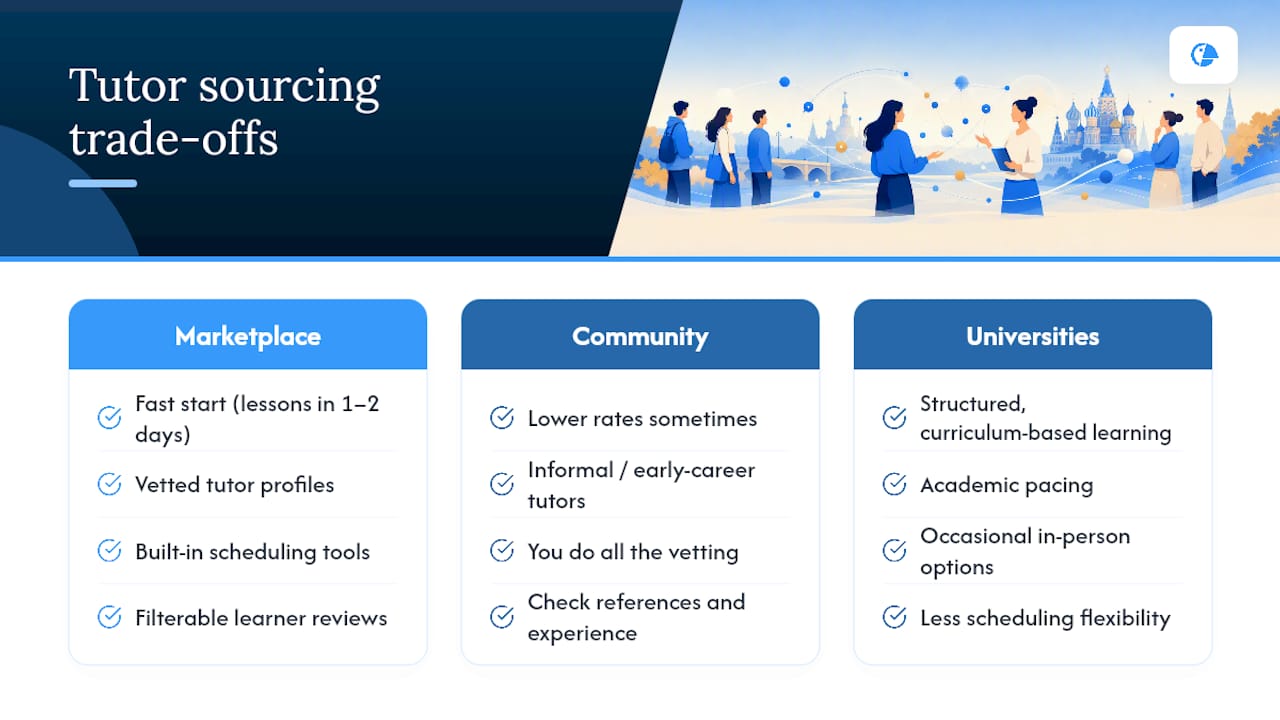
Marketplace platforms offer the fastest, lowest-friction start: vetted profiles, built-in scheduling tools, and reviews you can filter through in minutes. This is the best route for anyone who wants to be in a lesson within a day or two without doing manual vetting themselves.
Community classifieds and social groups sometimes turn up lower rates, particularly from tutors just starting out or teaching informally alongside other work. The trade-off is you're doing all the vetting yourself, checking references, confirming experience, and handling payment logistics without a platform's structure behind you.
University students and language schools can offer structured, curriculum-based learning and occasionally in-person options if you're near a campus with Russian studies. This suits learners who want a more academic pace and don't mind less flexibility around scheduling.
A sensible approach for many learners: start on a marketplace to trial two or three tutors quickly, then decide whether to continue there or supplement with a community conversation partner for extra practice once you've found your footing. If you specifically want an in-person element, prioritise local tutors through a university or community group over an online-only search.
How TUTOROO helps you find the right match
TUTOROO connects learners with over 386,000 language teachers across a wide range of languages, including a solid pool of Russian tutors ranging from casual conversation partners to certified, experienced instructors.
The platform's Russian tutors landing page lets you filter by availability, price, and teaching focus, then message tutors directly before booking, which maps neatly onto the checklist covered earlier in this guide.
Specific features that support the decision process:
- Direct messaging to ask first-contact questions before committing to a trial
- Schedule matching so you can filter by time zone and availability upfront
- Flexible lesson types, from casual conversation practice to structured exam prep
- Direct payment arrangements between you and your chosen tutor
The result is a search process where profiles, reviews, and trial booking sit in one place instead of scattered across community groups and classifieds.
Perspective: what most learners get wrong when picking a tutor
The most common mismatch isn't a bad tutor, it's a good tutor paired with the wrong goal. A brilliant grammar specialist wasted on someone who just wants confident small talk before a trip to Saint Petersburg helps nobody, and it's an easy trap to fall into when you shortlist by star rating alone rather than teaching focus.
Pro Tip: Book weekly, not fortnightly, for at least the first two months. Momentum matters more than intensity when you're building a new language habit, and gaps longer than a week tend to erase the previous lesson's gains.
— TUTOROO
Start your search and book a trial today
Tutoroo puts every part of the checklist in this guide, profiles, reviews, pricing, availability, and direct messaging, on one page instead of scattered across forums and classifieds.
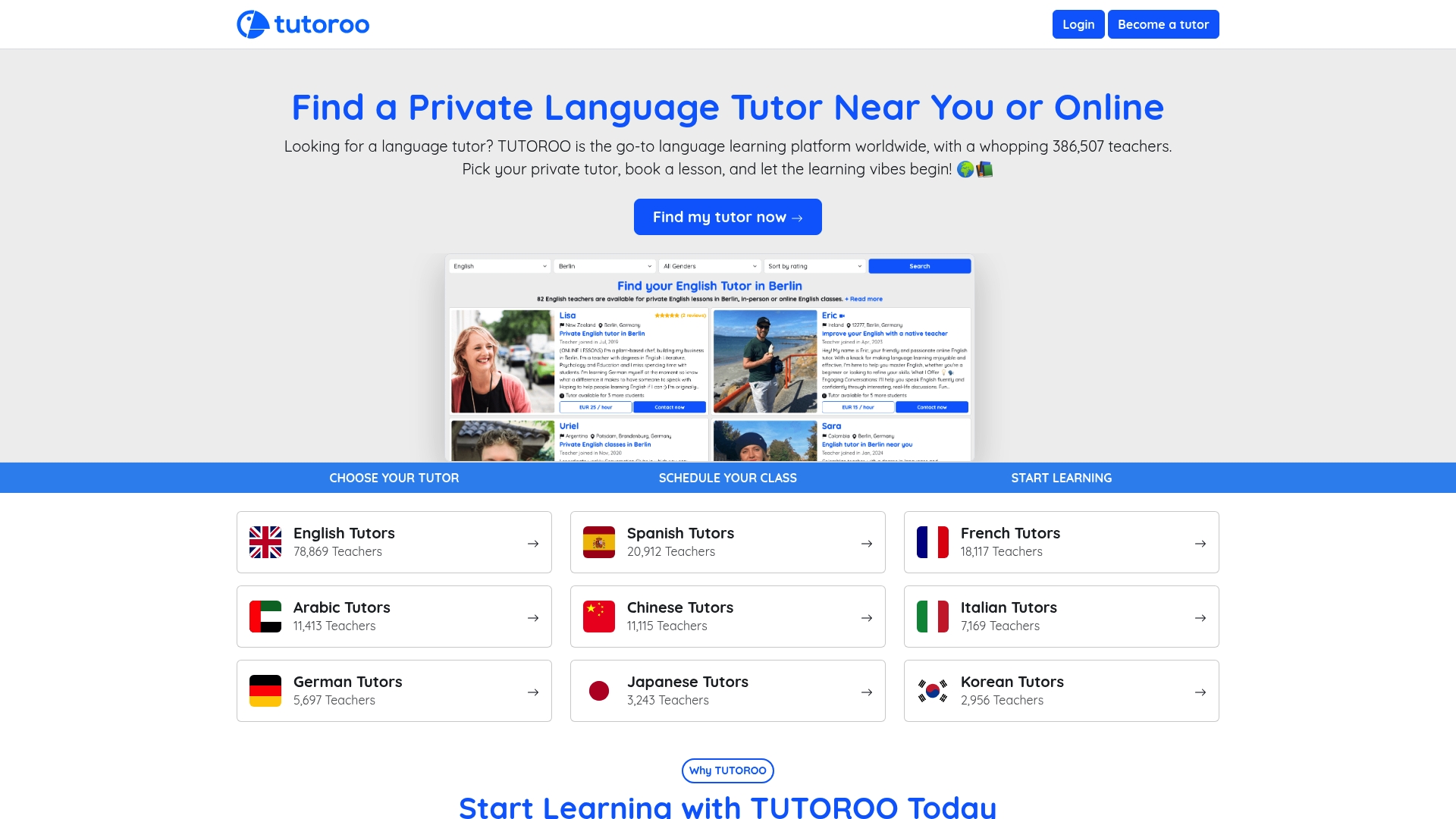
Rather than spending hours cross-checking community groups against review sites, you can filter Russian tutors by teaching focus and price, message a shortlist directly, and lock in a trial lesson the same day. The platform's flexible scheduling and direct payment setup mean there's no long-term contract standing between you and simply trying someone out. If a tutor isn't the right fit after the trial, you're free to book another without starting the search from scratch.
Head to the Pidgin Tutors Online style booking flow that TUTOROO uses across its language pages, apply the availability, teaching focus, and price filters covered earlier, and get your first Russian trial lesson on the calendar this week.