

Whether AP Spanish tutoring is worth it depends on three things: your current diagnostic score, how many weeks remain before the exam, and the score you actually need. For a student sitting between a 2 and a 4 with six or more weeks to prepare, tutoring through a language tutoring platform typically lifts scores by a full point and sharpens speaking and writing skills the College Board exam rewards most.
TL;DR:
- Students with six or more weeks to prepare can expect a score increase of about one full point with targeted tutoring focused on their specific weaknesses.
- Effective tutoring should include skills in reading strategies, listening note-taking, rubric-based essay planning, and timed speaking simulations aligned with AP exam tasks.
- Budgeting for 15–25 hours of AP Spanish tutoring generally costs between 150 and 500 dollars, with higher quality tutors often charging toward the upper end due to specialized knowledge.
- Tutors with AP Reader experience or rubric familiarity can identify weaknesses faster and provide actionable feedback with real practice essays and recordings.
- Last-minute students with fewer than three to four weeks remaining should prioritize diagnostic and strategic sessions rather than full packages for better value and results.
Table of Contents
- Who benefits most from AP Spanish tutoring
- What tutoring actually fixes: skills mapped to AP tasks
- Score distributions, college credit and realistic gains
- Cost, budgeting and judging value
- How to choose the right AP Spanish tutor: a short checklist
- When tutoring is unlikely to help and smarter short-term alternatives
- Example 8–12 week tutoring timeline and session plan
- How TUTOROO helps you find and trial AP Spanish tutors
- TUTOROO perspective: what success looks like
- Sources
- FAQ
Who benefits most from AP Spanish tutoring
Tutoring pays off best for students who already know where they're losing points. A diagnostic essay, a timed listening section, or a practice free-response task usually reveals the gap, whether that's weak subjunctive control, thin vocabulary for cultural comparison prompts, or nerves during the speaking tasks.
Students moving from a 2 to a 3, or a 3 into the 4–5 range, tend to see the clearest gains, provided they have at least six to twelve weeks before the exam. That runway matters because language skills build in layers. You can't cram verb conjugation the week before test day and expect it to carry into a spontaneous conversation prompt.
One-on-one sessions accelerate this in ways a classroom can't match:
- A tutor hears every spoken response and corrects register or fluency issues on the spot, rather than reviewing 30 students' work after the fact
- Free-response writing gets rubric-specific feedback within the same session, not a week later
- Pacing adjusts constantly. A student stuck on ser versus estar gets ten extra minutes; a student who's mastered it moves on immediately
Pedagogical research on scaffolded feedback backs this up: gains are largest when a tutor gradually removes support as a student's independent performance improves, rather than hovering over every sentence indefinitely.
What tutoring actually fixes: skills mapped to AP tasks

Good tutoring isn't generic conversation practice. It targets the exact components of the AP Spanish Language and Culture exam, which splits evenly between a 55-question multiple-choice section and free-response tasks covering writing, speaking, and a project presentation with Q&A.
Effective sessions usually work through four areas:
- Reading strategies and annotation. Tutors teach students to mark cognates, transition words, and tone shifts in authentic texts, cutting down time wasted rereading passages.
- Listening note-taking. Students practise catching signal words (sin embargo, por lo tanto, aunque) that flag argument shifts, since AP audio moves fast and doesn't repeat.
- Rubric-based essay planning. A tutor breaks down the argumentative essay rubric line by line, then reviews drafts against it, which is how feedback shapes real progress rather than just correcting grammar.
- Simulated speaking and project rehearsal. Students record timed responses to project Q&A prompts, mimicking the pressure of the real task.
Pro Tip: Ask your tutor to grade one practice essay against the actual College Board rubric in your first session. If they can't, or won't, that's a sign they're not AP-specialised.
Score distributions, college credit and realistic gains
College Board's published score distributions show most AP Spanish Language and Culture students land in the 3–5 range, and the American Council on Education recommends colleges award credit starting at a score of 3. Actual credit varies by institution: some universities grant six credits for a 3, nine for a 4, and up to twelve for a 5, according to College Board's own credit recommendations.
What tutoring hours typically buy you: Coaching data from IvyStrides suggests 15–25 focused hours to move a 2 to a 3, 20–30 hours for a 3 into the 4–5 band, and as few as 8–15 hours for a targeted 4-to-5 push.
That range matters when you're pricing a package, because it tells you roughly how many sessions to budget before expecting movement. Keep in mind these are coaching-industry estimates, not guarantees; a student who skips homework won't hit these numbers regardless of tutor quality. Two other points worth flagging:
- A single AP credit can offset a full college course, sometimes worth hundreds of dollars in tuition depending on the institution
- Score gains beyond one full point in under six weeks are uncommon without an unusually strong starting base
Cost, budgeting and judging value
Private tutoring in the US isn't cheap, but it's not uniform either. The Bureau of Labor Statistics puts the median tutor wage at roughly $19.27 an hour, while the top 10% of tutors, often subject specialists, earn upward of $78,810 annually. AP-specific Spanish tutors generally sit above the median given the specialised rubric knowledge required.
US Spanish tutoring rates typically run $15 to $60 an hour, depending on the tutor's experience and whether they hold AP Reader credentials. A light package (8–12 hours) might cost $150–$500; a focused 20-hour programme could run $400–$1,200.
Judge value with a simple rule: divide total cost by expected score improvement, then weigh that against potential college credit savings.
- Light package: good for a targeted skill gap or a 4-to-5 push
- Focused package: better suited to a 2-to-3 or 3-to-4 jump with more ground to cover
- Always book a trial lesson before committing to a full package, since a mismatched tutor wastes both money and time
How to choose the right AP Spanish tutor: a short checklist
Not every fluent Spanish speaker can teach to an AP rubric. Look for these signals before you commit:
- Ask about AP Reader experience or rubric familiarity. Tutors who've scored AP exams or trained specifically on the rubric spot weaknesses faster than generalists.
- Request a sample of rubric-based feedback. A real AP tutor can show you a marked-up essay or explain scoring criteria without hesitation.
- Run a trial lesson focused on a weak area. Test whether the tutor adjusts pacing and gives specific, actionable correction rather than vague encouragement.
- Confirm logistics upfront. Pricing, scheduling flexibility, homework expectations, and cancellation policy should all be clear before lesson one.
A red flag: a tutor who resists using the official rubric or has no AP-specific materials ready to share.
When tutoring is unlikely to help and smarter short-term alternatives
Tutoring has diminishing returns for students already scoring a consistent 4 with only days left before the exam. At that point, more hours rarely move the needle, and money is better spent elsewhere.
If you're under three to four weeks out, skip the full package. A diagnostic session plus one or two strategy-focused sessions targeting your weakest task type usually delivers more per dollar than bulk hours crammed in at the last minute.
Complementary, often free, options include:
- Reviewing the official Course and Exam Description for task-specific guidance
- Attending your class teacher's office hours for rubric clarification
- Running timed practice tests independently to build stamina and pacing
Example 8–12 week tutoring timeline and session plan
A well-structured programme follows a predictable arc rather than random conversation practice week to week.
- Weeks 1–2: Diagnostic testing across all four skills to establish a baseline and target the weakest areas.
- Weeks 3–7: Targeted skill blocks, one week each on listening, reading, writing, and speaking, with homework between sessions.
- Weeks 8–11: Full timed free-response practice and at least one mock exam under real time constraints.
- Final week: Light review, logistics prep, and confidence building rather than new material.
Aim for one to two sessions a week, each followed by 30–60 minutes of homework. Since the exam shifts to fully digital Bluebook delivery starting with the 2026–27 revision, ask your tutor to simulate that recorded speaking environment well before test day.
Pro Tip: Record every practice speaking response on your phone, exactly as you would for the digital exam, then play it back with your tutor. Hearing your own hesitations is more useful than any correction sheet.

How TUTOROO helps you find and trial AP Spanish tutors
You can find Spanish tutors online or locally, filtered by availability, teaching focus, and preference for local or virtual lessons. That matters when you're chasing an AP-specific skill gap rather than general conversation practice.
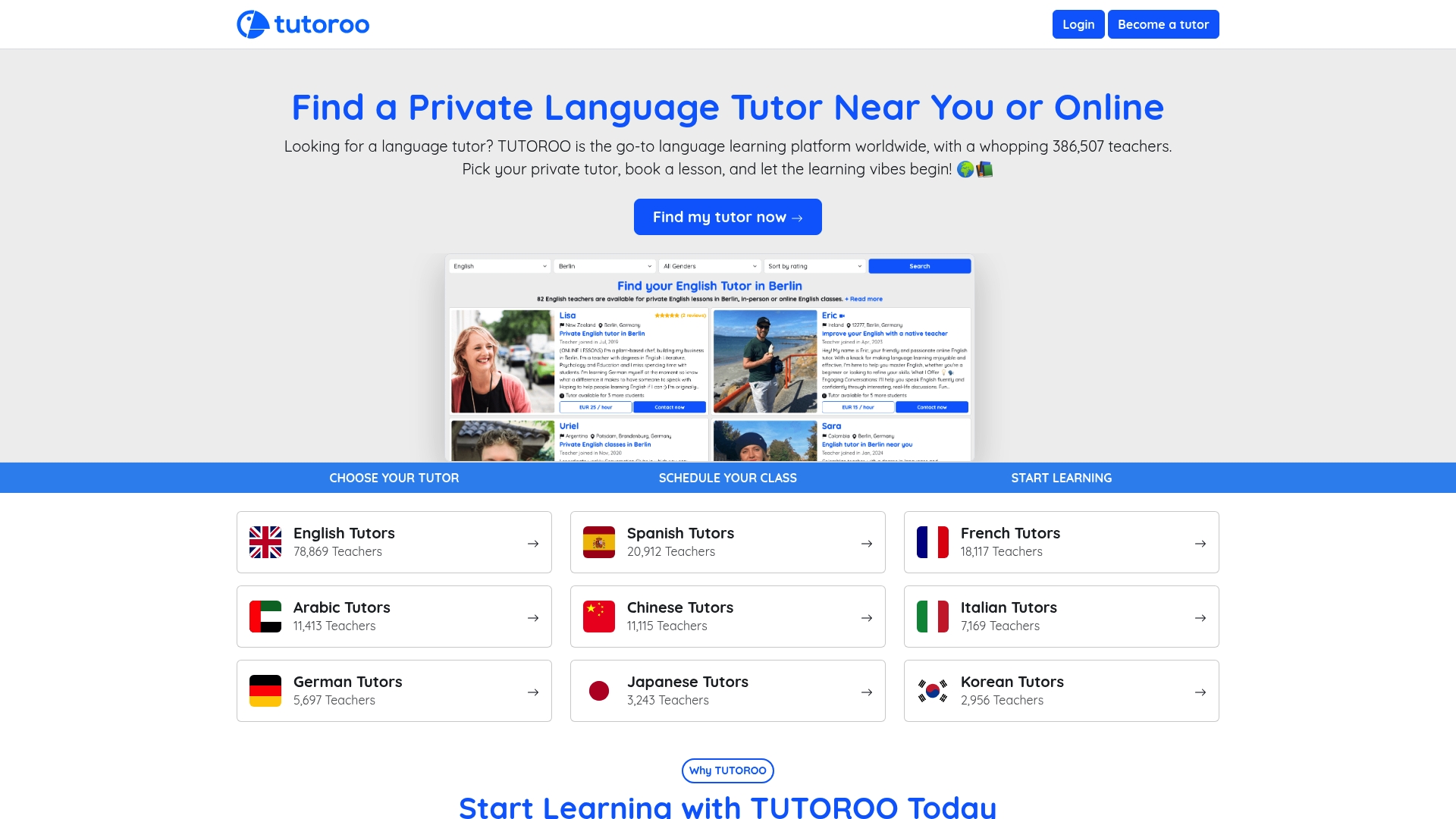
Before committing to a full package, use the budgeting guidance in our Spanish tutor pricing breakdown to work out what a light or focused programme should cost, then follow our advice to book two trial lessons with different tutors before choosing one. Comparing two trial sessions, one focused on writing feedback, one on speaking, tells you far more than a single introductory call ever will. Search current Spanish tutors on TUTOROO and book your first trial lesson this week.
TUTOROO perspective: what success looks like
The engagements that work share a pattern: steady homework completion, tutors who mark every essay against the real rubric, and students who tested at least two tutors before settling on one. Skipping the trial-lesson step is the single most common regret we hear about. Treat the first session as an audition, not a commitment.
Sources
- AP score distributions (College Board)
- AP Spanish Language and Culture exam overview (AP Central)
- Tutors: occupational outlook (U.S. Bureau of Labor Statistics)
- Is AP tutoring worth it? (IvyStrides coaching blog)
FAQ
Is AP Spanish worth taking?
Yes, for most college-bound students. A score of 3 or higher often earns college credit, and the coursework strengthens real-world Spanish proficiency beyond what the exam measures.
Is $50 an hour too much for AP Spanish tutoring?
Not necessarily. US Spanish tutoring rates typically run $15 to $60 an hour, and $50 sits within range for a tutor with AP Reader experience or specialised rubric knowledge.
How much do AP Spanish tutors make?
Tutors overall earn a median wage of about $19.27 an hour, but AP-specialist tutors, particularly those with rubric-grading experience, often charge and earn well above that median.
Does AP Spanish look good for colleges?
Yes. Admissions officers generally view AP Spanish as evidence of academic rigour, and a strong score can also translate into college credit, potentially reducing tuition costs down the line.