

TL;DR:
- Multilingual education enhances cognitive health, literacy, and cultural connection through structured, active language use. It builds neural resilience, delays cognitive decline, and improves academic outcomes when properly scaffolded. Supporting home languages and community involvement strengthens social cohesion and cultural preservation.
Multilingual education is defined as any formal learning approach that uses two or more languages as mediums of instruction, and its advantages reach far beyond the classroom. Research published in 2026 links speaking multiple languages to brains appearing measurably younger, with bilingual adults showing brains six years younger than monolinguals on average. Children taught in their home language are 30% more likely to read with understanding by the end of primary school. For educators, parents, and language advocates, these findings reframe multilingual learning not as a luxury but as a foundational investment in cognitive health, academic success, and cultural connection.
What are the cognitive advantages of multilingual education?
Multilingual education produces measurable changes in how the brain develops and ages. A study of 86,149 adults found a 50% reduced risk of accelerated biological ageing in highly multilingual areas. Speaking four languages correlates with brains appearing 13 years younger than those of monolinguals. That is not a minor statistical footnote. It means language learning actively builds what researchers call cognitive reserve, a kind of neural buffer against decline.
The mechanism behind this is well understood. Learning and switching between languages strengthens executive functions, the mental processes that govern task-switching, attention control, and problem-solving. Multilingualism enhances mental flexibility and cognitive resilience, particularly in resource-poor educational environments where learners must adapt constantly. These gains show up in academic performance, workplace problem-solving, and everyday decision-making.
One critical nuance: the benefits follow a "use it or lose it" principle. Brain-protective benefits rely on consistent, active language use rather than simply knowing multiple languages. Weaker languages are lost first in neurodegeneration, which means passive exposure is not enough. Learners need regular, meaningful practice in each language to maintain the cognitive gains.
The key cognitive benefits include:
- Improved executive function: Bilinguals consistently outperform monolinguals on tasks requiring attention switching and inhibitory control.
- Delayed cognitive decline: Building cognitive reserve through language use delays dementia diagnosis by 2–5 years.
- Enhanced problem-solving: Multilingual learners show greater flexibility when approaching novel challenges.
- Stronger neural connections: Regular language switching acts like physical exercise for the brain, reinforcing pathways used across all cognitive tasks.
Pro Tip: Encourage learners to use each language actively every week, not just during formal lessons. Conversation, reading, and even journalling in a second or third language sustains the neural benefits that passive study cannot.
How does multilingual education impact academic achievement and literacy?
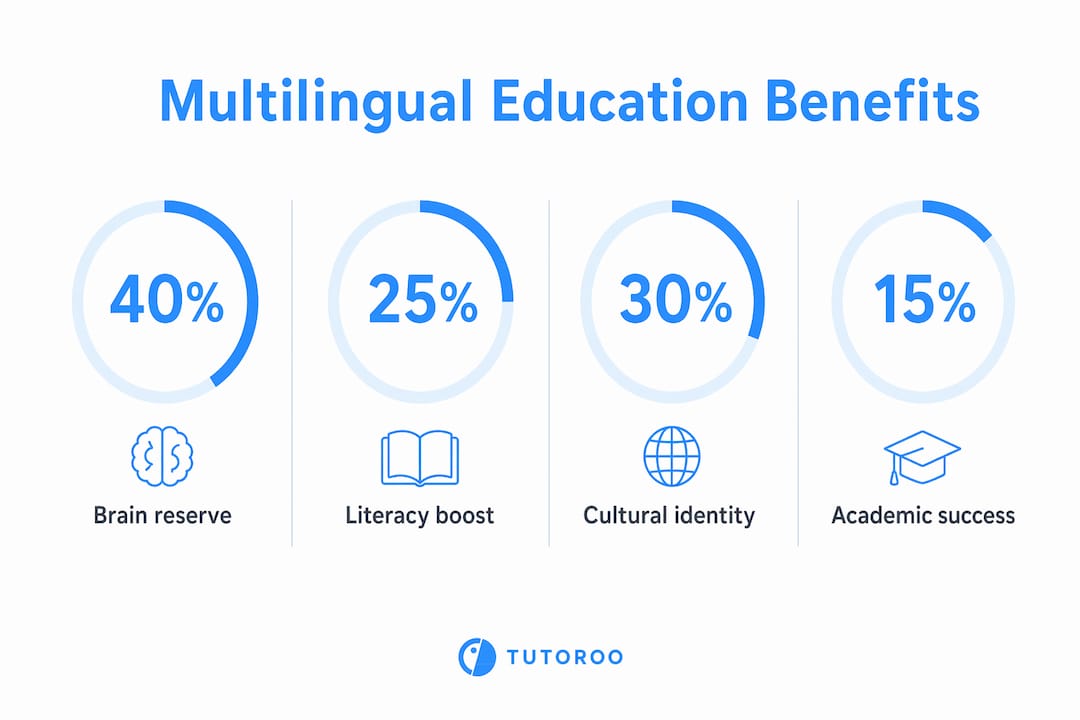
The academic case for multilingual education is grounded in strong evidence. Children taught in their home language first develop literacy skills that transfer across languages, making them stronger readers overall. UNESCO data confirms that home-language instruction produces a 30% improvement in reading comprehension by the end of primary school. This transfer effect means time spent building literacy in a familiar language is never wasted.

Language immersion programmes produce equally compelling results. Immersion-trained students consistently outperform traditional classroom learners on TOEFL language proficiency metrics across listening, speaking, reading, and writing. The advantage comes from sustained, contextualised exposure rather than isolated grammar drills. Learners in immersion settings absorb vocabulary and syntax through real communication, which accelerates fluency in ways that textbook study alone cannot replicate. For a deeper look at how immersion works in practice, the what is language immersion guide covers the key methods and their outcomes.
Translanguaging is one of the most promising pedagogical approaches in multilingual classrooms today. Rather than keeping languages strictly separate, translanguaging allows learners to draw on their full linguistic repertoire to make meaning. In South Africa, students receiving translanguaging instruction significantly outperformed control groups on comprehension and social engagement measures. The approach validates what learners already know and uses it as a scaffold for new learning.
| Pedagogical approach | Primary strength | Typical outcome |
|---|---|---|
| Mother tongue instruction | Literacy foundation | 30% higher reading comprehension |
| Language immersion | Fluency and proficiency | Higher TOEFL scores across all skills |
| Translanguaging | Comprehension and participation | Improved literacy and classroom engagement |
| Structured bilingual transition | Cognitive and emotional safety | Reduced vocabulary deficits and anxiety |
Pro Tip: When supporting a child in a multilingual programme, ask the school which pedagogical approach they use. Translanguaging and structured bilingual transition models tend to produce stronger outcomes than full immersion without scaffolding, especially in the early years.
What social and cultural benefits arise from multilingual education?
Multilingual education does more than sharpen minds. It shapes how learners relate to the world around them. Multilingualism fosters social cohesion and empathy by validating students' linguistic assets, which serves as a resilience factor in challenging educational environments. When a child's home language is respected in the classroom, their sense of identity and belonging strengthens. That sense of belonging directly reduces social anxiety and improves participation.
The cultural dimension is equally significant. Maintaining mother tongue languages alongside new languages preserves cultural heritage and supports environmental knowledge in Indigenous communities. For Aboriginal and Torres Strait Islander communities in Australia, for example, language preservation is inseparable from cultural survival. Multilingual education programmes that include Indigenous languages do not just teach communication. They protect ways of knowing that cannot be recovered once lost.
The social benefits of multilingual learning extend across communities:
- Intercultural understanding: Learners who study in multiple languages develop greater empathy and cross-cultural communication skills.
- Reduced social tension: Schools that honour linguistic diversity report stronger community cohesion and fewer incidents of cultural conflict.
- Community pride: Families whose languages are included in formal education feel more connected to the school and more invested in their children's learning.
- Identity preservation: Minority language speakers maintain a stronger sense of cultural identity when their language has educational status.
- Broader civic participation: Multilingual citizens engage more confidently across diverse communities, strengthening democratic life.
The role of community in language education is a factor that schools and policymakers often underestimate. When families and communities are active partners in multilingual programmes, outcomes improve for everyone.
What challenges and best practices exist for implementing multilingual education?
Multilingual education delivers strong outcomes when implemented well, but poor implementation carries real risks. Un-scaffolded immersion can cause vocabulary deficits of 12–18% and a 23% higher rate of socioemotional stress among learners. These are not reasons to avoid multilingual education. They are reasons to do it carefully.
Early language exposure must be structured with deliberate scaffolding to prevent cognitive overload and emotional distress. The research is clear that depth, duration, and quality of language experience matter far more than starting age alone. A child who begins a second language at age eight with excellent support will outperform one who starts at age four with poor support. Age is not the deciding factor. Quality is.
Best practices for educators and parents include:
- Use additive language policies. Additive approaches add new languages without replacing the home language. Subtractive approaches, which phase out the mother tongue, produce weaker outcomes and greater emotional distress.
- Scaffold gradually. Transition from the home language to the target language in stages, not all at once. Gradual transitioning prevents cognitive overload and keeps learners emotionally secure.
- Prioritise quality input. Learners need rich, contextualised exposure to each language. Repetitive drills without meaningful context produce limited gains.
- Involve families. Parents who understand the programme's approach can reinforce language use at home, which significantly extends learning time and deepens retention.
- Monitor for stress signals. Watch for signs of anxiety or disengagement, particularly in the first year of a new language programme. Early intervention prevents long-term setbacks.
For educators looking to build practical skills in this area, the guide to teaching multiple languages covers scaffolding strategies and additive language policy in detail.
Pro Tip: If you are a parent supporting a child through multilingual schooling, create low-pressure opportunities to use each language at home. Cooking together while naming ingredients, watching films, or reading picture books in the target language builds fluency without the stress of formal assessment.
Key takeaways
Multilingual education builds cognitive reserve, improves literacy, and strengthens cultural identity when delivered with structured scaffolding and additive language policies.
| Point | Details |
|---|---|
| Cognitive protection | Speaking multiple languages correlates with brains appearing up to 13 years younger than monolinguals. |
| Literacy gains | Home-language instruction produces 30% higher reading comprehension by the end of primary school. |
| Social cohesion | Multilingual classrooms that validate home languages build empathy, identity, and community belonging. |
| Implementation quality | Scaffolded, additive approaches prevent vocabulary deficits and socioemotional stress in learners. |
| Active use is essential | Cognitive benefits depend on consistent, active practice in each language, not passive exposure. |
Tutoroo's perspective on multilingual education
Working with language learners across dozens of countries, we have seen one pattern repeat itself clearly. The learners who thrive in multilingual environments are not necessarily the ones who started earliest. They are the ones who had consistent, quality support at every stage.
The research on cognitive reserve is striking, but what it really points to is something educators and parents already sense intuitively. Language is not just a communication tool. It is a way of thinking, a way of belonging, and a way of staying mentally sharp across a lifetime. When schools treat multilingual learners' home languages as assets rather than obstacles, the results are transformative. Comprehension improves, participation rises, and learners carry themselves with greater confidence.
The challenge we see most often is not a lack of willingness. It is a lack of structured support. Families want their children to succeed in multiple languages. Educators want to deliver that outcome. The gap is usually in the scaffolding, the deliberate, step-by-step transition from familiar to new that prevents the anxiety and vocabulary gaps that poorly designed programmes produce. Inclusive policy and community engagement are not optional extras. They are the foundation on which every successful multilingual programme is built.
— Tutoroo
Private tutoring that supports multilingual learning goals
Multilingual education works best when learners receive consistent, personalised support alongside their formal schooling. A private tutor who speaks your target language fluently can fill the gaps that classroom instruction leaves, whether that means reinforcing vocabulary, building conversational confidence, or working through a specific language skill at the learner's own pace.
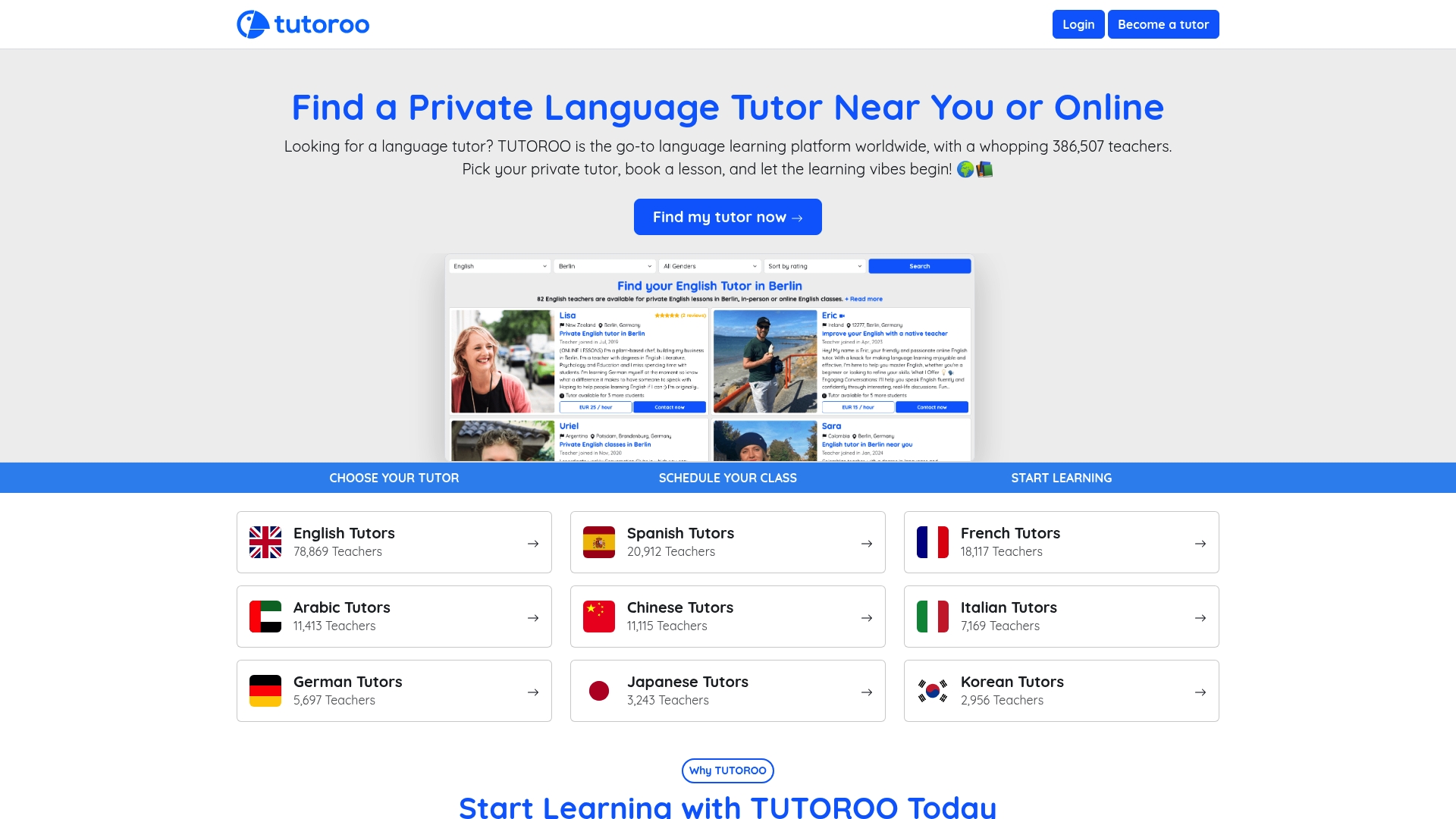
Tutoroo connects learners with over 386,000 private language tutors across the world, covering languages from English and Spanish to Arabic, French, Chinese, and many more. Lessons are available online or in person, making it straightforward to find a tutor who fits your schedule, language goals, and learning style. Whether you are a parent supporting a child through a multilingual programme or an educator looking to deepen your own language skills, Tutoroo makes finding the right match simple and direct.
FAQ
What are the main advantages of multilingual education?
Multilingual education improves cognitive function, literacy, and cultural understanding. Research links it to younger brain age, stronger executive function, and a 30% improvement in reading comprehension when home-language instruction is used.
At what age should multilingual education begin?
Quality of instruction matters more than starting age. Structured support with deliberate scaffolding produces better outcomes than early but unsupported exposure, regardless of when formal multilingual learning begins.
Does multilingual education cause confusion or delays in children?
Un-scaffolded immersion can cause short-term vocabulary deficits, but well-designed additive programmes do not cause lasting delays. Children in structured multilingual programmes consistently outperform monolingual peers on literacy and cognitive measures over time.
How does bilingual education differ from multilingual education?
Bilingual education uses two languages as mediums of instruction, while multilingual education extends this to three or more. Both approaches share the same core benefits, including improved executive function and stronger literacy outcomes, when implemented with quality scaffolding.
Can multilingual education help preserve Indigenous languages?
Multilingual education programmes that include Indigenous languages actively preserve cultural heritage and environmental knowledge. UNESCO identifies mother tongue instruction as a critical tool for maintaining linguistic diversity and supporting Indigenous community identity.