

TL;DR:
- Peer-assisted language learning uses structured peer collaboration to improve language skills and boost confidence. It produces significant academic gains when sessions include clear roles, reciprocal feedback, and regular oversight. Combining peer learning with private tutoring offers a comprehensive approach to language acquisition.
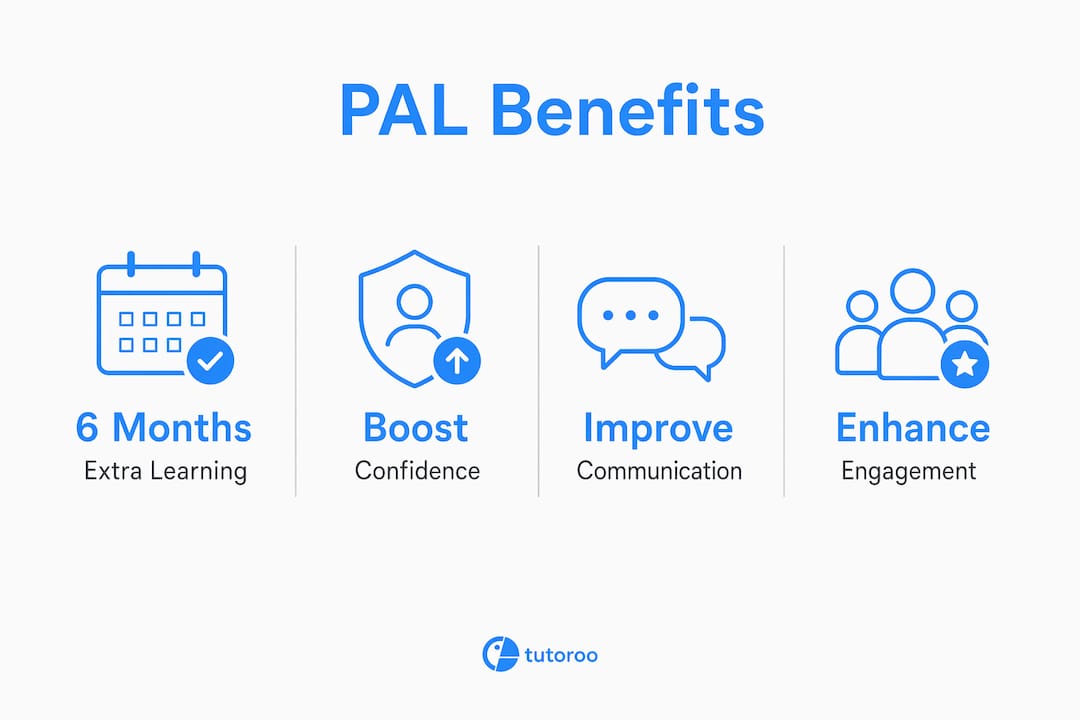
Peer-assisted language learning (PAL) is defined as a structured educational model where learners from similar social groups collaborate to support each other's language acquisition through reciprocal teaching and guided practice. Unlike professional instruction, PAL relies on non-professional peer collaboration to reduce academic stress and build mutual understanding. Research from the Education Endowment Foundation shows that peer tutoring delivers the equivalent of six additional months of academic progress within a single school year. That figure alone makes PAL one of the most cost-effective approaches available to language educators and students alike.
What is peer-assisted language learning and how does it work?
PAL works by assigning learners structured roles within a collaborative framework, so each participant contributes to and benefits from the interaction. The model draws on the principle that explaining a concept to a peer deepens the explainer's own understanding, while the listener gains a relatable, accessible explanation. This mutual dynamic is what separates PAL from passive group study.
The most widely used frameworks in language education include:
- Reciprocal tutoring: Two learners alternate between the roles of tutor and tutee, practising target language skills in both directions.
- Near-peer learning: A slightly more advanced learner guides a less experienced one, creating a mentoring relationship within a shared social context.
- Peer feedback: Learners review each other's written or spoken output using structured rubrics, developing critical analysis alongside language skills.
- The Jigsaw method: Each learner masters one segment of content and then teaches it to the group. The Jigsaw method promotes reciprocal teaching, accountability, and critical thinking through clearly assigned roles.
- Reciprocal Teaching: Learners take turns leading comprehension strategies such as summarising, questioning, clarifying, and predicting in the target language.
Technology is expanding what PAL can achieve. Mobile microlearning apps improve peer feedback training and transfer those skills directly to communicative language tasks. Short, focused digital modules help learners practise giving structured feedback before applying it in live peer sessions.
Pro Tip: Assign explicit roles before every PAL session. Without clear responsibilities, stronger learners tend to dominate and quieter participants disengage. A simple role card listing each person's task for the session prevents this from the outset.

What evidence supports the effectiveness of peer-assisted language learning?
The research base for PAL is strong and growing. A 2025 randomised control trial found that attending near-peer-assisted learning sessions significantly increases weekly test scores (p=.027) and student confidence (p=.006) within the same week of attendance. Those p-values indicate the results are statistically reliable, not coincidental.
"Peer tutoring yields progress equivalent to approximately six additional months of academic development within one school year, making it one of the highest-impact, lowest-cost interventions available to educators." — Education Endowment Foundation
The benefits extend beyond the learner receiving help. Tutors often gain as much or more than tutees by teaching, because the act of explaining material reinforces knowledge and builds metacognitive awareness. This "learning by teaching" effect is one of PAL's most underappreciated advantages.
Providing peer feedback also stimulates higher cognitive engagement than receiving it. Giving peer feedback develops internal feedback skills and metacognitive awareness more significantly than simply reading a peer's comments on your own work. That finding reshapes how educators should design feedback activities: the student doing the reviewing benefits at least as much as the student being reviewed.
Meta-analyses consistently highlight improvements in engagement, critical thinking, and language output when PAL is implemented with clear structure. The evidence points to one consistent pattern: structure determines outcomes. Unstructured peer interaction produces modest gains at best.
| Outcome | Finding |
|---|---|
| Academic progress | Equivalent to 6 months of additional learning per school year |
| Test score improvement | Statistically significant increase (p=.027) after near-peer sessions |
| Learner confidence | Significant boost recorded (p=.006) within the same week |
| Tutor benefit | Tutors reinforce their own knowledge and metacognitive skills |
| Feedback quality | Giving feedback builds more cognitive engagement than receiving it |
How does PAL compare to traditional teacher-led instruction?
Traditional teacher-led instruction delivers consistent content coverage and expert correction, but it limits the amount of time each learner spends actively producing language. In a class of twenty students, each learner may speak for only a few minutes per lesson. PAL changes that ratio dramatically by putting every participant in an active role simultaneously.
Structured peer learning modules foster better active engagement, critical thinking, and communication skills compared to conventional tutorials. The trade-off is that managing group dynamics requires deliberate planning. Without it, proficiency imbalances can undermine the experience for both parties.
PAL offers specific advantages over traditional instruction in these areas:
- Communication practice: Learners produce far more spoken and written output per session than in a teacher-fronted class.
- Motivation: Peer relationships create social accountability that a teacher-student dynamic rarely replicates.
- Learner autonomy: Students take ownership of their learning process rather than waiting for instruction.
- Reduced anxiety: Many learners feel less self-conscious making errors in front of a peer than in front of a teacher.
The limitations are equally real. PAL works best for reviewing and consolidating material already introduced by an instructor, rather than teaching entirely new content. Misconceptions can spread if a peer tutor holds an incorrect understanding. For a broader look at how online teaching methods compare across different learning contexts, the contrast between peer-led and instructor-led formats is worth examining in detail.
Pro Tip: Use PAL after introducing new content in a teacher-led session, not before. Peer collaboration is most powerful when learners already have a foundation to build on and discuss.
What practical strategies make peer-assisted language learning effective?
Effective PAL does not happen by placing two learners together and hoping for the best. It requires deliberate design across four key areas.
-
Assign structured roles with reciprocal responsibilities. Each session should clearly define who is tutoring and who is learning, with a planned role swap built into the session. PAL interventions typically run over 4–10 week intensive blocks in pairs or reciprocal setups, giving learners enough time to build rapport and routine.
-
Use rubrics for peer feedback. Open-ended feedback requests produce vague responses. A rubric that specifies what to look for in grammar, vocabulary, fluency, or content gives learners a concrete framework and produces more useful feedback for the recipient.
-
Incorporate microlearning tools to train feedback skills. Before asking learners to give peer feedback in a live session, use short digital modules to practise the skill. Microlearning apps help bridge feedback quality and transfer learning to real-world communication tasks through scaffolding.
-
Apply the Directed Motivational Currents (DMCs) framework to sustain engagement. The DMCs framework supports sustained student motivation through goal-oriented, reciprocal peer learning partnerships. Setting shared language goals at the start of a PAL block gives both partners a reason to stay committed across multiple sessions.
-
Monitor group dynamics actively. Proficiency imbalance and unstructured group work lead to poor outcomes. Check in with pairs regularly, rotate partners across a programme, and address dominance patterns early before they become entrenched habits.
For educators designing a full programme, the peer-to-peer teaching guide offers a practical framework grounded in current research on language learning outcomes.
Pro Tip: Rotate peer partners every two to three weeks. Familiarity builds comfort, but variety exposes learners to different communication styles, accents, and vocabulary choices, which accelerates real-world language readiness.
Key takeaways
Peer-assisted language learning produces measurable gains in academic progress, confidence, and communication skills when sessions are structured with clear roles, reciprocal responsibilities, and regular educator oversight.
| Point | Details |
|---|---|
| Core definition | PAL is a structured model where peers from similar groups support each other's language acquisition. |
| Evidence base | Research shows PAL delivers up to six months of additional academic progress per school year. |
| Mutual benefit | Both tutors and tutees gain: tutors reinforce knowledge, tutees receive accessible explanations. |
| Structure is critical | Unstructured peer work produces poor outcomes; the Jigsaw method and reciprocal teaching prevent this. |
| Technology supports PAL | Mobile microlearning apps train peer feedback skills and improve transfer to real communication tasks. |
Tutoroo's perspective on peer-assisted language learning
Peer-assisted language learning is one of the most genuinely exciting developments in language education, and not just because the research supports it. What makes PAL compelling is that it treats learners as active contributors rather than passive recipients. That shift in identity changes how people relate to the language they are learning.
What we have observed, working with language learners across dozens of languages and contexts, is that PAL works best when it sits alongside expert instruction rather than replacing it. Peers can offer relatable explanations and social motivation that a tutor cannot always replicate. But they cannot reliably catch subtle grammar errors, model authentic pronunciation, or explain the cultural nuance behind an idiom. The learners who progress fastest combine both: structured peer collaboration for practice volume, and expert guidance for accuracy and depth.
The technology angle is worth watching closely. Short, focused digital tools that train learners to give better feedback before they sit down with a peer are a genuine step forward. They address the single biggest weakness in most PAL programmes: the quality of the feedback itself. When learners know how to give specific, constructive feedback, the whole interaction becomes more valuable for both participants.
The future of language learning is not peer learning versus private tutoring. It is knowing when to use each, and building a personal learning environment that draws on both.
— Tutoroo
Private tutoring and peer learning: a powerful combination
Peer collaboration builds confidence and communication practice, but there are moments when only expert guidance will do. A qualified private tutor can identify the exact errors a peer might miss, explain grammar rules with precision, and tailor every lesson to a learner's specific goals.
Tutoroo connects learners with over 386,000 language teachers across the world, covering languages from English and Spanish to French, Arabic, Chinese, and many more. Whether you want to reinforce what you have practised in peer sessions or build a stronger foundation before joining a PAL programme, find a private tutor who fits your schedule, language, and learning style. One-on-one lessons, online or in person, give you the personalised attention that accelerates progress in ways peer sessions alone cannot.
FAQ
What is peer-assisted language learning in simple terms?
Peer-assisted language learning is a structured approach where learners from similar backgrounds teach and support each other to improve their language skills. It differs from group study because it assigns clear roles and uses reciprocal teaching methods.
How does peer-assisted language learning benefit both tutor and tutee?
The tutee gains accessible explanations and a low-pressure practice environment, while the tutor reinforces their own knowledge and builds metacognitive awareness through the act of teaching. Research confirms that tutors often gain as much as the students they help.
What are the most effective peer learning language strategies?
The Jigsaw method, reciprocal tutoring, and structured peer feedback are the most evidence-backed strategies. Each assigns clear roles and builds accountability, which research identifies as the key factor separating effective PAL from unproductive group work.
How long should a peer-assisted language learning programme run?
PAL interventions typically run over 4–10 week intensive blocks, which gives learners enough time to build rapport, establish routines, and see measurable progress in language output and confidence.
Can peer-assisted learning replace a private language tutor?
PAL complements private tutoring but does not replace it. Peers are effective for practising and consolidating language skills, but a qualified tutor provides expert correction, cultural context, and personalised feedback that peers are not trained to deliver.