
TL;DR:
- Supporting bilingual education involves daily language exposure and targeted private tutoring.
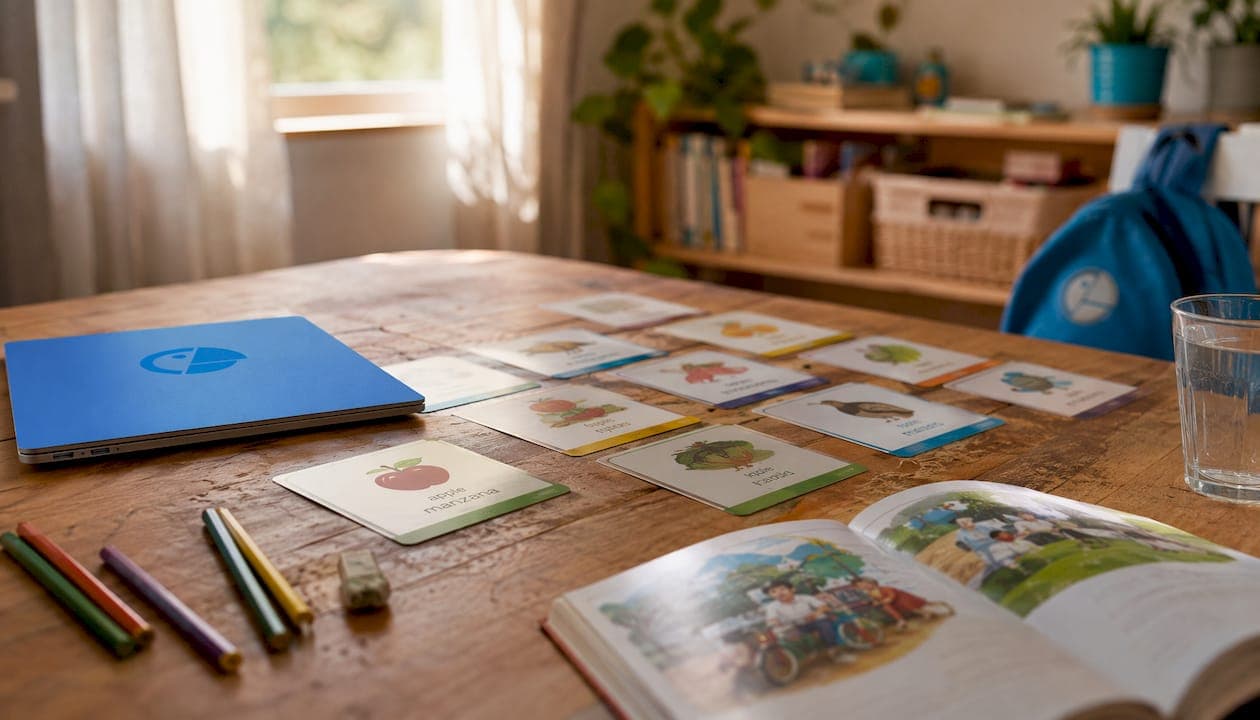
- Using home routines, media, and labels helps build literacy and vocabulary in both languages early.
The most effective ways to support bilingual education are to use both languages daily at home, build a rich collection of books and media in the home language, and pair those habits with targeted one-on-one tutoring that uses translanguaging and sheltered instruction. Over half of the world's population is estimated to be bilingual or multilingual, and the cognitive, social, and economic benefits of bilingualism are strongest when support begins early and stays consistent.
Your first-week action plan:
- Set two daily language moments: a morning greeting routine and an evening story time, each in the home language.
- Add at least three home-language books to a visible shelf or basket.
- Label five household objects bilingually (sticky notes work perfectly).
- Identify one specific language goal (conversation fluency, literacy, exam preparation) and write it down.
- Search for a private tutor with bilingual teaching experience and book a trial lesson.
Table of Contents
- What can parents do at home to build both languages?
- How does one-on-one tutoring support bilingual learners?
- What should you look for when hiring a bilingual tutor in Australia?
- Practical mini-lessons tutors and parents can use right now
- How often should you schedule sessions, and how do you track progress?
- Common challenges and how to fix them
- Key takeaways
- Why one-on-one tutoring and home strategies belong together
- Ready to find a bilingual tutor in Australia?
- Useful sources and further reading
What can parents do at home to build both languages?
Daily routines are the most reliable engine for bilingual development. The table below maps common home strategies to the age ranges where they have the greatest impact.
| Strategy | Best age/stage | Why it works |
|---|---|---|
| Shared read-alouds in home language | All ages, especially very young children | Books and environmental print in the home language strengthen literacy transfer to English |
| Bilingual labels on household objects | Toddlers to early primary | Connects spoken words to print; builds vocabulary in both languages simultaneously |
| Home-language media (songs, podcasts, films) | School age through adult | Exposes learners to authentic pronunciation, idiom, and cultural context |
| Previewing new topics in the home language | Primary and secondary | Activates prior knowledge before English instruction, a core home-language accommodation |
| Cognate spotting during reading | Upper primary to adult | Highlights shared vocabulary between languages, accelerating comprehension |
Cultural identity sits at the heart of language motivation. Displaying bilingual signage, selecting books by authors from the learner's heritage community, and connecting with local cultural organisations all send a clear message: both languages are valued here. For parents of very young learners, early language milestones are worth tracking from the first months of life.
Pro Tip: Organise your home library with colour-coded spine stickers: one colour for English titles, another for the home language. Children can find materials independently, and the visual mix signals that both languages belong equally on the shelf.
How does one-on-one tutoring support bilingual learners?
Private tutoring fills the gaps that classrooms and home routines cannot always reach. A skilled tutor provides individualised scaffolding, adjusts pacing in real time, and targets the precise vocabulary or grammar a learner is missing — none of which is possible in a class of twenty-five.
Tutoring is most effective in these situations:
- Filling academic language gaps before a new school term
- Supporting heritage language maintenance when community exposure is limited
- Preparing for NAPLAN, HSC, or university entrance assessments in a second language
- Building conversational confidence for a learner who reads well but rarely speaks
- Accelerating literacy transfer when a child is strong in the home language but behind in English
The most effective tutors draw on three evidence-based techniques. Translanguaging allows learners to move fluidly between languages during a lesson, which speeds content mastery and reduces cognitive load. Sheltered instruction simplifies vocabulary and sentence structure without lowering academic expectations, keeping lessons both accessible and rigorous. Cognate instruction draws explicit attention to words shared across languages, building vocabulary in both at once.
To create continuity between home, school, and lessons:
- Share the learner's current school unit topics with the tutor before each session.
- Ask the tutor to send a short summary of lesson vocabulary so you can reinforce it at home.
- Keep a shared notebook (physical or digital) where both parent and tutor log observations.
- Review the notebook together at the end of each month and adjust goals as needed.
What should you look for when hiring a bilingual tutor in Australia?
The right tutor has three things: relevant qualifications, genuine experience with bilingual learners, and current Australian safety checks.

Qualifications and experience. Look for a degree or diploma in education, linguistics, or TESOL, combined with demonstrated experience using translanguaging and sheltered instruction. Ask candidates to describe how they would plan a lesson for a learner who is strong in the home language but struggling with English academic vocabulary. A strong answer will mention previewing content, visual supports, and explicit vocabulary work — not just "speaking slowly."
Safety and compliance checks. In Australia, any tutor working with children must hold a current Working With Children Check (WWCC) for the relevant state or territory. Verify the WWCC number through the issuing authority's online portal. For adult learners, a National Police Check is standard good practice. Always confirm identity with a government-issued photo ID.
Interview questions worth asking:
- "How do you use a learner's home language during an English lesson?"
- "Can you share an example of a lesson plan you designed for a bilingual student?"
- "How do you measure vocabulary growth across both languages?"
Red flags include a tutor who insists on English-only instruction at all times, cannot explain what translanguaging means, or is reluctant to share references or a sample lesson plan.
Practical mini-lessons tutors and parents can use right now
Lessons work best when they combine a content goal with a language goal, use translanguaging naturally, and scaffold with visuals. A 3–5 second wait time after asking a question consistently produces more complex, confident responses from bilingual learners.
Preschool (30 minutes): Objective: name five household items in both languages. Read a bilingual picture book aloud, pause on each object, and ask "What do we call this?" in both languages. Use gestures and point to real objects in the room. Close with a matching game using picture cards.
Early primary (40 minutes): Objective: retell a short story using past-tense verbs. Read a culturally relevant story, then ask the learner to retell it first in the home language, then in English. The tutor notes vocabulary gaps and introduces three target words with picture supports.
Upper primary / teen (45 minutes): Objective: write a paragraph comparing two characters. Brainstorm in the home language first, then draft in English. The tutor highlights cognates between the two languages and models one sentence before the learner writes independently.
Adult (60 minutes): Objective: discuss a current events article. The learner reads a short article in English, summarises it in the home language, then discusses their opinion in English. The tutor uses sheltering: simplified follow-up questions, visual prompts, and explicit vocabulary checks.
For parents who do not speak the home language, language-independent activities such as songs, gestures, and hands-on tasks are genuinely effective. Learning five survival phrases in the learner's home language signals respect and builds connection. Explore more language practice activities for ideas you can adapt to any age group.
How often should you schedule sessions, and how do you track progress?
For maintenance (keeping a heritage language alive), one session per week is usually sufficient alongside daily home routines. For acceleration (closing an academic gap), two sessions per week produces noticeably faster results. For exam preparation, two to three sessions per week in the eight to twelve weeks before the assessment is a practical target.
Progress rarely looks like a straight line. Parents typically notice early gains in listening comprehension and vocabulary recognition before they see improvements in speaking or writing. Observable signs to log include: the learner initiating conversation in the target language unprompted, using new vocabulary correctly in a sentence, and asking questions about meaning rather than guessing past unfamiliar words.
A simple monthly check-in works well: the tutor rates vocabulary, comprehension, and production on a 1–5 scale, the parent notes two or three home observations, and both compare notes. School report feedback adds a third data point.
Pricing in Australia varies with tutor experience, session length, and whether lessons are online or in person. Online sessions with a newer tutor generally cost less than in-person sessions with an experienced specialist. Budgeting for a consistent block of lessons (rather than ad hoc bookings) tends to produce better outcomes because continuity matters more than intensity.
Common challenges and how to fix them
- Limited home-language materials. Local libraries in major Australian cities often hold multilingual collections. Community cultural organisations and diaspora groups are another reliable source of books, films, and audio resources.
- Inconsistent practice. Attach language moments to existing habits: home-language story time replaces screen time before bed; a bilingual podcast plays during the school run. Habit stacking removes the decision fatigue.
- Fear that two languages cause confusion. Research is clear: comprehension and reasoning skills transfer across languages, and simultaneous development of both is not only possible but beneficial. Share this with family members who express concern.
- Tutor unfamiliar with translanguaging. Use the interview questions from the checklist above. If a current tutor is willing to learn, share the guide to teaching multiple languages as a starting point.
- Motivation dips. Small, visible rewards tied to specific milestones (finishing a home-language book, holding a five-minute conversation) work better than vague praise. A progress chart on the fridge keeps younger learners engaged.
For school meetings, a useful talking point is: "We are working to maintain the home language alongside English because research shows the two support each other, not compete." Most teachers respond positively to parents who frame bilingualism as an asset rather than a complication.
Key takeaways
Supporting bilingual education works best when daily home routines, targeted private tutoring, and clear progress tracking operate together as a connected system.
| Point | Details |
|---|---|
| Start with daily routines | Morning greetings and evening story time in the home language build consistent exposure without extra effort. |
| Use evidence-based techniques | Translanguaging, sheltered instruction, and cognate spotting accelerate progress in both languages. |
| Verify tutor credentials | Confirm qualifications, bilingual teaching experience, and a current WWCC before booking lessons in Australia. |
| Track progress simply | A monthly 1–5 rating across vocabulary, comprehension, and production is enough to spot trends and adjust. |
| Find a specialist via Tutoroo | Tutoroo connects parents and learners with private bilingual tutors across Australia for personalised one-on-one lessons. |
Why one-on-one tutoring and home strategies belong together
Bilingualism is not a problem to manage; it is a genuine cognitive and cultural asset. The evidence is consistent: learners who receive support in both languages simultaneously outperform those whose home language is suppressed. Yet the most common mistake families make is treating bilingual education as the school's responsibility alone.
One-on-one tutoring is the most direct way to personalise that support. A tutor who understands translanguaging can meet a learner exactly where they are, in the language they are strongest in, and build from there. Combined with the home strategies in this guide, that personalised attention creates a learning environment that no classroom can fully replicate. Tutoroo's community of over 386,000 language teachers, and the published guides available on the Tutoroo blog, exist precisely to make that combination accessible to every family in Australia.
Ready to find a bilingual tutor in Australia?
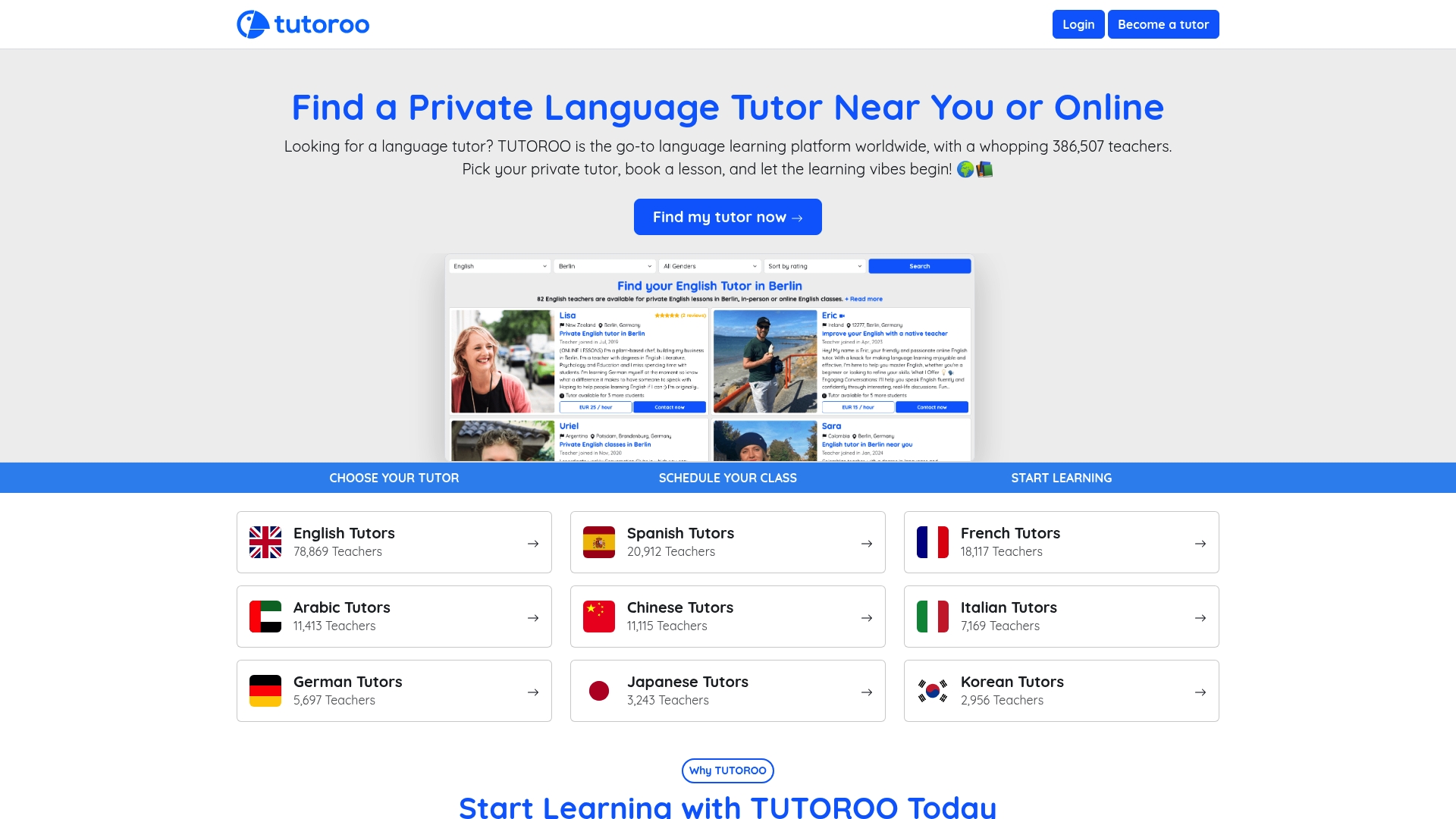
Tutoroo gives parents and learners direct access to private language tutors across Australia, covering dozens of languages from Spanish and Mandarin to Arabic and French. The matching process is straightforward: create a learner profile, list your language pair and specific goals (heritage maintenance, academic support, exam preparation), and filter for tutors with bilingual teaching experience.
Before the first session, prepare a short brief: the learner's current level in each language, the primary goal, and any school topics coming up. During the trial lesson, note whether the tutor uses the home language purposefully, scaffolds with visuals, and allows adequate wait time after questions. These are the markers of a tutor who genuinely understands bilingual learners.
With more than 386,000 tutors in the community, finding the right match is faster than most parents expect. Search for a private language tutor on Tutoroo today and book a trial lesson that fits your schedule and budget.
Useful sources and further reading
The following resources shaped this guide and are worth reading in full.
- Joint HHS and ED policy statement on dual language learners — The foundational US federal policy brief establishing why simultaneous bilingual development benefits children cognitively, socially, and economically. Directly relevant to Australian families making the case for home-language maintenance.
- OELA evidence-based practice brief on home-language accommodations — Concise summary of classroom and home practices (bilingual dictionaries, previewing, cognate instruction) with direct evidence links.
- AIR brief: language-independent strategies for dual language learners — Practical guide to hands-on, gesture-based, and visual strategies that work regardless of the tutor's home-language fluency.
- Supporting emergent bilingual children — EDC practitioner review — Evidence review linking home-language books and environmental print to stronger literacy outcomes.
- Eight best practices for dual-language programmes — School Library Journal — Practitioner-focused overview of sheltering, translanguaging, and culturally responsive teaching.
- Translanguaging and assessment in a New Zealand junior college — Research from a Pacific context directly applicable to Australian multilingual classrooms and tutoring sessions.
- Tutoroo blog: guide to teaching multiple languages — Practical strategies for tutors working across languages, with lesson design examples.
- Tutoroo blog: advantages of multilingual education — Research-backed overview of the long-term benefits of bilingualism for Australian families.
| Finding | Source |
|---|---|
| Over 50% of the global population is estimated bilingual or multilingual | HHS & ED joint policy statement |
| Wait time of 3–5 seconds after a question produces higher-quality responses from bilingual learners | ResearchGate wait-time study |
| Home-language books and environmental print are linked to stronger home-language development | EDC practitioner review |