

Cancel or reschedule with enough notice on a tutoring platform and you can expect a full refund or a free reschedule; leave it too late and you'll usually lose the session or face a fee. Most disputes hinge on notice given and evidence kept, so screenshot your messages, note your booking ID, and act as soon as you know your plans have changed.
TL;DR:
- Cancelling lessons at least 48 hours in advance usually guarantees a full refund or free reschedule, while late cancellations often result in losing the session or fees.
- Keep all messaging, booking confirmation, and payment receipts as proof for disputes or refunds, especially if cancellations happen close to the lesson time.
- Refund amounts depend on timing and payment type: full refunds for early cancellations, partial for prepaid blocks with unused sessions, and non-refundable fees for matching services.
- Notify your tutor as soon as possible via the platform’s messaging system to avoid penalties and maintain a clear record of your communication.
- Unexpected emergencies like illness or travel disruptions are accommodated if you provide verifiable evidence, and support aims to resolve these cases within a few business days.
Table of Contents
- What does Tutoroo's cancellation policy actually cover?
- How much notice do you need to cancel without a fee?
- What happens with reschedules, no-shows and tutor cancellations?
- Where does your money go when a lesson is cancelled?
- How do you cancel or reschedule a booking right now?
- What if something genuinely unexpected happens?
- How does Tutoroo support fair cancellations?
- Why clear cancellation rules matter more than they seem
- Booking a lesson you can actually plan around
- Sources
What does Tutoroo's cancellation policy actually cover?
This guide covers the student's side of things: what happens when you, the learner or parent doing the booking, need to cancel or reschedule a private language lesson through the Tutoroo marketplace. It doesn't cover how individual tutors should design their own cancellation terms. That's a different conversation for a different audience.
The rules apply across every booking type on the platform:
- Single, one-off lessons booked with a tutor for a specific time.
- Prepaid lesson blocks or bundles, where you've paid upfront for multiple sessions.
- Trial lessons, usually your first session with a new tutor.
- Recurring weekly or fortnightly lessons booked as a standing arrangement.
Whatever you're cancelling, the evidence that matters is the same: your in-platform message thread with the tutor, your booking confirmation, and your payment receipt. Keep all three, because tuition agreement templates consistently point to a dated written record as the thing that actually resolves a dispute quickly.
How much notice do you need to cancel without a fee?
Cancellation policies on tutoring marketplaces generally split into three tiers, and understanding which one you're in tells you almost everything about your likely outcome.
48 hours or more before the lesson. This is generally considered a safe period, when many platforms offer a full refund or a free reschedule, especially for lessons requiring substantial tutor preparation.
24 to 48 hours before the lesson. This period is often acceptable on many platforms, although some tutors may charge a partial fee if preparation has already been done.
Under 24 hours, or a missed cutoff set by the tutor. This late period usually results in the session being forfeited or charged in full, as tutors have reserved this time and may have declined other bookings.
Pro Tip: A 24-hour cancellation notice is the most widely used baseline across private tutoring. Many tutor cancellation policy templates recommend 48 hours specifically for lessons that require significant prep. If you're unsure which window applies to your tutor, message them directly and ask before you book your next block.
Prepaid packages add a wrinkle single lessons don't have: expiry. If you cancel one session from a ten-lesson block, that missed session usually needs to be rescheduled within a set window rather than simply refunded, since the whole block was purchased at a bundled rate. Fair practice looks like this: full flexibility for lessons cancelled early, a proportional charge for late cancellations, and a firm no-refund stance on genuine no-shows.
What happens with reschedules, no-shows and tutor cancellations?
Here's the practical breakdown of what to expect in each scenario:
- Rescheduling a lesson. Message your tutor with your preferred new time as early as possible. Most tutors will offer an alternative slot subject to their availability, and this is nearly always penalty-free if you're not inside the late-cancellation window.
- No-shows. If you simply don't turn up, without any notice at all, that's treated differently to a cancellation. A no-show almost always means the session is charged in full or lost, because the tutor held that time exclusively for you.
- Tutor-side cancellations. If your tutor cancels on you, the platform's job is to make you whole again, not the other way around. Expect a full refund, a free reschedule to another time, or a credit toward a future lesson, usually processed once the cancellation is confirmed on the platform.
Tutor cancellations are also where tutor availability becomes relevant. A tutor who cancels repeatedly is a signal worth flagging to support, not just something to shrug off.
Where does your money go when a lesson is cancelled?
Refund handling depends on what you paid for and when you cancelled it. A single lesson cancelled with proper notice is typically refunded in full to your original payment method. A prepaid block usually gets a partial refund, calculated on the sessions you haven't used yet, once any already-delivered lessons are deducted.
One thing worth understanding upfront: introduction or matching fees charged when you first connect with a tutor are generally non-refundable, since that fee covers the service of finding and matching you, not the lesson itself. Ongoing lesson payments, which flow directly between you and the tutor, are a separate transaction entirely.
- Full refunds apply when you cancel inside the safe notice window.
- Partial refunds are common for prepaid blocks with sessions still remaining.
- Non-refundable fees typically cover matching or introduction services, not lesson delivery.
Because tutors are paid directly rather than through a platform-held escrow account, payment records live in your own transaction history, not buried in a third-party ledger.
Pro Tip: Screenshot your payment confirmation the moment you book, not after a dispute starts. Refund requests move faster when you can attach a receipt and a booking ID in the same message.
How do you cancel or reschedule a booking right now?
If you need to act today, follow this sequence:
- Message your tutor first, through the platform's in-app messaging, not a personal phone number or external app. Say plainly that you need to cancel or reschedule, and give the reason if it's relevant (illness, scheduling conflict, timezone mix-up).
- Use the booking controls on your lesson page to formally cancel or request a new time. This creates a timestamped record separate from the chat.
- Keep the exchange documented. A simple message like "Cancelling our Tuesday 3pm lesson due to a family emergency, happy to reschedule for Thursday" gives you a clear paper trail if a refund question comes up later.
- Request your refund through the booking page if you're inside the eligible window, referencing your booking ID.
- Escalate to Tutoroo support if your tutor hasn't responded within a reasonable timeframe, typically 24 to 48 hours. Send your booking ID and the full message thread when you do.
Support teams move fastest when they don't have to chase you for proof, so send everything in one go rather than piecemeal.
What if something genuinely unexpected happens?
Life doesn't always give you 48 hours' notice. Sudden illness, a cancelled flight, a technical failure on your end, these are the exceptions most tutoring platforms are built to accommodate, provided you can show some evidence.
- A doctor's note or a screenshot of a medical appointment confirmation for illness.
- Airline notifications or a screenshot of a cancelled or delayed flight for travel disruption.
- A screenshot of an error message or a note about a power or internet outage for technical failures.
Filing a dispute typically means submitting your evidence alongside your booking ID, and most platforms aim to resolve these within a few business days. Be reasonable in how you frame it: a one-off emergency is treated very differently from a pattern of last-minute cancellations. If a tutor contests your refund, expect the platform to weigh the message history from both sides, which is exactly why keeping everything in-app rather than over text or email works in your favour. Guidance for tutors setting their own policies consistently recommends flexibility for verifiable hardship, and that expectation flows through to how platforms judge these cases too.
How does Tutoroo support fair cancellations?
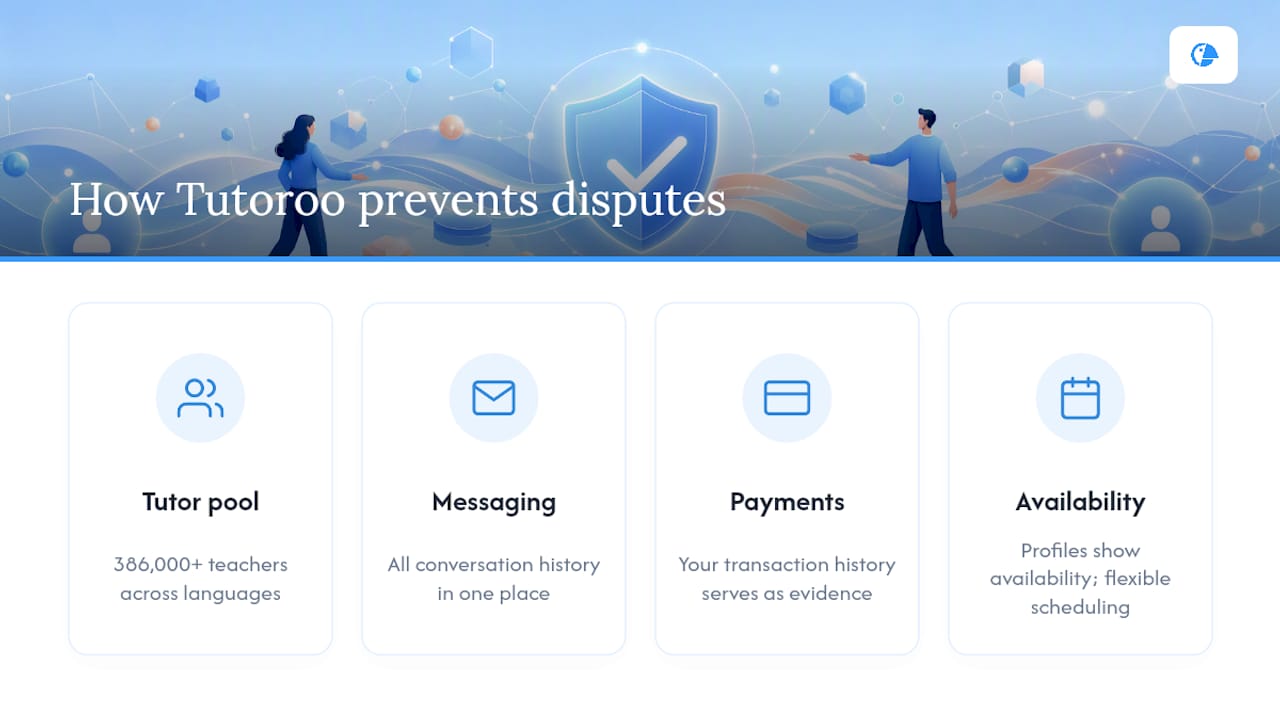
Tutoroo connects learners with a community of over 386,000 language teachers across dozens of languages, and that scale means most students can find a replacement time or a new tutor quickly if a booking falls through. The platform's messaging system keeps your entire conversation with a tutor in one place, which matters enormously when you need to prove what was agreed and when.
Because lesson payments go directly between student and tutor, your own transaction history doubles as your refund evidence, no need to chase a third party for records. Combined with flexible scheduling options and tutor profiles that show availability upfront, the structure is designed so a cancellation dispute rarely comes down to he-said-she-said.
Why clear cancellation rules matter more than they seem
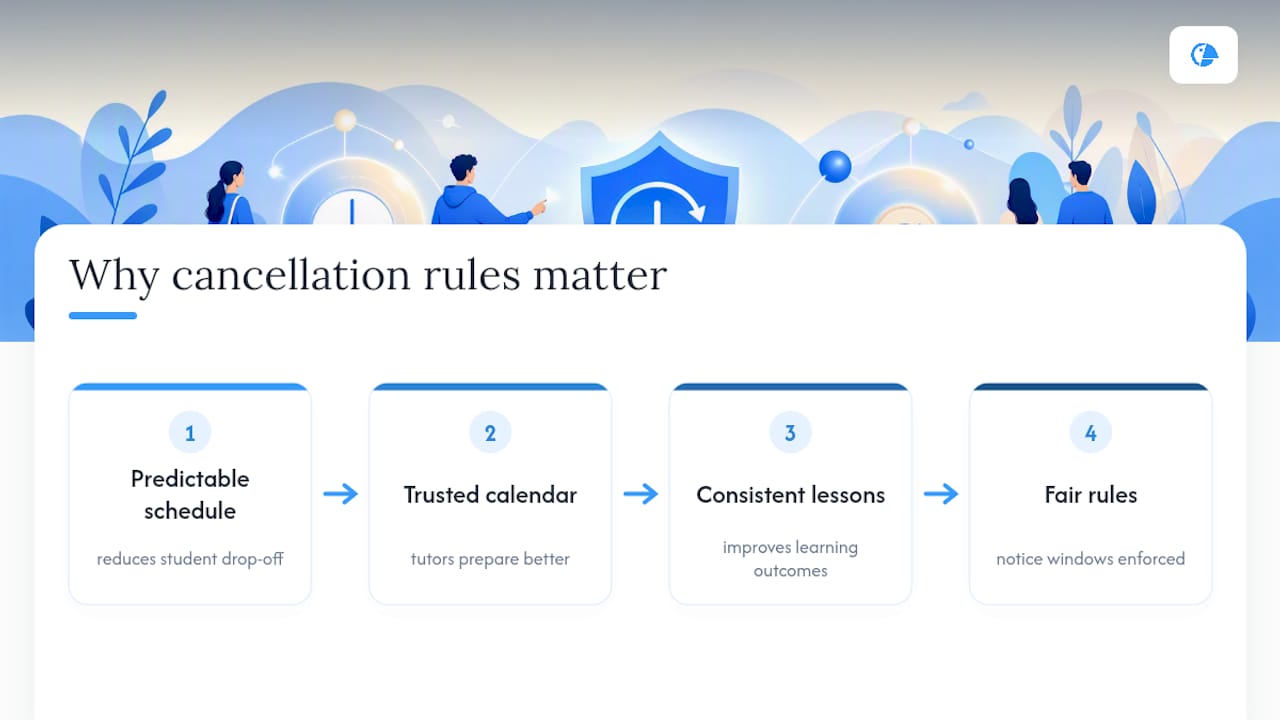
Predictable scheduling isn't just an admin detail. It's the difference between a student who sticks with a language for a year and one who drifts off after a few messy, disrupted weeks. Tutors who can trust their calendar tend to prepare better lessons and stay available longer, and that consistency is what actually drives learning outcomes over time.
That's why Tutoroo enforces notice windows rather than leaving cancellations to informal goodwill, while still making room for genuine emergencies on a case-by-case basis. Fairness only works both ways: tutors need reliable income from booked time, and students need room to breathe when life gets in the way. Keep every cancellation conversation inside the platform's messaging system. It's the single fastest route to a resolved dispute.
— TUTOROO
Booking a lesson you can actually plan around
Tutoroo's booking and messaging system is built so a cancellation or reschedule request never turns into a guessing game. Every message, booking change, and payment sits in one place, which means if you ever need to request a refund, you already have the evidence lined up rather than scrambling to reconstruct a conversation from memory.
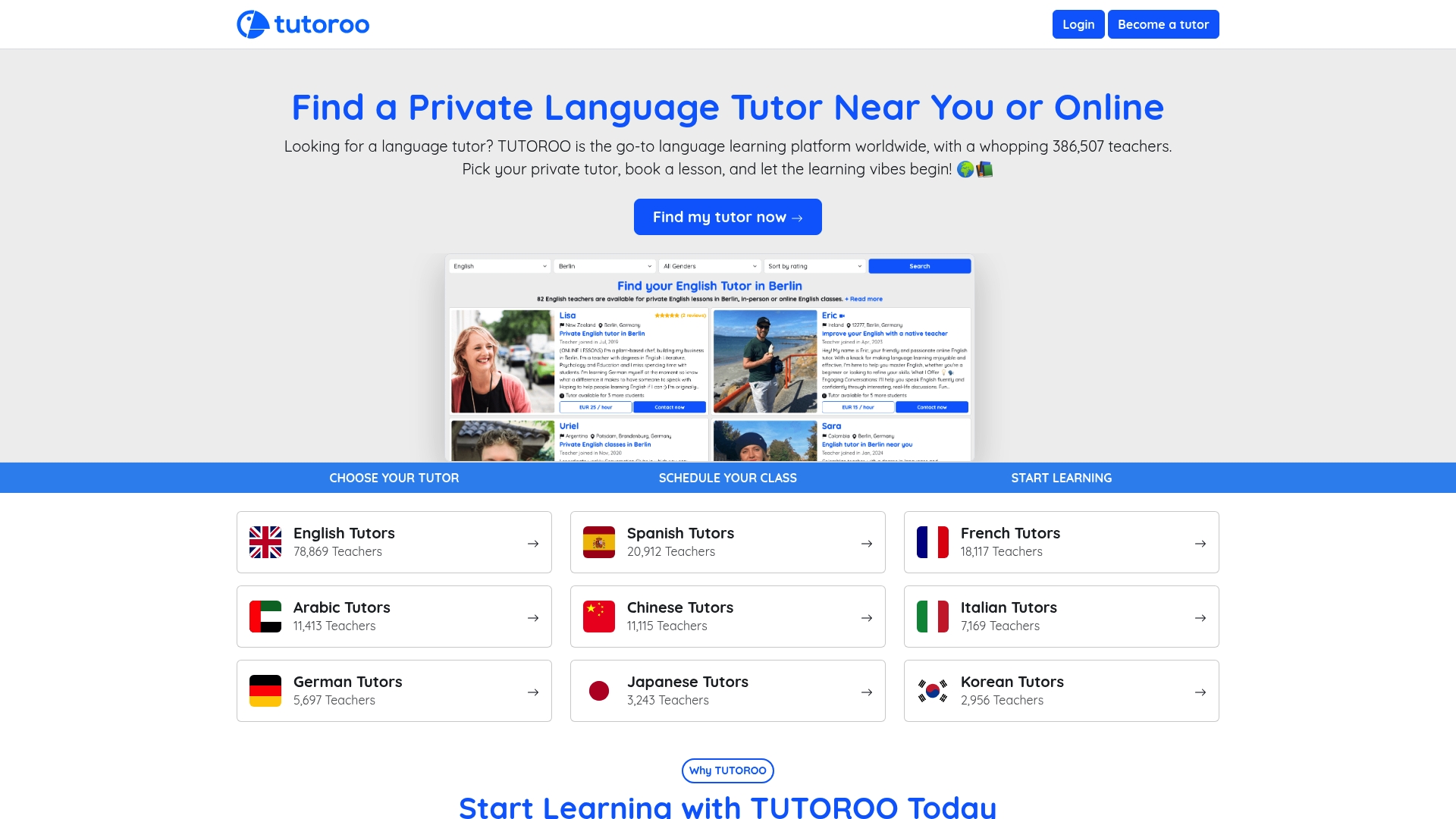
That structure matters most before you've booked, not after. Browse tutor profiles, check real availability windows, and read the platform's official booking terms before you commit to a schedule. If you're after a specific language, pages like the Malay tutor directory show exactly how tutor availability and lesson formats are laid out, so you know what you're agreeing to from the first click. Find a tutor, message them directly, and book your first lesson with a clear sense of what happens if plans change.
Sources
- How to Write a Private Tutor Cancellation Policy in the UK | Teamlilit Blog
- Free Private Tutoring Agreement Template — PDF & Word