

TL;DR:
- Effective travel language preparation involves practicing practical phrases through daily repetition, focusing on key scenarios. Using scenario-based mini-scripts and offline tools enhances recall and confidence before departure. Active speaking, live practice, and backups are essential for real-world communication success.
Effective step by step travel language preparation is the process of learning practical, trip-specific phrases through daily, context-driven practice rather than chasing full fluency. Most travellers underestimate how little language they actually need to get by confidently. A focused preparation plan built around spaced repetition systems (SRS) and real-world speaking practice produces far better results than weeks of passive app scrolling. Daily sessions of just 10–15 minutes improve usable skills by 30–50% within one to four weeks. That kind of progress is achievable for any traveller who starts early and stays consistent.
What do you need before starting stepwise language preparation?
The right tools and mindset set the foundation for everything that follows. Before you open a phrasebook or load an app, you need to know what your trip actually demands.

Start by reviewing your itinerary and listing the contexts where you will need to communicate. A beach resort stay in Bali requires very different phrases than a solo backpacking trip through rural Japan. Matching your phrase selection to your specific travel contexts is the single most efficient thing you can do at this stage.
The core tools you need:
- A phrasebook or language learning app with offline support
- A translation app with offline language packs downloaded
- A simple correction log (a notes app or small notebook works perfectly)
- A local SIM or eSIM plan for live translation when connectivity is available
Download offline language packs at least 24 hours before departure. Offline packs enable text translation and voice features even in areas with no mobile data. Skipping this step is one of the most common and costly mistakes travellers make.
Pro Tip: Set your phone's translation app to your destination language the week before you leave. Daily exposure to the interface builds familiarity before you need it under pressure.
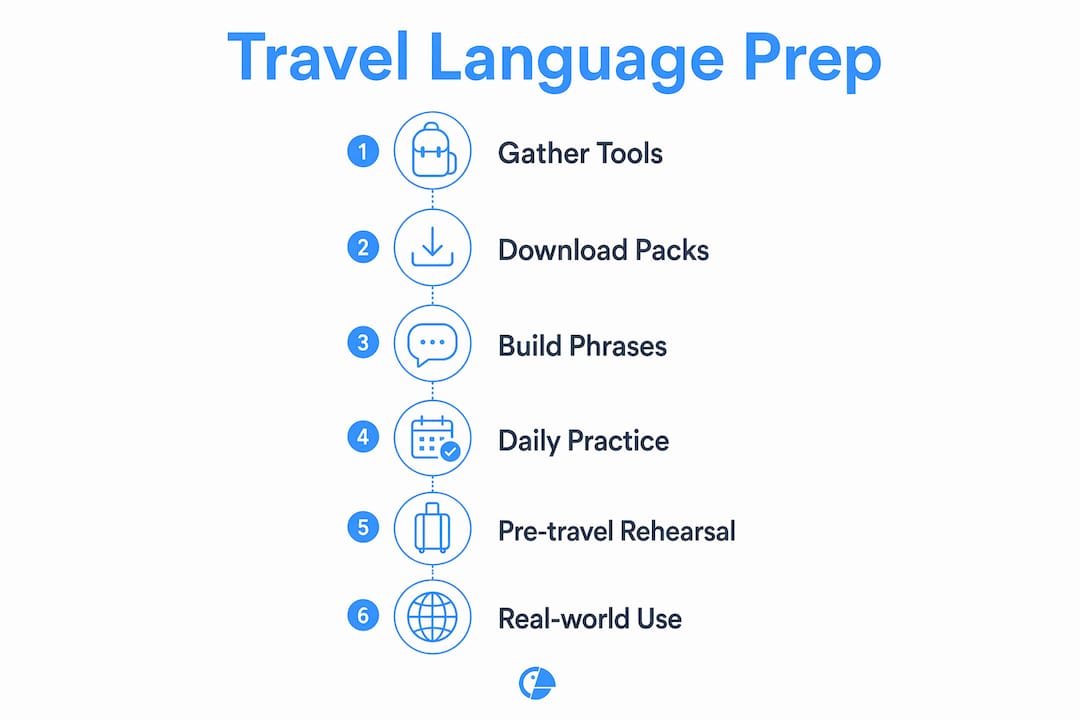
Your mindset matters as much as your toolkit. Brief, daily practice beats long, irregular sessions every time. Commit to 10–15 minutes each day rather than a two-hour cram session the night before you fly.
How do you build a phrase library for your travel needs?
A phrase library is not a vocabulary list. It is a curated set of mini-scripts organised by the situations you will actually face. Prioritising 5–7 core travel scenarios gives you a functional phrase base that covers your primary needs independently.
The seven scenarios every traveller should cover
- Airport and transport: Checking in, asking about gates, catching taxis or trains
- Hotel check-in: Confirming bookings, requesting room changes, asking about facilities
- Payments: Asking for the bill, confirming prices, handling card or cash transactions
- Directions: Asking how to get somewhere, understanding left, right, and distance
- Food ordering: Reading menus, flagging allergies, asking for recommendations
- Pharmacy and health: Describing symptoms, asking for medication, finding a doctor
- Emergencies: Calling for help, describing an incident, asking someone to call police
Rank these scenarios by how often you expect to use them during your specific trip. A traveller spending two weeks in rural France needs pharmacy and directions phrases far more urgently than someone on a five-day city tour of Tokyo with a guided group.
Build each scenario as a mini-script rather than isolated words. A mini-script for food ordering might run: greeting, pointing to the menu item, asking the price, and confirming the order. Organising phrases by situation significantly improves recall under travel stress compared to random vocabulary lists.
Use a spaced repetition system to drill your phrase library. SRS tools schedule reviews at increasing intervals, which means you spend less time on phrases you already know and more time on the ones that need work. This method dramatically improves retention compared to cramming.
Pro Tip: Write each mini-script on a separate index card. Carry the top three cards for the day's scenario in your pocket and review them during commutes or meal breaks.
What does an effective daily practice routine look like?
Structure is what separates travellers who arrive confident from those who freeze at the first real conversation. A consistent daily practice routine of 10–15 minutes produces measurably better results than sporadic longer sessions.
A daily routine that works:
- Minutes 1–3: Review yesterday's phrases using your SRS tool or flashcards
- Minutes 4–8: Practise today's new mini-script by speaking it aloud, not just reading it
- Minutes 9–12: Listen to a native speaker recording of the same phrases and shadow the pronunciation
- Minutes 13–15: Update your correction log with anything that felt unclear or awkward
Speaking phrases aloud is the step most travellers skip. Rehearsing mini-scripts aloud bridges the gap between passive recognition and live communication. Reading a phrase and saying it under pressure are completely different skills.
"Passive app use without active production leaves travellers unprepared for real communication pressures. The moment a local replies at full speed, recognition alone is not enough. You need the muscle memory of having said the phrase yourself, repeatedly, before you arrive."
Incorporate at least two live practice sessions per week with a tutor or language exchange partner. Live sessions expose you to natural speech rhythms, unexpected follow-up questions, and pronunciation feedback you simply cannot get from an app. Tutoroo connects travellers with private language tutors who specialise in exactly this kind of targeted, scenario-based preparation.
As your confidence grows, add follow-up phrases to each mini-script. If you can order food, learn how to ask for a recommendation or flag a dietary restriction. Progressive complexity keeps your practice challenging and your skills expanding right up to departure day.
How do you rehearse and troubleshoot real-world communication?
Rehearsal before you travel is the difference between a phrase you know and a phrase you can use. The goal is to simulate the pressure of a real interaction so that the actual moment feels familiar.
Four steps to effective pre-travel rehearsal
- Roleplay at home. Run through each mini-script with a friend, family member, or tutor playing the local. Ask them to respond naturally, not slowly.
- Test with a tutor. A session with a native-speaking tutor on Tutoroo exposes gaps in your pronunciation and listening comprehension that self-study misses entirely.
- Practise handling failure. Learn three recovery phrases: "Could you please repeat that?", "Could you speak more slowly?", and "Could you write that down?" These three phrases rescue more conversations than any vocabulary list.
- Simulate high-stress scenarios. Practise the pharmacy and emergency scripts while standing up, moving around, or with background noise playing. Stress changes how well you recall language.
Using phrase cards or fast-access phrasebooks reduces communication time and friction in noisy or high-stress situations. Accessing a phrase in one gesture is faster than typing into a translation app or waiting for voice recognition to process.
| Situation | Recommended tool | Backup option |
|---|---|---|
| Quiet hotel lobby | Translation app (live) | Phrasebook |
| Noisy market or street | Phrase card | Point-and-show phrasebook |
| Medical or emergency | Pre-written note in local script | Screenshot on phone |
| Transport or directions | Offline map with saved phrases | Printed address card |
Physical and digital backups of critical information are non-negotiable. Save your hotel address in the local script as a screenshot. Print your emergency contact numbers. Apps fail when batteries die or networks drop, and those moments tend to coincide with exactly the situations where you need help most.
Pro Tip: Ask your Tutoroo tutor to roleplay a scenario where you misunderstand the reply and have to recover. Practising failure is more valuable than practising success.
Avoid the English-speaking bubble. Seek out at least one interaction per day in the local language, even if it is just ordering a coffee or asking for directions. Consistent exposure to real-world language strategies builds the kind of confidence that no app session can replicate.
Key takeaways
Effective travel language preparation requires daily spoken practice, a scenario-driven phrase library, and physical backups, not passive app use or last-minute cramming.
| Point | Details |
|---|---|
| Daily practice wins | Ten to fifteen minutes of daily spoken practice improves usable skills by 30–50% within four weeks. |
| Build mini-scripts, not word lists | Organise phrases into 5–7 itinerary-specific scenarios to improve recall under pressure. |
| Speak aloud every session | Active production, not passive reading, prepares you for real conversations with native speakers. |
| Always prepare offline backups | Download language packs and save critical info as screenshots before departure. |
| Rehearse failure, not just success | Practise recovery phrases and high-stress scenarios with a tutor before you travel. |
Tutoroo's take: what actually works in travel language prep
The most common mistake we see is travellers treating language preparation as a reading exercise. They work through phrasebooks, tap through app lessons, and arrive abroad with solid recognition skills and almost no ability to produce a sentence under pressure. The gap between knowing a phrase and saying it to a stranger in a noisy street is enormous.
What actually works is embarrassingly simple. Say your phrases aloud every single day. Keep a correction log and review it the next morning. Book two or three sessions with a native-speaking tutor in the final weeks before departure and ask them to be ruthless about your pronunciation. The travellers who do this arrive with genuine confidence, not just a list of words they hope they remember.
Technology is a support tool, not a preparation strategy. A translation app is brilliant for reading a menu or deciphering a sign. It will not help you when a pharmacist speaks quickly and you need to describe a symptom clearly. Human interaction, even brief and imperfect, builds the kind of language instinct that apps cannot replicate. Start earlier than you think you need to, practise out loud, and find a real person to practise with.
— Tutoroo
How Tutoroo supports your travel language preparation
Tutoroo connects travellers with over 386,000 private language tutors worldwide, offering one-on-one sessions tailored to your specific trip and itinerary.
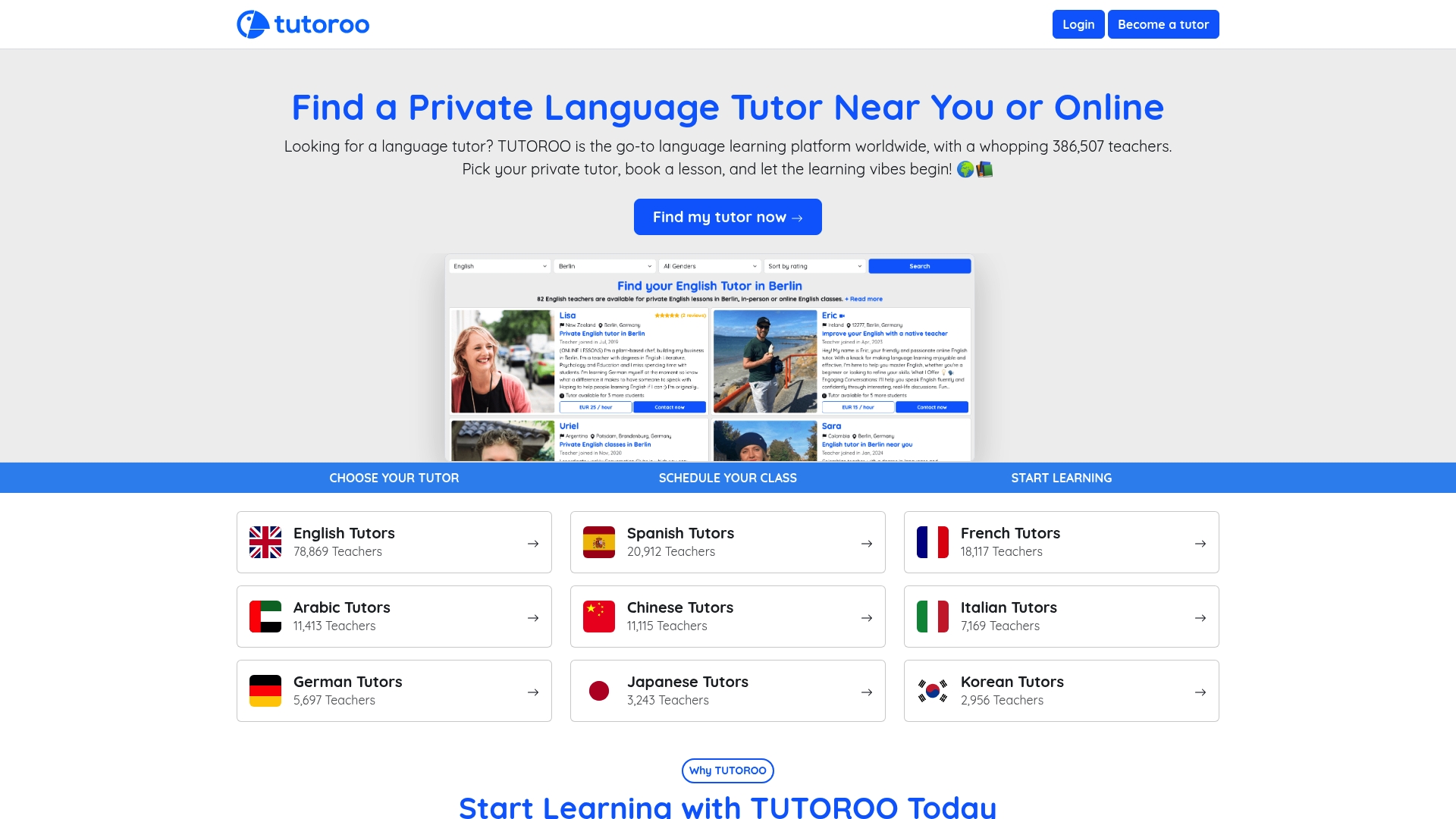
Whether you are preparing for a two-week trip through Spain or a business visit to Japan, a private tutor on Tutoroo can build a lesson plan around your exact travel scenarios. Sessions run online or in person, so you can fit preparation around your schedule in the weeks before departure. Tutors provide real-time pronunciation correction, scenario-based roleplay, and the kind of live feedback that transforms passive phrase knowledge into spoken confidence. If you are travelling to a region with a specific dialect or cultural communication style, Tutoroo's tutor matching makes it easy to find a native speaker who knows exactly what you will encounter on the ground.
FAQ
How long does travel language preparation take?
Four weeks of daily 10–15 minute sessions is enough to build functional communication skills for most travel scenarios. Consistent short practice produces better results than irregular longer sessions.
What phrases should I learn first?
Prioritise the seven core scenarios: airport, hotel check-in, payments, directions, food ordering, pharmacy, and emergencies. Rank them by how frequently your specific itinerary will require them.
Do I need to download offline language packs?
Download offline language packs at least 24 hours before departure. Offline packs keep translation and voice features working in areas with no mobile data or when your connection drops.
Is a language tutor necessary for travel preparation?
A tutor is not strictly necessary, but live practice with a native speaker closes the gap between recognition and real communication far faster than self-study alone. Even two or three sessions before departure make a measurable difference.
What is a correction log and how do I use it?
A correction log is a simple record of phrases that failed or felt awkward during practice. Write the context, what went wrong, and the corrected version. Reviewing it each morning accelerates improvement and prevents the same mistakes from repeating.