
TL;DR:
- Effective travel language strategies prioritize high-frequency phrases, authentic media, and live practice for real-world communication. Combining apps, spaced repetition, and cultural awareness accelerates fluency faster than any single method, especially when focused on practical tasks. Immersive, consistent effort and speaking imperfectly build confidence and conversational ability for travel success.
You can spend months planning the perfect trip and still feel completely lost the moment a local speaks to you. The good news is that fluency is not the goal. The right language learning strategies for travelers make the difference between ordering the wrong meal and sharing a genuine laugh with someone across the world. Whether you have one week or two months before departure, the strategies you choose determine how much real communication you actually experience when you get there.
Table of Contents
- Key takeaways
- What makes language learning strategies for travellers actually work
- Top language learning tools and methods for travellers
- Comparing language learning approaches for travellers
- Practical quick-start plans for every travel timeline
- My take on language learning for travellers
- Ready to speak confidently before you land?
- FAQ
Key takeaways
| Point | Details |
|---|---|
| Focus on high-frequency phrases | Prioritise survival vocabulary and greetings rather than grammar rules to communicate quickly and confidently. |
| Use a hybrid learning method | Combining apps, spaced repetition, and live conversation practice produces far better results than any single tool alone. |
| Cultural awareness matters | Learning words without cultural context risks misunderstandings that a phrasebook alone will never warn you about. |
| Set goals using real tasks | Measure readiness by whether you can order food or ask for directions, not by how many hours you have studied. |
| Start speaking early | Practise speaking from day one, even imperfectly, to build the confidence that carries you through real travel situations. |
What makes language learning strategies for travellers actually work
Not every language learning method suits a traveller with limited preparation time. Before selecting tools or committing to a programme, it helps to understand what separates a strategy that delivers real results from one that just feels productive.
The most important filter is time. Short-term travellers who invest around seven to ten hours can realistically acquire fifty to one hundred essential phrases, while four weeks of consistent effort can yield two to three hundred phrases alongside basic grammar. That shapes everything about which approach makes sense for you.
From there, consider these key factors before you commit to any method:
- High-frequency vocabulary first. Focus on the words and phrases locals use most often, not random vocabulary from a coursebook.
- Active output over passive input. Reading alone will not prepare you to speak. You need to produce the language, not just recognise it.
- Cultural context alongside vocabulary. Words carry meaning beyond their dictionary definitions, and misreading that context leads to genuine friction.
- Practical, task-based readiness. The CEFR framework measures language ability through real communicative tasks like ordering food or handling emergencies, not classroom hours. Use this lens to judge whether you are ready, not how many lessons you have completed.
Pro Tip: Write down three to five real situations you expect to face on your trip, such as catching a taxi, visiting a market, or checking into accommodation. Build your vocabulary and practice around those exact scenarios from the start.
Top language learning tools and methods for travellers
The best travel language apps and methods share one quality: they close the gap between knowing a word and using it confidently in the moment. Here is a breakdown of the most effective options available in 2026.
Language learning apps such as Duolingo and Babbel are excellent for building a base of vocabulary and basic grammar patterns. They are free or low-cost, require no scheduling, and let you learn in short bursts on the train or during a lunch break. The limitation is that apps alone plateau early, and relying on them exclusively rarely leads to real conversational ability.
Spaced repetition systems (SRS) like Anki offer something most apps do not: scientifically structured review that prevents forgetting. Spaced retrieval practice produces statistically significant improvements in oral fluency, including sustained speech length and articulation rate. Load Anki with travel-specific vocabulary decks and you will retain far more of what you study.
Authentic media is one of the most underrated tools available. Watching films, listening to podcasts, or playing music in your target language trains your ear to the natural rhythm and speed of real speech. Learners who combine apps with authentic media improve their listening comprehension 47% faster than those using apps alone.

Live tutoring and conversation practice sits at the top of the effectiveness hierarchy. Speaking with a real person forces you to respond in real time, exposes you to natural pronunciation, and provides the cultural nuance no algorithm can replicate. Platforms connecting learners with native-speaking tutors offer sessions specifically tailored to travel scenarios, which is exactly what you need. You can explore language exchange alternatives if you want free conversation practice alongside structured tutoring.
Offline phrasebooks and phrasebook apps serve as a safety net rather than a primary tool. They are most valuable in moments when you need a quick reference and do not have time to think. Download one for offline access before you leave.
Pro Tip: Create a custom Anki deck with fifty phrases specific to your destination and review it for ten minutes every morning. By the end of two weeks, those phrases will feel automatic rather than remembered.
Comparing language learning approaches for travellers
Different methods serve different goals. This comparison helps you weigh up the options based on what matters most when you are preparing for a trip.
| Method | Speed of results | Speaking practice | Cultural awareness | Cost | Best for |
|---|---|---|---|---|---|
| Apps only (e.g. Duolingo) | Moderate | Low | Low | Free to low | Complete beginners with limited time |
| Spaced repetition (Anki) | High for vocabulary | Low | Low | Free | Building and retaining phrase lists |
| Authentic media | Slow at first | Low | High | Free | Immersive listening and cultural context |
| Live tutoring (1-on-1) | High for speaking | Very high | Very high | Medium to high | Conversational fluency and real-world prep |
| Phrasebooks (offline) | Immediate | None | Low | Low | Quick reference in the field |
| Hybrid approach | Highest overall | High | High | Varies | Travellers who want the best outcomes |
The pattern is clear. No single method covers all the bases. A hybrid approach combining spaced repetition for vocabulary, authentic media for listening, and live conversation practice for speaking consistently outperforms any tool used in isolation. Spaced repetition reduces forgetting by up to 80% compared to passive review, but it only reaches its full potential when paired with active speaking sessions.
Practical quick-start plans for every travel timeline
One of the most common mistakes travellers make is treating language preparation as a single block of study rather than a daily habit. Here is how to structure your effort based on the time you have available.
If you have one week:
- Spend the first two days learning twenty core phrases covering greetings, directions, and numbers using a phrasebook app.
- Record yourself saying each phrase and listen back to catch pronunciation issues.
- Run the phrases through an Anki deck twice daily, morning and evening.
- Watch one short video or listen to one podcast episode in the target language each day, even without understanding everything.
- On day five, book a single thirty-minute session with a native-speaking tutor and rehearse your core phrases in context.
If you have two weeks:
- Follow the one-week plan above for the first seven days.
- Expand your vocabulary to cover food ordering, transport, accommodation, and basic emergencies.
- Add two more tutoring sessions focused on real travel role-plays.
- Begin learning ten to fifteen culture-specific notes, including any words in your native language that may sound offensive locally. Everyday English words like "salsa" can carry embarrassing meanings in other languages, so this step matters more than most travellers expect.
If you have four weeks or more:
- Dedicate the first week to survival phrases and pronunciation.
- Use weeks two and three to build grammar patterns around real situations using structured lessons.
- Schedule weekly tutoring sessions and increase frequency in the final week.
- Spend the last few days doing immersive practice: think in the language, label objects around your home, and narrate your daily routine.
Pro Tip: Avoid the temptation to study grammar rules exhaustively before a short trip. For one to two week travels, practical phrases and cultural confidence will serve you far better than knowing when to use the subjunctive.
Understanding how to learn a language quickly is ultimately about removing the gap between study and real-world use as fast as possible. Every technique that moves you closer to actual conversation is worth prioritising.
My take on language learning for travellers
I have seen thousands of learners approach travel language preparation, and the biggest dividing line is not which app they use. It is whether they are willing to speak imperfectly.
In my experience, travellers who obsess over getting grammar right before they open their mouths consistently underperform those who speak badly and often from week one. Real fluency, or even basic conversational ability, grows through attempted communication, not through preparation for it. The discomfort of making mistakes in front of a native speaker is the actual lesson.
What I have also learned is that cultural sensitivity is not an add-on to language learning. It is built into every meaningful exchange. Knowing that AI and apps can build vocabulary but cannot teach you how a local actually feels when you mispronounce their greeting or use a word that carries unintended meaning — that gap is where human tutoring earns its value.
My honest recommendation: set one tiny, specific goal per day. Not "study Spanish for an hour" but "order a coffee in Spanish without switching to English." Goals anchored to real situations keep motivation alive in a way that lesson counts never do. And when the trip is over, keep going. The best language immersion for tourists is not a two-week sprint. It is a habit that outlasts the holiday.
— TUTOROO
Ready to speak confidently before you land?
Knowing the right strategies is one thing. Practising them with a real person who understands travel contexts is where confidence actually comes from.
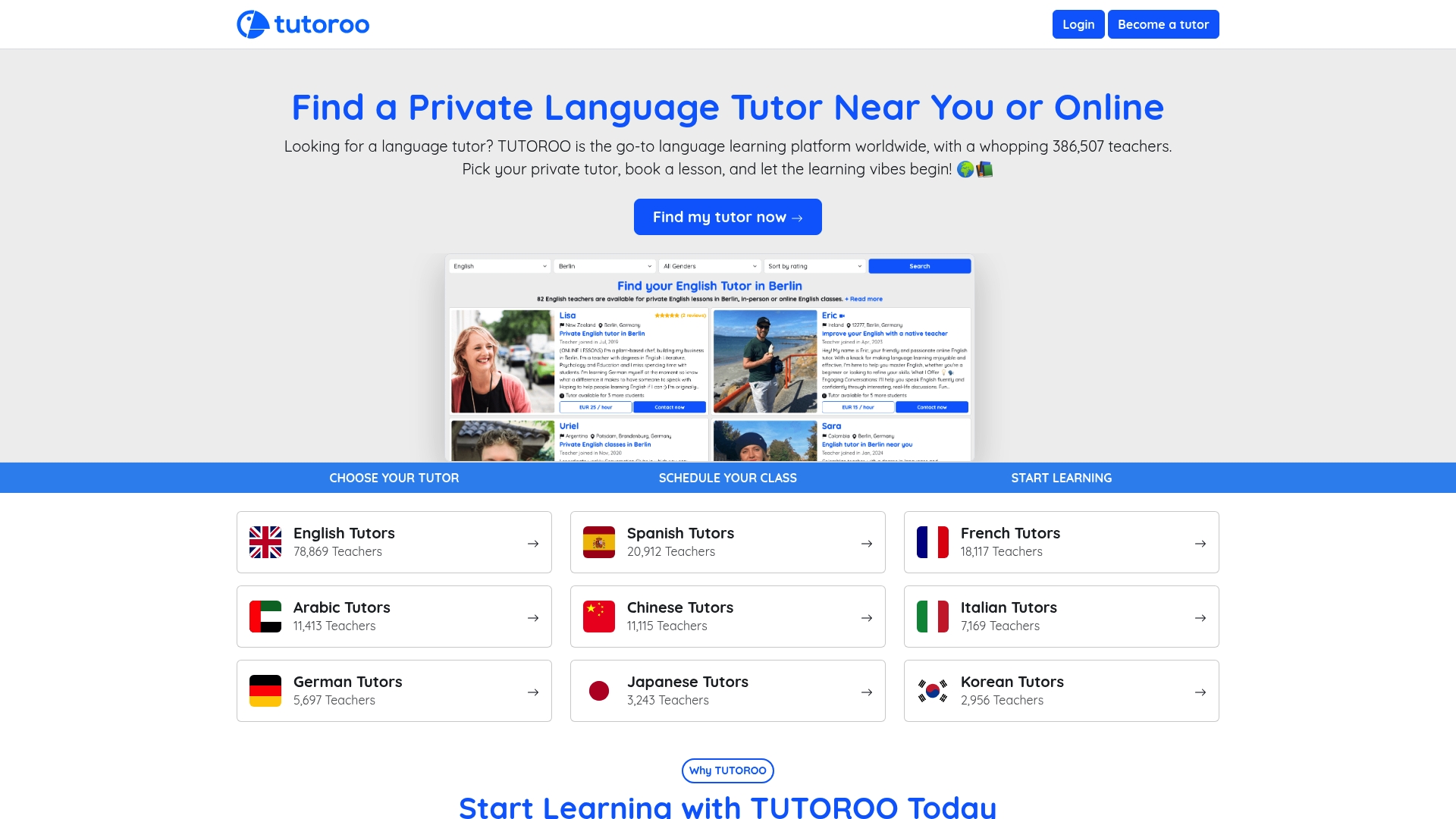
At Tutoroo, you can connect with over 386,000 private language tutors online or in person, many of whom specialise in preparing travellers for specific destinations and conversation scenarios. Whether you need a few focused sessions before a trip to Southeast Asia or want to find a dedicated Malay language tutor for your Malaysian adventure, Tutoroo matches you with the right person quickly and without the friction of traditional language schools. Sessions are flexible, personalised, and built around your travel timeline.
FAQ
What are the most effective language learning strategies for travellers?
The most effective approach combines spaced repetition for vocabulary, authentic media for listening, and live conversation practice with a native speaker. No single tool delivers the full range of skills you need for real travel communication.
How many phrases can you realistically learn before a trip?
With seven to ten hours of focused study, most learners can acquire fifty to one hundred high-frequency phrases. Four weeks of consistent practice can extend this to two to three hundred phrases alongside basic grammar patterns.
Do language learning apps work for travel preparation?
Apps like Duolingo and Babbel build a useful vocabulary base but plateau quickly on their own. Learners who pair apps with authentic media improve listening comprehension 47% faster, and adding live speaking practice produces the strongest overall results.
Why does cultural awareness matter in language learning for travel?
Some ordinary English words sound offensive or humorous in other languages, and using them unintentionally can create social friction. Cultural awareness, including understanding local customs and potential language pitfalls, is as important as vocabulary when communicating abroad.
How do I measure whether I am ready for travel communication?
Use task-based benchmarks rather than study hours. If you can order a meal, ask for directions, and handle a basic emergency in your target language, you are ready for most travel situations regardless of your formal proficiency level.