

TL;DR:
- The best travel languages are Spanish, French, Mandarin, Arabic, and Japanese, offering wide geographic reach and cultural access. Learning 50 to 300 common phrases in one to four weeks enables practical communication and meaningful cultural engagement abroad. Matching your language to your travel destination and focusing on core phrases enhances local interactions and enriches your experience.
The best languages to learn for travel are those that open doors to genuine connection, smoother logistics, and richer cultural experiences across the widest range of destinations. Spanish, French, Mandarin, Arabic, and Japanese stand out as the most useful languages for travel in 2026, each offering a distinct combination of geographic reach, speaker population, and cultural depth. You do not need fluency to benefit. Research shows that travel-ready competence requires just 50–300 essential survival phrases, which most travellers can acquire in one to four weeks of focused study.
1. Why the best languages to learn for travel are Spanish, French, Mandarin, Arabic, and Japanese
Choosing a language for travel is a practical decision, not an academic one. The right choice depends on geographic reach, the number of countries where the language is spoken officially, and how deeply it unlocks cultural access.
- Spanish is official in 21 countries with roughly 500 million speakers. That reach spans Latin America, Spain, and parts of the Caribbean, making it the highest-return language for English-speaking travellers.
- French is spoken across Europe, West Africa, and the Caribbean. It is the working language of many international organisations and gives travellers access to dozens of countries on multiple continents.
- Mandarin has 1.2 billion native speakers. For anyone travelling through mainland China, Taiwan, or parts of Southeast Asia, even basic Mandarin phrases produce an outsized response from locals.
- Arabic is the gateway language for the Middle East and North Africa. Learning Modern Standard Arabic or a regional dialect opens access to a culturally rich and historically significant part of the world.
- Japanese is geographically concentrated but culturally rewarding. Japan's tourism infrastructure is world-class, yet locals respond warmly and with genuine surprise when visitors make any effort in Japanese.
Travel experts recommend matching your language choice to your planned travel regions and personal goals rather than defaulting to global popularity rankings. A traveller heading to Morocco and Egypt gains far more from Arabic than from Mandarin, regardless of speaker population statistics.
2. How to get travel-ready in a language within one to four weeks
Phrase-based competence is the most efficient path to practical language skills for travel. This approach prioritises high-frequency, context-specific phrases over grammar rules or vocabulary lists.
- Set a phrase target. One week of 7–10 hours of study produces 50–100 usable phrases. Four weeks of the same effort yields 200–300 phrases plus a foundation in basic grammar. That range covers most real travel situations.
- Prioritise by situation. Focus on greetings, directions, food ordering, numbers, and emergency phrases first. These categories cover the majority of daily interactions a traveller faces.
- Practise pronunciation actively. Pronunciation-focused practice using speech recognition tools or audio comparison is more effective than reading phrases silently. Locals respond to spoken language, not written notes.
- Use spaced repetition. Apps built on spaced repetition algorithms help phrases stick faster than passive review. Fifteen minutes a day, every day, beats two hours on a Sunday.
- Simulate real situations. Practise ordering food, asking for directions, and buying tickets out loud before you travel. Muscle memory matters when you are nervous or tired in a foreign country.
Pro Tip: Prioritise phrase-based competence over grammar mastery. Knowing how to say "Where is the train station?" correctly matters far more than understanding why the verb conjugates the way it does.
The language learning strategies that work best for travellers are those built around real-world scenarios, not textbook exercises. A private tutor who understands your destination can compress weeks of preparation into targeted, practical sessions.
3. What makes language skills so powerful for cultural engagement
Speaking even a handful of phrases in the local language transforms how locals perceive and treat you. The shift from "tourist" to "guest" happens faster than most travellers expect.
- Greetings signal respect. A simple "good morning" or "thank you" in the local language communicates that you see the culture as worth engaging with, not just passing through.
- Food vocabulary opens conversations. Learning food-related language first delivers immediate rewards. Asking about a dish by name, or complimenting a meal in the local tongue, is one of the easiest ways to spark a genuine exchange.
- Language reduces tourist treatment. Speaking local phrases prevents travellers from being seen purely as outsiders, which leads to better hospitality, more honest pricing, and insider recommendations that never appear in guidebooks.
- Minimal effort, maximum impact. Basic greetings and polite phrases are enough to shift the dynamic of most interactions. Locals appreciate the attempt, even when the pronunciation is imperfect.
"Connection, not fluency, is the real goal when learning a language for travel. Locals notice and appreciate even imperfect attempts. The effort itself communicates respect, curiosity, and a genuine desire to engage with their culture."
Avoiding reliance on translation apps is another practical benefit. Knowing the basics lets you ask directions, order food, and handle small problems independently. Translation apps fail in noisy markets, poor signal areas, and moments when you need to respond quickly.
4. How to choose which language fits your travel goals
Matching your language choice to your actual travel plans is the single most important decision in this process. Choosing based on geography and goals produces better results than choosing based on global speaker rankings alone.
The table below compares the five top travel languages across the factors that matter most to travellers.
| Language | Official countries | Estimated learning time (basic travel phrases) | Best for |
|---|---|---|---|
| Spanish | 21 | 1–2 weeks | Latin America, Spain, Caribbean |
| French | 29 | 2–3 weeks | Europe, West Africa, Caribbean |
| Mandarin | 3 (widespread use) | 3–4 weeks | China, Taiwan, Southeast Asia |
| Arabic | 22 | 3–4 weeks | Middle East, North Africa |
| Japanese | 1 | 2–3 weeks | Japan, cultural tourism |
Spanish offers the highest return on investment for English-speaking travellers planning trips across multiple countries. French is the stronger choice for anyone combining European and African destinations. Mandarin and Arabic require more preparation time but reward the effort with access to cultures that are genuinely difficult to reach through English alone.
For long-term stays or cultural immersion trips, consider pairing your phrase-based preparation with structured lessons. Spanish tutors online can tailor sessions to your specific destination, whether that is Buenos Aires, Barcelona, or Mexico City. Mandarin tutors can focus on the tones and phrases most relevant to your itinerary. For Arabic, beginner-level resources like basic Arabic courses provide a solid foundation before you travel.
Pro Tip: If you are visiting a country where English is widely spoken in tourist areas, such as Japan or the Netherlands, learning the local language still pays off. Locals respond differently when you make the effort, regardless of whether they could answer you in English.
Key takeaways
The most useful languages for travel are those that match your destination, require realistic preparation time, and prioritise phrase-based competence over fluency.
| Point | Details |
|---|---|
| Spanish leads for reach | Spanish is official in 21 countries, making it the highest-return language for most travellers. |
| Phrase-based learning works fast | One to four weeks of focused study produces 50–300 phrases, enough for most travel situations. |
| Connection beats fluency | Locals appreciate even basic attempts; the goal is engagement, not perfection. |
| Match language to destination | Choose based on your travel region and goals, not global speaker population alone. |
| Food vocabulary is your entry point | Learning food-related phrases first builds confidence and opens genuine cultural conversations. |
Tutoroo's take on learning languages for travel
Travellers consistently overestimate what they need to know before they go. The assumption that you must be conversationally fluent before a trip is one of the most common reasons people never start learning at all. At Tutoroo, we see this pattern regularly, and it is worth addressing directly.
The travellers who get the most out of language learning are not the ones who spend six months working through a textbook. They are the ones who spend three weeks learning the phrases that matter for their specific trip, practise pronunciation until it feels natural, and then show up willing to make mistakes. That combination works every time.
What surprises most people is how little it takes to shift a local's response. Ordering coffee in Italian, asking for directions in Thai, or saying goodbye properly in Japanese produces a reaction that no translation app can replicate. The local sees you differently. The interaction becomes warmer. You leave with a story instead of a transaction.
The joy of travel languages is not in mastering them. It is in using them imperfectly and being met with genuine warmth anyway. Start with the phrases that matter for your next trip. The rest follows naturally.
— Tutoroo
Tutoroo's private tutors for your next trip
Preparing a language for travel is faster and more enjoyable with a tutor who knows your destination. Tutoroo connects you with over 386,000 private language tutors worldwide, covering Spanish, French, Mandarin, Arabic, Japanese, and dozens of other languages.
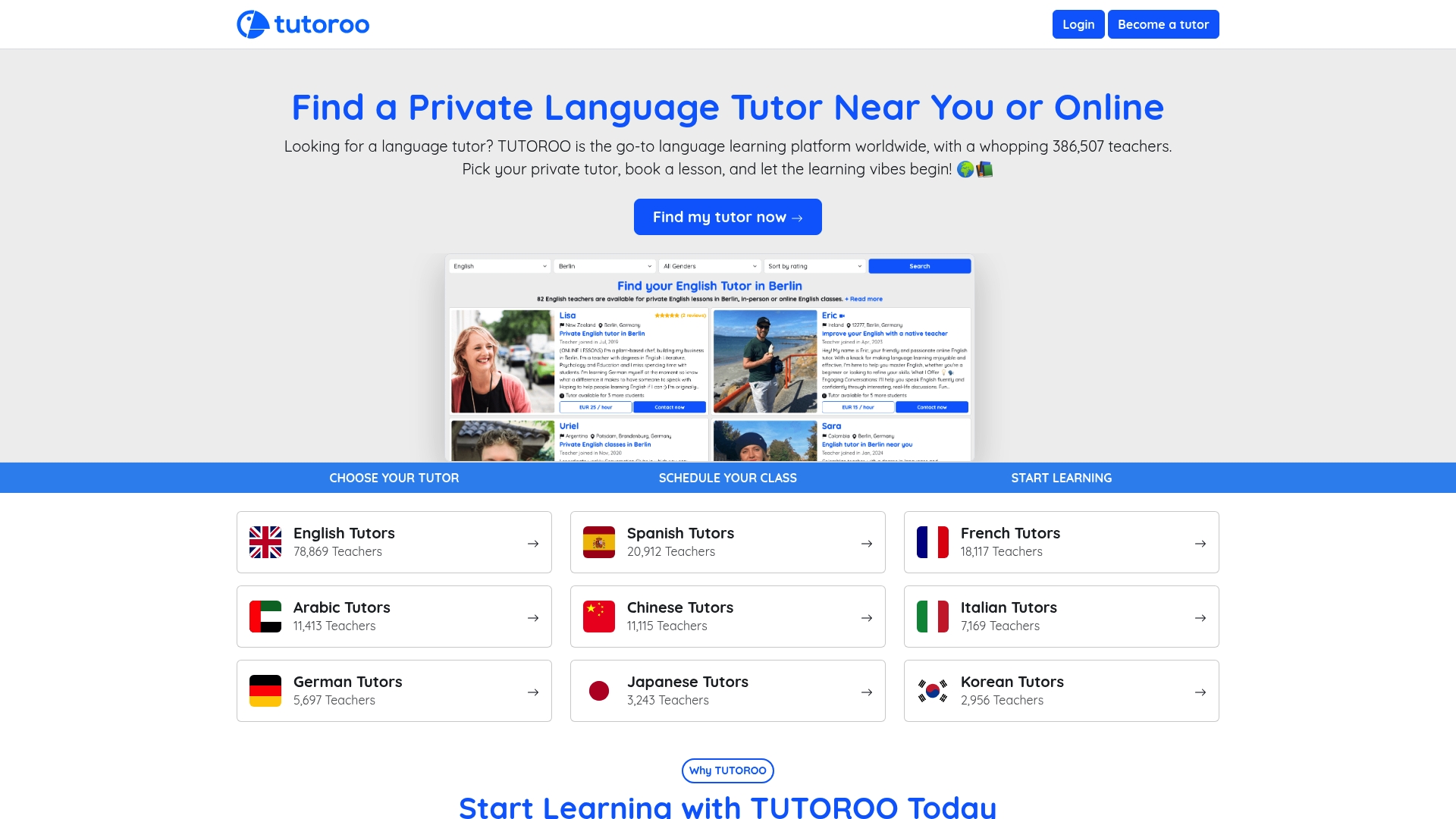
Lessons are available online or in person, and every tutor can tailor sessions to your travel itinerary, focusing on the phrases, pronunciation, and cultural context you actually need. Whether you have four weeks or four days before departure, a private language tutor can build a preparation plan that fits your schedule and your destination. French tutors can prepare you for Paris or Dakar. Mandarin tutors can focus on the tones and phrases most useful in Beijing or Chengdu. The right tutor makes the difference between arriving prepared and arriving anxious.
FAQ
What are the most useful languages for travel?
Spanish, French, Mandarin, Arabic, and Japanese are the most useful languages for travel in 2026. Spanish alone is official in 21 countries, giving it the widest geographic reach for most travellers.
How long does it take to learn enough of a language for travel?
Beginners can reach travel-ready status in one to four weeks by learning 50–300 essential survival phrases. One week of 7–10 hours of study produces 50–100 usable phrases.
Is it worth learning a language if locals speak English?
Yes. Even in destinations where English is widely spoken, making an effort in the local language changes how locals respond to you. The effort signals respect and curiosity, which leads to warmer interactions and better experiences.
What phrases should I learn first for travel?
Prioritise greetings, directions, food ordering, numbers, and emergency phrases. These categories cover the majority of real situations a traveller encounters and deliver the fastest return on study time.
How do I choose which language to learn for my trip?
Match your language choice to your planned travel region and personal goals. Choosing based on geography rather than global popularity produces the most practical results for your specific itinerary.