

TL;DR:
- Digital messaging plays a central role in modern language education by enabling immediate feedback and authentic communication. Research shows that messaging improves engagement, vocabulary, and learning scores while drawing learners in early. However, challenges like distraction, informal register, and access barriers require structured boundaries and supportive infrastructure for effective use.
Messaging in language education is defined as the use of digital text-based communication, including apps, platforms, and direct exchanges, to support language acquisition and effective communication between learners, educators, and peers. Research confirms that weekly teacher messages increase parental engagement by 5%, and government-led text campaigns have lifted student enrolment by 6 percentage points while improving maths and language scores by 0.2 standard deviations. These figures show that digital messaging is not a peripheral tool. It sits at the centre of modern language teaching, shaping how learners practise, receive feedback, and stay connected to their studies.
How does messaging improve communication in language education?
Messaging enables immediate feedback loops that transform passive language input into active output. When a learner sends a message in their target language and receives a correction or reply within minutes, they practise real negotiation of meaning. That cycle, repeated daily, accelerates acquisition far faster than weekly written assignments alone.

Platforms such as WhatsApp and Facebook Messenger are now standard in many language classrooms across Australia and internationally. Messenger apps facilitate teacher-student communication and measurably boost motivation and engagement in English as a Foreign Language (EFL) contexts. Learners report more positive attitudes toward their studies when they can reach their teacher outside the classroom wall.
Peer-to-peer messaging adds another layer. When learners message each other to complete a task, they produce authentic language under real communicative pressure. Reciprocal messaging tasks improve vocabulary, interactive writing, and pragmatic competence in EFL classrooms. That means learners do not just learn words; they learn when and how to use them.
Key benefits of messaging for language learners include:
- Immediate correction: Errors are addressed in context, not days later.
- Authentic output: Learners write for a real audience, not just a teacher.
- Reduced anxiety: Text-based exchanges lower the pressure of speaking in real time.
- Flexible access: Learners can practise at any hour, from any location.
- Cultural connection: Messaging opens doors to native-speaker exchanges and cultural nuance.
Pro Tip: Set a brief daily messaging task, such as asking learners to describe their morning in three sentences in the target language. Short, consistent output builds fluency faster than occasional long exercises.
What evidence supports messaging's effectiveness in language learning?
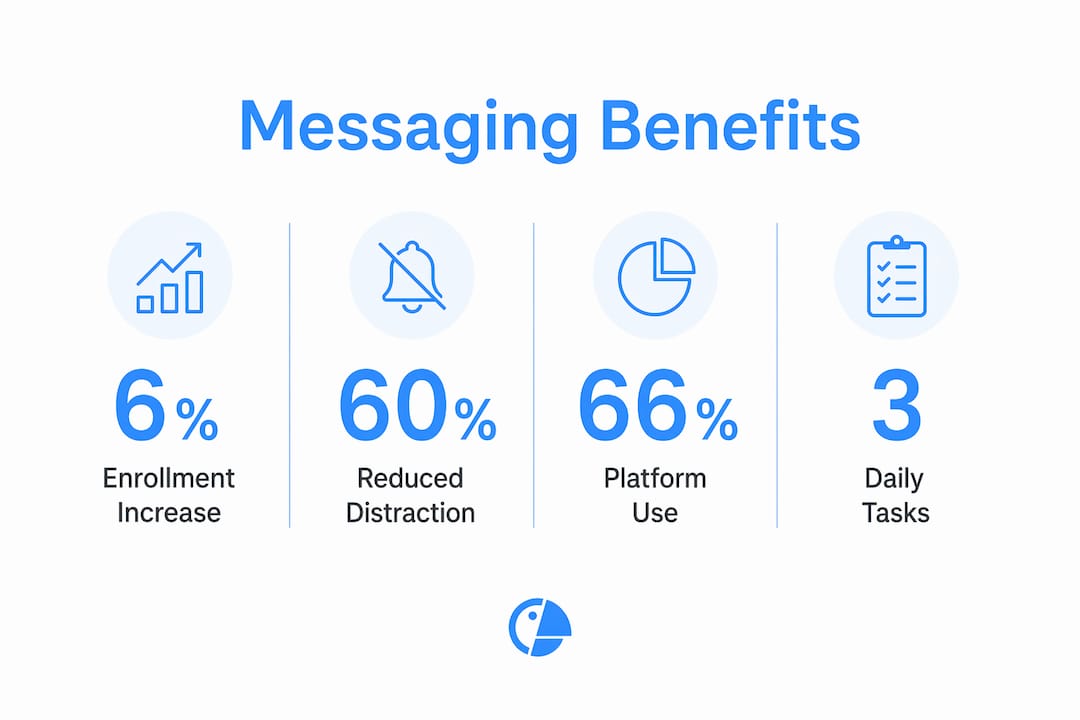
Research from multiple sources confirms that messaging produces measurable gains across enrolment, engagement, and skill development. The table below summarises key findings.
| Study / Source | Key Metric | Outcome |
|---|---|---|
| NSW Government behavioural insights | Parental engagement | 5% increase with weekly teacher messages |
| World Bank (2026) | Student enrolment | 6 percentage point increase via text campaigns |
| World Bank (2026) | Learning scores | 0.2 standard deviation improvement in maths and language |
| University-level social media study | Perceived usefulness | 66% of tertiary students find social media useful for language learning |
| EFL reciprocal messaging research | Writing skills | Improved vocabulary, spelling, coherence, and pragmatic competence |
The World Bank findings are particularly striking. A 6 percentage point enrolment increase driven purely by text campaigns shows that messaging does not just support learning once learners are engaged. It draws them in before they even enter the classroom. That is a function no textbook can replicate.
The university-level data tells a more nuanced story. 66% of tertiary students find social media platforms useful for language learning. That majority view reflects genuine perceived value, not novelty. Learners recognise that messaging gives them practice opportunities that structured class time cannot always provide.
The reciprocal messaging research adds depth to the skills picture. Improvements in vocabulary, spelling, and coherence suggest that messaging does not just build confidence. It builds measurable linguistic competence when tasks are designed with clear learning goals.
What challenges and limitations exist in using messaging for language education?
Messaging carries real risks alongside its benefits. The most cited concern among educators is the bleed between informal register and academic writing. When learners spend hours writing in abbreviated, casual text language, those habits can creep into formal assessments. Educators must actively scaffold the transition between the two registers.
Distraction is the second major obstacle. 60% of tertiary students report struggling with distractions when using social media for study. That figure reflects a genuine structural problem. A messaging app that delivers a language task also delivers notifications from friends, news feeds, and entertainment. Without clear boundaries, the learning purpose dissolves.
Teacher workload is a third pressure point. Setting messaging windows helps teachers maintain motivation while avoiding the burnout that comes from 24/7 correction expectations. Without those boundaries, messaging can shift from a teaching tool into an always-on obligation. Infrastructure also matters. Learners in areas with limited internet access or high data costs face real barriers to participation, which can widen existing educational inequities.
Common challenges educators face include:
- Register confusion: Informal texting habits interfere with formal writing skills.
- Digital distraction: Off-topic content competes with learning tasks.
- Teacher burnout: Unlimited messaging expectations drain educator energy.
- Unequal access: Connectivity gaps exclude some learners from digital tools.
- Lack of structure: Without clear guidelines, messaging becomes social rather than educational.
Pro Tip: Announce your messaging hours at the start of each term and post them in your course outline. Learners respect clear boundaries, and you protect your own capacity to teach well.
How can educators effectively integrate messaging into language teaching?
Practical integration requires a clear framework, not just good intentions. The following strategies reflect current research on what actually works in language classrooms.
-
Use messaging to reinforce pre-class preparation. Messaging supports flipped learning by reinforcing pre-class preparation rather than replacing core instruction. Send a short vocabulary list or audio clip the night before class. Ask learners to reply with one sentence using a new word. They arrive primed, and class time deepens rather than introduces.
-
Set specific messaging hours. Define when you are available to respond. Post those hours clearly and stick to them. This protects your workload and teaches learners to plan their questions, which is itself a valuable study skill.
-
Scaffold from informal to formal writing explicitly. Do not assume learners will make the shift on their own. Assign tasks that require formal register within a messaging platform. For example, ask learners to write a professional email draft via WhatsApp, then compare it to a casual version. The contrast makes the difference visible.
-
Encourage teacher-to-teacher digital collaboration. Messaging tools support teaching collaboration but remain underutilised for structured instructional development. Create a staff messaging group to share lesson ideas, flag learner challenges, and co-design tasks. That collective knowledge improves outcomes for every learner in the network.
-
Pair messaging with stable institutional support. Messaging tools work best when backed by reliable infrastructure, clear policies, and professional development. Encourage your institution to invest in non-presential learning tools that complement messaging and give educators a broader digital toolkit.
The most effective approach treats messaging as a complement to structured teaching, not a substitute for it. When learners know that messaging is one part of a well-designed learning experience, they use it with more purpose and less distraction.
Key takeaways
Messaging in language education produces the strongest outcomes when it is structured, bounded, and integrated into a broader teaching plan rather than used as a standalone tool.
| Point | Details |
|---|---|
| Messaging drives measurable gains | World Bank data shows a 6 percentage point enrolment increase and 0.2 SD score improvement from text campaigns. |
| Immediate feedback accelerates acquisition | Reciprocal messaging tasks improve vocabulary, coherence, and pragmatic competence in EFL learners. |
| Distraction is a real risk | 60% of tertiary students report distraction when using social media platforms for language study. |
| Messaging windows protect educators | Setting defined hours prevents burnout and maintains the quality of teacher-learner communication. |
| Scaffolding bridges informal and formal writing | Explicit register instruction stops casual texting habits from undermining academic writing skills. |
Tutoroo's perspective on messaging and language learning
Messaging is not a shortcut to fluency. It is a channel, and like any channel, its value depends entirely on how it is used. At Tutoroo, we see this play out constantly across our community of over 386,000 language tutors and the learners they work with worldwide.
The most common mistake we observe is treating messaging as a replacement for structured teaching. A learner who only chats informally with a tutor via text will build confidence, but they may not build accuracy. The feedback that shapes real progress is deliberate, targeted, and tied to specific learning goals. Messaging delivers that feedback fastest when the tutor knows exactly what to look for.
What genuinely excites us is messaging's ability to keep learners connected between sessions. A tutor who sends a short vocabulary challenge on a Tuesday morning keeps the language alive in a learner's week. That consistency, even in small doses, compounds over months into real fluency. The student-tutor messaging dynamic is one of the most underrated factors in long-term learner retention.
Digital communication competence among teachers also predicts how well they use these tools. Teacher digital competence directly shapes the quality of messaging-based support learners receive. That is why we believe professional development in digital communication is not optional for language educators. It is part of the job.
Messaging will keep evolving. The educators who thrive will be those who treat it as a craft, not a convenience.
— Tutoroo
Private tutoring with messaging at its core
Personalised language learning works best when communication between tutor and learner is consistent, clear, and purposeful. Tutoroo connects learners with private tutors across more than 50 languages, offering flexible sessions online or in person, supported by direct messaging that keeps the learning conversation going between lessons.
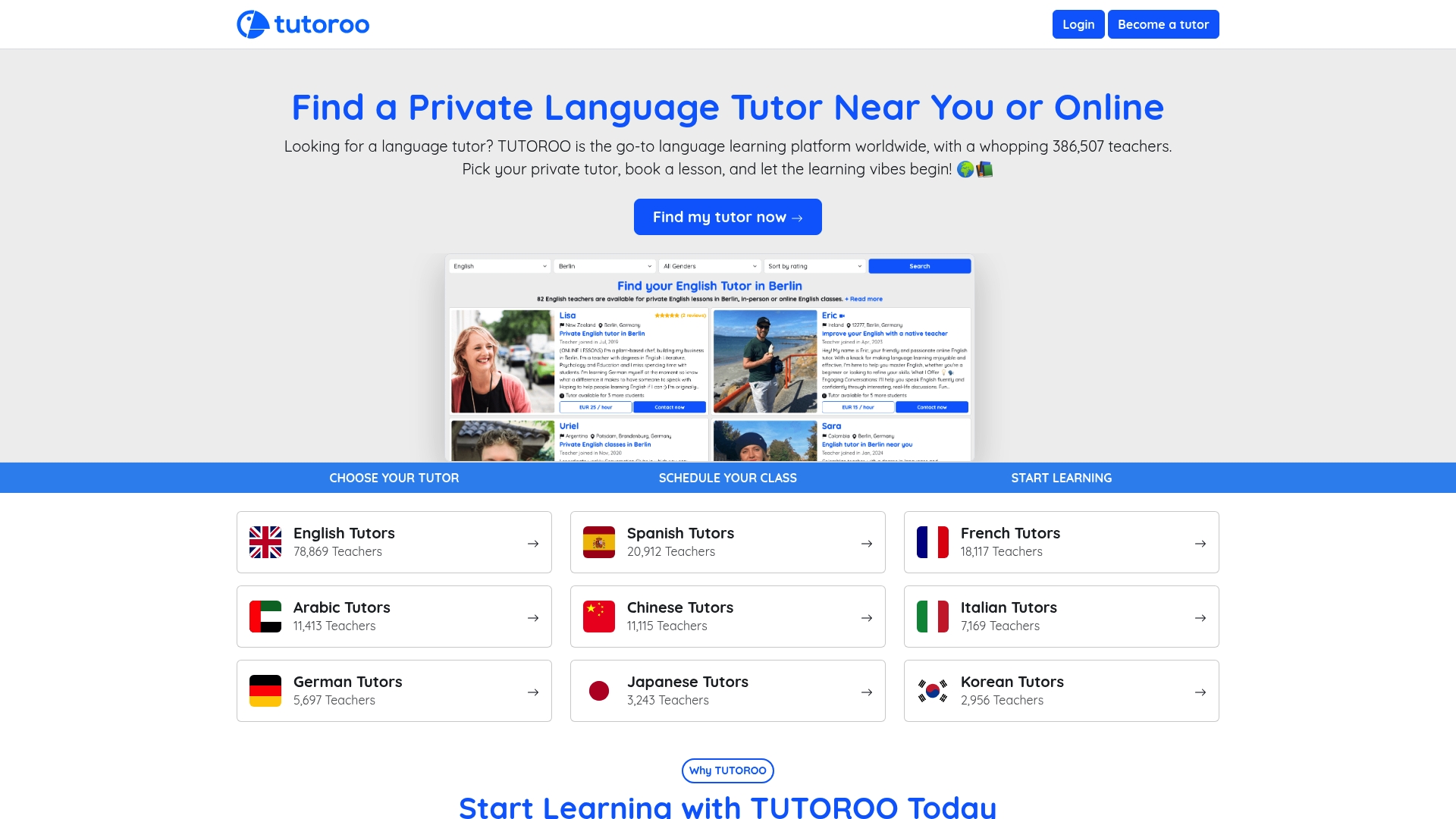
Whether you are learning English, Spanish, French, Arabic, or Malay, Tutoroo's platform makes it straightforward to find a tutor who fits your schedule, your goals, and your learning style. Tutors on the platform use messaging to send practice tasks, share resources, and provide feedback that builds real skill. With over 386,000 tutors available globally, finding the right match is faster than you might expect. Find a private tutor and experience language learning that does not stop when the session ends.
FAQ
What is the role of messaging in language education?
Messaging in language education refers to the use of digital text-based communication to support language practice, feedback, and learner-teacher interaction. Research shows it improves engagement, vocabulary, and writing skills when used with clear structure and learning goals.
How does messaging aid language acquisition?
Messaging creates immediate feedback loops that push learners to produce and refine language in real time. Reciprocal messaging tasks have been shown to improve vocabulary, spelling, coherence, and pragmatic competence in EFL contexts.
What are the main challenges of using messaging in language teaching?
The two biggest challenges are digital distraction and informal register bleed. 60% of tertiary students report distraction when using social media for study, and casual texting habits can interfere with formal academic writing if not actively managed.
How can educators use messaging without burning out?
Setting defined messaging windows is the most effective strategy. Messaging windows allow teachers to respond consistently without the pressure of 24/7 availability, protecting both their wellbeing and the quality of their feedback.
Are messaging apps effective for all language learners?
Messaging apps benefit most learners, but access depends on reliable internet connectivity and device availability. Learners in areas with limited infrastructure may face barriers that reduce the effectiveness of digital messaging tools in their language education.