

TL;DR:
- Marketplace language tutoring provides Australian learners with more flexibility and cultural fluency than apps alone.
- Choosing a verified tutor based on qualifications, flexible scheduling, and clear policies is crucial for success.
For most Australian learners who want real conversation skills, the marketplace model — a platform that connects you directly with a private, human tutor for one-on-one lessons — is the strongest choice. Apps build vocabulary and habit; marketplaces build the speaking confidence and cultural fluency that apps simply cannot replicate.
Three reasons this matters right now:
- Tutor variety and native speakers. Marketplace platforms give you access to hundreds of thousands of tutors across dozens of languages, including native speakers and certified teachers with exam specialisations.
- Local and online flexibility. You can meet in person in your suburb or connect via video from anywhere in Australia, on a schedule that fits your life.
- Trial lessons reduce risk. Verified tutor profiles, intro videos, and satisfaction guarantees mean you can test the fit before committing to ongoing lessons.
The practical next step: book a short trial lesson with a vetted tutor. Look for platforms that offer verified profiles, clear cancellation terms, and a satisfaction guarantee before you pay anything beyond that first session.
Table of Contents
- How do language education platforms actually differ?
- How do you choose the right platform for your goals?
- What does one-on-one tutoring actually look like?
- How do you find and evaluate tutors on a marketplace?
- What do tutors cost in Australia, and how long will progress take?
- Why Tutoroo is worth considering for one-on-one tutoring in Australia
- Key takeaways
- The perspective that shapes this guide
- Tutoroo: your path to a private language tutor in Australia
- Useful sources and further reading
How do language education platforms actually differ?
Not all platforms are built for the same learner. Understanding the four main types is the fastest way to cut through the noise in any language apps comparison.
| Platform type | Best for | Pricing shape | Lesson format | Tutor qualification model | Scheduling flexibility |
|---|---|---|---|---|---|
| Self-paced apps | Beginners, daily habit, vocabulary | Free to ~A$15/month | Solo, on-demand | Algorithm-driven; no human tutor | Any time, fully self-directed |
| Tutor marketplaces | Personalised one-on-one, conversation, exam prep | Per-lesson or intro fee; tutors set rates | Online or in-person | Verified profiles; native speakers and certified teachers | High; learner and tutor agree directly |
| Online language schools | Structured curricula, small group classes | Subscription or per-course | Live online, often group | Employed or contracted teachers; fixed curriculum | Moderate; set timetables |
| Local schools and agencies | In-person placement, accredited courses | Course fees or hourly | In-person, classroom | Formally qualified teachers | Low; fixed terms and timetables |
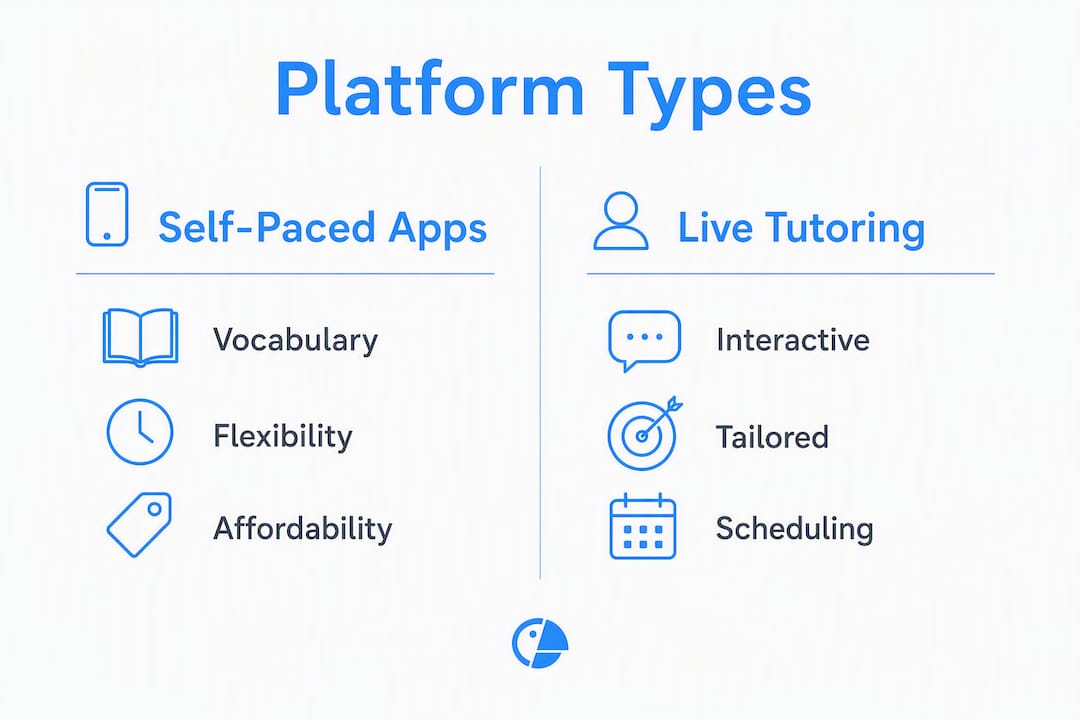
Self-paced apps are excellent on-ramps. Language reviewers consistently find that apps are strong for building vocabulary and daily habit, but hit a ceiling at intermediate level when speaking and nuance become the priority. Audio-first programmes like Pimsleur accelerate speaking from day one but offer limited grammar and writing coverage, so they work best as a complement rather than a standalone solution.
Online schools suit learners who want a structured progression and don't mind group classes. Local agencies are worth considering when in-person placement and formal accreditation matter, such as migration English requirements.
Pro Tip: If you are already past the beginner stage, skip the app-only route. Live, interactive sessions with a human tutor are what intermediate and advanced learners need for real-world conversational fluency.
How do you choose the right platform for your goals?
Start with your goal, then refine by schedule and budget. That order matters because the best platform depends on your current level: a beginner benefits from structure, while an intermediate learner needs live interaction and tutor choice above almost everything else.
Five criteria are worth weighing carefully:
- Tutor qualifications and teaching experience. Look for completed lesson counts, subject specialisations (exam prep, business language, children's tutoring), and evidence of structured lesson plans rather than casual conversation only.
- Lesson format. Online suits busy schedules and remote areas; in-person suits younger learners or those who find video fatigue a real barrier.
- Flexibility and scheduling. Can you book, reschedule, or cancel with reasonable notice? Platforms that let tutors and learners agree directly tend to offer the most flexibility.
- Trial and cancellation policies. A platform with a satisfaction guarantee and a clear refund or replacement process materially lowers your risk. Check whether unused credits are refunded or simply held in your account.
- Secure payment and support. Platforms that publish verified profiles, transparent reviews, and straightforward payment processes are worth the small premium over informal arrangements.
For a child learner, prioritise a tutor with experience teaching young students and a playful, structured approach. A busy professional needs flexible evening or weekend slots and a tutor comfortable with workplace vocabulary. An exam candidate (IELTS, HSK, DELF) should filter specifically for tutors with that credential and a track record of exam results.
Red flags to watch for: tutors with no reviews and no intro video, vague lesson descriptions ("we'll just chat"), and platforms with no published cancellation policy.
Pro Tip: Ask any prospective tutor two questions before booking: "What does a typical lesson plan look like for my goal?" and "How do you track my progress between sessions?" Vague answers to either question are a signal to keep looking.
What does one-on-one tutoring actually look like?
One-on-one lessons are interaction-driven from the first minute. Expect conversation, targeted error correction, personalised feedback, and materials chosen specifically for your level and goal — not a generic textbook shared with twenty other students.
A typical lesson flows through four phases: a short warm-up (reviewing the previous session or a quick speaking prompt), targeted practice on the week's focus (grammar pattern, vocabulary set, or exam task), live error correction with explanation, and a short homework or self-study task to consolidate before the next session. Good tutors adapt this structure constantly based on what you struggled with last time.
A realistic 12-week plan for a conversational goal looks like this:
- Weeks 1–4: Foundation. Core vocabulary, basic sentence structures, and pronunciation habits. Milestone: hold a short, simple conversation on familiar topics without long pauses.
- Weeks 5–8: Expansion. Longer exchanges, past and future tenses, and topic-specific vocabulary (travel, work, family). Milestone: navigate an unscripted conversation with a native speaker on a familiar topic.
- Weeks 9–12: Fluency building. Complex sentences, idiomatic expressions, and cultural context. Milestone: sustain a 10-minute conversation with minimal prompting.
A hybrid routine — short daily practice in a self-paced app plus two or three weekly one-on-one sessions — combines spaced repetition with corrective feedback and accelerates real-world speaking ability faster than either approach alone. Use the app for vocabulary and grammar drilling; use your tutor for speaking, nuance, and accountability.
Pro Tip: In the first 15 minutes of a trial lesson, ask your tutor to correct every error out loud, not just the major ones. How they handle that request tells you more about their teaching style than any profile description.

How do you find and evaluate tutors on a marketplace?
Vetting is the single most important step in the marketplace process. A well-matched tutor accelerates progress; a poor match wastes both time and money. Use profile signals, intro videos, and a paid trial lesson to make the call before committing to a package.
Positive indicators on a tutor profile:
- A clear, well-produced intro video where the tutor explains their teaching approach (not just their background)
- A high number of completed lessons with recent, specific reviews (comments on lesson structure and communication, not just "great teacher!")
- Stated specialisations that match your goal (exam prep, children, business language, conversation)
- Explicit lesson materials or a sample lesson plan available on the profile
- Clear cancellation and rescheduling terms
During the trial lesson, run a short assessment: ask the tutor to give you an unscripted speaking prompt, then observe how they correct errors, whether they explain the "why" behind corrections, and whether they ask about your specific goals. Rapport matters enormously. The quality of the tutoring relationship — shared goals, feedback style, and genuine connection — is one of the strongest predictors of long-term progress.
For online sessions, confirm the video platform in advance and test your audio and camera before the lesson. For in-person meetings, choose a public location for the first session and confirm the tutor's identity against their profile photo.
Pro Tip: Book trial lessons with two or three tutors before committing to a package. The difference between a good tutor and the right tutor for you is often only apparent after you've experienced both.
What do tutors cost in Australia, and how long will progress take?
Hourly rates on tutor marketplaces vary widely because tutors set their own fees, which lets you trade cost for experience and niche skills. Here are typical price bands for private language tutoring in Australia:
| Tutor band | Typical rate (AUD/hour) | What to expect |
|---|---|---|
| Entry-level / student tutors | A$15 | Conversational practice; less structured lesson plans |
| Experienced native speakers | A$30–A$50 | Structured lessons, cultural context, reliable feedback |
| Certified teachers / exam specialists | A$50 and up | Formal methodology, exam-specific materials, tracked progress |
Prices rise with native-speaker status, formal teaching certification, exam specialisation (IELTS, HSK, DELF), in-person travel time, and peak-hour booking. Package deals and lesson bundles typically offer a small discount over single-lesson rates.
Realistic progress timelines for common goals, assuming two to three lessons per week:
- Basic conversational ability: 8–12 weeks for most European languages; 16–24 weeks for languages with a different script (Mandarin, Arabic, Japanese).
- Intermediate fluency: 6–12 months of consistent study combining tutoring and self-practice.
- Exam readiness (IELTS, DELF, HSK): 3–6 months with an exam-specialist tutor, depending on starting level.
Budget tip: allocate one or two trial-lesson credits before committing to a package. For steady progress, plan for two to three sessions per week and supplement with a self-paced app for daily vocabulary practice.
Why Tutoroo is worth considering for one-on-one tutoring in Australia
Tutoroo is recommended because it specialises in exactly this: connecting Australian learners with private tutors for personalised one-on-one lessons delivered locally or online, across a wide range of languages including English, Spanish, French, Arabic, and Mandarin.
The features that matter most for Australian learners:
- Over 386,000 tutors globally, with local and online options across Australian cities and regional areas
- Verified tutor profiles with clear credentials, lesson history, and student reviews
- Direct messaging so you can discuss goals and lesson format before booking
- Flexible scheduling agreed directly between learner and tutor
- Straightforward payment flow with no ongoing platform subscription required after the initial matching fee
Getting started takes three steps: search by language and location (or choose online), browse verified profiles and intro videos, and book a trial lesson. If the match isn't right, Tutoroo's support team can assist with finding an alternative.
Pro Tip: When browsing Tutoroo profiles, filter by your specific goal (exam prep, conversation, children's tutoring) and read the most recent reviews first. A tutor with 50 recent, detailed reviews is a safer bet than one with 200 older ones.
Key takeaways
For most Australian learners, the marketplace model delivers the best combination of personalised instruction, flexible scheduling, and tutor variety for real conversation progress.
| Point | Details |
|---|---|
| Best platform model | Tutor marketplaces suit most learners; apps work best as a daily supplement, not a replacement. |
| Three selection priorities | Check tutor qualifications, trial/cancellation policy, and secure payment before booking. |
| Trial lesson strategy | Book trials with two or three tutors; ask for live error correction to assess teaching style. |
| Budgeting rule of thumb | Expect moderate hourly rates for experienced native speakers; budget for a couple of trial lessons before committing. |
| Tutoroo recommendation | Tutoroo connects Australian learners with verified private tutors for local or online one-on-one lessons across 50+ languages. |
The perspective that shapes this guide
The most common mistake learners make is treating platform choice as the hard part. It isn't. The hard part is committing to regular sessions and choosing a tutor whose feedback style actually motivates you to show up the following week.
Apps are genuinely useful, and the best ones are well-designed. But no gamified streak has ever corrected a learner's tonal pronunciation in Mandarin or explained why a French subjunctive feels natural in one sentence and awkward in the next. That requires a person who listens, adapts, and cares about your specific progress. The benefits of personalised one-on-one tutoring are well-documented, and they compound over time in ways that solo app use simply does not.
The guidance in this article reflects what consistently works: start with a clear goal, choose a tutor who matches it, use a trial lesson to test the relationship, and supplement with self-paced tools for daily vocabulary work. If you are unsure which tutor to try first, Tutoroo's support team can help with a matching consultation.
Tutoroo: your path to a private language tutor in Australia
Private tutoring without the agency overhead — that is the real advantage Tutoroo offers Australian learners. Where traditional language schools lock you into fixed timetables and group classes, Tutoroo puts you directly in contact with a verified private tutor who teaches on your schedule, at your pace, and towards your specific goal.
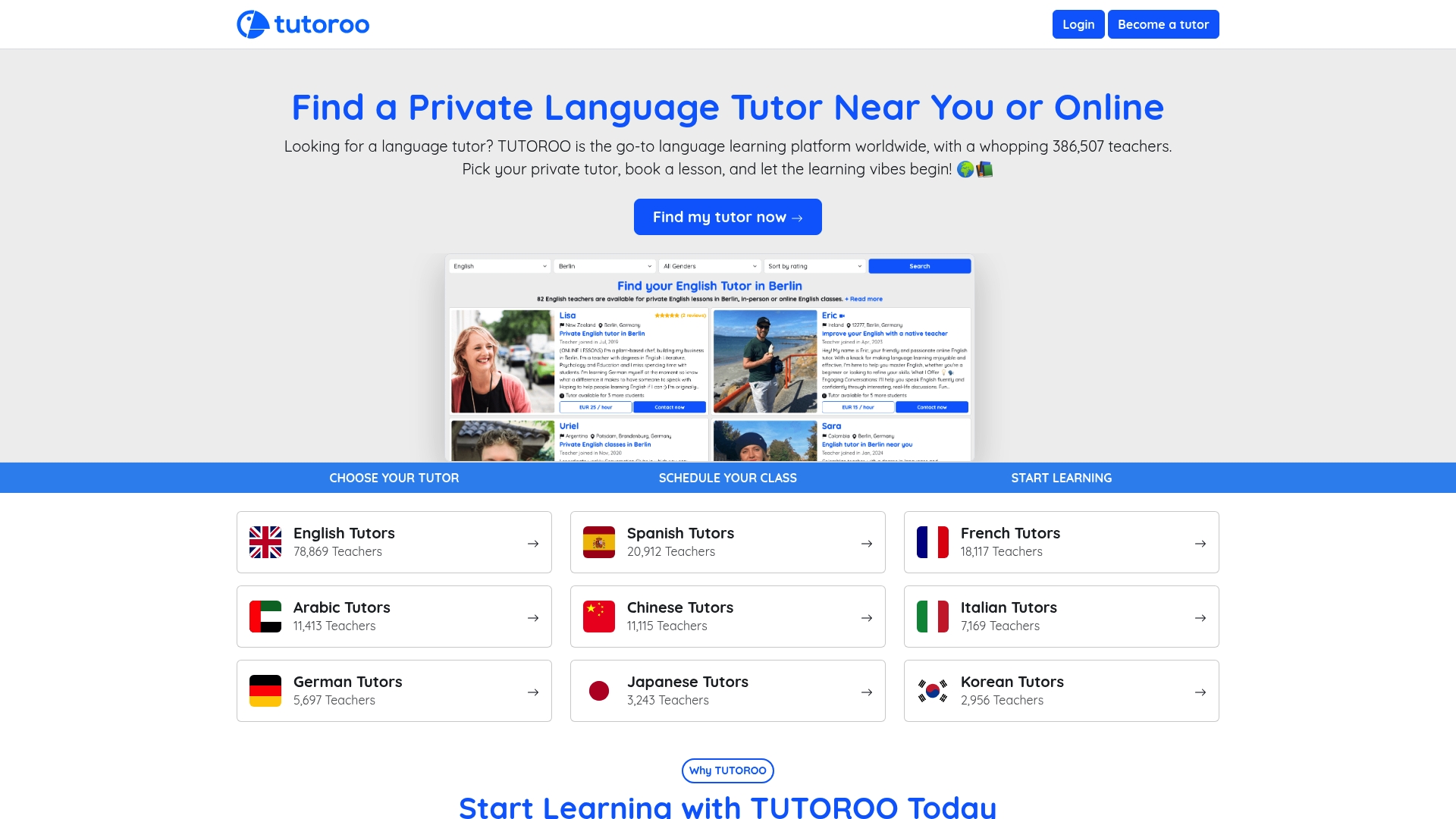
With over 386,000 tutors available for local and online lessons across 50+ languages, finding the right match is faster than most learners expect. Whether you are preparing for an IELTS exam, helping your child build confidence in a second language, or finally committing to conversational Spanish, there is a tutor on Tutoroo suited to exactly that goal. Browse verified profiles, watch intro videos, and book a trial lesson at tutoroo.co to get started today.
Useful sources and further reading
- PCMag: Best language learning apps — supports the finding that apps excel at vocabulary and habit but require live tutors for speaking progress.
- PCMag: Lingoda review — source for the recommendation that live, interactive sessions are essential for intermediate and advanced learners.
- Pimsleur review — explains where audio-first courses fit in a hybrid study plan.
- Preply review: honest, detailed and worth your time — detailed analysis of marketplace pricing, tutor vetting, and trial lesson mechanics.
- Tutoroo blog — further reading on tutor matching, marketplace mechanics, and language learning strategies for Australian learners.
- Why learn a language one-on-one — data and arguments for the accelerated progress that private tutoring delivers.
- What is a language learning marketplace? — explains how marketplace matching works and what to expect from the process.