

TL;DR:
- A language learning marketplace is a dynamic digital ecosystem that consolidates live tutoring, courses, language exchanges, assessments, and progress tools, facilitating meaningful connections beyond a simple course list. Advanced technology such as AI matching and verification enhances quality, ensuring better learner-provider relationships, while multiple user groups benefit from tailored features and transparent billing models. Choosing the right platform involves verifying provider credentials, assessing matching capabilities, and ensuring flexibility, as these factors significantly influence language learning success.
Most people assume a language learning marketplace is simply a website with a list of courses. That assumption undersells what these platforms actually do. A language learning marketplace is a dynamic digital ecosystem that aggregates live tutoring, self-paced courses, language exchange platforms, proficiency tests, and progress tracking tools under one roof, connecting learners and providers in ways a static course directory never could. Whether you are a student seeking personalised instruction, a tutor building a global client base, or a parent comparing private education options, understanding how these platforms work opens doors to culture, connection, and genuine opportunity.
Key takeaways
| Point | Details |
|---|---|
| More than a course list | A language learning marketplace combines tutors, courses, exchanges, and tools in one platform. |
| Technology drives quality | AI matching and identity verification significantly reduce poor learner-provider pairings. |
| Multiple user groups benefit | Learners, tutors, and parents each gain distinct advantages from well-designed marketplace platforms. |
| Billing models vary | Marketplaces support subscriptions, pay-per-session, and course purchases depending on the service type. |
| Verification matters most | Platforms with embedded quality controls deliver better outcomes than simple catalogue-style directories. |
What a language learning marketplace really is
The industry term you will encounter most often is "online language learning platform," but the word "marketplace" carries a more specific meaning. It describes a platform that does not just host content. It orchestrates an entire ecosystem of providers, learners, and tools.
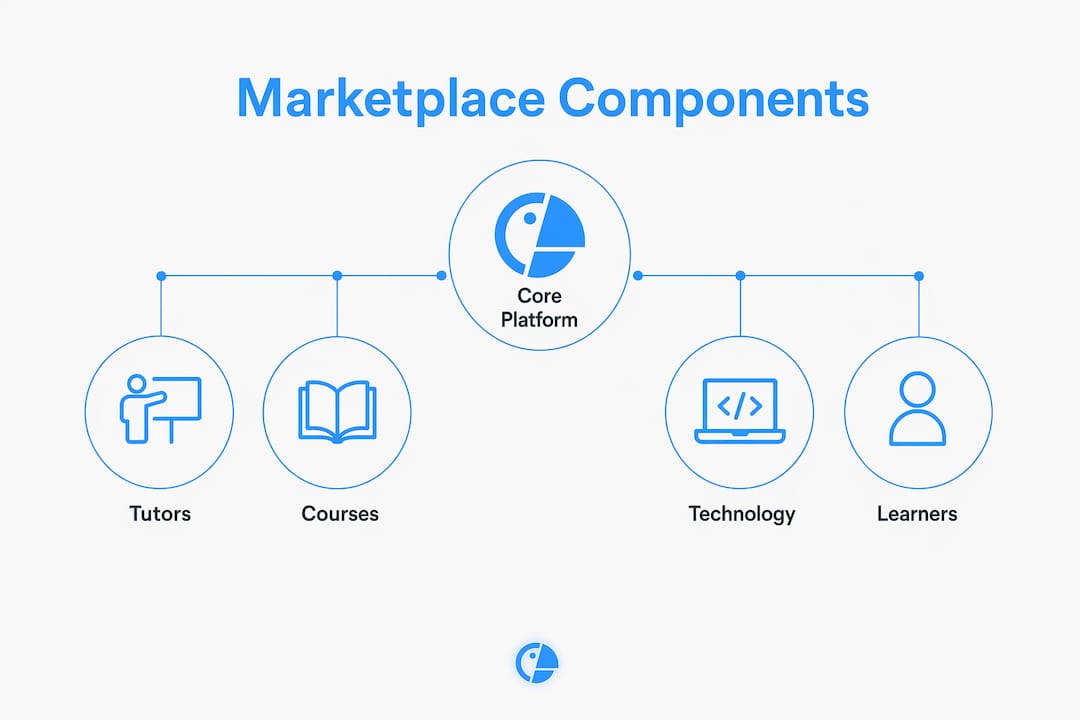
At its core, a language learning marketplace aggregates several distinct service types:
- Live tutoring with qualified or native-speaking teachers, booked in real time
- Self-paced online courses created by independent educators or institutions
- Language exchange communities that pair learners with native speakers for conversational practice
- Proficiency tests and assessments to benchmark progress
- Progress tracking tools that give learners and tutors visibility over learning goals
Provider types vary widely too. Some marketplaces feature professional tutors with formal teaching credentials. Others give space to course creators and community-driven exchanges, where peer-to-peer connection is the core offering. Many platforms blend several of these models, which is precisely what separates them from a simple course directory.
A static course site lists content. A marketplace manages relationships. That distinction matters enormously when you are choosing where to invest your time and money.

How marketplace technology powers better matches
The technology underneath a language learning marketplace is what separates a genuinely useful platform from a glorified search engine. The most capable platforms use AI-powered matching to connect learners with providers based on language goals, availability, learning style, and proficiency level, not just location or price.
A strong real-world example is OpenLearning's Uni Guide, launched in May 2026, which uses AI matching and applicant verification to connect students, education agents, and universities. While Uni Guide operates in the higher education sector, its design philosophy applies directly to language learning. Verification tools are central to building trust between learners and providers, and they dramatically reduce wasted time on poor matches.
Beyond matching, the best platforms handle:
- Booking and scheduling systems that let learners see real-time availability and lock in sessions without back-and-forth messaging
- Identity and credential verification so learners know who they are working with
- Quality signals such as reviews, session counts, and completion rates that help users make informed decisions
- Multi-model billing supporting subscriptions for app-based learning alongside pay-per-session for live tutoring
Pro Tip: When evaluating a marketplace, check whether the platform verifies tutor credentials directly or simply relies on self-reported information. Platforms that independently verify providers give you a much stronger guarantee of quality.
The real power of a marketplace, as the research consistently shows, lies in orchestration. Discovery, matching, booking, verification, and progress signalling working together reduce friction for everyone involved.
Comparing language learning marketplace models
Not all language learning marketplaces are built the same way. Understanding the key differences helps you choose a platform that fits your actual needs.
| Marketplace type | Key features | Best for | Typical limitations |
|---|---|---|---|
| Catalogue-style directory | Browse-only listings, no integrated booking | Quick discovery of options | No accountability, weak matching controls |
| Verified tutor marketplace | Credential checks, booking tools, reviews | Learners wanting trusted one-on-one tuition | Fewer community or exchange features |
| Language exchange platform | Peer-to-peer native speaker pairing | Conversational practice at low or no cost | Limited structured learning or progression |
| Integrated recruitment marketplace | AI matching, verification, institutional partners | Complex multi-party education decisions | Often narrower in language scope |
| Subscription course platform | Unlimited access to pre-recorded content | Self-paced, budget-conscious learners | No live interaction or personalised feedback |
Catalogue-style directories were the first generation of language learning platforms. They aggregate listings but offer weaker matching controls and little provider accountability. Learners essentially browse blind.
Language exchange platforms such as HelloTalk and Tandem sit at the other end of the spectrum. They facilitate peer-to-peer practice with native speakers and offer community and live interaction features. They are excellent for conversational fluency but are not designed for structured progression. You can also explore finding an exchange partner through dedicated community resources if you want to supplement your marketplace experience.
Verified tutor marketplaces occupy the middle ground that most learners and parents will find most useful. They combine discovery with accountability, ensuring the person teaching you has been assessed in some meaningful way before appearing in search results.
Benefits for learners, tutors, and parents
The practical advantages of using a language learning marketplace differ depending on who you are and what you need.
-
For learners: Personalised matching means you are not choosing a tutor based on a photo and a price tag alone. Platforms use your stated goals, preferred schedule, and language level to surface genuinely suitable options. Add progress tracking to the mix, and you have a feedback loop that keeps motivation high. The benefits of private tutoring through a well-designed marketplace extend well beyond a single lesson.
-
For tutors: A marketplace removes the need to build your own client acquisition system from scratch. Your profile becomes your business card, visible to thousands of motivated learners. Scheduling tools handle the administrative side of your practice, and verified profiles mean serious students are more likely to reach out. Tutors on global platforms can build client bases across multiple countries without leaving home.
-
For parents: Comparing private education options used to mean asking for recommendations or scrolling through Google. A marketplace centralises that process. Parents can review tutor credentials, read verified feedback from other families, filter by language and availability, and feel confident that the platform has done at least some of the vetting work on their behalf.
Common challenges do exist. Overwhelm is real. When a platform lists thousands of tutors, narrowing the field can feel like its own task. The best marketplaces solve this with smart filtering and clearly displayed quality signals. Pricing transparency also matters. Hidden fees or unclear cancellation policies erode trust quickly.
Pro Tip: Before booking a first session, use a marketplace's messaging or trial feature to exchange a short note with a potential tutor. Even a brief exchange reveals communication style and responsiveness, two factors that shape the learning experience far more than the listed credentials alone.
How to choose the right marketplace
With so many platforms available, selecting the best language learning sites for your specific situation requires a clear set of criteria. Here is what to look for:
- Provider verification: Does the platform check credentials, or simply allow anyone to create a profile? Verification signals accountability and protects your time.
- Matching quality: Does the platform actively suggest suitable tutors or courses based on your profile, or do you have to search manually every time?
- Delivery flexibility: Can you access both online and local tutoring options? The ability to switch between formats is valuable as your circumstances change.
- Billing transparency: Are subscription and pay-per-session options clearly explained? Effective use of a marketplace means evaluating platform features and understanding exactly what each model includes.
- Progress tracking: Does the platform offer tools to monitor your development, or is each session treated as an isolated transaction?
- Community features: Some learners thrive with peer support and community accountability. Check whether the marketplace offers group sessions, forums, or exchange options alongside private tuition.
Avoid committing to a long-term subscription before experiencing how the platform actually works. Most reputable marketplaces offer trial sessions or free account browsing. Use them. And always ask: who is responsible if a session goes poorly? A trustworthy platform will have a clear resolution process.
My perspective on what most people miss
I have seen hundreds of learners approach language learning marketplaces the same way they approach a supermarket. They scan the shelves, pick what looks appealing, and hope for the best. That approach works for cereal. It does not work for language learning.
What most people miss is this: the platform itself is part of the learning experience. A marketplace with poor verification might list ten thousand tutors, but if those profiles are self-reported and unmoderated, you are essentially interviewing strangers with no reference checks. The number of listings is not the measure of quality. The infrastructure behind those listings is.
I have also seen tutors frustrated by platforms that hand them visibility but no tools. Scheduling chaos, unclear payment timelines, and no feedback mechanisms make it hard to build a sustainable practice. The best marketplaces treat tutors as partners, not just suppliers, and that distinction shows up in the quality of instruction learners receive.
The move toward AI-enabled verification and matching, as seen in platforms like OpenLearning's Uni Guide, represents a genuinely exciting shift. But technology is only as good as the human experience it supports. A well-matched tutor who communicates with warmth and adapts their teaching style will always outperform an algorithmically perfect pairing that lacks real connection. Choose platforms that respect both.
— TUTOROO
Find your perfect language tutor with Tutoroo
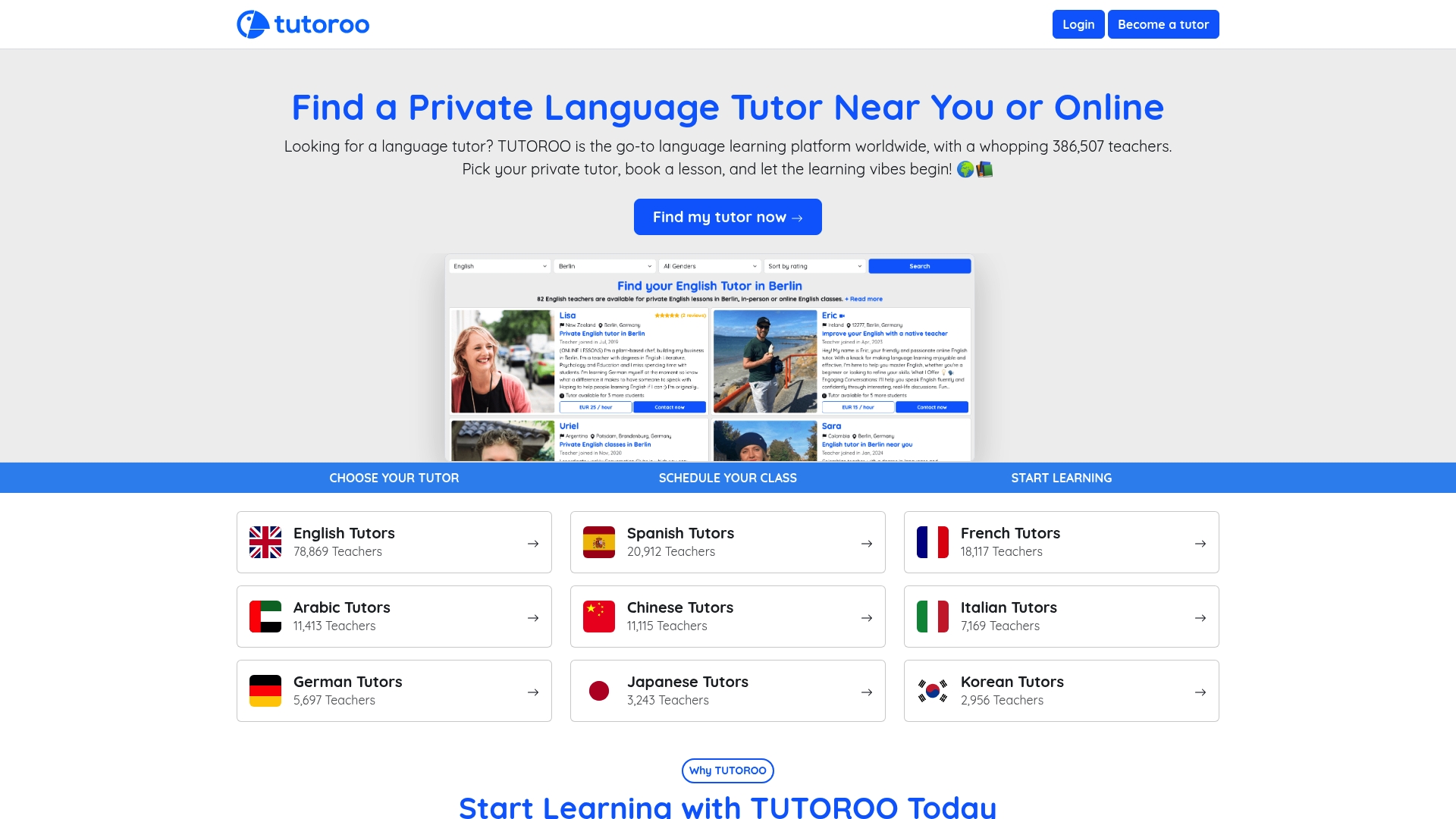
Tutoroo is a global marketplace connecting learners with over 386,000 verified private language tutors across dozens of languages, from Spanish and French to Arabic and Chinese. Whether you prefer to learn online from anywhere in the world or connect with a local tutor in your city, Tutoroo makes the process straightforward. Tutors set their own availability, learners message directly, and sessions are arranged without layers of administrative friction.
For parents evaluating private language education, Tutoroo's tutor profiles include detailed background information and learner reviews to support confident decision-making. For tutors, the platform opens access to a global community of motivated students. Explore what is possible and find a private tutor on Tutoroo today. If you are specifically seeking Malay instruction, you can also browse Malay tutors tailored to your level and schedule.
FAQ
What is a language learning marketplace?
A language learning marketplace is an online platform that aggregates tutors, courses, language exchange communities, and learning tools, allowing learners to discover and book services in one place rather than across multiple separate websites.
How is a marketplace different from a course website?
A course website hosts static content for passive consumption. A marketplace actively connects learners with providers through matching tools, booking systems, and verification features that support ongoing relationships and personalised outcomes.
How do I find the right language tutor on a marketplace?
Use the platform's filtering tools to narrow by language, availability, and experience level, then review verified feedback from other learners. A step-by-step hiring guide can help you ask the right questions before committing to a tutor.
Are language exchange platforms the same as marketplaces?
Not exactly. Language exchange platforms focus on peer-to-peer conversational practice between native speakers. Marketplaces are broader, typically including tutors, courses, assessments, and exchange features within a single ecosystem.
What should parents look for in a language learning platform?
Parents should prioritise platforms that verify tutor credentials, display transparent pricing, and offer clear review systems. Comparing alternative marketplace options can also help identify the platform that best fits a child's learning style and schedule.