

Finding a language tutor marketplace that lets you book flexible lessons with transparent pricing and native speakers in your city or online often turns into a drawn-out process across platforms with inconsistent vetting. Most sites either restrict lesson formats to subscription bundles or leave quality control to chance with little guidance beyond tutor profiles and reviews. This comparison covers pricing, lesson structure and tutor matching so you can choose a marketplace for tailored language tuition without committing blindly.
Table of Contents
Tutoroo
At a Glance
The vendor reports a community of over 386,000 language teachers, a scale that highlights Tutoroo’s global reach. The marketplace connects learners with native tutors for personalised, one to one lessons that can be taken locally or online with flexible scheduling and secure payments.
Core Features
- Global marketplace connecting tutors and learners across cities and time zones, so you can search by location or online availability.
- Online booking and scheduling system that lets learners view tutor calendars and book lessons directly.
- Secure payment processing so payments move through the platform rather than informal transfers.
- User reviews and ratings for tutors to help you assess experience and teaching style.
- Mobile friendly platform for searching, messaging and managing bookings while on the go.
Key Differentiator
Tutoroo’s defining feature is the sheer breadth of tutor options combined with locality filters. You can find native tutors in your city or choose online lessons from a different country, all within the same marketplace.
This mix of local and remote choices reduces friction if you want conversational practice with a nearby native speaker or structured lessons with a specialist based elsewhere.
Pros
-
Wide language selection and tutor variety make it likely you will find a teacher who matches your dialect preference and learning goals.
-
User reviews provide practical signals about teaching style and reliability so you do not rely purely on profile blurbs.
-
The booking and messaging flow keeps scheduling and payments in one place which reduces back and forth in email threads.
-
Tutors set their own schedules and receive direct payments, a workflow attractive to experienced tutors expanding their client base.
-
Mobile access means you can manage lessons and messages between work meetings or while travelling.
Cons
- Limited platform control over tutor quality beyond reviews and profiles can mean inconsistent lesson standards; vetting still rests largely with you.
Who It's For
You, if you want flexible, personalised language tuition without enrolment in a programme. It fits travellers, students needing extra support, professionals sharpening language skills and tutors wanting a global client pool.
Unique Value Proposition
Tutors can register, set their schedules and receive direct payments from students. That payment and scheduling model gives tutors granular control over pricing and availability and lets you negotiate lesson length and frequency directly with the person teaching you.
For learners, that arrangement shortens the path from discovery to paid lesson. You can trial a tutor, adjust cadence, and pay per lesson rather than committing to a subscription.
Real World Use Case
A professional moving to Madrid searches Tutoroo for a Spanish tutor in the same neighbourhood, reads reviews, books a trial lesson through the platform and pays securely. They then switch to online weekly lessons with the same tutor when travel schedules tighten.
Pricing
Pricing varies by tutor and language and is paid per lesson rather than via subscription. Expect a range from budget to premium rates depending on experience and location. The platform may apply a service fee to bookings.
Website: https://tutoroo.co
Italki
At a Glance
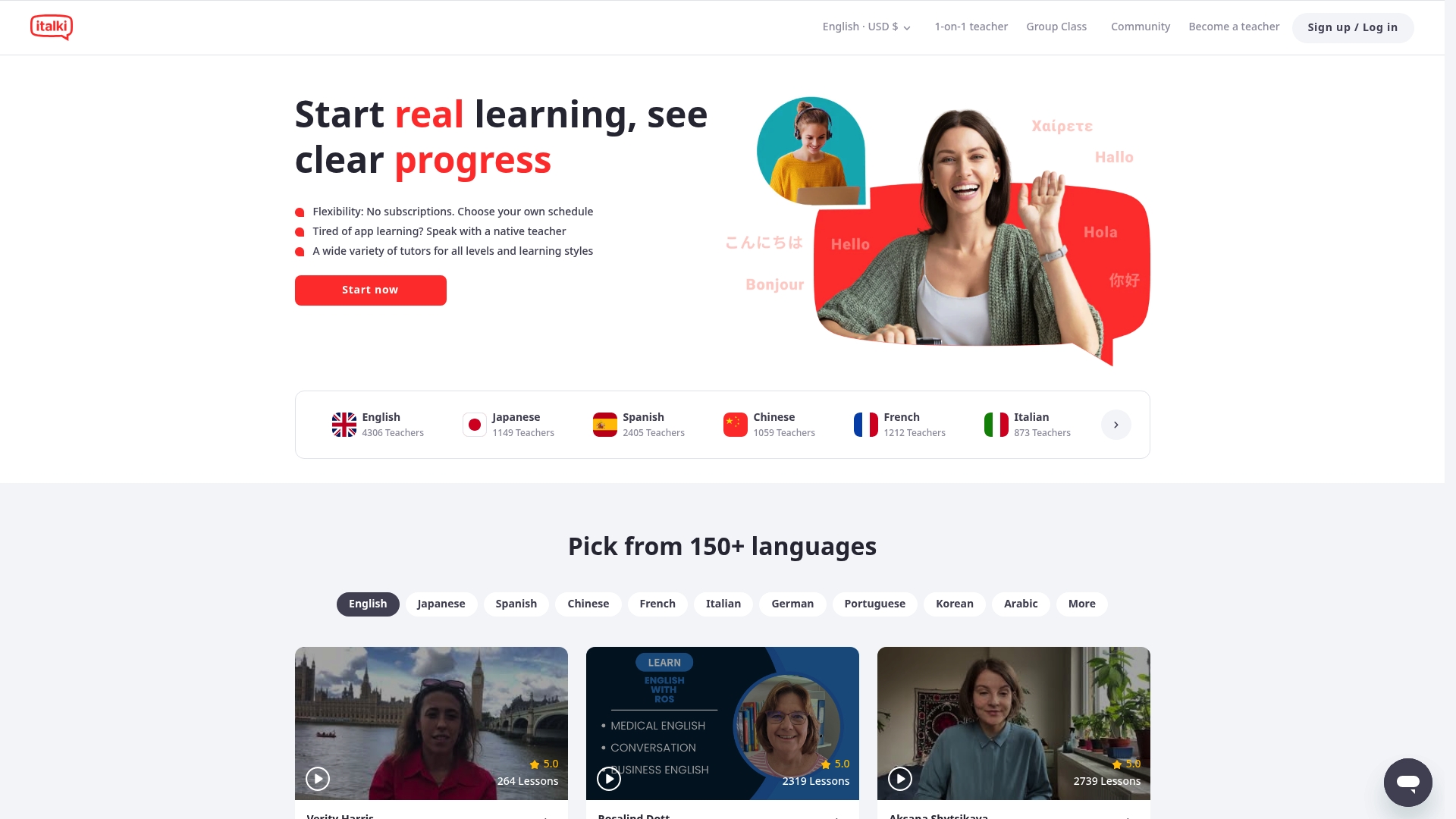
Italki reports millions of students and thousands of qualified teachers worldwide, a scale that explains the platform's language variety and pricing spread.
Pay-as-you-go lessons typically range from approximately USD 4 to USD 60 per hour, with no subscription required and credit-based payments available.
Core Features
- Wide teacher selection: native and professional tutors across many languages so you can filter by country, price and teaching style.
- Flexible scheduling: book individual lessons without a subscription and arrange recurring weekly sessions when you want them.
- Lesson variety: 1-on-1 lessons, group classes and community practice sessions to suit conversational work or exam preparation.
- Learning resources: assessments, podcasts and quizzes that complement live lessons and help track progress.
Key Differentiator
The platform's strength lies in its global teacher network and the sheer choice that brings. That scale lets you match highly specific needs such as exam prep, niche dialect coaching or cultural exchange with tutors who specialise in those areas.
Pros
- Extensive pool of native and professional tutors makes it easier to find the exact accent, teaching approach or speciality you need.
- Customisable learning: pick lesson length, frequency and content so sessions fit around study, work or travel commitments.
- Straightforward booking and payment flow reduces friction when you try a trial lesson or change tutors mid-course.
- Community features and supplemental materials help you practise between lessons and stay motivated.
- Many learners report effective improvement and good tutor rapport after several months of regular lessons.
Cons
- Video and audio quality depend on individual connections; platform lag or dropouts happen for some users.
- Pricing variability between tutors can feel opaque and has led to occasional billing disputes reported by users.
- The interface makes it awkward to manage favourites and rebook the same tutor after an initial lesson.
- Some UX issues such as slow pages or navigation glitches persist for a minority of users.
When It May Not Fit
If your internet connection is unstable, live lessons will likely be frustrating because sessions require steady video and audio. If you need centralised billing for a company, the pay-as-you-go model and tutor-level pricing may complicate budgeting. Also, if you prefer a single structured curriculum rather than tutor-driven plans, this marketplace model may not meet your needs.
Who It's For
Learners at any level who want personalised, flexible tuition rather than classroom timetables. Ideal for people preparing for exams, practising conversation with native speakers or getting targeted help for work related language tasks.
Real World Use Case
A university student in Spain books a trial English lesson, then schedules weekly sessions with the same tutor. The tutor sets tailored exercises and speaking practice, the student uses community quizzes between lessons, and over several months the student gains confidence and passes a standardised test.
Pricing
Lessons are sold on a pay-as-you-go basis. The vendor advertises rates from approximately USD 4 up to about USD 60 per hour depending on the tutor's experience and speciality. No subscription is necessary.
Website: https://italki.com
Lingoda

At a Glance
Live classes run around the clock so you can join a group or private lesson at any hour. Lingoda pairs that scheduling with a CEFR aligned curriculum and a mix of self study tools and AI feedback to support steady progress.
Core Features
Lingoda delivers live online classes taught by certified native level teachers and a structured CEFR aligned curriculum. You can choose small group or private lessons and book classes 24/7 to suit shift work or irregular timetables.
Additional study materials include downloadable lesson packs, quizzes, a mobile app, and AI powered feedback that highlights pronunciation and grammar points for targeted practice.
Key Differentiator
The combination of a step by step CEFR aligned course and genuinely round the clock timetabling is the product's defining angle. That mix lets learners follow an internationally recognised progression while attending live sessions that fit their personal schedule.
Pros
-
Structured lessons help learners track progress against CEFR milestones rather than guess their level. This makes goal setting clearer for exam or workplace targets.
-
Small group and private classes give you speaking time with certified teachers and the chance for tailored corrections during a session.
-
Flexible scheduling accommodates busy professionals and shift workers who need lessons outside usual business hours.
-
Teachers are native level and generally engage learners with practical, real world tasks rather than textbook only drills.
-
The platform supplements classes with a mobile app and downloadable resources so you can practise between lessons and keep momentum.
Cons
-
Strict subscription terms mean unused credits can be lost if you miss or cancel classes under certain plans. That policy frustrates learners with unpredictable schedules.
-
Placement sometimes does not match actual proficiency which can leave new students in an ill fitting class until they are reassessed.
-
Teacher availability can be limited for specific time slots or languages, so booking your preferred instructor may take planning.
-
Customer support is occasionally slow to respond which can delay credits, refunds, or placement changes.
When It May Not Fit
If your schedule changes week to week and you cannot commit to a fixed number of classes the subscription terms may cost you credits. If you need guaranteed one on one time with a specific teacher every week you may hit availability limits.
If immediate, hands on support for billing or placement is crucial, the reported customer support delays could be a blocker for you.
Who It's For
Motivated adult learners who want a clear syllabus and live interaction will get the most from Lingoda. Working professionals, expatriates, and students preparing for language exams will appreciate the CEFR progression and the ability to book lessons outside normal hours.
Real World Use Case
A busy professional attends three evening group classes per week and supplements with app quizzes each morning. They join a sprint challenge to accelerate study and use teacher feedback to refine workplace phrases. After several months they report improved confidence in meetings and a recognised certification.
Pricing
Most packages run between about $126 and $271 for a 12 week bundle with larger discounts for bigger bundles and periodic promotions. Lingoda advertises a free trial that includes three free classes. There is no single lesson price and additional material or administrative fees may apply.
Website: https://lingoda.com/en
LiveLingua.com
At a Glance
Free trial lessons and pay‑per‑hour options sit alongside subscription plans, and the marketplace mixes live tutors with AI tutoring apps and digital courses. The platform positions itself for flexible practice rather than a single rigid syllabus. That orientation shapes what you get from lessons.
Core Features
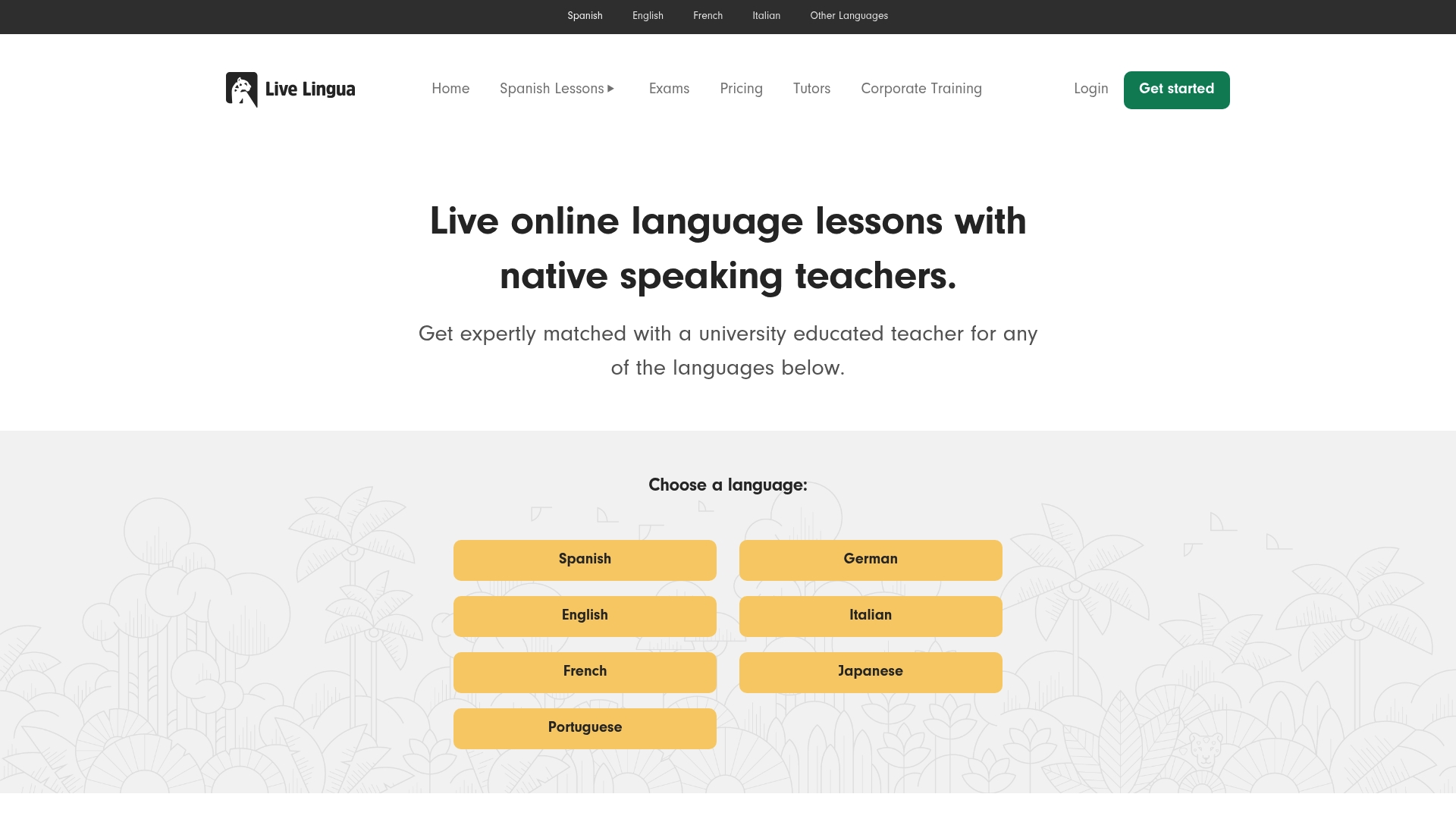
- Wide language selection covering Spanish, English, French, Italian and more for beginner to advanced learners.
- Multiple delivery formats: private one‑to‑one lessons, small group classes, digital courses and AI tutors for on‑demand practice.
- Flexible billing with subscriptions, hourly rates and free trial lessons to test teachers before committing.
- Responsive customer support and a web and mobile friendly interface for booking and messaging.
Key Differentiator
The marketplace model combines human tutors with AI practice tools under one roof, letting you swap formats as your goals change. That flexibility suits learners who want conversation practice, extra drill with an app, or mixed group and private classes without moving between several vendors.
Pros
- Diverse course choices let you switch between conversation focus and grammar drills without leaving the platform. Useful when your goals shift from travel survival to exam prep.
- Flexible pricing options mean you can trial a tutor hourly, join a monthly plan, or attend group classes to lower costs per session.
- Small group classes are reported by users to increase speaking time and peer feedback compared with large prerecorded courses.
- Tutors are described in reviews as knowledgeable and patient, which helps learners gain confidence speaking from the first lessons.
- Support and lesson structure receive positive mentions in third‑party reviews, making scheduling and progress tracking straightforward.
Cons
- Teaching materials get criticism from some users who want highly structured, syllabus driven curricula rather than conversational content.
- The quality and depth of the digital courses and AI tutor modules have limited independent feedback, so experiences can vary.
- The marketplace model means tutor quality varies by instructor; you may need a few trial lessons to find a consistent match.
When It May Not Fit
If you want a rigorously structured programme with a strict curriculum path, LiveLingua's conversational emphasis may feel light on formal progression. Also, if you prefer face‑to‑face classes, the platform offers limited in‑person or offline options.
Who It's For
Learners who favour flexible, practice‑heavy study: travellers, professionals polishing speaking skills, university students topping up classroom learning and companies arranging mixed online group training. You value variety and trying formats before committing.
Real World Use Case
A university student takes a free trial private Spanish lesson, then subscribes for weekly speaking practice. They join small group conversation sessions for peer feedback and use the AI tutor between classes to reinforce vocabulary. Regular feedback from tutors improves confidence and oral fluency.
Pricing
Services are sold via subscription plans or hourly rates and also include group class pricing and free trial lessons. Specific costs vary by language, tutor and lesson type; the vendor publishes detailed pricing on the site and during booking.
Website: https://livelingua.com/language-lessons
Polyglot Language Academy
At a Glance
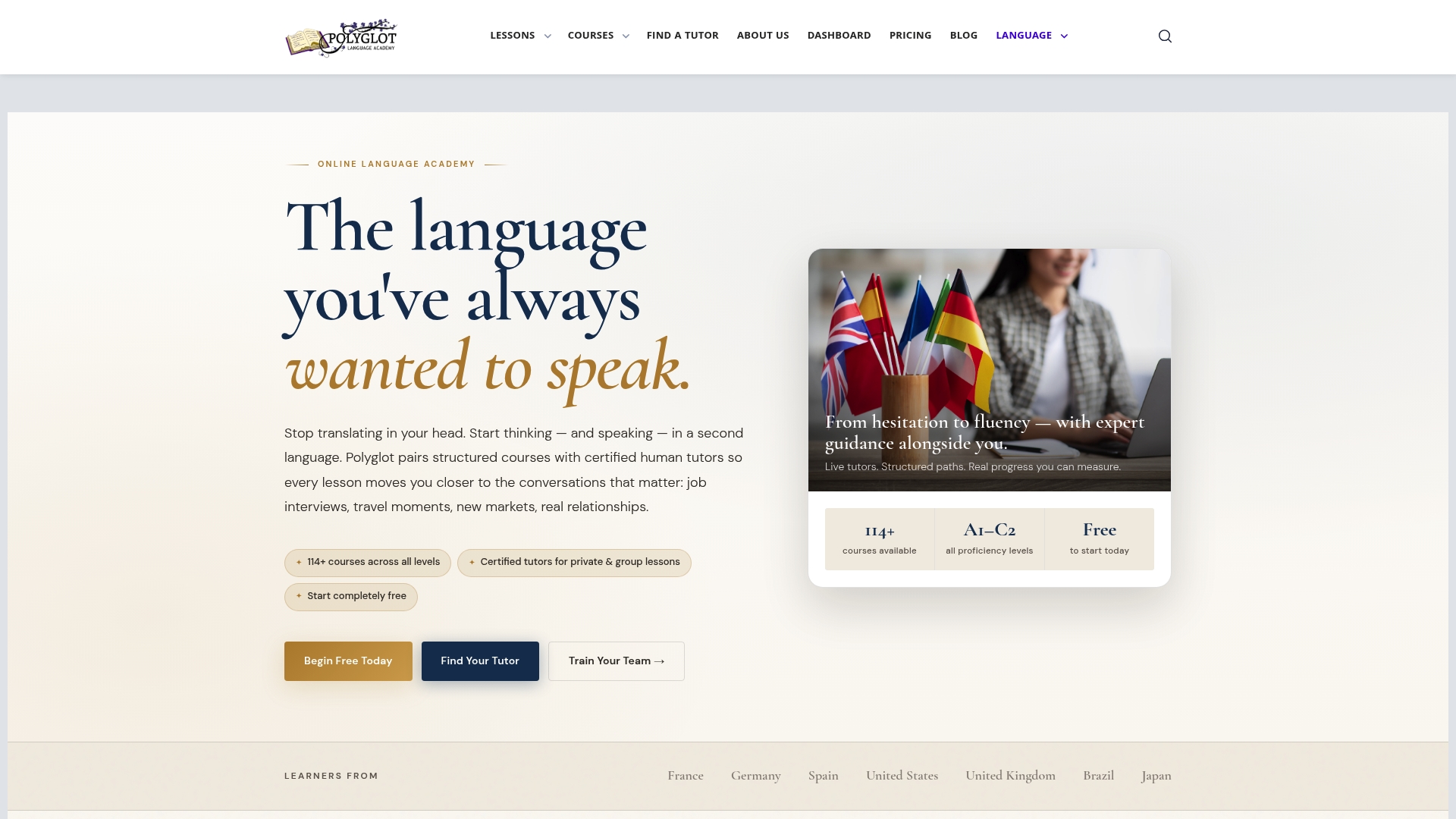
The vendor advertises access to over 114 language courses covering CEFR levels from beginner to advanced. Polyglot combines those courses with certified tutors and measurable assessments to push learners toward confident, real‑world speaking rather than rote vocabulary memorisation.
Core Features
- 114+ language courses mapped to CEFR levels, from A1 through C2, with modular lesson plans.
- Certified native-speaking tutors available for private and group lessons, scheduled to suit individual or corporate needs.
- Structured curricula that focus on practical conversation, role plays, and industry vocabulary for business learners.
- Progress assessments, quizzes, and official certificates of achievement to record measurable gains.
- Flexible formats: free beginner content, paid memberships, private lessons and group sessions.
Key Differentiator
Polyglot’s hand on the marketplace is its emphasis on certified native tutors tied to an explicit curriculum and assessments. Where Tutoroo concentrates on fast local tutor matching, Polyglot aims to convert lesson time into verifiable progress and certificates that organisations and exam candidates can cite.
Pros
- Guided progression helps learners move from phrasebook ability to fluent conversation; the course structure keeps weekly goals clear.
- Certified tutors provide targeted pronunciation correction and culturally informed feedback, which lifts spoken confidence faster than anonymous app drills.
- Multiple delivery options mean teams can book industry-specific group training or individuals can choose private weekly sessions.
- Assessment and certification give corporates a simple way to track staff language competence for project staffing or compliance.
- Free beginner access lowers the barrier to trial before upgrading to paid plans.
Cons
- Public sentiment is thin. There are relatively few third‑party reviews, which makes overall user satisfaction hard to judge.
- Trustpilot presence is mixed or low in places, signalling variable learner experiences rather than a uniformly positive record.
- Heavy reliance on in‑house content and tutors may limit exposure to a broader mix of teaching styles some learners prefer.
When It May Not Fit
Not ideal if you want a purely self‑guided, app‑only route with no tutor interaction; Polyglot’s strength is tutor‑led practice. Availability varies by language and region, so rare languages or specific time zones may have fewer tutors. If you need broad public review data to vet a provider, the limited review volume is a constraint.
Who It's For
Adult learners, professionals and corporate training managers who value structured syllabuses, certified tutor feedback and measurable outcomes. Suits exam candidates and business teams wanting role‑specific language practice rather than casual conversational practise.
Real World Use Case
A professional in Germany books weekly private lessons to improve business German. The tutor focuses on sector vocabulary and pronunciation corrections from Polyglot’s curriculum. Regular assessments track progress and a certificate helps the learner secure internal client meetings and prepare for a language exam.
Pricing
Free access to complete beginner courses. Premium content and certificates from €8/month. Private lessons listed from €30/month, with a comprehensive membership option at €35/month for broader course access and assessments.
Website: https://polyglot-language-academy.com
Berlitz

At a Glance
The company states it has operated for over 145 years, a pedigree reflected in classroom legacy and corporate contracts. Berlitz combines live, instructor-led tuition with cultural seminars and private coaching for professionals and organisations seeking rapid conversational skills.
Core Features
Live instructor-led courses available both online and in person, delivered by native-speaking teachers.
Customisable course lengths and formats, from short intensives to long-term programmes.
The vendor reports support for more than 50+ languages, including tailored corporate and government tracks.
Cultural skills seminars and immersion experiences designed to practise language in context.
Key Differentiator
Berlitz pairs long-established in-person teaching practice with flexible online delivery and a focus on real-world conversation. The emphasis on the Berlitz Method — immersive, teacher-led interaction — is aimed at accelerating spoken fluency rather than passive vocabulary memorisation.
Pros
-
Deep institutional experience that appeals to HR and L&D teams organising large-scale language training for staff.
-
Personalised, conversational lessons that prioritise speaking and cultural competence over rote grammar drills.
-
A broad selection of formats: private lessons, group classes, corporate workshops and cultural seminars mean you can combine options as goals change.
-
Strong presence in corporate and government training makes contracting and bespoke programme design straightforward for organisations with compliance or reporting needs.
-
Accredited instructors and formal course frameworks lend credibility for learners needing documented proof of training.
Cons
-
Several users report higher-than-app prices and limited transparency on exact fees, which can complicate budgeting for individuals.
-
There are reports of lesson cancellations, patchy communication and platform bugs that interrupt continuity for some learners.
-
Some online classes are described by users as underwhelming or lacking interactivity compared with face-to-face sessions.
When It May Not Fit
If you want a free or low-cost, gamified app for casual study, Berlitz’s premium, instructor-centred model will feel expensive and heavyweight. If transparent, fixed pricing is critical, the consultation-based quoting and custom packages may frustrate you.
If you need rapid self-paced drills or an automated progress dashboard, look elsewhere; Berlitz prioritises human-led instruction over automated learning paths.
Who It’s For
Dedicated learners and organisations that prioritise personalised, instructor-driven tuition and cultural readiness. Ideal for professionals preparing for international assignments and for companies needing bespoke language programmes with documented outcomes.
Real World Use Case
A manager slated for a six-month posting in Tokyo booked private sessions, joined weekly cultural seminars and took intensive conversation classes. The combination of private coaching and immersion-style seminars improved practical negotiation language and local business etiquette within three months of study.
Pricing
Pricing varies by course type and level of customisation. Private lessons and intensive programmes are typically premium and often require a consultation; corporate bundles and cultural seminars are custom-priced. Some users report additional fees for cancellations or transfers and occasional refund difficulties.
Website: https://berlitz.com/blog/what-are-the-best-online-language-learning-programs
Comparative Analysis
When analysing language tutoring platforms such as Tutoroo, Italki, Lingoda, LiveLingua, Polyglot Language Academy, and Berlitz, a nuanced understanding reveals distinct strengths. Each platform caters to specific learning needs, making them particularly suited for unique user scenarios.
Platform Accessibility and Convenience
Tutoroo introduces a straightforward entry into language learning through its efficient model. Learners can easily connect with tutors locally or online, as the platform supports location-filtered searches. Comparatively, while Italki also provides a broad tutor network and flexible lesson scheduling, its platform interface and management features occasionally face user-reported issues, such as difficulties with booking consistency among tutors. Lingoda, on the other hand, employs a CEFR-aligned curriculum and flexible scheduling options tailored for professionals with rigorous timelines.
Teaching Approaches
Polyglot Language Academy focuses on providing structured, goal-driven programs facilitated by certified instructors that align with formal standards, making it particularly beneficial for professionals requiring measurable qualifications. Meanwhile, LiveLingua combines human instruction with AI-assisted tools for versatile learning needs, though its less formal curriculum might not suit all learners. Berlitz excels in delivering a variety of formats, including in-person cultural immersion experiences, though at a relatively higher cost and with pricing clarity limitations.
Best Fit Scenarios
- Tutoroo is for individuals wishing to study with native-speaking tutors either locally or remotely while valuing ease of scheduling and interaction.
- Lingoda excels for serious learners needing a structured syllabus aligned with CEFR standards along with round-the-clock booking capabilities.
- Berlitz is ideal for professionals seeking immersion within cultural skills training, especially when aligning with corporate or specialised assignments.
- Polyglot Language Academy suits learners pursuing certified progress tracking and task-specific training.
- LiveLingua benefits users looking for a mix of in-person, remote, and AI-enhanced lessons for diverse learning formats.
Our Pick
Tutoroo encapsulates a streamlined process advantageous to learners looking for quick access to qualified language tutors with varied linguistic backgrounds. This approach provides flexibility for tailored learning experiences. However, learners prioritising CEFR-based curricula may find Lingoda a better match. Tutoroo's flexibility and ease of localised or global tutor selection secure its spot as the leading choice for many casual and professional learners alike.
Comparison of Language Tutoring Marketplaces
Here’s a comparison of the leading language tutoring marketplaces, focusing on their key features and differences to help you identify the best option for your individual needs.
| Product | Core Feature | Key Differentiator | Best For | Pricing | Notable Limitation |
|---|---|---|---|---|---|
| Tutoroo | Personalised local or online one-on-one lessons | Large native speaker pool | Learners seeking geographic or online flexibility | Not disclosed | Limited tutoring quality oversight beyond reviews |
| Italki | Wide teacher variety and flexible pay-as-you-go pricing | Global teacher network | Learners needing highly specific language expertise | ~$4–$60/hour | Variable quality in connection stability |
| Lingoda | Live classes aligned with CEFR standards | 24/7 scheduling for structured courses | Busy adults seeking recognised certification | $126–$271/12 weeks | Strict class credit policies under subscriptions |
| LiveLingua.com | Blended AI tools and tutor lessons | Combined digital & human-learning formats | Professionals seeking flexible study strategies | Not disclosed | Variability in class content structures |
| Polyglot Language Academy | Certified tutoring with modular CEFR-aligned courses | Certification of progress | Corporates designing targeted employee training | €8–€35/month | Smaller volume of user reviews available |
Find Your Perfect Language Tutor with Tutoroo
Choosing from numerous options when searching for languagetrainers.com alternatives can feel overwhelming. The variety of tutors, pricing models and lesson formats often makes it difficult to decide which platform matches your personal needs for flexible, personalised language learning. Tutoroo addresses these challenges by connecting you directly with native tutors who set their own schedules and pricing, allowing you to focus on what matters most�improving your skills with one-to-one lessons tailored just for you.
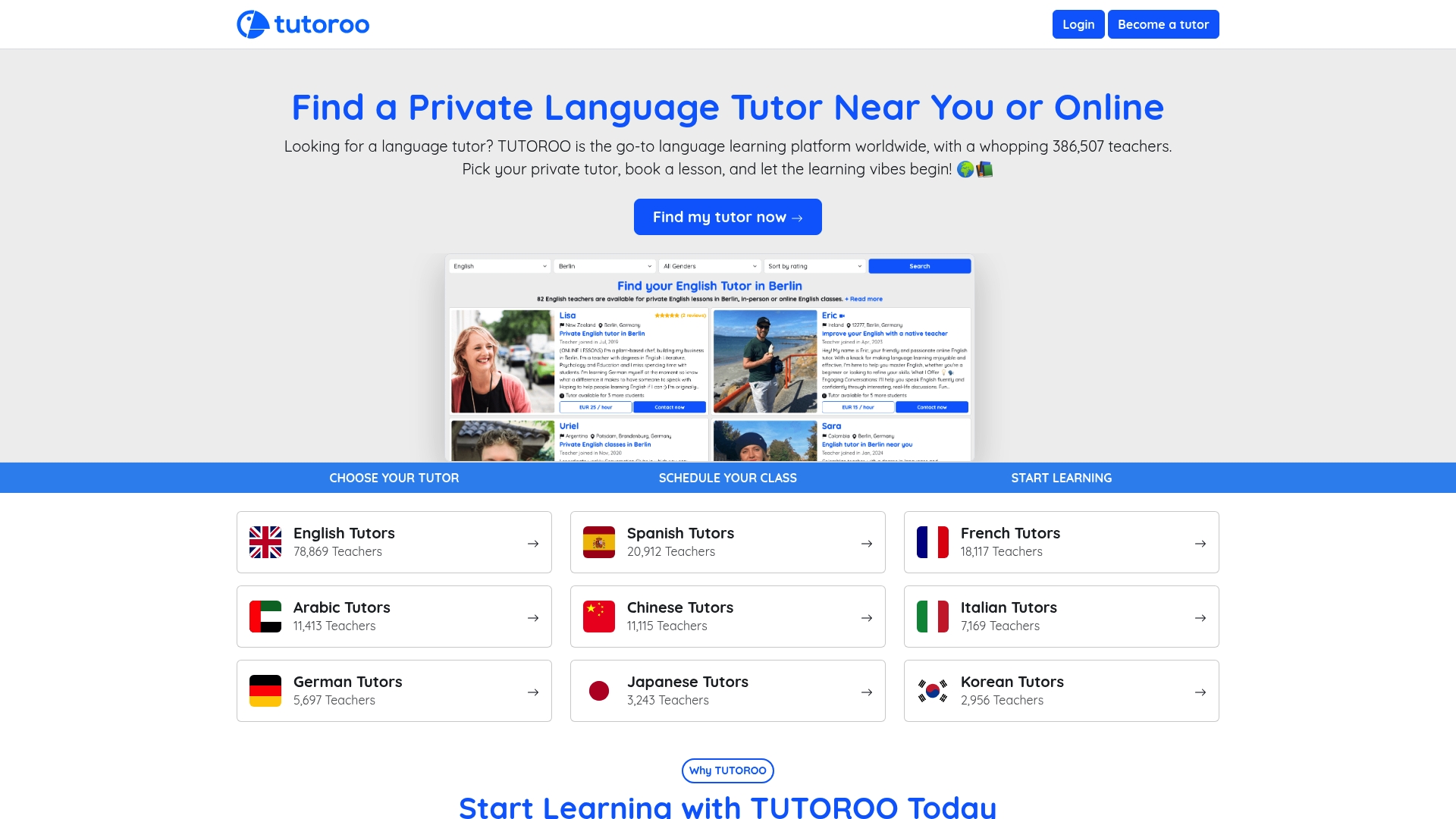
Explore a vast community of over 386,000 tutors across many languages on Tutoroo. Book lessons locally or online, read genuine user reviews to choose the right match, and enjoy secure payments all in one place. Dont wait to take control of your language learning. Visit Tutoroo today and book your first personalised lesson with a native tutor for conversational practice or exam preparation.
Frequently Asked Questions
How does Tutoroo support flexible scheduling for language lessons?
Tutoroo provides a flexible online booking and scheduling system that allows learners to view tutor calendars and book lessons directly. This feature enables you to choose from a variety of tutors that suit your preferred time slots, allowing for greater convenience and adaptability in your learning schedule.
What is the difference between Tutoroo and Italki in terms of lesson formats?
Italki offers extensive lesson variety, including 1-on-1 lessons, group classes, and community practice sessions that cater to diverse learning needs. Tutoroo, on the other hand, primarily focuses on personalised, one-on-one lessons which may be ideal if you're looking for direct interaction with a native tutor.
Which platform offers a wider selection of languages and tutors, Tutoroo or LiveLingua?
LiveLingua features a wide selection of languages and delivery formats, such as private lessons, small group classes, and AI tutors for immediate practice. While Tutoroo boasts a broad pool of native tutors, LiveLingua's emphasis on combining human tutors with AI tools offers unique flexibility for learners who want to switch their learning methods.
Can I rely on Tutoroo for consistent tutor quality?
Quality consistency on Tutoroo can vary since it largely relies on user reviews and tutor profiles for vetting. While user ratings help assess a tutor's experience, it’s essential to trial lessons to determine if their teaching style meets your expectations.
How does Tutoroo's payment model compare to that of Lingoda?
Tutoroo uses a convenient per-lesson payment model, whereas Lingoda operates on stricter subscription terms that may result in lost credits if classes are missed. This makes Tutoroo especially suitable if you're interested in a low-commitment option without the need for a subscription.