

TL;DR:
- Learning a new language is achievable through consistent practice, focusing on high-frequency vocabulary and speaking from day one. Using tools like Anki and engaging in real conversations accelerate progress and deepen retention beyond passive input. Early speaking practice combined with daily structured study leads to faster fluency and meaningful cultural connection.
Learning a new language is one of the most rewarding skills you can build, and research confirms it is fully achievable with the right methods regardless of age or background. The core principles are straightforward: prioritise high-frequency vocabulary, speak from day one, and study consistently rather than in sporadic bursts. Tools like Anki for spaced repetition and HelloTalk for conversation practice accelerate progress significantly. Multilingual individuals carry half the risk of accelerated brain ageing compared to monolinguals, which means the benefits extend well beyond ordering coffee in Paris.
How to learn a new language: prerequisites and tools
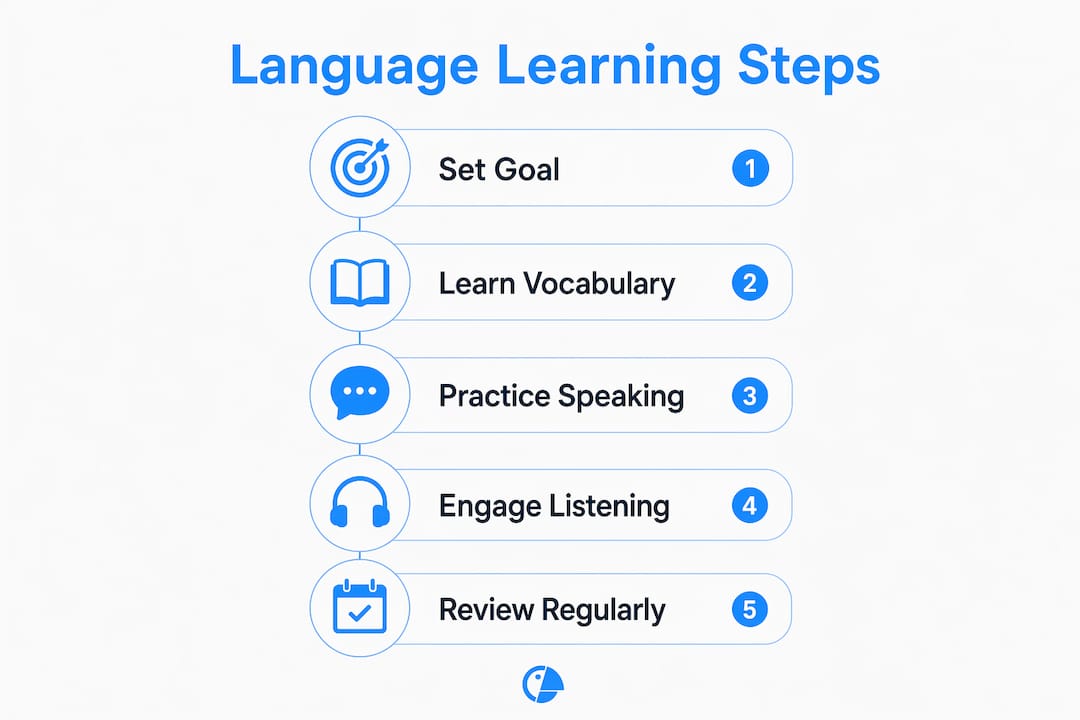
Before opening a textbook or downloading an app, two things matter most: a clear goal and an honest understanding of what effective study actually looks like. Wanting to "speak Spanish" is vague. Wanting to hold a ten-minute conversation with a colleague in Buenos Aires by October is specific, measurable, and motivating.
Once the goal is set, vocabulary is the foundation. High-frequency vocabulary front-loading leads to faster functional comprehension than learning words in arbitrary order. The practical implication is clear: learn the most common words first, not the most interesting ones.
The tools that consistently produce results include:
- Anki for spaced repetition flashcards, which schedules reviews at the exact moment your memory is about to fade
- HelloTalk and Tandem for live text and voice exchanges with native speakers
- Duolingo for habit formation in the early weeks, though it works best as a supplement rather than a primary method
- A private tutor for structured feedback, particularly on speaking and pronunciation
- Graded readers and podcasts matched to your current level for listening and reading input
Pro Tip: Start with the top 1,000 most frequent words in your target language. They cover around 85% of everyday speech, which means you reach functional comprehension far sooner than learners who study from a standard textbook vocabulary list.
Setting realistic expectations matters just as much as choosing the right tools. A2 proficiency, where you can handle simple conversations, is achievable within three months of daily study. B2 conversational fluency typically takes 12 to 18 months. These are not guarantees; they are benchmarks for learners who study with purpose every day.
How can you structure daily study for fastest progress?
The structure of your study sessions matters as much as the total hours you put in. An hour of daily consistent study produces better retention than irregular intensive sessions, because memory consolidation happens during sleep. Spreading your study across the day in shorter blocks amplifies this effect further.
A practical daily structure for a 60-minute study session looks like this:
- 15 minutes of Anki flashcard review to reinforce vocabulary through spaced repetition
- 30 minutes of active engagement: a conversation with a tutor or language partner, a graded podcast, or a short writing exercise
- 15 minutes of passive input: watching a TV programme, reading a news article, or listening to music in your target language
The optimal study block is 30 to 60 minutes split into 15-30-15 minute segments, with focused activity outperforming longer, unfocused sessions. This means a distracted two-hour session is worth less than a sharp 45-minute one.
Here is how different study approaches compare in terms of weekly time investment and expected outcomes:
| Study approach | Weekly time | Expected outcome at 3 months |
|---|---|---|
| Daily 30-min focused sessions | 3.5 hours | Basic greetings, core vocabulary (A1) |
| Daily 60-min structured sessions | 7 hours | Simple conversations, travel phrases (A2) |
| Daily 90-min with tutor + self-study | 10.5 hours | Functional dialogue, reading simple texts (A2+) |

Pro Tip: Pair your daily language practice with an existing habit, such as reviewing flashcards during your morning coffee or listening to a podcast on your commute. Habit stacking removes the friction of starting.
The biggest mistake learners make is treating all study time as equal. Active spaced repetition and speaking practice create exponentially better retention than passive input alone. Reading vocabulary lists is not the same as retrieving words under pressure in a real conversation.
What role does speaking play in learning a language effectively?
Speaking is a distinct skill that must be practised separately from reading, writing, and listening. Many learners spend months studying grammar and vocabulary before attempting to speak, and this delay consistently slows their overall progress. Speaking helps active retrieval and memory consolidation in ways that passive study simply cannot replicate.
The fear of making mistakes is the single biggest barrier to early speaking practice. Reframing errors as data points rather than failures changes everything. Every mispronounced word or incorrect verb tense is information your brain uses to self-correct over time.
The most effective speaking strategies include:
- Scheduling weekly sessions with a private tutor who provides corrective feedback in real time
- Using HelloTalk or Tandem to find language exchange partners who are native speakers of your target language
- Practising social interaction with native speakers rather than relying solely on AI conversation tools
- Recording yourself speaking for 60 seconds each day and listening back to identify patterns in your errors
- Joining local conversation groups or cultural events where the target language is spoken naturally
"Real-time conversation with native speakers offers unpredictable, natural language use and corrective feedback that AI tools cannot match." — HelloTalk Blog, 2026
Technology complements but cannot replace the human co-construction of meaning, which is at the core of genuine language acquisition. An AI chatbot will never correct your tone, laugh at your cultural reference, or push back on an ambiguous phrase the way a real conversation partner will. Human interaction is where language becomes alive.
For learners who want to explore how student-tutor interaction accelerates fluency, the evidence consistently points to one-on-one sessions as the fastest path to confident speaking.
How long does it take to reach conversational fluency?
The honest answer depends on which language you are learning and how many hours you study each week. The Foreign Service Institute (FSI) in the United States has benchmarked language difficulty for English speakers, and the differences are substantial.
Spanish or French require approximately 600 class hours to reach professional working proficiency, which translates to roughly six months at 90 minutes of daily study. Mandarin or Arabic require around 2,200 hours, placing fluency three to four years away for the same daily commitment. This is not a reason to avoid harder languages. It is a reason to set honest expectations from the start.
| Language | FSI difficulty category | Approximate hours to B2 fluency | Daily study at 60 min/day |
|---|---|---|---|
| Spanish, French, Italian | Category I | 600 hours | ~2 years |
| German, Indonesian | Category II | 750 hours | ~2.5 years |
| Arabic, Mandarin, Japanese | Category IV | 2,200 hours | ~6 years |
These figures assume classroom-quality study. Self-directed learners who combine spaced repetition, speaking practice, and immersive input can often progress faster than the FSI benchmarks suggest, particularly in the early stages. The key variable is not talent. It is consistency in study and the quality of daily practice.
Learning a second language also improves decision-making, memory, and stress resilience by creating emotional distance from problems. The cognitive benefits compound over time, which means every hour of study pays dividends beyond the language itself.
For a deeper look at proven language learning methods that work across different proficiency levels, Tutoroo's blog covers the research in practical detail.
Key takeaways
Consistent, structured study combined with early speaking practice is the most effective path to conversational fluency in a new language.
| Point | Details |
|---|---|
| Prioritise high-frequency vocabulary | The top 1,000 words cover ~85% of everyday speech; learn these before anything else. |
| Study daily in short, focused blocks | 30 to 60 minutes of structured daily practice outperforms long, irregular sessions. |
| Speak from day one | Speaking activates memory consolidation and accelerates fluency faster than passive study. |
| Match timeline to language difficulty | Spanish or French take ~600 hours to B2; Mandarin or Arabic require ~2,200 hours. |
| Use technology as a supplement | Apps like Anki and HelloTalk support learning, but human conversation remains irreplaceable. |
Tutoroo's take on technology and human connection
At Tutoroo, we have seen thousands of learners move through the same cycle: they download every app available, build impressive streaks on Duolingo, and then stall the moment they need to hold a real conversation. The technology is not the problem. The gap between passive input and active speaking is.
What we have found, working with learners across dozens of languages, is that the turning point almost always comes from a human relationship. A tutor who notices you consistently avoid the subjunctive. A language partner who laughs and gently corrects your idiom. A conversation that goes off-script in a way no app can replicate. Cross-situational learning mirrors real-world acquisition by picking up patterns through immersion, and that immersion is richest when it involves real people.
Our honest view is this: use the apps, use the flashcards, use the podcasts. But treat them as preparation for conversation, not a substitute for it. The learners who progress fastest are not the ones with the most sophisticated tools. They are the ones who start talking earliest, make the most mistakes, and keep showing up. That combination of courage and consistency is something no algorithm can teach.
— TUTOROO
Find a private tutor and accelerate your progress
Learning a language opens doors to culture, connection, and opportunity in ways that few other skills can match. The fastest path from beginner to confident speaker runs through personalised, one-on-one practice with someone who can meet you at your level and push you forward.
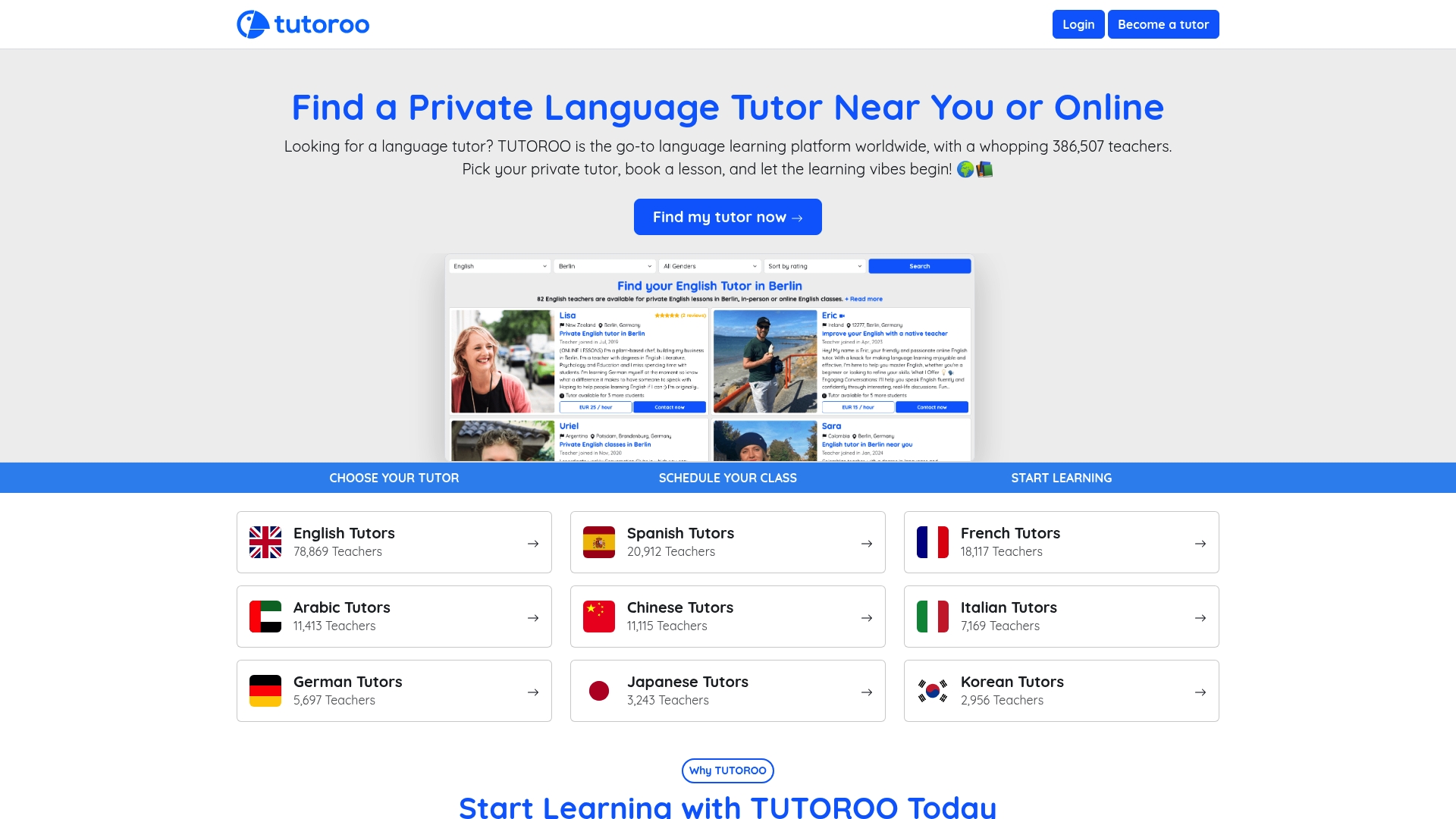
Tutoroo connects learners with over 386,000 private language tutors worldwide, covering languages from Spanish and French to Arabic, Mandarin, and beyond. Whether you prefer online sessions from your living room or in-person lessons in your city, finding the right tutor takes minutes. Every session is tailored to your goals, your schedule, and your current level. Find your language tutor today and start speaking with confidence sooner than you think.
FAQ
What is the fastest way to learn a new language?
The fastest approach combines daily spaced repetition vocabulary practice with early, frequent speaking sessions. Consistent daily study of 60 minutes, split across vocabulary review and live conversation, produces faster results than longer but irregular sessions.
How many words do I need to know to hold a basic conversation?
Mastering the 1,000 most frequent words in your target language covers approximately 85% of everyday spoken language. This vocabulary base is enough to handle most practical conversations at an A2 to B1 level.
Can I learn a language without a tutor?
Self-directed learners using tools like Anki, HelloTalk, and graded readers can make strong progress independently. However, a private tutor provides corrective feedback and real conversation practice that accelerates speaking fluency significantly faster than self-study alone.
How long does it take to become conversational in Spanish?
Spanish sits in the FSI Category I difficulty group for English speakers, requiring approximately 600 class hours to reach professional working proficiency. With 60 minutes of focused daily study, most learners reach conversational B2 level within 18 to 24 months.
Why is speaking early so important in language learning?
Speaking activates active retrieval and memory consolidation in ways passive study cannot. Learners who delay speaking until they feel "ready" consistently take longer to reach fluency than those who start practising from the first week.