

Private French tutors typically charge between $25 and $130 per hour, with most learners settling somewhere in the $35 to $85 range. Where you land depends on three things: the tutor's credentials, whether lessons happen online or in person, and whether you need general conversation practice or something specialised like exam prep. This guide breaks down every price band, shows you the maths behind packages and budgets, and gives you a vetting checklist before you commit.
TL;DR:
- Online French lessons generally cost 20 to 40% less than in-person sessions, with mid-tier online tutors charging around $35 to $40 per hour.
- Higher credentials like DELF/DALF examiners or university professors typically command $65 to $130+ per hour for specialized exam or business French coaching.
- Package deals and longer session commitments usually lower the hourly cost by 10 to 20 percent, making consistent long-term learning more affordable.
- For most learners, a balanced budget ranges from $35 to $60 per hour, but premium rates are justified for exam success or high-stakes professional needs.
- Conducting a trial lesson, asking specific qualification questions, and comparing multiple tutors on a marketplace helps secure the best value for your goals.
Table of Contents
- How much does a French tutor cost by experience level?
- Does online or in-person tutoring cost more?
- What credentials justify a higher hourly rate?
- How do session length and packages affect the total price?
- How can you lower the cost without losing progress?
- What questions should you ask before hiring a tutor?
- Why marketplace data matters for setting your budget
- When is it worth paying more for a French tutor?
- Compare tutors and book a trial lesson through TUTOROO
- Sources
How much does a French tutor cost by experience level?
Not all French tutors are pricing the same product. A university student who grew up speaking French at home and a certified DELF examiner with fifteen years in the classroom are both technically "French tutors," but they belong in entirely different price tiers.
Entry-level tutors typically charge $15 to $30 per hour. These are often native speakers without formal teaching credentials, or advanced learners tutoring as a side gig. Think a Sorbonne exchange student helping a neighbour's teenager with homework, or a retiree from Lyon offering casual conversation practice over video calls. They're excellent for building comfort with the spoken language and racking up practice hours cheaply, but don't expect a structured curriculum or exam-specific coaching.
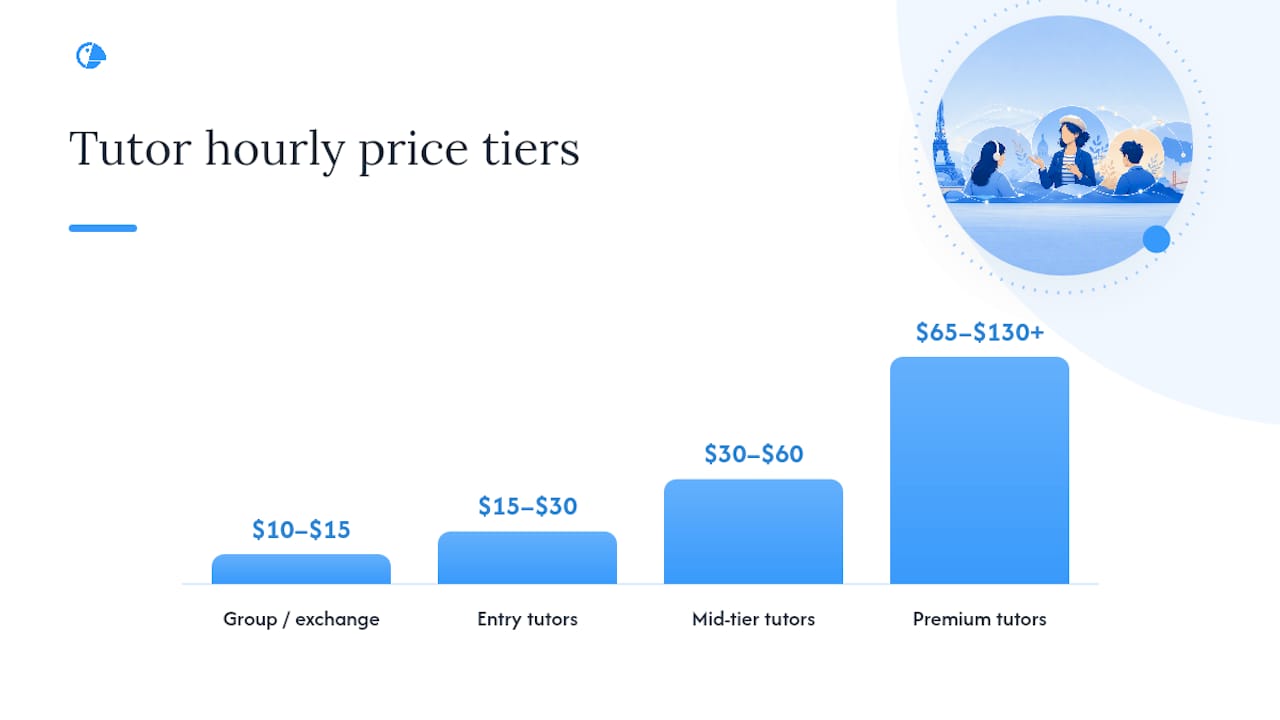
Mid-tier tutors sit in the $30 to $60 per hour bracket, and this is where most US learners end up spending. These tutors usually hold a teaching qualification, a degree in French or linguistics, or several years of classroom or one-on-one experience. A former high school French teacher now tutoring full-time online, or a certified instructor with a TEFL-equivalent qualification for French, both fall here. You get lesson planning, progress tracking, and a tutor who can adjust their approach when something isn't clicking.
Premium tutors run from $65 up to $130 or more per hour. This tier includes DELF/DALF examiners, university-level French professors, and specialists in business French or interpreter-style coaching. They charge more because they're solving a narrower, higher-stakes problem: passing a specific exam, prepping for a French-language job interview, or reaching a fluency benchmark on a deadline.
Quick stat: Marketplace data puts the practical sweet spot for most US learners at $35 to $60 per hour, with wider ranges reported down to $10 for casual online conversation partners and up past $150 for elite specialists on platforms like TutorOcean.
Here's how the tiers typically break down:
- Entry ($15 to $30/hr): conversational practice, informal exchange, minimal structure.
- Mid ($30 to $60/hr): certified teachers, structured curriculum, progress tracking.
- Premium ($65 to $130+/hr): examiners, professors, business or exam specialists.
- Group or exchange formats: often under $15/hr per person, but less individual attention.
Does online or in-person tutoring cost more?
Format changes the price more than almost anything else. Online French lessons run roughly 20 to 40% cheaper than in-person sessions, mostly because a tutor working from home in a lower cost-of-living region doesn't carry the overhead of travel, studio rental, or commuting time.
That gap matters in real dollars. A mid-tier tutor charging $55 per hour in person might charge $35 to $40 for the identical lesson delivered over Zoom. Multiply that across a few sessions a week and the savings compound fast.
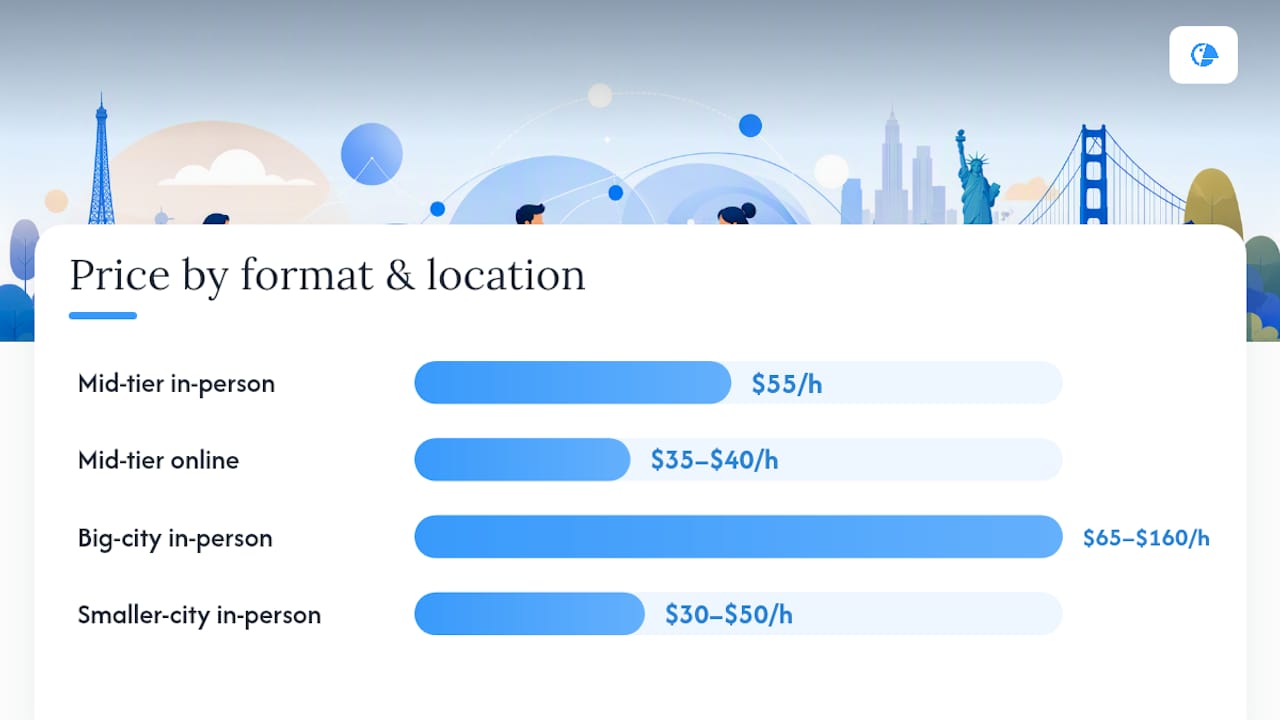
Location adds a second layer on top of format. Tutors in New York, Los Angeles, or Chicago commonly charge $65 to $160 per hour for in-person sessions, reflecting local cost of living and demand. In smaller cities and regional areas, the same qualifications might only command $30 to $50 per hour in person.
So when is paying more for in-person tutoring worth it?
- You're a beginner who benefits from body language, physical materials, and being in the room.
- You're prepping for an in-person exam or interview and want realistic practice conditions.
- You're tutoring a young child who needs closer supervision than a screen allows.
- You live in a smaller city where in-person rates are already close to online rates, so the premium is small.
For most working adults with reasonable self-discipline, online lessons deliver equivalent progress at a meaningfully lower price, which is why the online market has grown into the default choice for busy learners across the US.
What credentials justify a higher hourly rate?
Credentials aren't just a badge. Each tier of qualification tends to solve a different kind of problem, and paying more only makes sense once you know which problem you actually have.
A native speaker without formal training is your cheapest option and genuinely useful for pronunciation, slang, and casual fluency. What they usually can't do well is diagnose grammar mistakes systematically or build a curriculum that moves you from A2 to B2 with any predictability.
A certified language teacher (holding a teaching credential or a degree in French pedagogy) typically charges $30 to $65 per hour and brings structure: assessments, lesson sequencing, and the ability to explain why a sentence is wrong, not just that it is.
Specialists command the steepest premiums. DELF/DALF exam coaches and business French tutors often charge $65 to $130+ per hour because they're working against a deadline and a specific, measurable outcome. A business French coach preparing you for client calls in Paris isn't teaching general vocabulary. They're drilling industry-specific terminology, email etiquette, and negotiation phrasing that a generalist tutor simply hasn't practised.
Translation and interpreter-track coaching sits at the very top of the market, often overlapping with premium exam prep rates, because it demands near-native precision in both directions.
Credential tiers, roughly mapped:
- Native speaker, no credential: $15 to $30/hr. Best for casual conversation and listening practice.
- Certified teacher: $30 to $65/hr. Best for structured progress and grammar correction.
- DELF/DALF examiner or exam specialist: $65 to $110/hr. Best for exam-specific strategy.
- Business French or interpreter coach: $70 to $130+/hr. Best for professional, high-stakes fluency.
Pro Tip: If your goal is a specific certificate or exam score, pay for a specialist even if it costs more per hour. A generalist tutor can accidentally teach you toward the wrong register or skip exam-specific technique, which costs you more in the long run than the hourly premium ever would.
How do session length and packages affect the total price?
Hourly rate is only half the equation. Session length and how you buy lessons change what you actually pay per minute of instruction.
- 30-minute sessions suit quick conversation drills or maintaining existing fluency. They're often priced at 60 to 65% of the full hourly rate rather than a clean half, since tutors build in a small fixed cost per booking.
- 45-minute sessions are the most common format for working adults, balancing depth with a manageable weekly time commitment.
- 60-minute sessions offer the best per-minute value and suit anyone doing structured grammar work or exam prep, where momentum matters.
Packages change the maths again. Many tutors and platforms offer 10 to 20% discounts for block bookings of 10 or more lessons, effectively lowering a $50/hour rate to $40 to $45 per hour if you commit upfront.
Here's a worked example using a mid-tier tutor at $45 per hour:
Monthly budget: Two 45-minute sessions per week at $45/hour = roughly $270/month. Six-month goal budget: The same schedule across six months = approximately $1,620, before any package discount. With a 15% block discount: That six-month total drops to roughly $1,377.
If your goal is conversational comfort for an upcoming trip, two sessions a week for three months might be enough. If you're chasing a DELF B2 certificate, budgeting for six months of consistent sessions gives a far more realistic runway than a burst of lessons right before the exam.
How can you lower the cost without losing progress?
Paying full premium rates isn't the only path to fluency, and the cheapest option isn't automatically the worst one. It depends on what you're optimising for.
- Group classes cost a fraction of private rates, often under $15 per person per hour, but you get less individual correction and slower pacing.
- Language exchange apps are free but unstructured. Great for supplementing paid lessons, weak as a standalone method for beginners.
- Short, focused drills (20 minute sessions on a single grammar point) cost less per booking and work well once you already have a foundation.
- Off-peak scheduling with tutors in different time zones can unlock lower rates without sacrificing qualifications.
The honest lesson from learner forums is that the lowest hourly rate rarely produces the lowest total cost to fluency. A cheap tutor who takes twice as long to get you to B1 has cost you more time and often more money than a pricier tutor who gets you there in half the sessions.
Negotiation is more common than most learners realise. Many tutors will offer a discount for a trial lesson, and most are open to adjusting package pricing if you commit to a longer block upfront.
Pro Tip: Always book a single trial lesson before committing to a package, even at full price. One session tells you more about whether a tutor's teaching style fits you than any profile description ever will.
What questions should you ask before hiring a tutor?
A tutor's hourly rate tells you almost nothing about whether they're right for you. The vetting happens in the questions you ask before you book, and in what you notice during a trial lesson.
Ask these before committing to anything beyond a single session:
- What qualifications or certifications do you hold for teaching French?
- How many years have you been tutoring, and what age groups or levels do you usually work with?
- Do you follow a structured curriculum, or is each lesson built around my specific goals?
- Can you share example materials or a sample lesson plan?
- How do you track progress, and how often do you reassess my level?
- What's your cancellation and rescheduling policy?
- Have you prepared students for the specific exam or outcome I'm targeting?
- Do you offer package pricing, and what's included if I book a block of lessons?
Watch for a few warning signs during that first conversation or trial:
- Vague answers about qualifications or unwillingness to share teaching examples.
- No clear plan for tracking whether you're actually improving.
- Pressure to commit to a large package before a single trial lesson.
- Rates that seem dramatically below market for the credentials claimed.
Positive signals go the other direction: a tutor who asks about your specific goals before quoting a price, who offers a structured trial, and who can explain their teaching method in plain language rather than jargon. For a deeper look at evaluating quality beyond price, this guide to assessing private language teachers covers the signals that matter most during a trial lesson.
Why marketplace data matters for setting your budget
Price ranges pulled from a single tutor's website tell you what that one person charges. Marketplace data, drawn from thousands of active tutor profiles, tells you what the market actually looks like right now.
TUTOROO's network of over 386,000 language tutors worldwide gives you a genuinely broad sample to benchmark against, rather than guessing from a handful of listings. That breadth matters most when you're trying to work out whether a quoted rate is reasonable for the credentials on offer.
Online averages are a starting point, not a guarantee. A published range can't tell you whether a specific tutor's teaching style suits how you learn, which is exactly why a trial lesson matters more than any number on a profile page. Use platform data to set a realistic budget range, then let the trial lesson decide the rest.
When is it worth paying more for a French tutor?
Spending more only makes sense when the goal demands it. If you're three months from a DELF B2 exam, paying premium rates for a specialist who has coached that exact test dozens of times is worth every extra dollar. The alternative, a generalist tutor guessing at exam technique, risks failing a test you've already paid to sit.
Saving money makes just as much sense in other situations. Someone maintaining conversational French before a holiday doesn't need a $100-an-hour examiner. A mid-tier tutor, or even a language exchange partner, does that job just as well for a fraction of the cost.
The real skill isn't finding the cheapest tutor or the most credentialed one. It's matching the tutor's specialisation to what you're actually trying to achieve.
Compare tutors and book a trial lesson through TUTOROO
Working out a fair price is easier when you can see what real tutors actually charge, side by side, instead of guessing from a handful of listings. Online platforms offer access to a global network of language tutors, giving you enough profiles to compare qualifications, teaching styles, and rates before you spend a cent.
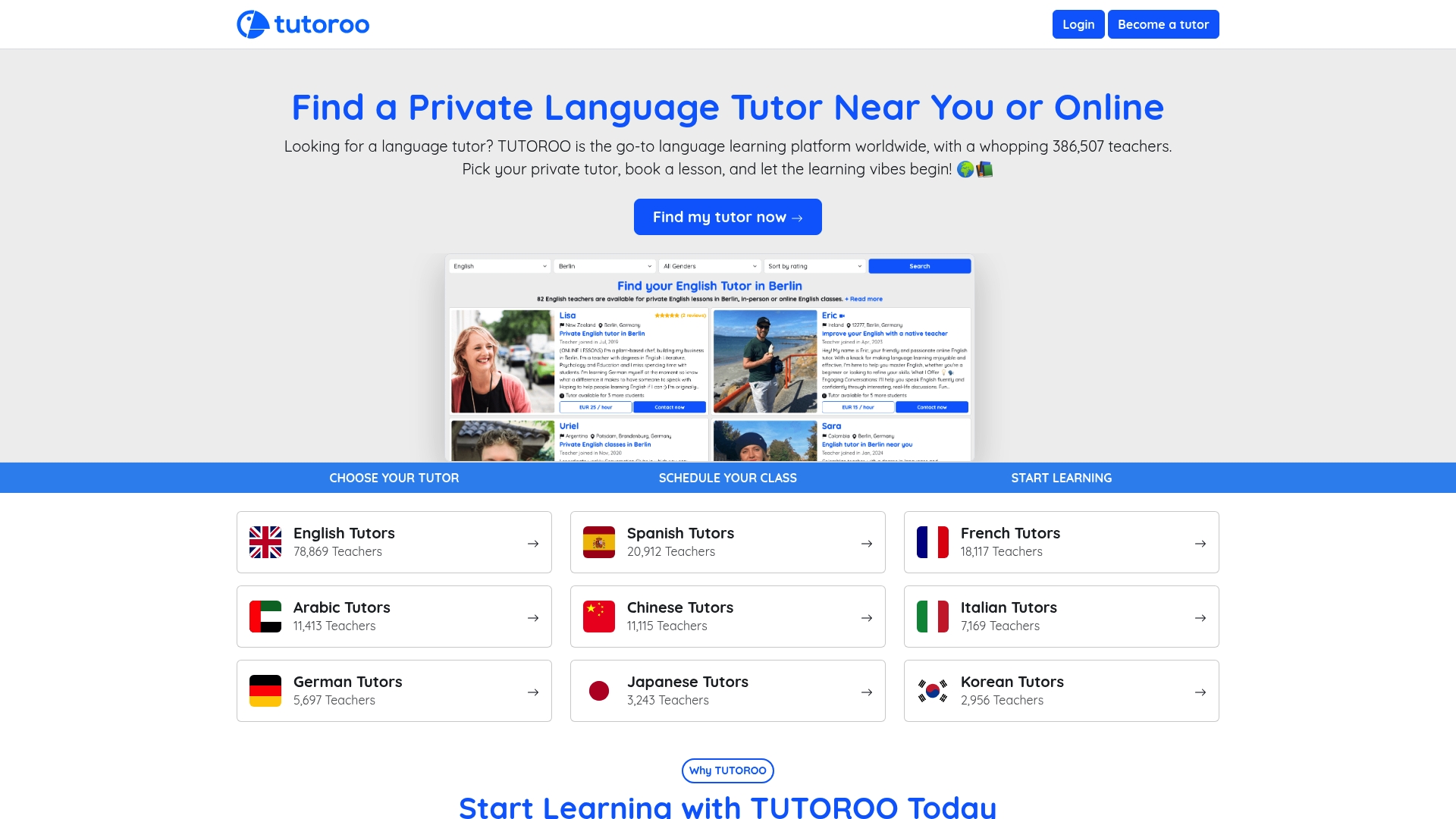
Browsing French tutors on TUTOROO lets you filter by availability, format, and price so you're not stuck choosing between the first three results on a generic search. Every tutor sets their own rate and schedule, and TUTOROO's messaging system makes it simple to ask the vetting questions covered above before you commit to anything. If French isn't the only language on your list, the same marketplace for private tutors covers dozens of others, from English to Lebanese Arabic. Review a few profiles, message a couple of tutors whose experience matches your goal, and book a trial lesson to see how their teaching style actually fits before locking in a package.
Sources
- Lessons
- How much do French tutors cost? — TutorOcean
- How Much Is Reasonable to Spend on a French Tutor? — Reddit