

Live guided conversation lessons, whether one-to-one or in a small group, remain the fastest route to stronger speaking skills because they combine real-time correction with authentic interaction. The quickest next step is simple: book a short trial lesson or join a free speaking club today and start practising with a real partner rather than a screen.
TL;DR:
- Pair a weekly private lesson for tailored feedback with a free speaking club or language exchange to add practice without paying for every session.
- Beginners benefit from patient tutors or small groups and short, frequent lessons, while advanced learners need debates or targeted sessions for vocabulary and register gaps.
- Two or three lessons weekly tend to build steadier progress than one long weekly session; ask tutors to flag one or two recurring errors.
- Learners who prepared before conversations and reviewed afterward reported stronger oral proficiency, vocabulary, and fluency gains than those who chatted without structure.
- Prioritize conversation volume for fluency, but choose a tutor familiar with your speaking test for exam preparation; AI drills help rehearse, not replace live conversation.
Table of Contents
- Types of online conversation lessons and what they give you
- Which format fits beginners, intermediates and advanced learners
- Lesson structure, common activities and feedback formats
- A single checklist for choosing the right format and provider
- Research-backed pre-lesson and post-lesson routines that accelerate gains
- What this playbook gets wrong in most learners' hands
- Start a trial conversation lesson today
- FAQ
- Sources
Types of online conversation lessons and what they give you
Every format on offer gives you something slightly different, and knowing the trade-offs helps you pick without second-guessing yourself.
- One-to-one lessons: tailored correction, a pace set entirely around you and the fastest path to a specific goal, whether that is a job interview or smoother small talk.
- Small-group classes: regular practice with peers, shared energy and a lower price point than private tuition.
- Speaking clubs and community meet-ups: low-stakes, often free sessions built for fluency and cultural exchange rather than correction.
- Language exchanges or tandem learning: reciprocal practice where you teach your own language in return, which naturally builds cultural insight alongside speaking confidence.
- AI-based conversation tutors and scenario drills: unlimited repetition for situational practice, useful for rehearsing a script before a live lesson.
Session lengths typically run from 15 to 60 minutes, and the price reflects the format: free community meet-ups and language exchanges sit at one end, while private one-to-one lessons with an experienced tutor sit at the other. Most learners get the best return by mixing formats: a weekly private lesson for structured feedback, topped up with a free speaking club or exchange for extra volume. If you want to understand the thinking behind these formats, our guide on conversational language practice breaks down the pedagogy in plain terms.
Which format fits beginners, intermediates and advanced learners
Matching the format to your level matters more than chasing the newest app or the cheapest class.
- Beginners generally do best with structured, patient tutors or small groups, in short, frequent lessons that build basic confidence before pushing fluency.
- Intermediate learners benefit from fluency-focused tasks and a mixed-format week, combining a private lesson with a speaking club or exchange.
- Advanced learners get more out of debates, topic-led classes and targeted one-to-one sessions that fill specific vocabulary or register gaps.
- Match the format to your actual goal: travel, work, an upcoming exam or simply more social confidence in the language.
Pro Tip: If you're unsure which level you're at, book one trial lesson with a tutor first; a few minutes of real conversation will tell you more than any self-assessment quiz.
Lesson structure, common activities and feedback formats
A well-run conversation lesson follows a shape you can learn to recognise and use to your advantage.
- Warm-up: a few minutes of easy chat to settle nerves and get your mouth moving in the target language.
- Task-based conversation: role play, storytelling, a topic discussion or a pronunciation drill built around a real communicative task rather than a grammar point in isolation.
- Targeted feedback: the tutor flags one or two patterns rather than every error, so you leave with something specific to work on.
- Recap and homework: a short summary of what came up, plus a small task to carry into your next session.
This task-based progression, where real communicative functions drive the lesson rather than isolated vocabulary lists, mirrors how the ACTFL proficiency guidelines frame speaking development. Ask your tutor for the correction balance that suits you: some learners want every slip flagged, others prefer to finish a thought first and get feedback after. Two or three lessons a week tends to produce steadier progress than one long weekly session, because the gap between practice sessions stays short enough that corrections actually stick. For more on how lesson activities are built, our piece on lessons that build real speaking skills walks through the detail.
A single checklist for choosing the right format and provider
Before you book anything, run through a short list of criteria so you are not choosing on price alone.
- Tutor fit: do they teach your level comfortably, and do you get on with their style in a trial lesson?
- Format: one-to-one for targeted goals, group or club for volume and routine.
- Price and scheduling: does the cost match the value you need, and can you commit to a consistent slot?
- Trial availability and cancellation policy: a short trial and a clear cancellation window protect you from a bad fit.
Ask a tutor directly: how do you structure a typical lesson, how is feedback delivered, and what happens if I need to reschedule? One-to-one lessons allow tailored feedback and rapid correction cycles, which pedagogic literature links to faster improvement on specific speaking targets than unsupervised practice, as reflected in British Council's online learning guidance. If your goal is fluency, prioritise conversation volume over grammar accuracy; if it's an exam, prioritise a tutor who knows that exam's speaking format. If you're preparing for a specific speaking test, task templates such as those in CELPIP speaking preparation can sharpen exam-specific practice alongside your regular conversation lessons.
Research-backed pre-lesson and post-lesson routines that accelerate gains
What you do around a lesson matters almost as much as the lesson itself.
- Pre-lesson (10 to 15 minutes): review the topic prompt, note a handful of useful words, and log in around 10 minutes early to clear any technical hiccups before the clock starts.
- In-lesson: set yourself one task for the session, aim to communicate first and ask your tutor to flag only one or two correction points so you are not overloaded.
- Post-lesson: write a one-sentence summary of what you talked about, add any new errors to a running mistake log, and revisit that log for five minutes within the next day or two.
This structure is not guesswork. Research on virtual exchanges found that learners who worked through pre- and post-conversation worksheets reported stronger gains in oral proficiency, vocabulary and perceived fluency than those who simply chatted without any framing. The same study found cultural awareness rose noticeably after live exchanges with native speakers, alongside oral proficiency and listening comprehension, which learners rated as the most valuable outcomes overall.
Pro Tip: Keep your mistake log to one or two entries per lesson; a long list of errors is harder to act on than a short, specific one. For ready-made templates, see our guide on preparing for language lessons effectively.
What this playbook gets wrong in most learners' hands
Most learners treat conversation practice as something that happens during the lesson and stops the moment the call ends. That is the single biggest waste of a paid or free session. The actual learning gain comes from the five minutes before and the five minutes after, not from squeezing in one more topic during the call itself.

There is also a persistent myth that more lessons always beat better-prepared lessons. A learner who shows up unprepared to three sessions a week often progresses slower than one who does a focused pre-study routine and a mistake log review around a single weekly lesson. Volume without structure just repeats the same plateau at a faster pace.
The format debate (one-to-one versus group versus app) gets more attention than it deserves. The format matters far less than whether you are completing real communicative tasks, the kind ACTFL's framework is built around, rather than rehearsing vocabulary lists in isolation.
— TUTOROO
Start a trial conversation lesson today
We connect learners with private tutors across a wide range of languages, matched by availability, goals and teaching style rather than a rigid timetable. Because tutors set their own schedules and communicate with you directly, booking a trial lesson is usually a matter of minutes, not days.
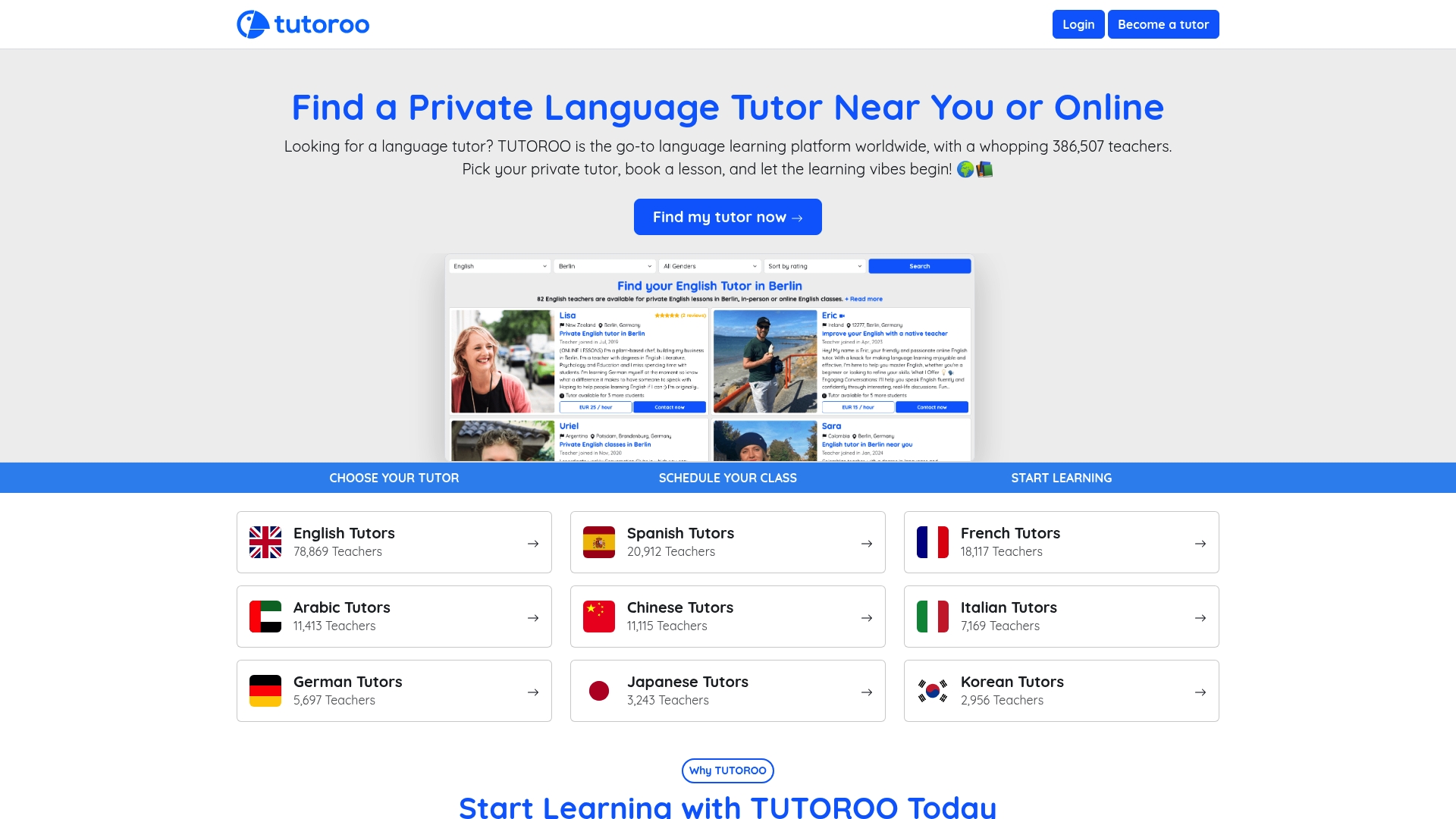
If you want structured, consistent practice rather than relying only on free clubs or exchanges, search English tutors online and book a trial lesson built around the format and level that suit you. Tutors on our platform set their own availability, so you can find a slot that fits your week without waiting on a fixed class schedule. Whether you are after conversational fluency, exam preparation or simply more confidence in everyday chat, you can find a tutor on TUTOROO and start your first session this week.
FAQ
Where can I find free online conversation classes?
Free speaking clubs, community meet-ups and language exchange platforms are widely available and offer structured, low-cost practice with real conversation partners. These sessions are a strong complement to paid lessons, giving you extra speaking volume between more structured, feedback-focused sessions.
How do I train my speaking skills for free?
Join a free speaking club or set up a language exchange where you alternate between practising your target language and helping a partner with yours. Pairing this with a simple pre- and post-session routine, noting new vocabulary beforehand and reviewing mistakes afterwards, makes free practice noticeably more effective.
Is there an app to practice conversation skills?
Yes, AI-based conversation tools and scenario-practice apps let you rehearse dialogues and situational tasks with unlimited repetition, which is useful for building confidence before a live lesson. They work best as a warm-up tool rather than a replacement for real conversation with a tutor or exchange partner.
What is the best way to learn conversational English?
The fastest route combines regular live conversation, whether one-to-one, small group or exchange, with a short pre-lesson prep routine and a post-lesson mistake log. Learners who follow structured pre and post routines around their conversations report stronger gains in oral proficiency and listening comprehension than those who practise without that structure. Platforms such as TUTOROO let you book a trial lesson with a private English tutor to start that routine straight away.
Sources
- Student perceptions of virtual exchanges for L2 practice
- ACTFL proficiency guidelines 2024
- Learning without borders: five lessons from five years of online English