
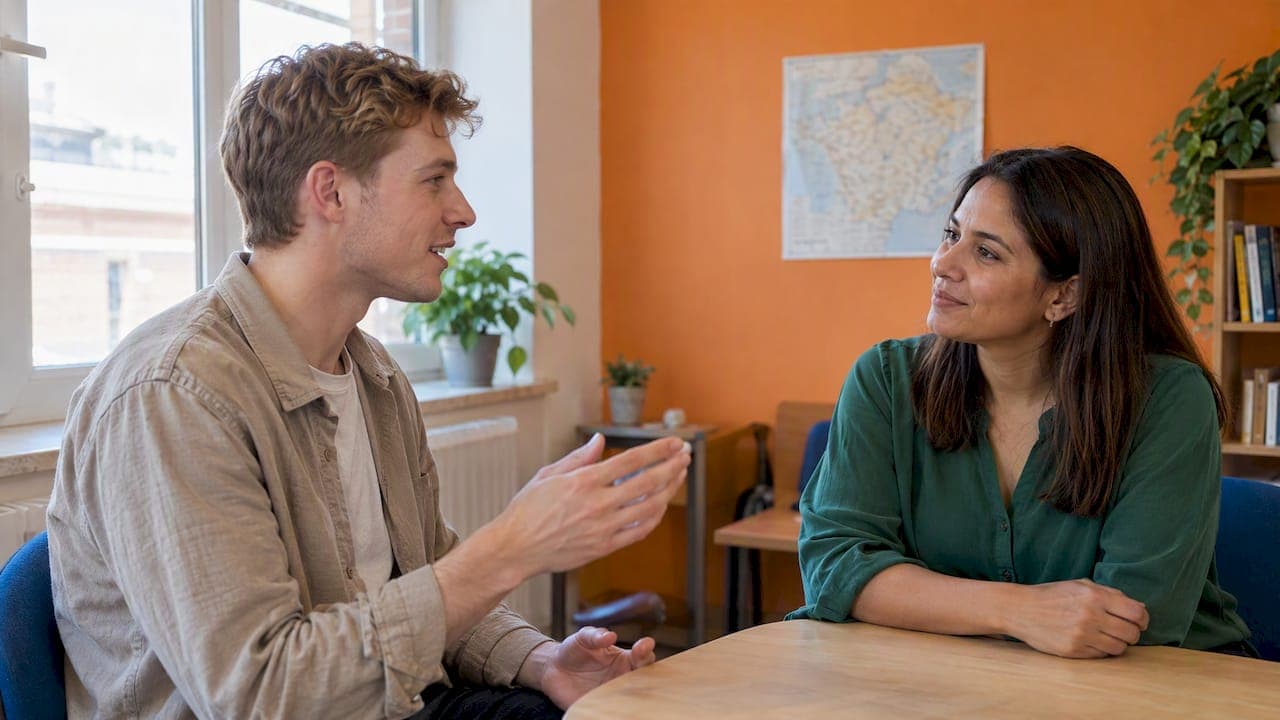
The best beginner French lessons combine three things: a small daily habit, a clear set of first phrases and sounds, and regular speaking with someone who can correct you. Free courses cover the first two well. A private tutor covers the third, and that is usually where beginners stall. This guide shows what to learn in your first weeks, how to structure your practice, where self-study runs out of road and what to expect from a first lesson with a French tutor.
TL;DR
- Start with short, regular sessions. About 20 minutes a day beats one long weekly session.
- Learn greetings, introductions, high-frequency verbs and the core French sounds together, not one after the other.
- Free courses and audio guides are a strong starting point, but speaking and error correction are the usual gaps.
- A tutor works best when you arrive with a goal (travel, work, an exam, conversation) and ask for feedback on pronunciation and phrasing.
- Try one trial lesson before committing, then keep the tutor who fits your pace.
Table of Contents
- What beginner French lessons should cover first
- A realistic beginner routine
- Can you learn French on your own?
- Where a private tutor fits
- Our perspective
- Find a French tutor for your first lessons
- Making the most of each lesson
- Common beginner mistakes
- FAQ
- Sources
What beginner French lessons should cover first
A good first month is narrow on purpose. You are not trying to learn French. You are trying to be able to greet someone, introduce yourself, ask for something and understand the reply.
The Open University's free beginner course on OpenLearn is a useful model. Its first unit opens with greetings and introductions, moves to basic structures and everyday communication, and trains you to hear the difference between the French "u" and "ou" sounds. The design tells you something: pronunciation, social context and practical phrases belong together from week one, rather than saving sounds for later.
TV5MONDE takes a similar practical line. Its free beginner course offers around 500 video exercises on topics such as greetings, hobbies, accommodation, meals, work, health and trips. It suggests roughly 20 minutes a day for three weeks per module, which is a sensible pace for someone with a job or school.

The first words and phrases
The BBC's French guide offers 20 audio phrases covering the situations beginners meet first, starting with greetings. Listen and repeat them out loud. Reading them silently teaches your eyes, not your mouth.
Beyond set phrases, a beginner's vocabulary should be built from three groups:
- Social basics: bonjour, bonsoir, salut, merci, s'il vous plaît, de rien, pardon, oui, non.
- Pronouns and articles: je, tu, vous, le, la, les, un, une, des. These appear in almost every sentence.
- High-frequency verbs: être, avoir, faire, aller, parler, vouloir, pouvoir. Verbs are what let you build complete sentences instead of lists of nouns.
The tu/vous distinction deserves attention early. Tu is for friends, family and children; vous is for strangers, older people and formal settings. Beginners who default to vous when unsure are rarely wrong.
Pronunciation from day one
French spelling and French sound are only loosely related. Silent final letters, nasal vowels and the rolled or throaty "r" surprise nearly everyone. Learning words by sight alone means you will say them wrongly and then have to unlearn the habit. Spend a few minutes of every session listening and repeating. Our step-by-step pronunciation guide walks through the sounds that trip up English speakers.
A realistic beginner routine
Consistency matters more than intensity. A schedule you can keep for six months will beat a heroic fortnight followed by silence.
Here is a simple weekly pattern for about 20 to 30 minutes a day:
| Day | Focus | Example activity |
|---|---|---|
| Mon | New phrases | Learn five phrases from a themed unit, say each aloud three times |
| Tue | Listening | Replay audio from a beginner video exercise, repeat after the speaker |
| Wed | Verbs | Practise je forms of être, avoir, aller in short sentences |
| Thu | Review | Revisit Monday's phrases without notes |
| Fri | Speaking | Describe your day in two or three French sentences, out loud |
| Sat | Light exposure | A short French video or song with subtitles |
| Sun | Rest or one tutor lesson | Rest, or a 30 to 60 minute conversation session |
Two habits make the biggest difference:
- Learn phrases, not isolated words. "Je voudrais un café" is more useful than "café" and "vouloir" learned separately, because it arrives ready to use.
- Speak early, even badly. Talking to yourself counts, though talking to a person counts more. Our guide to practising conversation skills in a new language offers ideas for every stage.
If you are wondering how far a routine like this will take you, our breakdown of how long it takes to learn French, by level puts realistic hours against each stage.
Can you learn French on your own?
Yes, and many people begin that way. Free courses, audio guides and video lessons give a beginner plenty of structure at no cost. The question is what self-study does well and where it tends to fall short.
What the research says about self-directed learning
The University of Oregon's LinguaFolio Network describes successful self-directed learning as a process of setting goals, choosing strategies, documenting evidence of progress and assessing yourself. It also makes a point worth remembering: autonomy means controlling your learning, not necessarily learning entirely alone.
Research on the limits is consistent. A University of Newcastle doctoral study on adult self-instruction identified three main threats compared with classes: too little conversation practice, no feedback on errors, and difficulty sustaining discipline and perseverance. That study dates from 1996, but the three problems will sound familiar to anyone who has tried an app for a month.
A more recent peer-reviewed study of 52 French learners found that simply inviting students to use a popular language app on their own did not produce higher listening, reading or writing scores. Participation and writing outcomes improved when learners received self-regulation training and temporary scaffolding. In other words, tools help most when someone guides how they are used.
A smaller 2014 study of five ESL learners at City College of San Francisco, not about French, points the same way. Self-study resources and digital storytelling supported speaking and confidence, yet instructor feedback and guidance still mattered.

The speaking gap
Beginners using self-study commonly neglect speaking. A well-rounded plan covers speaking, listening, reading and writing, and the speaking strand is the one most easily skipped because it needs another person. That is the natural point to add a tutor.
Where a private tutor fits
A tutor does not replace your free resources. A tutor makes them work harder. Think of your daily practice as the training and the lesson as the session where someone watches your form.
What a one-to-one lesson adds for a beginner:
- Real-time correction. Mispronounced vowels and wrong word choices are caught the moment they happen, before they set into habits.
- A plan built around your goal. A traveller heading to Paris, a student preparing for a school exam and a professional who works with French-speaking clients need different vocabulary.
- Speaking time you can't get from an app. In a 45-minute lesson you may speak for more of it than in a month of solo study.
- Accountability. A booked lesson is hard to skip, which helps with the discipline problem the research identifies.
What a first lesson looks like
Expect your tutor to ask why you want French, what you have tried and how much time you can give each week. Many tutors then run a short speaking exercise to hear your starting point. You will likely practise greetings and introductions, work on a handful of sounds, and leave with a small amount of homework. Feedback on pronunciation, word choice and natural phrasing is the core of the experience, and the topics should match your goal, whether that is travel, work, exams or everyday conversation.
A lesson is most valuable when it has a defined purpose. Open-ended chat feels pleasant but can leave weak areas untouched. Tell your tutor what you want to be able to do in four weeks, for example "order a meal and ask for directions", and ask them to build toward it.
How to choose a tutor
Look for these signals:
- Experience with beginners. Teaching true beginners is a different skill from chatting with fluent speakers.
- Clear communication about the plan. A good tutor can tell you what you will cover in the first month.
- A teaching style that suits you. Some learners want structure and homework; others want more conversation.
- Availability that fits your calendar. Regular weekly slots matter more than occasional marathon sessions.
- A trial lesson. Hear the tutor's pace and accent, and see whether you feel comfortable making mistakes.
We explain this process in more detail in our guide to choosing a French tutor with one paid trial, and our piece on the benefits of learning French with a private tutor covers what regular one-to-one lessons can offer.
Our perspective
We built TUTOROO around a simple belief: language learning opens doors to culture, connection and opportunity, and it comes alive when you speak with a real person.
For a beginner, the first weeks matter most. The free resources available today are excellent for building a habit and a basic vocabulary, and we encourage learners to use them. What they cannot do on their own is listen to you, notice the sound you keep getting slightly wrong and adjust the next ten minutes around it. That is the strength of personalised, one-to-one tuition.
Our platform is designed to make that step easy. You can browse French tutors, read their profiles, message them directly and agree a schedule that suits you, online or locally where tutors are available. Tutors set their own availability and are paid directly by their students, which keeps lessons flexible and conversational rather than rigid.
Our advice to every beginner is the same: start small, speak early and find a tutor whose style makes you want to come back next week.
TUTOROO
Find a French tutor for your first lessons
If you are ready to move from solo study to speaking, TUTOROO connects you with private French tutors for one-to-one lessons, online or in person. You can search by availability and message tutors directly to ask about their experience with beginners before you decide.
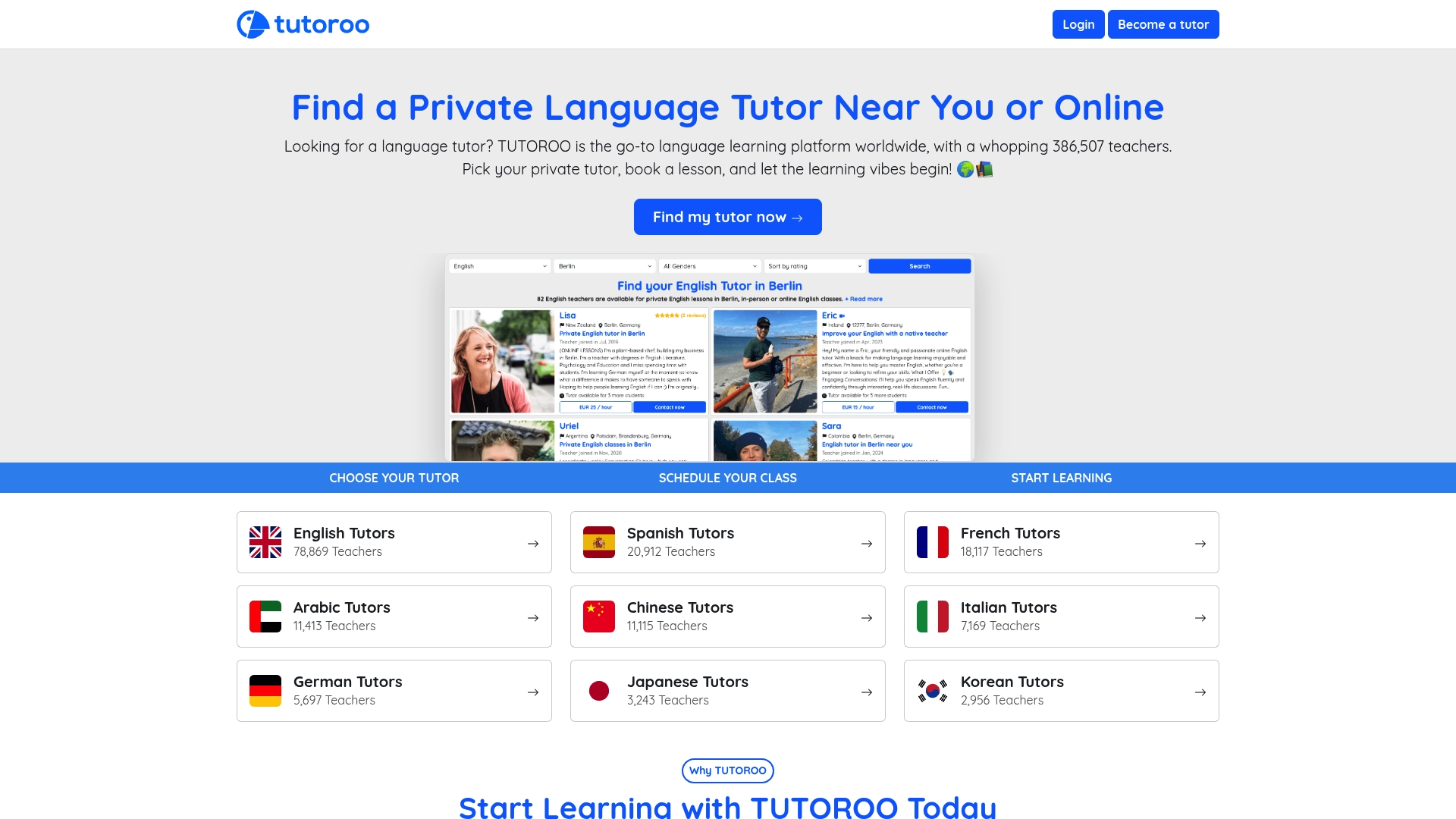
Browse our French tutors online to compare profiles, or visit the TUTOROO homepage to see the other languages we cover.
Making the most of each lesson
A few habits turn a good lesson into steady progress.
Before the lesson
Write down two or three things you want to practise: a phrase you could not say last week, a situation coming up, a sound you find difficult. Bringing a short list saves the first ten minutes.
During the lesson
Ask the tutor to correct you in the moment, or at the end of each exchange, whichever you prefer. Record the lesson if your tutor agrees, so you can replay difficult sounds. Do not apologise for mistakes. Mistakes are the material the lesson works on.
After the lesson
Spend five minutes the same day rewriting the new phrases from memory, then say them aloud. Review them again two or three days later. This brief repetition is what moves a phrase from "heard once" to "available when I need it".
If you also watch French films, start with English subtitles and slowly reduce your reliance on them as your ear improves. Add this to your routine as a light weekend activity, not a replacement for speaking.
Common beginner mistakes
- Trying to memorise long word lists. Themed phrases stick better and can be used immediately.
- Ignoring pronunciation until later. Early practice links spelling to speech and saves relearning.
- Waiting until you feel ready to speak. You will never feel ready. Speak anyway, with a tutor who is happy to hear it.
- Studying in rare, long bursts. Short daily sessions are easier to sustain and more effective for memory.
- Switching resources constantly. Pick one structured course, add a tutor, and give both a few weeks.
FAQ
What is the best way for a beginner to learn French?
Combine a short daily study habit with regular speaking practice. Use a structured free course for vocabulary and listening, then add weekly lessons with a tutor for feedback on pronunciation and phrasing. The mix covers the speaking and correction that solo study usually lacks.
Can French be self-taught?
Yes, and plenty of learners make a good start that way. The usual weak points are limited conversation practice, little feedback on errors and keeping motivation going over months. Adding a tutor or a conversation partner addresses all three.
What are 10 basic French words to learn first?
Start with bonjour, merci, s'il vous plaît, oui, non, de rien, pardon, je, tu and vous. Then add the verbs être, avoir and aller so you can start building sentences. Say each one aloud so your ear and mouth learn them together.
Do I need a French tutor as a complete beginner?
You do not need one on day one, but a tutor helps from the very beginning because good pronunciation habits are easier to build than to fix. Many beginners start with one lesson a week alongside free daily practice. A trial lesson will show you whether the fit feels right.
Sources
- Getting started with French 1, OpenLearn, The Open University
- Start for free in French, TV5MONDE
- A Guide to French, BBC Languages
- LFO at Home: Self-Directed Learning, LinguaFolio Network, University of Oregon
- Self-instruction in adult foreign-language learning, University of Newcastle
- Complementing in-class language learning with voluntary out-of-class app use, Computer Assisted Language Learning, 2019
- Developing autonomous learning for oral proficiency, Language Learning & Technology, 2014