

Book a short paid trial lesson with a tutor matched to your specific goal and current level, rather than the cheapest or first profile you find. That single step reveals more about teaching fit than any bio or review ever will. Search a vetted marketplace like TUTOROO to filter by speciality and availability, then confirm chemistry before you commit to a longer package.
TL;DR:
- A paid trial lesson of 30 to 45 minutes with a focus on your specific goal provides the clearest indication of teaching fit and style.
- Check that the tutor's proficiency level, qualifications, and teaching style align with your target outcome before booking a package.
- Overall costs range from US$35 to US$60 per hour, with higher rates often including tailored materials and progress tracking.
- Online marketplaces like TUTOROO are the fastest way to compare tutors, verify recent reviews, and communicate directly before booking.
- Confirm cancellation policies and progress measurement methods to avoid wasted lessons and ensure ongoing value.
Table of Contents
- Goal-first checklist: what to check before you choose a French tutor
- Where to find a French tutor: marketplaces, schools and community options
- How does a trial lesson reveal the right fit?
- What does a French tutor cost, and how do you budget for one?
- Which type of French tutor suits your goal and level?
- What questions should you ask before you pay?
- What does TUTOROO offer when you search for a French tutor?
- Tutors, apps and classes: what actually moves the needle
- Ready to book your first French tutor?
- Sources
- FAQ
Goal-first checklist: what to check before you choose a French tutor
Choosing a French tutor works best when you treat it like hiring for a short, specific job rather than browsing a catalogue. Start with the outcome, not the person.
Get clear on what "success" looks like in three months, not just "getting better at French". Do you need conversational confidence before a trip, a passing DELF B2 score, or the vocabulary to run a client meeting in Lyon? A tutor who excels at exam drilling may bore a learner chasing casual fluency, and vice versa.
Once the goal is set, work through these criteria in order:
- Proficiency level: favour tutors who offer a quick placement chat or ask you to self-assess against the CEFR scale (A1 to C2) before the first paid lesson.
- Qualifications and experience: teaching certificates matter for structured exam prep; for casual conversation practice, a native speaker with genuine tutoring hours can outperform a credentialed generalist.
- Teaching style and materials: ask whether lessons run mostly in French or mix in English, and request an example lesson plan.
- Availability and cancellation policy: weekly consistency beats occasional long sessions for language retention, so check the tutor's schedule matches yours before booking a block.
- Cost versus value: a higher hourly rate often includes custom materials, homework review, and progress checkpoints. A lower rate without any of that is not automatically the better deal.
Pro Tip: Write your goal down as a single sentence before you search, e.g. "I want to hold a 10 minute unscripted conversation about my job by December." Send that sentence to any tutor you shortlist. Their reply tells you more about their teaching style than their profile bio does.
Where to find a French tutor: marketplaces, schools and community options
Different channels suit different goals, and knowing which one to try first saves weeks of trial and error.
- Online marketplaces such as TUTOROO let you filter tutors by speciality, availability, and lesson format in minutes, then message several candidates before booking a trial. This is usually the fastest route because you are comparing live profiles with recent reviews rather than waiting on a school's intake process.
- Language schools and university tutoring programs offer structured curricula and often pair you with a rotating instructor, which suits learners who want a fixed syllabus but is less flexible if your schedule shifts week to week.
- Community exchanges and conversation meetups are low-cost or free and great for casual practice, but they rarely track progress or adjust to a specific goal like exam preparation.
- Exam-focused centres for DELF, DALF or TCF matter when you need a tutor who knows the exact exam format and marking criteria, since general conversation tutors may not know the scoring rubric.
Whichever channel you try, prioritise the same signals: recent reviews over old ones, a described sample lesson rather than a vague "conversational lessons available", and how quickly a tutor responds to your first message. Slow replies before you have even paid rarely improve once you are a paying student.
How does a trial lesson reveal the right fit?
A trial lesson is the single most informative hour you will spend before committing to a French tutor, and it should be a real, paid session rather than a five minute chat.
- Book a 30 to 45 minute paid trial. A practical approach to choosing a tutor starts with confirming your goal and level, then using that trial to test whether the tutor's style matches how you learn. Paid trials also tend to attract more committed tutors and fewer no shows than free introductory calls.
- Watch how the lesson is structured. Does the tutor open with a level check, follow a plan, and correct errors in a way that helps rather than interrupts your flow?
- Ask for two or three micro tasks during the session, such as a short roleplay, a grammar correction exercise, or a request to explain a concept a different way. This shows you how they adapt on the spot.
- Decide immediately afterwards: continue with a package, ask to renegotiate the format (more speaking, less grammar, or vice versa), or move on to another tutor without guilt.
Pro Tip: Take notes during the trial on a shared document. If the tutor asks to see them at the next lesson, that is a strong signal they plan to track your progress properly.
What does a French tutor cost, and how do you budget for one?
Private French tutoring in the United States typically runs between US$35 and US$60 per hour, depending on the tutor's experience, whether they hold formal teaching qualifications, and how specialised the lesson content is.
Rates climb toward the top of that range for exam-specific coaching or business French, and sit lower for casual conversation practice with a native speaker who tutors informally. Your budget should follow your intensity, not just your wallet:
- Intensive goals (an upcoming exam or relocation) usually need two to three lessons a week, which adds up fast, so ask about package discounts.
- Maintenance goals (staying sharp after reaching a comfortable level) often work fine with one lesson a week or fortnightly sessions.
- Cancellation policies vary widely, so confirm the notice period and whether missed lessons are refunded or forfeited before you pay for a block.
Value signals worth paying for include progress checkpoints, tailored materials, and homework review between sessions. A tutor charging less but offering none of that is often more expensive per unit of actual progress.
Which type of French tutor suits your goal and level?
Matching tutor speciality to your stated outcome saves months of mismatched lessons. A tutor brilliant at business French vocabulary is not necessarily the right coach for someone who just wants to chat comfortably with a partner's French family.
- Conversational fluency: look for tutors who advertise speaking-focused sessions and are comfortable with unscripted roleplay; one-to-one format works best for personalised correction, though small groups can sharpen listening skills.
- Exam preparation (DELF, DALF, TCF): prioritise tutors with direct experience marking or teaching to that specific exam's rubric.
- Business French: seek out tutors with professional or corporate backgrounds who can build vocabulary around your actual industry.
Lesson focus should also shift as your level climbs. An A1 to A2 learner needs heavy structure and repetition; a B1 to B2 learner benefits from more spontaneous conversation and error correction; a C1 to C2 learner often gains most from nuance work, idiom, and native media discussion.
A simple three-month plan for a B1 learner chasing conversational confidence might run: weeks one to four on structured speaking drills and common idioms, weeks five to eight on unscripted roleplay covering daily scenarios, and weeks nine to twelve on discussing short articles or podcasts in French with the tutor.

What questions should you ask before you pay?
A short round of questions before booking a package protects you from months of wasted lessons and money.
- Ask for a qualification summary and a specific example of a past lesson plan.
- Ask how they measure progress and how often they will check it with you.
- Confirm the cancellation and refund policy in writing before the first paid package.
- Treat refusal to offer any trial lesson as a clear red flag, along with vague answers about materials or wildly inconsistent availability.
Pro Tip: If a tutoring relationship isn't working, end it politely by email, reference the original cancellation policy, and ask directly whether unused lesson credits are refundable or transferable.
What does TUTOROO offer when you search for a French tutor?
TUTOROO connects learners with a large global network of private tutors and supports flexible scheduling with direct payments between students and tutors, which removes a lot of the back and forth that slows down other booking methods.
For French specifically, that translates into practical features you can use right away:
- Filter tutor profiles by speciality, such as conversation practice, exam prep, or business French.
- Message tutors directly to confirm availability and lesson format before you pay for anything.
- Book a trial lesson to test fit, using the same protocol covered earlier in this guide.
- Compare typical US pricing, which marketplace data places around US$35 to US$60 per hour, to set a realistic budget before you start messaging tutors.
The platform's own step-by-step hiring guidance echoes the same goal-first, trial-tested approach this article recommends, which is a useful sanity check if you are comparing multiple tutors at once.
Tutors, apps and classes: what actually moves the needle
Apps are excellent for vocabulary repetition, but they cannot correct your accent mid-sentence or push you to finish a thought in French when you freeze. That is where a tutor earns their fee, particularly for speaking practice and exam outcomes. The smartest setup uses a tutor to structure and correct the work you do independently between lessons. Expect real movement in conversational confidence after eight to twelve weeks of steady, weekly sessions, not overnight.
— TUTOROO
Ready to book your first French tutor?
Once you know your goal and level, starting on the platform takes three steps: search the marketplace, filter results by speciality and availability, then message a shortlist to compare responsiveness before you book anything. That last step matters more than people expect. A tutor who replies thoughtfully within a day is usually the one who shows up prepared for lesson one too.
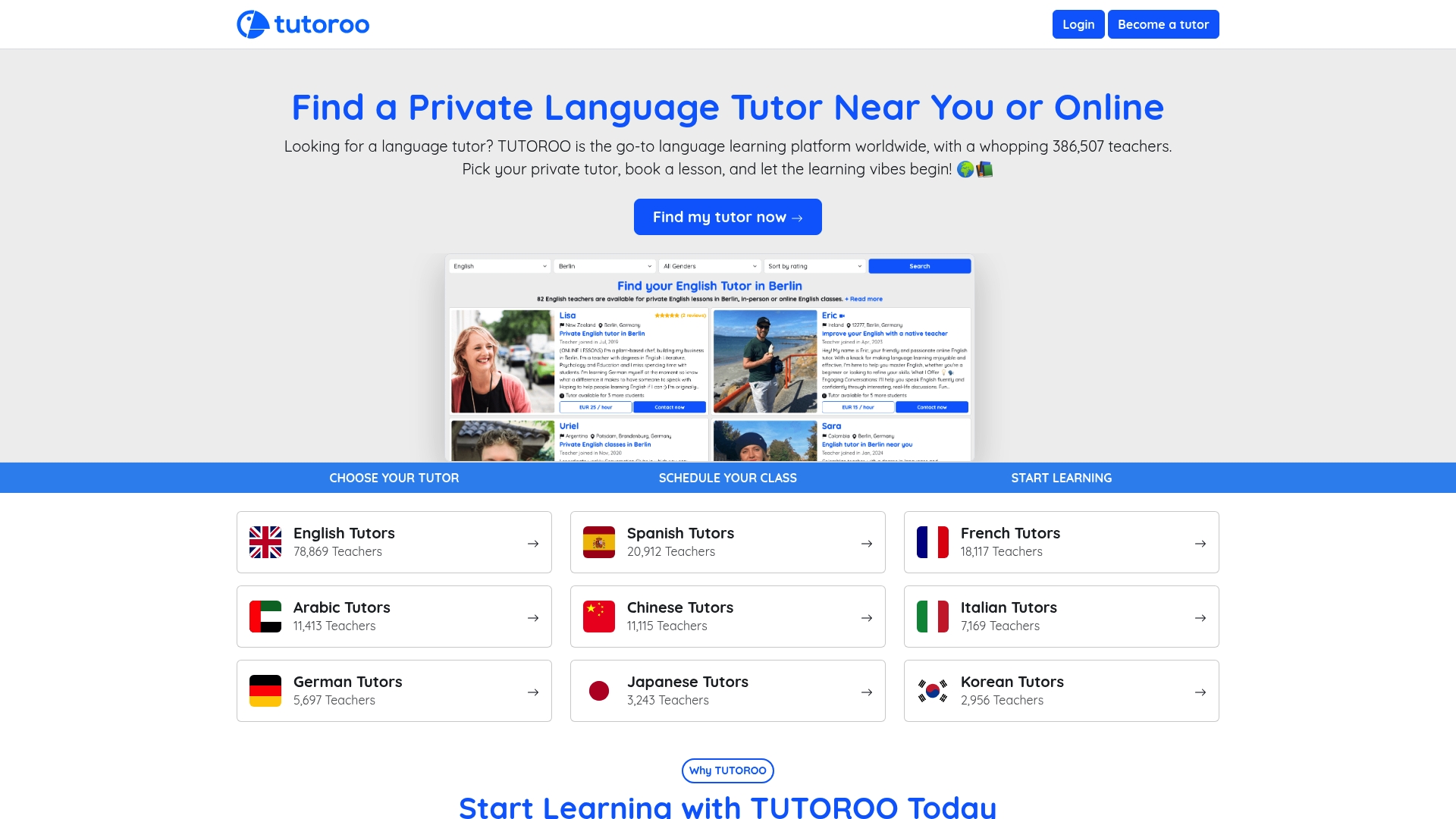
Expect to pay somewhere in the US$35 to US$60 per hour range for most US-based French tutoring, and treat your first booking as a paid trial rather than a long-term commitment. That keeps the financial risk low while you confirm the teaching style actually works for how you learn. When you are ready to compare profiles directly, browse French tutors on TUTOROO and message a few candidates today to get your first trial lesson on the calendar.
FAQ
What is the 80/20 rule for learning French?
The 80/20 rule suggests that roughly 20% of French vocabulary and grammar structures cover about 80% of everyday communication, so focusing early lessons on high-frequency words and common sentence patterns speeds up practical fluency. A tutor who prioritises this kind of high-value vocabulary early, rather than obscure grammar rules, is applying the same principle.
How do I find a good French tutor?
Start by identifying your specific goal and current level, then check a prospective tutor's qualifications and experience before booking anything. The most reliable step is a paid trial session to confirm their teaching style actually matches how you learn.
Is it worth getting a French tutor?
For speaking practice and exam outcomes, a tutor typically delivers faster progress than app-only study because they correct mistakes in real time and adapt lessons to your goal. Whether it is worth it usually depends on how quickly you need results and how much unscripted speaking practice you are getting elsewhere.
What is the average cost of French lessons?
Private French tutoring in the United States typically costs between US$35 and US$60 per hour, with rates varying based on the tutor's experience and lesson speciality. Exam preparation and business French coaching tend to sit toward the higher end of that range.