

TL;DR:
- A hybrid approach combining private tutors with AI conversation tools offers the fastest path to fluency in Australia.
- Live lessons provide real-time feedback and cultural context, while daily practice solidifies language skills.
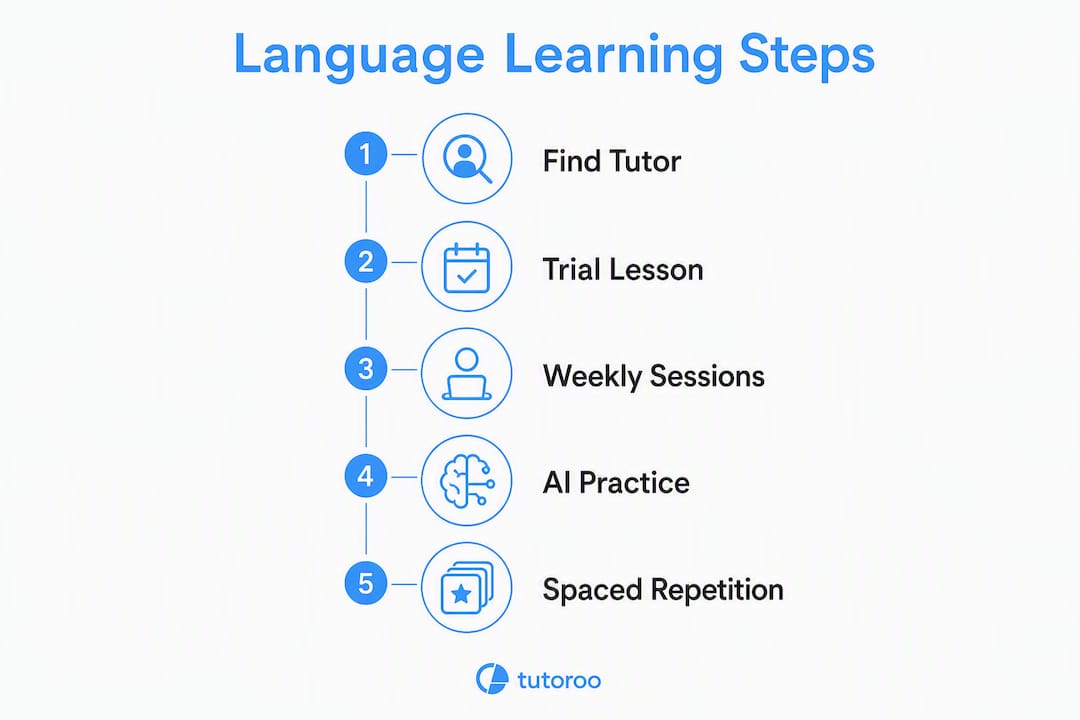
For one-on-one language lessons in Australia, the clearest path to conversational fluency is a marketplace-first, hybrid approach: connect with a private tutor through a platform like Tutoroo, then reinforce progress daily with AI conversation tools and spaced repetition.
Learners: search Tutoroo for a tutor in your target language, book a trial lesson within 24–72 hours, then pair weekly sessions with an AI speaking tool between lessons.
Tutors: register on Tutoroo, build a profile that highlights your niche and qualifications, set an introductory rate, and start accepting bookings from Australian students online or in person.
Why this route works:
- Live tutors deliver real-time corrective feedback that apps cannot replicate
- Cultural context and authentic conversation come naturally in one-on-one sessions
- Marketplace scheduling gives both parties full flexibility across time zones
- A hybrid stack keeps you practising daily without booking a tutor for every session
Table of Contents
- Why does one-on-one tutoring accelerate conversational fluency?
- What are the top global language learning solutions available in Australia?
- How do you choose the right language learning platform?
- How can tutors in Australia get started on a marketplace?
- How do learners in Australia find and book the right tutor?
- Key takeaways
- Why marketplaces are the right choice for language learning in Australia
- Tutoroo connects you with private language tutors across Australia
- Useful sources
Why does one-on-one tutoring accelerate conversational fluency?
Live interaction is the highest-leverage activity for speaking fluency. Linguistics researchers at Lancaster University have found that while humans use statistical pattern learning to absorb grammar and vocabulary quickly, genuine fluency requires sustained social exposure and corrective feedback over months or years. An app can teach you what a word means; a tutor shows you when and how a native speaker actually uses it.
One-on-one lessons deliver three things group classes and apps rarely can:
- Targeted feedback: a tutor catches fossilised errors before they become habits
- Customised practice: lessons adapt to your goals, whether that is a job interview in Mandarin or casual conversation in French
- Accountability: a scheduled session creates a commitment that self-study rarely matches
How long does fluency actually take? The Foreign Service Institute estimates that it takes 600–750 hours to reach conversational fluency in Romance languages (Spanish, French, Italian), and around 2,200 hours or more for groups such as Mandarin, Arabic, Japanese, and Korean for native English speakers. Those figures assume structured study; regular speaking practice with a tutor compresses the timeline considerably.
Pro Tip: Start speaking in your target language from lesson one, even if it feels uncomfortable. Learners who begin active use early maintain motivation and progress faster than those who wait until they feel "ready."
What are the top global language learning solutions available in Australia?
The market for language education tools spans several distinct categories. Understanding where each sits helps learners and tutors choose the right combination.
| Solution type | Best for | Format | Pricing shape | Australia availability | Core features |
|---|---|---|---|---|---|
| Private tutor marketplaces | Conversational fluency, accountability | Online or in-person | Introduction fee + direct tutor rate | Strong (Tutoroo, local tutors) | Matching, messaging, scheduling, reviews |
| Self-study apps | Vocabulary, grammar foundations | Self-paced, mobile | Free tier or subscription | Widely available | Gamified lessons, spaced repetition |
| AI conversation tools | Daily speaking practice between lessons | On-demand, mobile/web | Free or low-cost subscription | Available | Simulated dialogue, pronunciation feedback |
| Online course platforms | Structured grammar and reading | Asynchronous video | Per course or subscription | Available | Video lessons, quizzes, certificates |
| Language schools | Classroom immersion, group interaction | In-person or live online | Per term or intensive | Major cities only | Structured curriculum, peer practice |

The hybrid model consistently produces the best outcomes: self-paced digital tools build vocabulary and grammar foundations, while a private tutor provides the communicative practice that converts passive knowledge into real speech. AI conversation tools have matured to the point where they offer on-demand speaking practice between tutor sessions, making daily practice affordable and accessible anywhere in Australia.
For learners and tutors, educational marketplaces occupy the centre of this ecosystem. They provide the human connection that no app replicates, while offering the scheduling flexibility and transparent pricing that language schools often lack.
How do you choose the right language learning platform?
Prioritise marketplaces that show clear tutor vetting, transparent fees, Australian-friendly payment methods, and genuine local availability. A platform that looks polished but lists no tutors in your city or time zone is not useful.
Evaluation checklist for learners and tutors:
- Tutor vetting process: does the platform verify qualifications, identity, or teaching experience?
- Review system: are student reviews visible, verified, and recent?
- Matching quality: can you filter by language, location, availability, and teaching style?
- Messaging before booking: can you contact a tutor before committing to a paid session?
- Scheduling tools: does the platform handle time-zone conversion for online lessons?
- Payment flow: are AUD payments supported, and is the fee structure transparent upfront?
- Cancellation and refund policy: is it clearly stated and fair to both parties?
- Mobile experience: does the platform work well on iOS and Android for Australian users?
- Dispute resolution: is there a clear process if something goes wrong?
On pricing, expect private tutor rates in Australia to vary by language, tutor experience, and lesson format. Introductory or trial lessons are typically offered at a reduced rate. Platforms that charge a one-off introduction fee (rather than a recurring commission on every lesson) tend to be more cost-effective for learners who plan ongoing study. Spaced repetition and short daily practice blocks between sessions keep costs down while maintaining momentum.
How can tutors in Australia get started on a marketplace?
Yes, you can build steady one-on-one work through a marketplace like Tutoroo, and the setup process is straightforward.
- Register and verify: create your profile, submit ID, and add any relevant qualifications or teaching credentials.
- Craft a specific profile: name your niche clearly (e.g. "Business English for professionals" or "Conversational Mandarin for beginners") rather than listing every language you speak.
- Add a demo video: a 60–90 second clip showing your teaching style converts significantly more trial bookings than a text-only profile.
- Set competitive availability: list your available hours in local time and note whether you offer online, in-person, or both.
- Offer an introductory lesson: a shorter, lower-cost first session reduces the barrier for new students and gives you a chance to demonstrate your approach.
- Gather reviews early: ask your first students to leave a review after their trial lesson. Early social proof accelerates future bookings.
Tutor-ready checklist before going live:
- Government-issued ID for verification
- Proof of qualifications (TESOL, CELTA, degree, or relevant certification where applicable)
- A clear, well-lit profile photo
- Demo video (optional but strongly recommended)
- Two or three lesson plan templates for your most common student goals
- A clear cancellation policy stated in your profile
Pro Tip: Test two versions of your profile headline over a fortnight — one focused on your qualification ("Certified French teacher") and one on the student outcome ("Speak French confidently in 3 months"). Track which attracts more enquiries and keep the stronger one.
How do learners in Australia find and book the right tutor?
Book a trial lesson within 24–72 hours of shortlisting a tutor. Waiting longer rarely improves the decision and often kills momentum. Use the trial to assess teaching style, materials quality, and whether the tutor's pace suits you — not just whether they speak the language fluently.
Checklist for selecting a trial tutor:
- Availability matches your schedule, including time-zone compatibility for online lessons
- Profile states clear lesson objectives or a teaching methodology
- Reviews mention speaking practice, not just grammar explanation
- Cancellation and refund terms are visible before you pay
- Payment is in AUD or a clearly stated equivalent with no hidden conversion fees
- The tutor offers a shorter introductory session so you can assess fit at low cost
Once you have found a good match, set clear language learning goals before your second lesson. Specific, measurable targets ("hold a five-minute conversation about my job in Spanish by week eight") give your tutor a framework and keep you accountable. Between sessions, use an AI conversation tool for daily speaking practice and a spaced repetition app for vocabulary. This combination, recommended by Coursera's language learning guidance, keeps the language active in your memory without requiring a tutor every day.
Pro Tip: Negotiate a lesson package after your trial. Most tutors offer a small discount for five or ten prepaid sessions, and the commitment keeps you consistent.
Key takeaways
A marketplace-first, hybrid approach combining private tutor sessions with daily AI speaking practice and spaced repetition is the most effective and flexible route to conversational fluency in Australia.
| Point | Details |
|---|---|
| Hybrid model wins | Pair a private tutor for live feedback with AI tools and spaced repetition for daily practice. |
| Fluency takes time | Expect 600–750 hours for Romance languages and around 2,200 hours or more for Mandarin, Arabic, Japanese, or Korean. |
| Trial lessons first | Book a trial within 24–72 hours of shortlisting; use it to assess teaching style, not just language ability. |
| Tutors: niche your profile | A specific offer and a demo video convert more trial bookings than a generic profile. |
| Tutoroo for Australia | Tutoroo connects learners and tutors across Australia for online or in-person one-on-one lessons. |
Why marketplaces are the right choice for language learning in Australia
Tutoroo's model is built around one idea: fast, transparent matching between students and private tutors, with the flexibility to learn online or in person anywhere in Australia. With a large community of language teachers worldwide, the platform covers languages from English and Spanish to Arabic, Mandarin, and beyond — including languages with strong demand in Australia such as Japanese, Indonesian, and Korean.
The platform's trust signals matter as much as its scale. Tutor profiles include qualifications, student reviews, and availability, so learners can make an informed choice before paying anything. Messaging happens directly on the platform before a booking is confirmed, which means both parties can align on goals, materials, and lesson structure upfront. Payments flow directly from student to tutor after the initial introduction, keeping ongoing lesson costs straightforward and transparent.
For Australian tutors, Tutoroo offers genuine local discovery. Students can search by suburb or city, which means in-person lessons remain a real option alongside online sessions. Tutors set their own rates and schedules, making it a practical fit for full-time teachers, freelancers, and native speakers building a side income.
Pro Tip: Use Tutoroo's messaging feature to send a brief welcome note to every new student before their first lesson. Outline what you plan to cover and ask one question about their goal. It sets a professional tone and reduces no-shows.
Tutoroo connects you with private language tutors across Australia
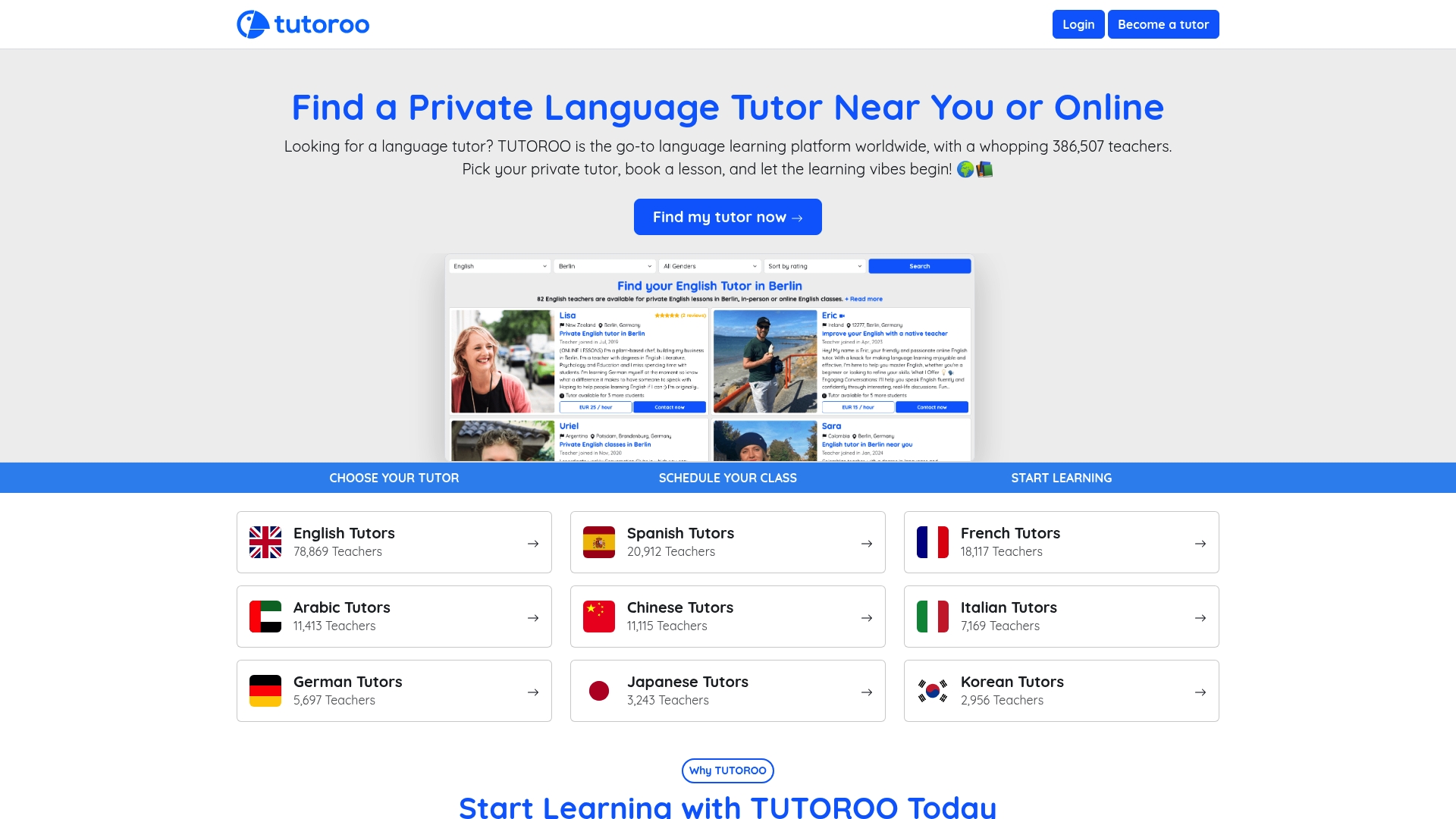
Tutoroo is the direct route to personalised, one-on-one language lessons in Australia, without the overhead of a language school or the limitations of a self-study app. Students pay a one-off introduction fee to connect with a tutor, then arrange ongoing lessons and payments directly, keeping the process simple and cost-effective. Lessons can be online or in person, across dozens of languages, with tutors available across Australian cities and time zones.
Whether you are looking to build conversational confidence in a new language or you are a qualified tutor ready to attract students, Tutoroo's matching system, verified profiles, and direct messaging make the process clear from the first search to the first lesson. The platform supports languages with strong local demand, including Malay tutors and many others across the Asia-Pacific region.
Find a private language tutor on Tutoroo today and book your first lesson.
Useful sources
These sources informed the recommendations and evidence in this article.
| Source | What it covers | Why it matters |
|---|---|---|
| Foreign Service Institute, U.S. Department of State | Language difficulty tiers and estimated hours to fluency | The most widely cited benchmark for realistic fluency timelines by language group |
| BBC Future: What's the best way to learn a new language? | Linguistics research on pattern learning, social exposure, and fluency | Grounds the case for live interaction and sustained communicative practice |
| Coursera: How to learn a new language | Practical tools, course options, and combining structured study with speaking | Useful starting framework for learners building a hybrid study routine |
| Scott H Young: What does research say is the best way to learn a language? | Evidence on spaced repetition, microlearning, and speaking practice scheduling | Practical scheduling and retention strategies for learners between tutor sessions |
| LinguaLive: How to learn a new language — the complete evidence-based guide | Hybrid model rationale and AI conversation tools for daily practice | Supports the recommendation to pair AI speaking tools with private tutor sessions |