

TL;DR:
- Educational marketplaces are digital platforms that connect learners directly with qualified tutors, offering personalized and flexible language instruction. They are growing rapidly, with the sector projected to reach $45.8 billion by 2034, driven by AI personalization and platform consolidation. Trust, vetting, and combining live with self-paced learning are key to maximizing success in these marketplaces.
Educational marketplaces are digital platforms that connect learners directly with educators, enabling personalised, flexible instruction outside traditional classroom settings. The role of educational marketplaces has grown from simple content libraries into dynamic, two-sided ecosystems where supply and demand are matched in real time. The global education content marketplace was valued at $17.9 billion in 2026 and is projected to reach $45.8 billion by 2034. That trajectory reflects a fundamental shift in how people learn languages, acquire skills, and connect with expert tutors across borders. Platforms like Tutoroo sit at the centre of this shift, offering over 386,000 language teachers across dozens of languages to learners worldwide.
How do educational marketplaces facilitate personalised and flexible learning?
Personalisation is the defining advantage of modern learning platforms over traditional classrooms. A classroom teacher works to a fixed curriculum at a fixed pace. An educational marketplace lets each learner choose a tutor, set a schedule, and adjust the learning path as progress unfolds.

AI-native tools like AI-graded writing and adaptive pacing now enable marketplaces to charge premium prices for personalised instruction compared to static content. That pricing gap exists because the outcomes are measurably better. A student learning Spanish through adaptive exercises that respond to their error patterns will retain vocabulary faster than one working through a fixed textbook chapter.
The mechanics of personalisation in language learning marketplaces typically include:
- Adaptive pacing: The platform adjusts lesson difficulty based on quiz results and session performance.
- Tutor matching: Algorithms align learner goals, availability, and preferred communication style with the right instructor.
- Progress tracking: Dashboards show learners and parents exactly where gaps exist and what to address next.
- Asynchronous tasks: AI-graded exercises let learners practise between live sessions without waiting for tutor feedback.
Balancing synchronous and asynchronous activities is critical for engagement and retention. Live sessions build social connection and accountability. Self-paced tasks reinforce what was covered and allow learners to work at their own rhythm. The combination produces better outcomes than either approach alone.
One underappreciated challenge is catalogue bloat. Open marketplaces with thousands of tutors and courses can leave learners paralysed by choice. Knowing how to filter by verified credentials, language specialisation, and learner reviews cuts through the noise quickly.
Pro Tip: Before booking a tutor, ask for a short trial session. Most quality platforms support this. A single 30-minute conversation reveals teaching style, pacing, and cultural fit far better than any profile description.
What are the primary marketplace models in the language learning sector?
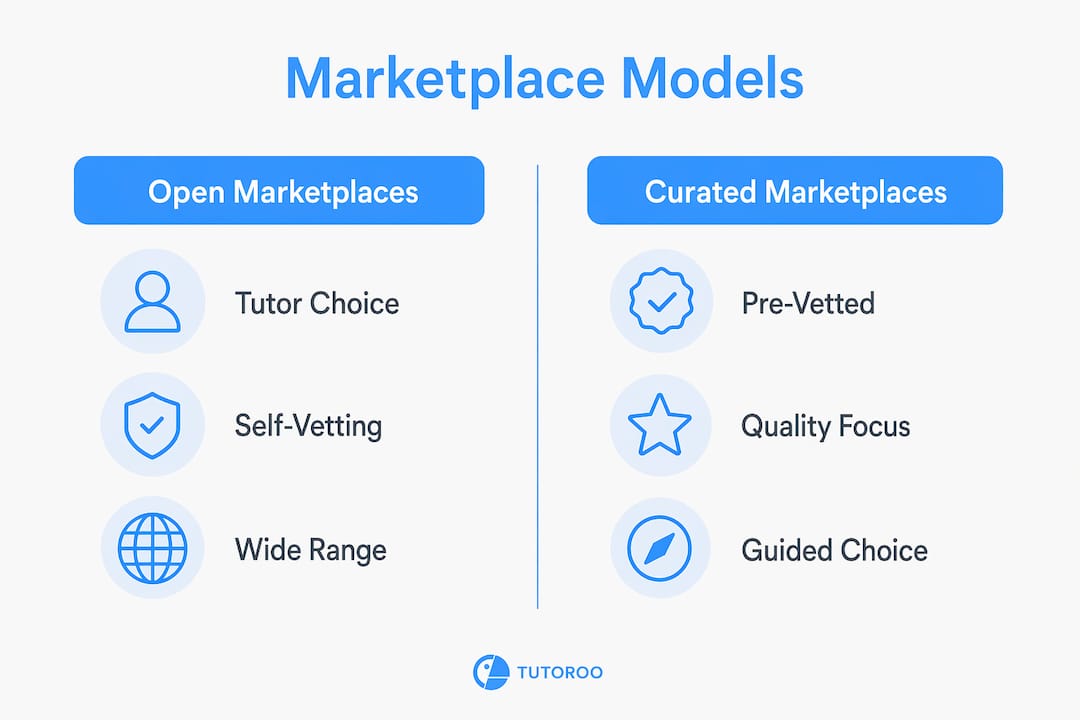
Not all educational hubs operate the same way. Understanding the two main models helps educators, students, and parents choose the right environment for their goals.
Students choosing language learning platforms face a clear fork: open platforms where tutors set their own rates and curated platforms that vet instructors before listing them. Each model carries distinct trade-offs.
| Feature | Open marketplace | Curated marketplace |
|---|---|---|
| Tutor vetting | Self-reported credentials | Platform-verified qualifications |
| Price range | Highly variable, often lower | Narrower range, reflects quality floor |
| Content volume | Very large, can feel overwhelming | Smaller, easier to navigate |
| Learner trust | Relies on peer reviews | Backed by platform quality assurance |
| Tutor autonomy | High, tutors set own terms | Moderate, platform sets some standards |
Curated platforms reduce user overwhelm from catalogue bloat by vetting tutors to improve decision-making efficiency and quality assurance. That vetting process is not just a convenience feature. It directly affects learning outcomes by filtering out underqualified instructors before a learner ever encounters them.
Trust is the scarcest resource in education, with learners favouring platforms that offer verifiable credentials and institutional partnerships over independent creators. Parents selecting a language tutor for a child are not just buying lessons. They are extending trust to a stranger, and platform design either supports or undermines that trust.
Key factors that build trust in a language learning marketplace:
- Verified identity and qualification checks for tutors
- Transparent learner reviews with response options for tutors
- Clear refund and cancellation policies
- Secure in-platform messaging before any payment is made
Pro Tip: Check whether a platform displays tutor response rates and average reply times. A tutor who responds within a few hours is far more likely to be reliable throughout a course than one who takes days.
For a deeper look at how open and curated models compare in practice, the language learning marketplace overview from Tutoroo breaks down the key distinctions clearly.
What are the current market trends shaping educational marketplaces?
The education content marketplace sector is growing at a pace that reflects genuine demand, not speculative investment. The projected CAGR of 12.4% through to 2034 is driven by three converging forces: AI personalisation, credential verification, and post-pandemic hybrid learning habits.
| Trend | What it means for learners |
|---|---|
| AI-powered matching | Faster, more accurate tutor recommendations based on goals and learning style |
| Verified micro-credentials | Learners can trust tutor qualifications are real, not self-declared |
| Hybrid learning models | Combines live tutor sessions with self-paced content for flexibility |
| EdTech consolidation | Fewer but stronger platforms, with better quality controls |
| Multilingual content expansion | More tutors and resources available in non-English languages |
AI-powered personalisation has become the main driver behind marketplace adoption, shifting beyond content access towards demonstrable career and academic outcomes. That shift matters enormously for language learners. Completing a course is no longer the measure of success. Demonstrable fluency, verified by structured assessment, is what learners and employers now expect.
The EdTech marketplace landscape is consolidating rapidly, creating roll-up opportunities and offering premium platform features. Consolidation tends to raise the quality floor. Smaller, lower-quality platforms get absorbed or exit the market, leaving learners with fewer but more reliable options.
Educational marketplaces accelerated post-pandemic, highlighting the importance of hybrid models that combine institutional programmes with marketplace content. The learners who adapted fastest were those who embraced both live instruction and self-directed practice. That pattern has now become the expected standard rather than the exception.
The future of learning platforms also points strongly toward multilingual and region-specific content. A learner in Melbourne seeking a Malay tutor or a parent in Singapore looking for a French instructor for their child now has access to a genuinely global pool of educators. That access was simply not possible a decade ago.
How can educators, students, and parents get the most from language learning marketplaces?
Getting real value from a learning marketplace requires more than signing up and booking a session. The following steps reflect how successful learners approach the process.
- Define your goal before searching. "Learn Spanish" is too vague. "Hold a 10-minute conversation about work topics within three months" gives a tutor something concrete to build toward.
- Use platform filters deliberately. Filter by language specialisation, teaching style (conversational vs. grammar-focused), and availability in your time zone. Broad searches return too many results to evaluate meaningfully.
- Prioritise verified credentials. A tutor with a recognised language teaching qualification and a history of positive reviews is a safer choice than one with a polished profile and no verifiable background.
- Combine live sessions with self-paced practice. Effective marketplace learning combines live sessions for social connection with asynchronous tasks graded by AI for retention. Booking weekly lessons without practising between them cuts progress in half.
- Reassess every four weeks. Learning goals shift. A tutor who was right for beginner vocabulary may not be the best fit for advanced conversation practice. Good platforms make it easy to adjust.
Two-sided marketplace platforms must manage the balance between available tutors and learner demand. AI-driven matching is critical for quality user experience. That means the platform itself is doing significant work behind the scenes to surface the right tutor at the right time. Learners who engage actively with matching tools, rather than just scrolling through listings, get better results.
For parents, the most common pitfall is choosing based on price alone. The cheapest tutor is rarely the most effective. A tutor who charges more but delivers structured, outcome-focused lessons will produce faster progress and better value over time.
Pro Tip: Ask any prospective tutor how they measure your progress. A good tutor will describe specific milestones, not just say "we'll see how you go." Clear benchmarks keep both parties accountable.
The role of technology in language education continues to expand, and learners who understand how AI matching and adaptive tools work will use them far more effectively than those who treat the platform as a simple directory.
Key takeaways
Educational marketplaces deliver the best language learning outcomes when learners combine AI-driven tutor matching, verified credentials, and a deliberate mix of live and self-paced practice.
| Point | Details |
|---|---|
| Market growth is real | The sector is projected to reach $45.8 billion by 2034, reflecting sustained global demand. |
| Curation beats volume | Vetted tutor platforms reduce catalogue bloat and improve decision-making for learners and parents. |
| AI drives personalisation | Adaptive pacing and AI-graded tasks produce measurably better outcomes than static content alone. |
| Trust requires verification | Verified credentials and institutional partnerships are the strongest signals of platform quality. |
| Blended learning works best | Combining live sessions with asynchronous practice yields faster progress and stronger retention. |
Tutoroo's view on where educational marketplaces are heading
The most important thing we have observed across language learning is this: technology does not replace the human element in education. It makes the human element more accessible. AI matching surfaces the right tutor faster. Adaptive tools fill the gaps between sessions. But the moment a learner connects with a tutor who speaks their target language with genuine cultural fluency, something shifts that no algorithm can replicate.
We are also cautious about the consolidation trend. Larger platforms with premium features are not automatically better for learners. Scale can introduce its own form of impersonality. The marketplaces that will matter most in the years ahead are those that use technology to create more meaningful one-on-one connections, not fewer.
For educators, the opportunity is significant. A well-structured profile on a curated marketplace, with verified credentials and clear learning outcomes, now reaches a global audience of motivated learners. That reach was previously available only to institutions. The community-based approach to language education, where trust and authentic connection sit at the centre, is what separates lasting platforms from passing trends.
The role of educational marketplaces in 2026 is not just to connect people. It is to create the conditions where genuine learning happens, consistently, across time zones, languages, and life circumstances.
— Tutoroo
Tutoroo: personalised language learning, matched to you
Tutoroo connects learners with over 386,000 private language tutors across the world, covering languages from English and Spanish to Arabic, French, Chinese, and beyond. Every match is built around your schedule, your goals, and your preferred learning style.
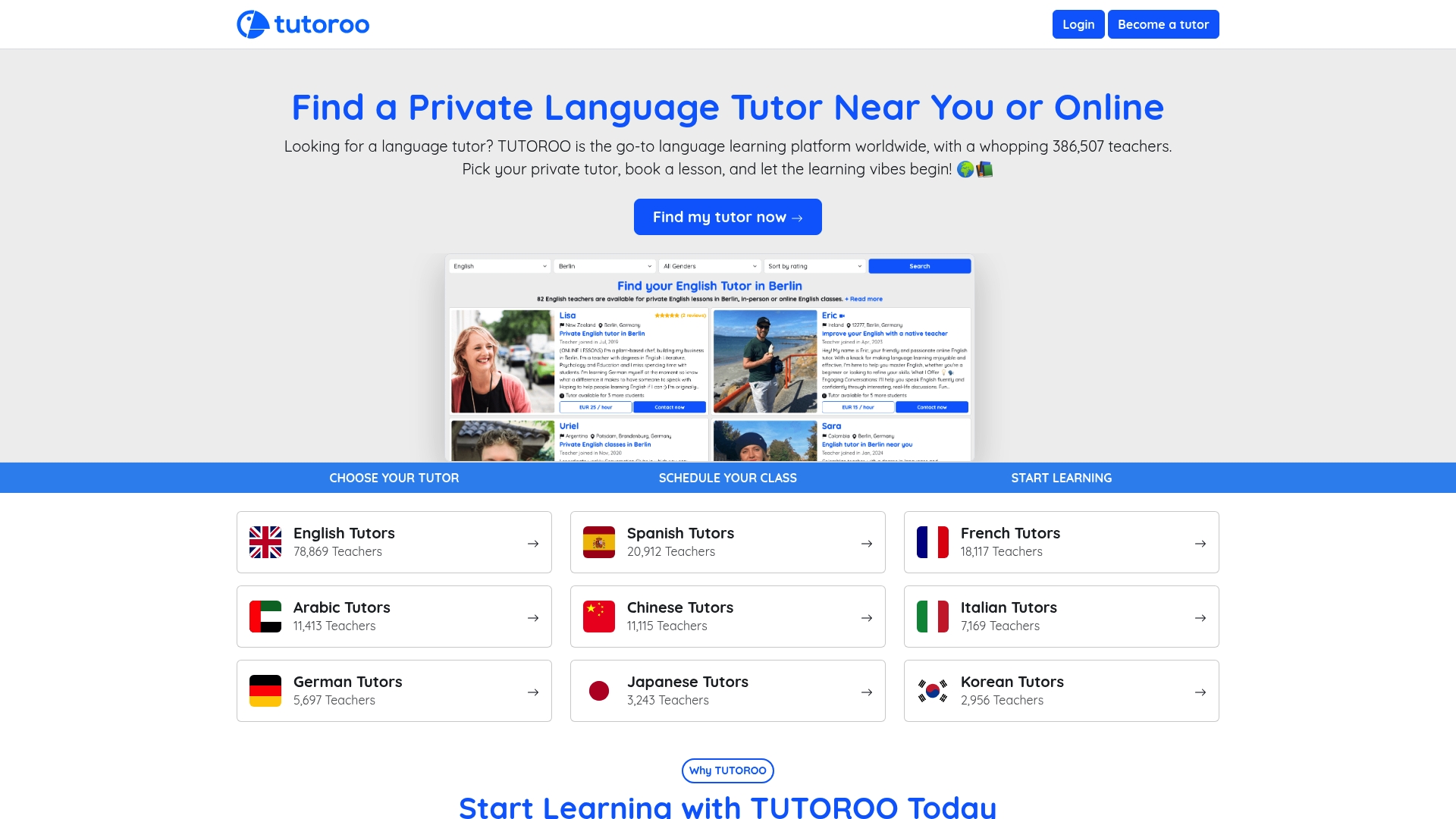
Whether you are a student preparing for an exam, a parent finding the right tutor for your child, or an educator looking to reach motivated learners globally, Tutoroo makes the process straightforward. Tutors set their own availability and rates, and learners connect directly through a secure messaging system before committing to lessons. For flexible, quality-matched language tutoring online, Tutoroo offers one of the most accessible and well-supported marketplaces available today. Explore the full tutor catalogue and find your match at Tutoroo.
FAQ
What is the role of educational marketplaces in language learning?
Educational marketplaces connect learners with qualified tutors through digital platforms, enabling personalised, flexible instruction in any language. They replace the fixed pace of traditional classrooms with tutor-matched, goal-driven learning that adapts to each learner's needs.
How do open and curated language learning platforms differ?
Open platforms let tutors set their own rates and credentials, offering wide choice but variable quality. Curated platforms vet tutors before listing them, reducing catalogue bloat and giving learners greater confidence in the quality of instruction.
Why is AI important in educational marketplaces?
AI-driven matching pairs learners with the most suitable tutors based on goals, availability, and learning style, while adaptive tools grade practice tasks and adjust difficulty between live sessions. Together, these features produce faster, more measurable progress than static content alone.
How large is the education content marketplace sector?
The global education content marketplace was valued at $17.9 billion in 2026 and is forecast to reach $45.8 billion by 2034, growing at a CAGR of 12.4%. That growth reflects rising demand for personalised, outcome-focused learning across all age groups and regions.
What should parents look for when choosing a language learning platform?
Parents should prioritise platforms with verified tutor credentials, transparent learner reviews, and clear refund policies. A curated marketplace with quality assurance processes offers stronger protection than an open directory where anyone can list as a tutor.