

Text-based language tutoring means learning a language through written exchanges rather than speech: chatting, messaging, or drafting with a human tutor or an AI chat agent who corrects and guides you in real time or over hours. It suits learners who want low-pressure practice, editable output, and detailed written corrections they can revisit. Tutoroo connects learners with tutors who deliver exactly this kind of lesson, alongside spoken practice.
TL;DR:
- Synchronous chats provide real-time feedback, while asynchronous messaging allows flexible scheduling for busy learners.
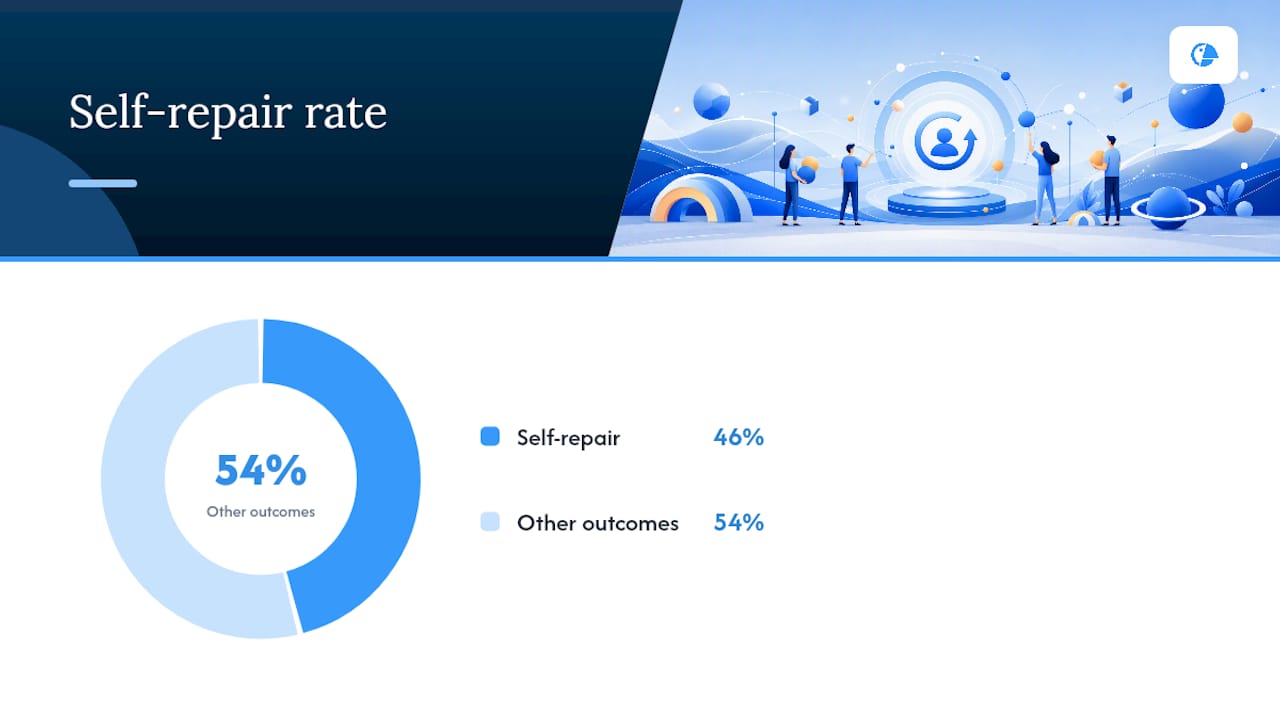
- Effective sessions use a three-step approach: eliciting self-correction, hinting, and only recasting as a last resort, with self-repair rates around 46 percent.
- Text tutoring improves grammar, vocabulary, and confidence but offers limited practice on pronunciation, rhythm, or intonation.
- Choosing a tutor involves asking about correction methods, response times, record-keeping, and whether they include voice or video components.
- Consistently using one platform or tutor for at least a month yields better results than switching frequently, with a mix of written practice and brief speaking sessions.
Table of Contents
- What text-based language tutoring is: models and variants
- How text-based tutoring works in practice: session flow and mechanics
- Benefits and limits of text-based tutoring
- How to choose and set up text-based tutoring for your goals
- Practical session formats and best practices you can copy
- Costs and pricing expectations for text-based tutoring
- How Tutoroo supports text-based tutoring
- Our take: pick one method and stick with it
- Sources
What text-based language tutoring is: models and variants
Three distinct models sit under this umbrella, and confusing them is the most common mistake new learners make.
Synchronous human text chat puts you in a live conversation with a tutor, typing back and forth in real time. Corrections arrive within seconds, and the pace mirrors a spoken lesson but with a permanent transcript. Asynchronous human messaging works differently: you send a message, essay, or voice-to-text note, and your tutor replies hours or a day later with detailed annotations. It suits busy schedules and rewards patience over speed. AI-assisted text agents sit somewhere in between, offering instant feedback around the clock using structured correction methods, though without the cultural nuance a native-speaking tutor brings.
- Synchronous chat: best for learners who want conversational rhythm without speaking pressure.
- Asynchronous messaging: best for working adults or students juggling time zones.
- AI text agents: best for daily drilling between human lessons.
A text-based language teaching methodology organises lessons around whole texts, linking written correction to spoken discourse rather than treating grammar points in isolation. That framework is worth borrowing whichever model you choose.
How text-based tutoring works in practice: session flow and mechanics
A well-run session follows a predictable rhythm, and knowing it helps you brief a tutor or judge whether a platform is doing this properly.
- Pretest or generative prompt. You attempt a sentence, message, or short paragraph before receiving any instruction, forcing you to retrieve what you already know.
- Tutor response using elicit, hint, recast. Rather than simply rewriting your error, an effective tutor first elicits a self-correction, then hints if needed, and only recasts the correct form as a last resort.
- Learner revision. You rewrite the corrected passage yourself instead of just reading the fix.
- Spaced repetition integration. Genuine errors get logged into a flashcard system for review days later, not forgotten the moment the chat ends.
This elicit-hint-recast approach is not just theory. Tutor Lily reports a 46% self-repair rate among users who go through this three-step method, meaning nearly half the time, learners fix their own mistake before being told the answer. Self-correction sticks better than being handed the answer, because generating the fix yourself is what psychologists call the generation effect.
Fast feedback loops matter more than most learners assume. Being asked to resubmit a corrected sentence, rather than just reading a tutor's fix and moving on, turns a passive glance into active retrieval practice.
Pro Tip: Ask your tutor to hint rather than correct outright for at least the first two attempts at any sentence. It slows the session down slightly but roughly doubles what you retain a week later.
Benefits and limits of text-based tutoring
Text-based tutoring earns its place in a learning routine for reasons that go beyond convenience.
- Lower anxiety. Drafting a message gives you time to think, which matters enormously for learners who freeze up mid-sentence in live conversation.
- Editable output. You can revise before sending, something impossible in spoken practice.
- Persistent records. Every correction stays searchable, unlike a spoken lesson that vanishes once the call ends.
- Correction-heavy practice. Written feedback can be more granular than a tutor can deliver verbally in the moment.
- Accessibility. Learners with hearing difficulties, social anxiety, or unreliable internet for video calls can still get quality instruction.
The limits are real too. Text tutoring gives you little to no feedback on pronunciation, rhythm, or intonation unless it is paired with audio clips or occasional voice notes. Speaking fluency has to be practised somewhere else. A 2026 feature in The Guardian makes a similar point: no single method, app, or format replaces the need to combine approaches for genuine language learning success.
The practical fix is simple. Use text tutoring for grammar precision, vocabulary depth, and confidence building, and book a short weekly video or in-person session for spoken fluency. Neither format alone gets you fluent.
How to choose and set up text-based tutoring for your goals
Choosing well starts with knowing what to ask, not just what to compare.
Look for a tutor or platform against five criteria: correction style (do they explain why something is wrong, not just mark it incorrect), responsiveness (hours, not days, for asynchronous work), record-keeping (can you export or revisit past corrections), progress metrics (do they track recurring error types), and a clear price model.
When you message a prospective tutor, ask them directly:
- "Do you use elicit-hint-recast correction, or do you just rewrite my mistakes?"
- "How quickly do you typically respond to asynchronous messages?"
- "Can you keep a running document of my recurring errors?"
- "Do you mix in voice notes or calls to check pronunciation?"
- "What does a typical week look like, and what's included in the price?"
Once you have picked a tutor, set up your routine properly:
- Agree on a cadence (daily short messages beat one long weekly session for most learners).
- Start a living document where corrected sentences and explanations accumulate over time.
- Feed genuine recurring errors into a spaced repetition system rather than relying on memory alone.
- Check in monthly on a simple metric: fewer repeated errors, longer unprompted sentences, or faster response time in target language.
Reading up on how feedback shapes success in language tutoring is worth doing before your first session, since it shapes exactly what to ask for.
Practical session formats and best practices you can copy
Three templates cover almost every use case, and you can hand any of these directly to a tutor as a brief.
- Rapid daily correction loop. Send one to three sentences each morning about your day. Tutor replies within hours using elicit-hint-recast. You revise and resend before evening. Best for building daily habit and vocabulary recall.
- Asynchronous multi-day task. Write a short essay or story over two or three days. Tutor annotates in full once complete, flagging patterns rather than every single slip. Best for grammar structure and longer-form fluency.
- Extended generative-and-revise cycle. Attempt a complex piece (a formal email, an opinion paragraph) cold, get full correction, then rewrite it entirely from memory a week later without looking at the original correction. Best for intermediate learners plateauing on complexity.
Whichever template you use, adopt an ask-first policy: request that your tutor prompt you toward the fix before revealing it, and always require resubmission rather than passive reading. This is what separates a genuinely effective loop from a glorified spellcheck.
Pro Tip: Keep one running document per language, not per tutor. Losing your error history every time you switch platforms wastes months of accumulated insight.
Costs and pricing expectations for text-based tutoring
Pricing varies more than most learners expect, largely because the format itself changes the cost structure.
- Per-message or package pricing is common for asynchronous tutors, often sold as a bundle of corrections per week or month.
- Hourly rates apply to synchronous text chat sessions, generally cheaper than video lessons since no camera setup or spoken delivery is required.
- Marketplace introduction fees apply on platforms like Tutoroo, where you pay once to be matched with a tutor and then pay that tutor directly for ongoing lessons.
What moves the price: tutor experience and native-speaker status, whether the session is synchronous or asynchronous, and whether you buy single sessions or a discounted bundle. Judge value by outcomes retained, not the hourly figure alone. A cheaper tutor who never explains the why behind a correction costs you more time in the long run than a slightly pricier one whose feedback actually sticks.
How Tutoroo supports text-based tutoring
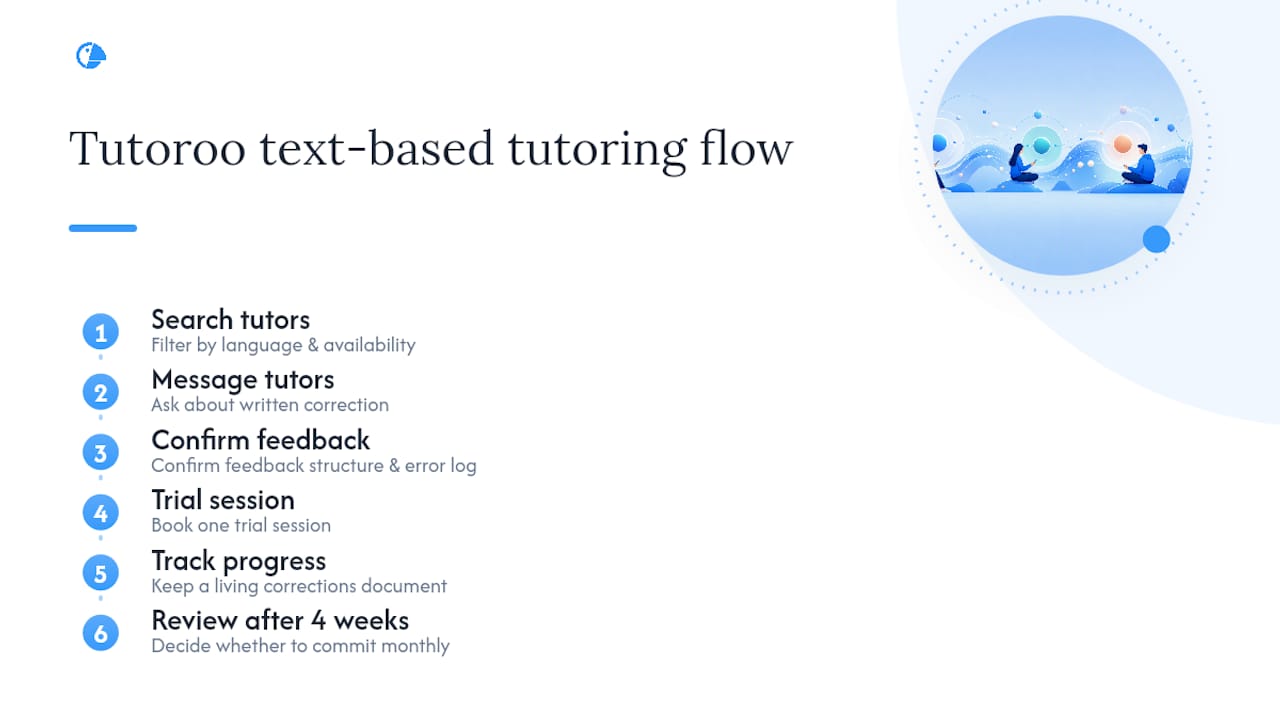
Tutoroo connects learners with a community of over 386,000 tutors worldwide, many of whom offer text-based formats alongside video and in-person lessons. Finding the right fit starts with filtering by language and availability, then messaging tutors directly through the platform to confirm their correction style before booking.
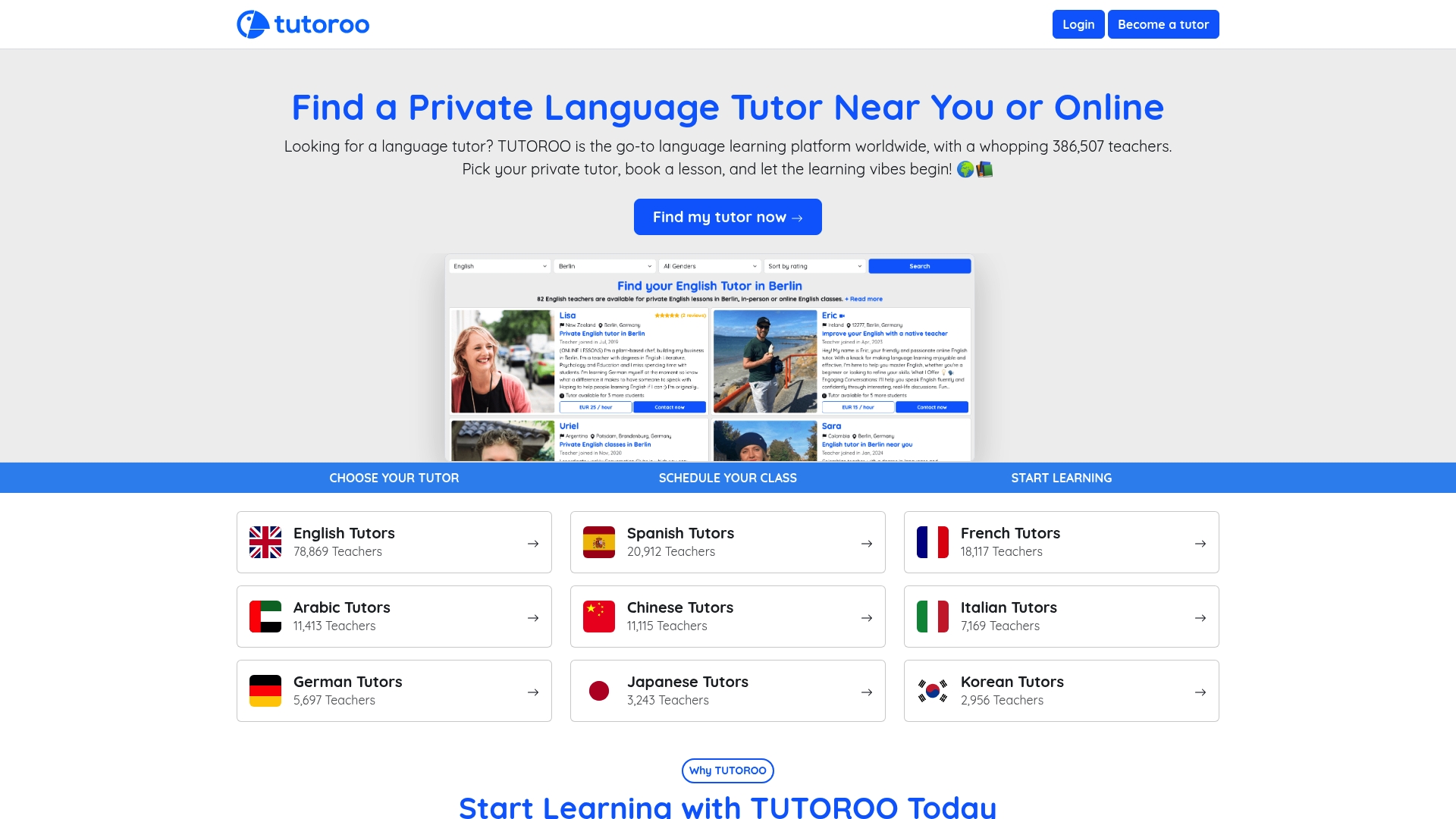
When you message a tutor on Tutoroo, ask specifically whether they offer asynchronous written correction, how they structure feedback, and whether they can maintain a running record of your recurring errors. Profiles that mention written correction, homework review, or messaging support are the ones set up for this kind of work. Explore English tutors if that is your target language, or browse by language elsewhere on the platform to find a text-savvy match.
Committing to a single tutor for a month, rather than jumping between apps and tutors, is what tends to move the needle; see the benefits of tailored language courses for adult learners for why this approach works best. Start with one trial session, keep a living document of your corrections from day one, and check your progress against a simple metric after four weeks. Find a tutor and book your first session to see whether the format fits before committing to a longer run.
Our take: pick one method and stick with it
Most learners chase novelty, switching tools weekly and never accumulating enough corrected material to see real patterns emerge. Commit to one tutor or platform for a full month, pair it with brief weekly speaking practice, and try a single text-based session on Tutoroo before judging the format.
— TUTOROO
Sources
The Sanako text-based methodology guide explains how whole-text instruction links written and spoken practice. The Tutor Lily data illustrates self-repair rates under structured correction. The gislio/claude-language-tutor project on GitHub shows how AI agent systems bundle assessment and spaced repetition. LinguaLive's 2026 language learning guide covers daily routine design for combining AI, tutoring, and spaced review.