

The fastest way to choose an Arabic tutor is to match their dialect and teaching style to your specific goals, then confirm the fit with a short trial lesson before committing to a package. Start by deciding whether you need Modern Standard Arabic or a regional dialect, then search a vetted marketplace such as Tutoroo, message two or three candidates, and book a trial this week.
TL;DR:
- Matching the tutor's dialect to your specific goal, such as MSA or a regional dialect, is crucial to effective communication and progress.
- Asking for a sample lesson plan before the trial helps identify if the tutor uses a structured methodology suitable for your learning style.
- Online marketplaces like Tutoroo enable filtering by dialect and availability, making it easier to find vetted tutors for online or local lessons.
- A well-conducted trial should focus on achieving a small, clear objective and reveal how readily the tutor adapts to your questions and feedback.
- Expect to pay more for tutors with formal qualifications or specialized knowledge, with rates varying based on the focus of instruction and qualification level.
Table of Contents
- What criteria matter most when you choose an Arabic tutor?
- Where can you find an Arabic language tutor?
- How do you interview and trial an Arabic tutor?
- What should you expect to pay for Arabic lessons?
- Your first 4 to 6 weeks with a new Arabic tutor
- Why the trial lesson matters more than the resume
- Getting started with a tutor on Tutoroo
- Sources
- FAQ
What criteria matter most when you choose an Arabic tutor?
Dialect match comes first, and it trips up more beginners than anything else. Arabic isn't one language with regional accents. Modern Standard Arabic (MSA) is the formal register used in news broadcasts, books, and official documents, while Egyptian, Levantine, Gulf, and Maghrebi dialects differ enough from each other that a fluent Levantine speaker can genuinely struggle to follow fast Moroccan Arabic. If your goal is watching Egyptian films or chatting with family in Beirut, an MSA-only tutor will leave you stranded in real conversations. If you're preparing for academic study or Quranic reading, MSA is exactly right.
Once dialect is settled, look at these attributes:
- Qualifications and specialisation. A teaching certificate matters less than a track record with learners like you, whether that's exam preparation, Quranic Arabic, or business Arabic for professional contexts.
- Teaching methodology. Ask whether they follow a structured syllabus or improvise session to session. A tutor who can describe how they'll measure your progress over eight weeks is a different proposition to one who says "we'll just talk and see."
- Language of instruction. Some excellent native speakers cannot explain Arabic grammar in English. If you need concepts broken down in your own language, confirm this before booking anything beyond a trial.
- Homework and assessment cadence. Structured lesson plans and consistent weekly practice measurably improve retention, according to the British Council's own reflections on years of online language teaching.
- Trust signals. Student reviews, references, and a clear trial-lesson policy tell you more than a polished bio ever will.
Pro Tip: Ask a prospective tutor to send you a one-page sample lesson plan before you even book a trial. A tutor who can produce one in a day usually already teaches with structure; one who stalls usually doesn't have one.
Where can you find an Arabic language tutor?
Different channels suit different priorities, and picking the wrong one wastes weeks.
- Online marketplaces give you filters for dialect, price, and availability, plus reviews and built-in messaging before you commit to anyone. Tutoroo works this way, connecting learners with tutors who list their dialect specialisation and teaching background directly on their profile, whether you want Arabic tutors online or a dialect-specific option like Lebanese Arabic.
- Universities and cultural centres often run structured Arabic programmes with vetted instructors, which suits learners who want a formal curriculum over flexible, conversational lessons.
- Community groups and forums move fast. Threads on r/learn_arabic regularly feature learners crowdsourcing tutor recommendations from people who've already vetted someone, though quality varies since these are personal referrals rather than verified profiles.
- Apps and app-store listings can surface tutoring services too, but read the reviews carefully. Check the App Store listing for an Arabic-learning app or its Google Play equivalent and note whether reviewers are commenting on paid tutoring or a free self-study feature, since the two get mixed together often.
Marketplaces suit learners who want a structured, ongoing relationship with someone vetted upfront. Community forums and classifieds suit learners after cheap, casual conversation practice and who don't mind doing their own screening. Neither is wrong, but knowing which one you're using changes how much vetting you need to do yourself.
How do you interview and trial an Arabic tutor?
Before you even schedule a call, check the practical basics: availability that matches your timezone, standard lesson length, cancellation notice, payment terms, and whether a trial lesson is free or discounted.
Once you're talking with a candidate, run through these questions:
- What's your experience teaching learners with my specific goal (conversational fluency, exam prep, Quranic reading)?
- Which dialect do you teach, and can you also explain grammar concepts in MSA if I need the bridge?
- What does a typical lesson structure look like, and what materials do you use?
- How do you measure progress, and how often will I get feedback?
- Can you explain grammar or vocabulary in English when I get stuck?
The trial lesson itself should have a job to do. Set one small, specific objective, such as introducing yourself and asking basic questions, and watch how clearly the tutor corrects you without derailing the conversation. Good rapport and clear explanations in a single session are a stronger signal than a long, polished bio.
Pro Tip: Treat a vague answer to "how do you measure progress?" as your biggest red flag. Tutors who can't describe a checkpoint usually don't have one, and you'll be the one discovering that three months in.
Decline anyone who avoids questions about their teaching structure, cannot produce even a rough syllabus, or spends more of the trial upselling packages than actually teaching.
What should you expect to pay for Arabic lessons?
Hourly rates for private Arabic tuition vary widely depending on the tutor's qualifications, dialect specialisation, and whether they teach exam preparation or business Arabic, which tends to command a premium over general conversation practice. Tutors with formal teaching certificates or Quranic Arabic expertise generally sit at the higher end of any given market.
- Hourly vs packages: Hourly rates give you flexibility to pause or switch tutors anytime. Block packages often come with a small discount but check the refund policy and what happens if a tutor cancels partway through.
- Scheduling: A consistent weekly slot beats sporadic bookings for actual progress, and the British Council's own experience delivering online language lessons points to steady weekly rhythm as one of the biggest drivers of learner retention.
- Timezones: For online lessons, confirm the tutor's timezone converts cleanly into a slot you can actually keep every week, not just this week.
- Comparing offers fairly: Work out the effective per-hour cost after any matching or introduction fee, and check whether materials or written feedback are included or billed separately.
Community forums consistently show learners emphasising trial lessons and reviews above almost anything else when deciding who to hire, and that instinct holds up: a tutor's price means little until you know what an hour with them actually delivers.
Your first 4 to 6 weeks with a new Arabic tutor
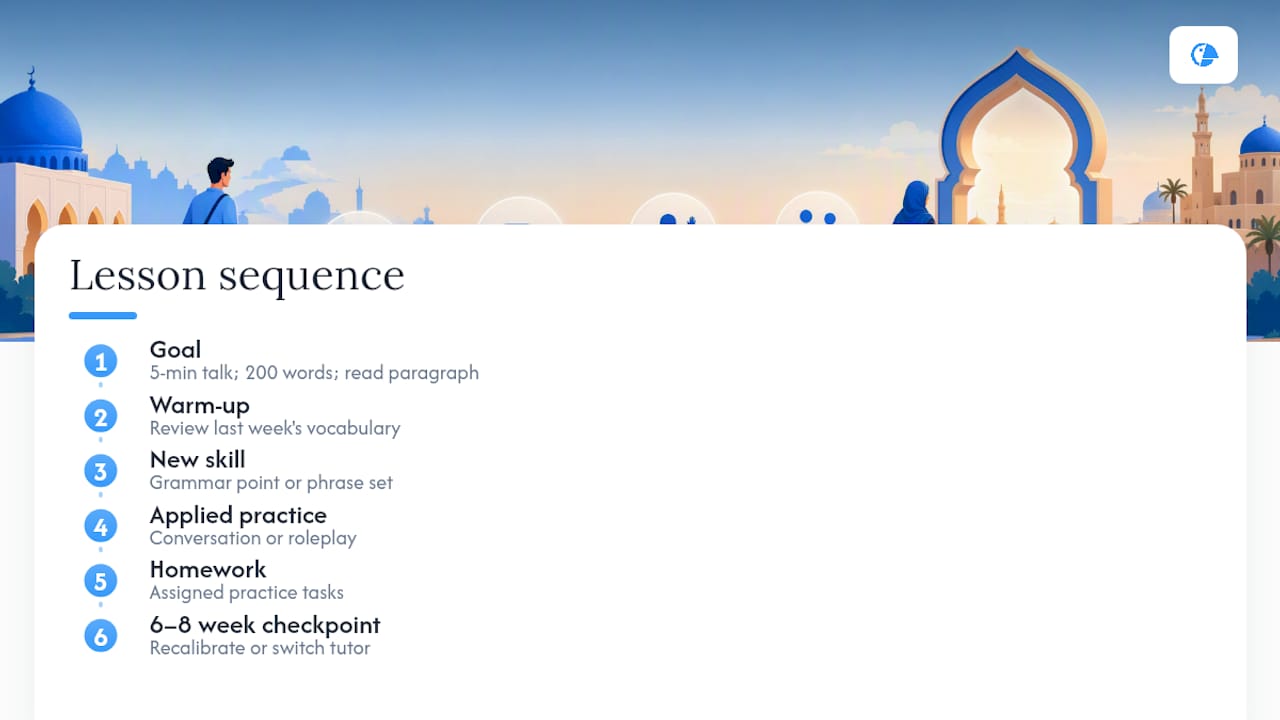
Set one measurable goal before lesson one. That might be holding a five-minute basic conversation, learning 200 high-frequency words, or reading a short paragraph aloud without stumbling. Vague goals like "get better at Arabic" make it impossible to tell if the tutor is working out.
A solid, consistent structure looks like: a short warm-up reviewing last week's vocabulary, a focused new skill (a grammar point or set of phrases), applied practice through conversation or roleplay, then homework and a quick review of what stuck. Ask your tutor for a simple written lesson plan and brief progress notes after each session. If you haven't hit your six to eight week checkpoint, or the teaching style just isn't clicking, that's your signal to recalibrate or switch.
Why the trial lesson matters more than the resume
Most guides tell you to check credentials first and trial lessons last, treating the trial as a formality before signing up. We'd argue that's backwards. A tutor's certificate tells you they passed a course; a trial tells you whether they can actually read your confusion in real time and adjust. Marketplaces like Tutoroo exist precisely because matching by dialect, availability, and stated goals gets you to that trial faster, with reviews and direct messaging replacing guesswork. The vetting still matters. It just shouldn't happen instead of the trial.
— TUTOROO
Getting started with a tutor on Tutoroo
Online marketplaces allow you to search by language and dialect, view tutor profiles with their specialisation upfront, and message candidates directly before committing.
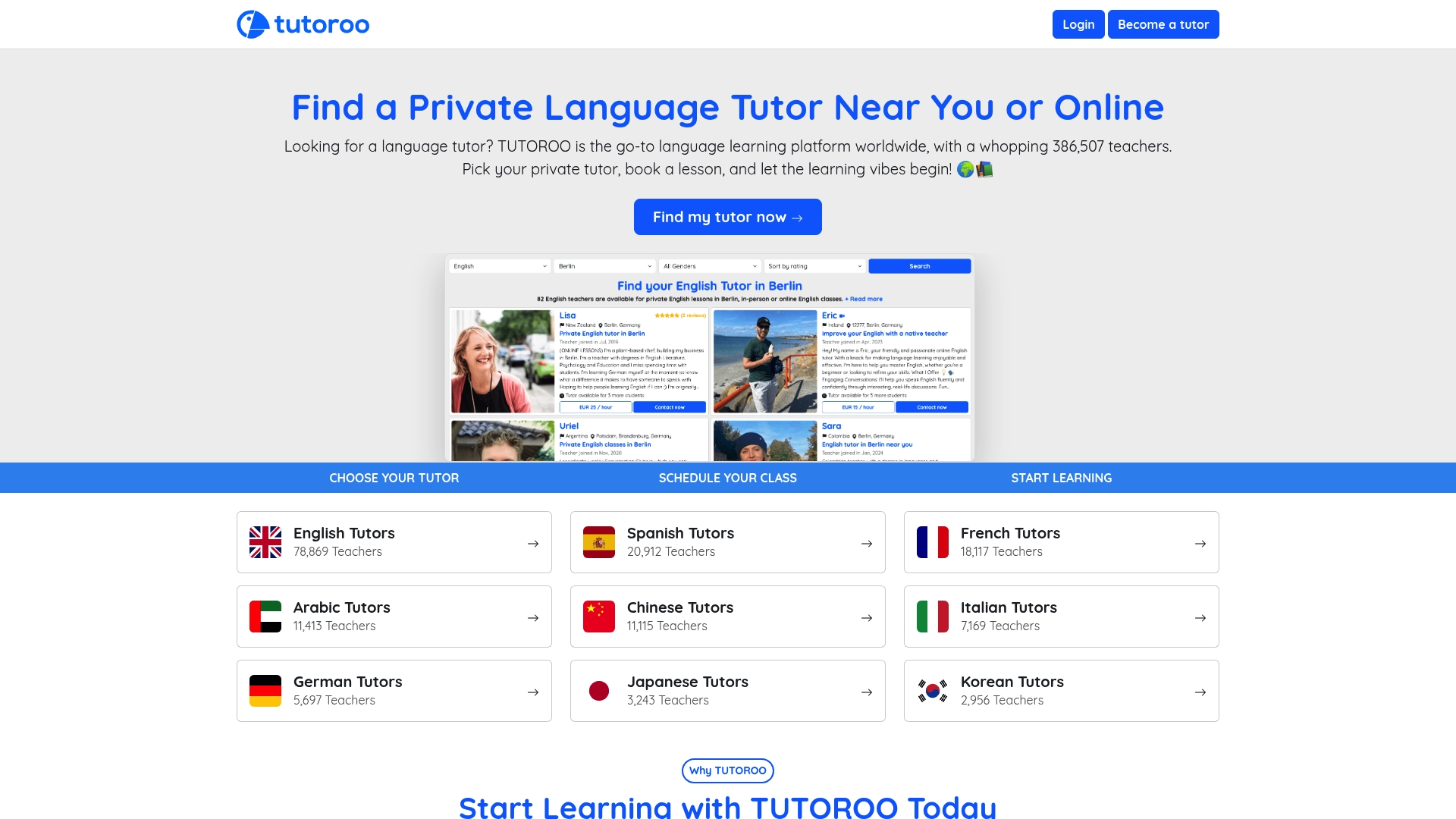
The process is simple. Search the Arabic tutor listings by dialect and availability, message the two or three tutors whose profiles match your goals, and ask for a trial or short paid introduction before booking anything longer. Lessons run locally or online depending on what a tutor offers, and scheduling happens directly between you and them once you're matched. If Arabic isn't your only language project, the same search and messaging system applies across Tutoroo's other language listings, from Spanish to Japanese. Head to the platform, filter for the dialect you actually need, and message a tutor today to lock in a trial lesson.
Sources
For more detail on structuring the hiring process itself, Tutoroo's step-by-step guide to hiring the right language tutor walks through the same vetting logic covered here. The British Council's reflections on five years of online teaching back up the emphasis on consistent weekly lessons, and the r/learn_arabic community thread is worth a browse for real learner experiences finding tutors.
- Where to find arabic tutor? I am Willing to pay. : r/learn_arabic
- Five lessons after five years online | British Council
- IQRA Network on the App Store
FAQ
Should I learn Modern Standard Arabic or a dialect first?
It depends on your goal: choose MSA for reading, formal writing, or academic study, and choose a regional dialect if you want to hold everyday conversations with speakers from a specific country or community.
How much does an Arabic tutor typically cost?
Rates vary by qualification, dialect, and specialisation, so compare a few tutor profiles directly on a marketplace like Tutoroo to see current rates for your specific needs.
Is a free trial lesson standard practice?
Many tutors offer a free or discounted trial lesson, and it's reasonable to ask for one before committing to a paid package.
How do I know if my tutor's dialect matches what I need?
Ask directly which dialect they specialise in and give a concrete example of how you plan to use Arabic, since a good tutor will tell you honestly if their dialect doesn't match your goal.
What's a realistic goal for the first six weeks?
A reasonable checkpoint is holding a short basic conversation, recognising around 200 common words, or reading a simple paragraph aloud, depending on which skill you and your tutor prioritise.