

If you want the fastest, lowest-risk way to find a qualified Korean tutor, Tutoroo is the practical starting point. It suits beginners building foundations, learners prepping for the TOPIK exam, and business professionals who need conversational fluency on a tight timeline. Every tutor profile shows teaching background, languages offered, and availability, so you can compare candidates properly instead of guessing from a headshot and a price tag.
The platform's value comes down to three things: a large pool of vetted native and certified tutors, flexible lesson formats (online or local), and a straightforward trial system that lets you test a tutor before committing to a package. You are not locked into a long contract with someone you have never spoken to.
To get moving today:
- Search Korean tutors on Tutoroo and filter by your goal, budget, and availability
- Message two or three tutors whose profiles match your level and schedule
- Book a trial lesson before agreeing to any multi-lesson package
Key Takeaways
Choosing a Korean tutor comes down to matching credentials and teaching style to your specific goal, then confirming fit with a trial lesson before committing to any package.
| Point | Details |
|---|---|
| Start with your goal | Define TOPIK, conversation, business, or child-focused Korean before filtering tutor profiles. |
| Weigh experience and credentials together | Prioritise specialised experience for exam prep; native fluency alone doesn't guarantee good teaching. |
| Use the trial lesson properly | Set a goal, assign homework, and follow up with targeted questions to test real fit. |
| Compare cost per effective hour | Judge packages by outcomes reached, not just the cheapest hourly rate. |
| Tutoroo simplifies the shortlist | Its 386,000-plus tutor community, location and availability filters, and trial policy help you compare and book a vetted Korean tutor quickly. |
Table of Contents
- How to choose a Korean tutor: a practical checklist
- What do Korean tutor qualifications actually mean?
- Online, in-person, private or group: which lesson format fits?
- How much does a Korean tutor cost, and what's fair value?
- How to read tutor reviews and use trial lessons properly
- How to book your first Korean lesson and get started
- Why Tutoroo makes vetting a Korean tutor easier
- What most guides get wrong about picking a tutor
- Ready to book a Korean tutor who actually fits your goals?
- Frequently asked questions
- Sources
How to choose a Korean tutor: a practical checklist
Choosing the right Korean tutor is less about finding "the best" teacher in the abstract and more about finding the right match for your specific goal with private Korean tutoring: personalized paths in Singapore. A tutor who excels at conversational drilling for expats might be the wrong pick for someone grinding through TOPIK grammar points, and vice versa. Start with your objective, then filter everything else through it.
Here is the order to work through when shortlisting candidates:
- Define your primary goal first. Are you studying for TOPIK, building workplace Korean, learning for travel, or teaching a child? This single decision eliminates half the tutors on any platform.
- Check teaching experience against your goal. A tutor with five years of TOPIK prep experience is a stronger match for exam candidates than a generalist with broader but shallower experience.
- Look at how they structure a sample lesson. Tutors who outline a clear lesson plan (warm-up, new material, practice, review) tend to produce steadier progress than those offering vague "we'll just chat" formats.
- Filter by availability and lesson length. Match their time zone and session length (30, 45, or 60 minutes) to what your schedule can actually sustain long-term, not just this week.
- Confirm language of instruction. Some tutors teach entirely in Korean for immersion; others explain grammar in English. Beginners often need the latter, at least initially.
- Message before booking. Ask about their approach to correcting mistakes, how homework works, and whether they track progress across lessons.
Watch for red flags at this stage: tutors who dodge direct questions about their teaching method, profiles with no reviews or sample materials, or anyone pushing you straight into an expensive bundle before offering a trial.
Pro Tip: Send the same three questions to every tutor you're considering — how do they handle corrections, what materials do they use, and how do they measure progress. Comparing identical answers side by side makes the differences between candidates obvious fast.

Tutoroo's own guide to evaluating private language teachers walks through this same filtering process in more depth if you want a second framework to cross-check against.
What do Korean tutor qualifications actually mean?
Credentials matter, but not all of them matter equally for every learner. A teaching diploma or TESOL-equivalent certificate signals someone has studied pedagogy, which tends to show up in how clearly they explain grammar and structure lessons. A degree in Korean language or linguistics suggests deeper subject knowledge but doesn't guarantee teaching skill. Specialised TOPIK trainers are worth prioritising specifically if the exam is your goal, since they know the test format inside out.
Native speaker status is valuable for pronunciation and natural phrasing, but it is not the same as teaching ability. Plenty of fluent native speakers have never taught anyone before. The strongest profiles usually combine both: native or near-native fluency plus a background in instruction.
Beyond the certificate itself, look for concrete experience indicators:
- Number of lessons taught (a tutor with hundreds of completed lessons has a track record you can question them about)
- Specific student testimonials that mention measurable progress, not just "great tutor"
- Sample lesson materials or a syllabus outline they can share before you book
Structured instruction with regular feedback consistently produces better outcomes than unguided self-study, according to a review of language learning evidence, which is exactly why the quality of a tutor's method matters more than their certificate count. Don't be afraid to ask directly for a reference or a short sample lesson plan before paying for anything. A tutor confident in their teaching will hand this over without hesitation. When a candidate has strong testimonials and a clear track record but lighter formal credentials, that experience can outweigh paperwork, particularly for conversational or casual learning goals rather than exam prep.
Online, in-person, private or group: which lesson format fits?
Online lessons win on flexibility and access to a far wider tutor pool, including native speakers based in Korea. In-person lessons suit learners who want the same person and place every week and prefer face-to-face correction of pronunciation. Neither is objectively superior. It depends on your schedule and how you learn best.

Private one-to-one lessons let a tutor adapt entirely to your pace and gaps, which usually means faster progress per hour, though the Korean American Center's local listing shows how institutional group classes remain a common, budget-friendly alternative for social learners. Small-group lessons cost less per session but move at the group's average pace, which can frustrate faster or slower learners alike.
A few practical guidelines:
- Aim for 45 to 60 minute sessions; anything shorter rushes real practice
- Book at least one lesson per week to retain momentum; twice weekly accelerates progress noticeably
- For online lessons, confirm stable internet, a quiet space, and a webcam that shows your face clearly for pronunciation feedback
How much does a Korean tutor cost, and what's fair value?
Prices vary by tutor experience and format, but most learners will find rates spanning from budget-friendly student tutors through to premium certified specialists, with certified TOPIK trainers and business Korean specialists usually sitting at the top of that range. What you get at each tier differs meaningfully: entry-level tutors often teach solid conversational Korean, while premium tutors bring structured curricula, exam-specific materials, and progress tracking.
Packages typically come in a few shapes:
- Single lessons — flexible but usually priced higher per hour
- Multi-lesson bundles (5 to 20 lessons) — discounted rate in exchange for commitment
- Trial lessons — a low-cost or discounted first session to test compatibility before buying a bundle
To judge real value, calculate cost per effective hour of instruction rather than comparing sticker prices. A tutor who structures every minute toward your goal delivers more per dollar than a cheaper tutor whose lessons drift off-topic. Estimate how many hours you realistically need to hit your goal (conversational basics typically take noticeably longer than a handful of sessions) and multiply that against the hourly rate to see the real cost of reaching it.
Before buying any bundle, always ask about refund terms, whether unused lessons expire, and what happens if a tutor cancels or you need a replacement.
How to read tutor reviews and use trial lessons properly
Generic five-star praise tells you almost nothing. Reviews that mention specific progress, "helped me pass TOPIK II" or "my speaking confidence improved noticeably in six weeks", carry far more signal than a one-line "great tutor!" Marketplace reviews vary widely in quality and reliability, so treat platform-wide ratings from sites like Trustpilot's reviews for italki as a reminder to read individual comments rather than trust the average alone, especially when a tutor only has a handful of reviews.
Use the trial lesson deliberately, not just as a formality:
- State your goal clearly at the start so the tutor can tailor the session
- Watch how they explain a new concept. Clear, structured explanation beats charisma
- Ask them to assign a small, concrete homework task before the lesson ends
- Follow up afterward with one or two specific questions about your weak points
A tutor's response to that follow-up question often reveals more about their teaching quality than the trial lesson itself. Personal, specific messages about your goals are a stronger predictor of fit than a marketplace star rating. If the trial feels rushed, generic, or the tutor can't articulate a plan for your next few lessons, that is your cue to request a replacement or a refund rather than persisting out of politeness. A trial policy exists specifically to protect you from a bad match, so use it.
How to book your first Korean lesson and get started
Booking doesn't need to take more than a few days if you approach it in order:
- Define your goal and available time slots before you start browsing profiles. Vague searching wastes time.
- Filter and shortlist three to five tutors using the criteria above, then send each a short, specific introductory message about your goal and schedule.
- Book a trial lesson with your top pick or two, and ask for a small homework task at the end to test follow-through.
- Set a two-week checkpoint. After three or four lessons, honestly assess whether you're progressing, and adjust frequency, format, or tutor if needed.
Setting explicit goals and checkpoints early aligns with how structured feedback and spaced practice drive better retention than open-ended, unstructured study. Tutoroo's step-by-step hiring guide breaks this same process down further if you want a companion checklist while you search.
Why Tutoroo makes vetting a Korean tutor easier
Tutoroo's tutor pool includes over 386,000 language teachers across dozens of languages, including Korean, English, Spanish, French, Arabic, and Chinese, so Korean learners aren't choosing from a handful of thin profiles. The platform's matching system filters by location, language preference, and availability, which means you can narrow candidates down to a genuinely comparable shortlist in minutes rather than hours.
What makes the process lower-risk for students:
- A built-in messaging system that lets you vet a tutor's communication style before booking anything
- Direct payment arrangements between student and tutor, without hidden platform mark-ups on ongoing lessons
- Editorial resources like Tutoroo's guide to hiring the right language tutor, which walks through the same evaluation steps covered in this article
A community-oriented, one-on-one matching model works because it puts the decision back in the student's hands. You compare real profiles, message real tutors, and test compatibility with a trial before committing, instead of accepting whoever a school assigns you.
What most guides get wrong about picking a tutor
Most advice on choosing a language tutor treats credentials as the finish line. Find someone with a diploma, check a box, done. That misses the part that actually predicts whether you'll still be taking lessons in three months: whether the tutor can explain, correct, and adapt in real time during that first trial.
We'd argue the conventional wisdom overweights formal qualifications and underweights the trial lesson itself. A tutor's certificate tells you they studied teaching once. A well-run trial tells you whether they can teach you, today, given your specific gaps and goals. That is a materially different question, and it's the one most learners skip by jumping straight into a five-lesson bundle because it looked like good value.
Prioritise the trial. Ask pointed follow-up questions afterward. Treat a vague or generic response as a real warning sign, not a minor quibble. The learners who make fastest progress aren't the ones who found the most credentialed tutor. They're the ones who tested fit properly before committing money and momentum to someone who wasn't right for them.
Ready to book a Korean tutor who actually fits your goals?
Rather than scrolling endless profiles across scattered platforms or relying on a local school's assigned teacher, Tutoroo puts location filters, availability, language preference, and direct messaging in one place, so you compare real Korean tutors side by side before you spend a cent. With a community of over 386,000 tutors across dozens of languages, you're not limited to whoever happens to be free this week.
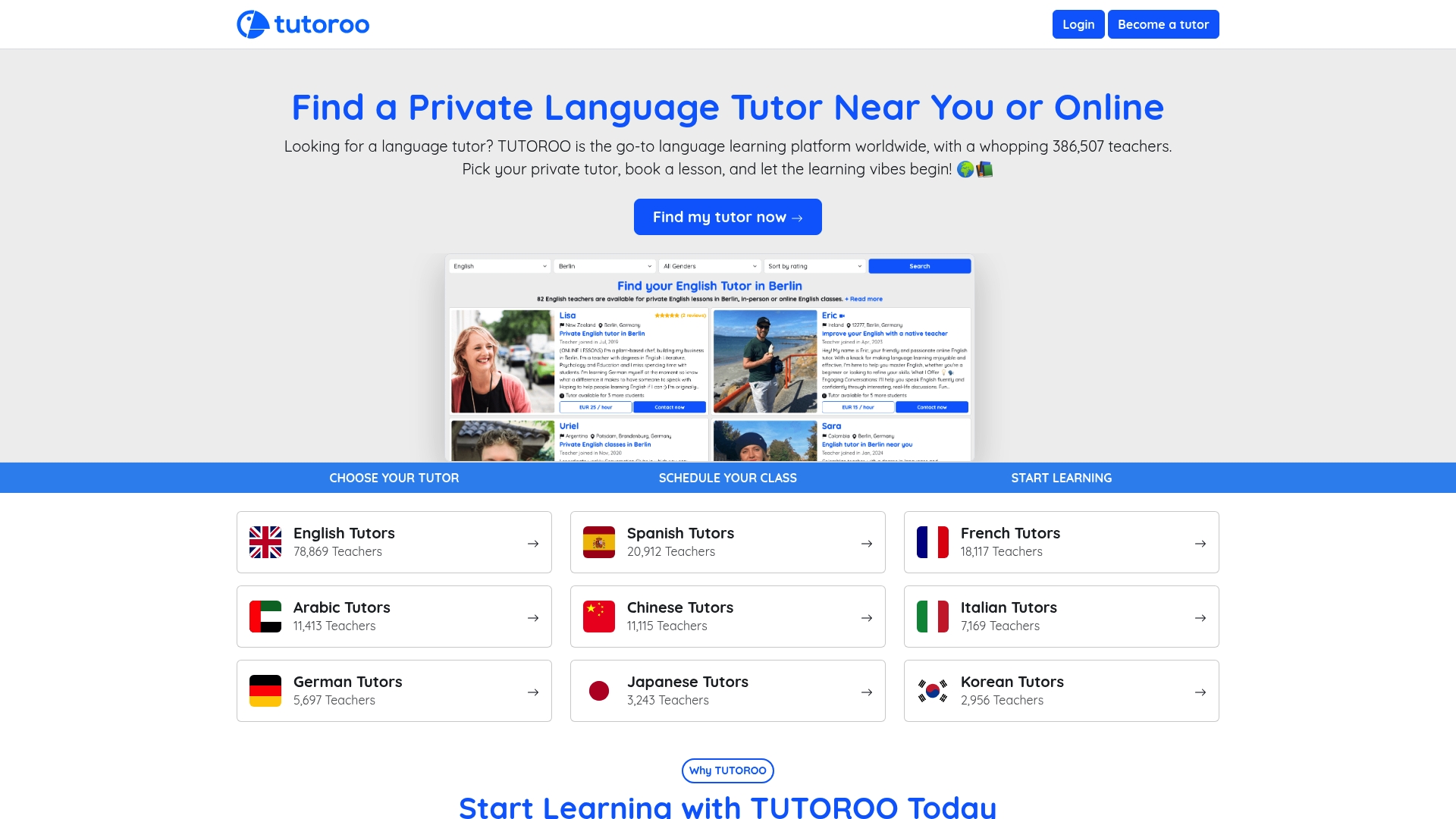
If you've read this far, you already know what to look for: relevant experience, a clear teaching approach, and a trial lesson that proves the fit. Head to Tutoroo's Korean tutor listings now, shortlist two or three profiles that match your goal, and book a trial this week. There's no long contract standing between you and your first real conversation in Korean.
Frequently asked questions
How long does it usually take to find and book a suitable Korean tutor? Most learners can shortlist candidates and book a trial lesson within two to three days of starting their search, provided they've already defined their goal and schedule. Booking the actual first lesson can happen the same day a tutor confirms availability.
Is a native Korean speaker always a better tutor than a certified non-native teacher? Not necessarily. Native speakers offer natural pronunciation and idiom, but teaching skill and structured lesson planning matter just as much, particularly for grammar-heavy goals like TOPIK prep.
Should I book a multi-lesson package before trying a tutor? No. Always book a trial lesson first. It's the clearest, lowest-risk way to confirm a tutor's teaching style matches how you learn before committing money to a bundle.
What should I do if a tutor cancels frequently or lessons feel unstructured? Ask about their cancellation policy upfront, and don't hesitate to request a replacement tutor if lessons consistently lack a clear plan or follow-up homework.
Can I switch tutors if the first one isn't the right fit? Yes. A good trial policy exists precisely so you can test compatibility before committing, and switching tutors after an honest trial is a normal, expected part of the process.
Sources
- Evidence review on instructional approaches (PMC article)
- Trustpilot reviews for italki
- Google Maps listing: Korean American Center