

Ready to learn a new language but not sure where to start? The most effective approach is a structured checklist that takes you from your first greeting to genuine conversation, step by step. Whether you are picking up Spanish for travel, French for work, or Mandarin out of pure curiosity, having a clear roadmap makes all the difference between steady progress and spinning your wheels.
Here is your practical checklist for learning a new language as an independent learner:
- Set your goal. Define why you are learning and which CEFR level you are targeting (A1 through C1).
- Learn the writing system. Master the alphabet or script before anything else, especially if it differs from your own.
- Start with numbers, greetings, and survival phrases. These give you fast wins and real-world use from day one.
- Build high-frequency vocabulary. Aim for 10 new words per day using spaced repetition tools like Anki or Memrise.
- Study grammar in context. Learn verb conjugations and sentence structure through real examples, not isolated tables.
- Practise listening daily. Podcasts, short clips, and music train your ear for natural rhythm and pronunciation.
- Speak from the beginning. Shadowing, reading aloud, and short voice notes build the motor skills fluency requires.
- Track your progress. Use CEFR benchmarks and periodic self-assessments to measure where you stand.
- Find a conversation partner or tutor. Real feedback accelerates what solo study cannot.
- Stay consistent. Short daily sessions beat long occasional ones every time.
Table of Contents
- How to build a study schedule that actually works
- Essential language skills to master at every stage
- How to stay motivated and build the right mindset
- How to use self-assessment and CEFR to track your progress
- What resources and tutoring support are available in Australia?
- Keeping motivation alive for the long haul
- Key takeaways
How to build a study schedule that actually works
Distributed practice of 20–45 minutes daily outperforms cramming, and research supports keeping your new vocabulary load to around 10 items per day for solid retention. The key is not finding more time but using the time you have with intention.
A practical daily routine for independent learners looks like this:
- Speaking practice (20 minutes). This is the highest-leverage activity. Shadowing native audio, recording voice notes, or practising with an AI conversation tool all count. Speaking is a motor skill; you build it through repetition, not reading.
- Vocabulary review (10 minutes). Use spaced repetition software like Anki, which optimises long-term retention by scheduling reviews right before you forget. Keep your daily deck small enough to finish even on a busy day.
- Grammar study (5 minutes). Learn one concept per session and use it immediately in your speaking practice. Grammar absorbed in context sticks far better than memorised rules.
Habit stacking is one of the most underrated strategies here. Swap your morning news feed for a podcast in your target language. Listen to music in that language during your commute. These substitutions build exposure without adding a single minute to your day.
Plateaus are normal, and the fix is almost always more varied input and output. If you have been drilling vocabulary for weeks, shift to watching a short TV clip with target-language subtitles, or find a conversation partner for a live exchange. Changing the format reactivates engagement and exposes gaps you did not know you had.
Pro Tip: Balance vocabulary and grammar by learning phrases rather than isolated words. A phrase like "I would like to order" teaches vocabulary, grammar, and real usage simultaneously, which is far more efficient than studying each element separately.
For a deeper look at building sustainable routines, Tutoroo's guide to effective language study routines covers daily habit design in detail.

Essential language skills to master at every stage
Knowing which skills to prioritise at each stage prevents the common mistake of spending months on grammar while neglecting the listening comprehension that makes real conversation possible.
- Pronunciation and listening (weeks 1–4). Beginners should prioritise pronunciation early to prevent errors from becoming entrenched habits. Spend five minutes daily on sounds you find difficult. Record yourself and compare to native audio.
- High-frequency vocabulary. About 70% of spoken language consists of a few hundred high-frequency words. Mastering these first gives you the biggest communication return for your effort.
- Core grammar patterns. Focus on present tense, question formation, and basic negation before moving to complex structures. Learn each pattern through real sentences, not abstract rules.
- Reading basics. Start with graded readers or short social media posts in your target language. Reading reinforces vocabulary and exposes you to natural sentence structure.
- Writing practice. Keep a short daily journal in your target language. Even three sentences a day builds fluency and forces you to retrieve vocabulary actively.
- Speaking fluency. Practising grammar and vocabulary through genuine communication from day one produces practical usage rather than theoretical knowledge. Start with low-stakes output: shadowing, reading aloud, and short self-recorded messages.
Balanced skill development across speaking, listening, reading, and writing is what separates learners who plateau from those who keep progressing. Neglecting any one area creates a bottleneck that slows the others.
How to stay motivated and build the right mindset
Motivation is not something you either have or do not have. It is something you design into your study system.
- Know your "why." A concrete reason, whether connecting with family, preparing for travel, or pursuing a career opportunity, gives you something to return to when progress feels slow.
- Set SMART goals using CEFR levels. "Reach A2 in Spanish within six months" is a goal you can plan around. "Learn Spanish" is not. The CEFR framework defines clear skill descriptions from A1 to C1, making it straightforward to set benchmarks and recognise genuine progress.
- Celebrate small wins. Understood a sentence in a film without subtitles? Ordered a coffee in your target language? These moments matter. Acknowledging them keeps momentum alive.
- Manage your timeline expectations. Conversational B1/B2 level requires roughly several hundred hours for languages like Spanish, French, and Italian. Harder languages such as Japanese or Arabic require substantially more study time. Knowing this upfront prevents the discouragement that comes from expecting fluency in a few weeks.
- Speak before you feel ready. Consistent habits and willingness to speak before feeling "ready" drive progress more than searching for shortcuts or studying for extended hours. Mistakes are data, not failure.
- Vary your input during plateaus. When progress stalls, the answer is rarely more grammar drills. Try a new podcast, a different genre of film, or a conversation with a native speaker. Novelty reactivates curiosity.
The learners who reach fluency are not the ones with the most talent. They are the ones who kept showing up, even on the days it felt slow.
How to use self-assessment and CEFR to track your progress
Knowing where you stand is as important as knowing where you are headed. Without honest self-assessment, it is easy to keep practising what you already know rather than pushing into the areas that need work.
The CEFR framework gives independent learners a clear, internationally recognised structure for measuring progress:
| CEFR level | Description | Approximate timeline |
|---|---|---|
| A1 (Beginner) | Survival phrases, basic introductions, numbers | 2 months |
| A2 (Elementary) | Simple conversations, present tense, familiar topics | 4–6 months |
| B1 (Intermediate) | Express opinions, handle travel situations | 600–750 hours for languages like Spanish, French, Italian; about 2,200 hours for Japanese or Arabic |
| B2 (Upper Intermediate) | Discuss complex topics, understand native speakers | — |
| C1 (Advanced) | Near-native fluency across most contexts | — |
CEFR-aligned self-assessments help learners contextualise their current level and identify the specific skills holding them back. A practical self-assessment checklist includes:
- Can you introduce yourself and answer basic questions? (A1)
- Can you describe your daily routine using past and present tense? (A2)
- Can you express an opinion on a familiar topic? (B1)
- Can you follow a native speaker in a casual conversation? (B2)
Beyond self-assessment, periodic formal tests such as DELF for French, DELE for Spanish, or JLPT for Japanese provide external validation. A language exchange partner or tutor can also give you honest, real-world feedback that self-study alone cannot replicate. Keeping a short reflective journal, noting what confused you each week, builds a personal record of growth that is genuinely motivating to look back on.
For a more detailed skill-by-skill self-assessment guide, Tutoroo's improving language skills checklist is a practical companion resource.
What resources and tutoring support are available in Australia?
Australia's language learning community is well served by both digital tools and personalised tutoring options, giving independent learners a strong foundation to build on.

Spaced repetition apps. Anki is free, highly customisable, and widely regarded as the gold standard for vocabulary retention. Memrise offers pre-made decks with a more gamified experience, making it a good entry point for beginners who want structure without setup. Both are available in Australia and work across devices.
Grammar and reading resources. Graded readers matched to your CEFR level build reading fluency without overwhelming you with unfamiliar vocabulary. Free resources such as BBC Languages, the Alliance Française online materials, and Goethe-Institut Australia provide structured grammar support for French and German learners respectively.
One-on-one tutoring. Working with a private tutor accelerates progress in ways that apps simply cannot match. A tutor provides immediate pronunciation correction, adapts to your specific gaps, and holds you accountable to your goals. Tutoroo connects learners across Australia with private language tutors in over 50 languages, available for both online and in-person sessions. With more than 386,000 tutors on the platform, finding someone who matches your language, schedule, and learning style is straightforward.
Combining resources for balance. The most effective approach pairs a spaced repetition app for daily vocabulary with a tutor for weekly speaking practice and a graded reader for reading input. No single tool covers all four skills. Mixing formats also keeps study fresh, which matters more than most learners expect.
For learners wanting to understand how tutoring fits into a broader self-study plan, Tutoroo's guide on the language tutoring process explains how personalised instruction complements independent practice.
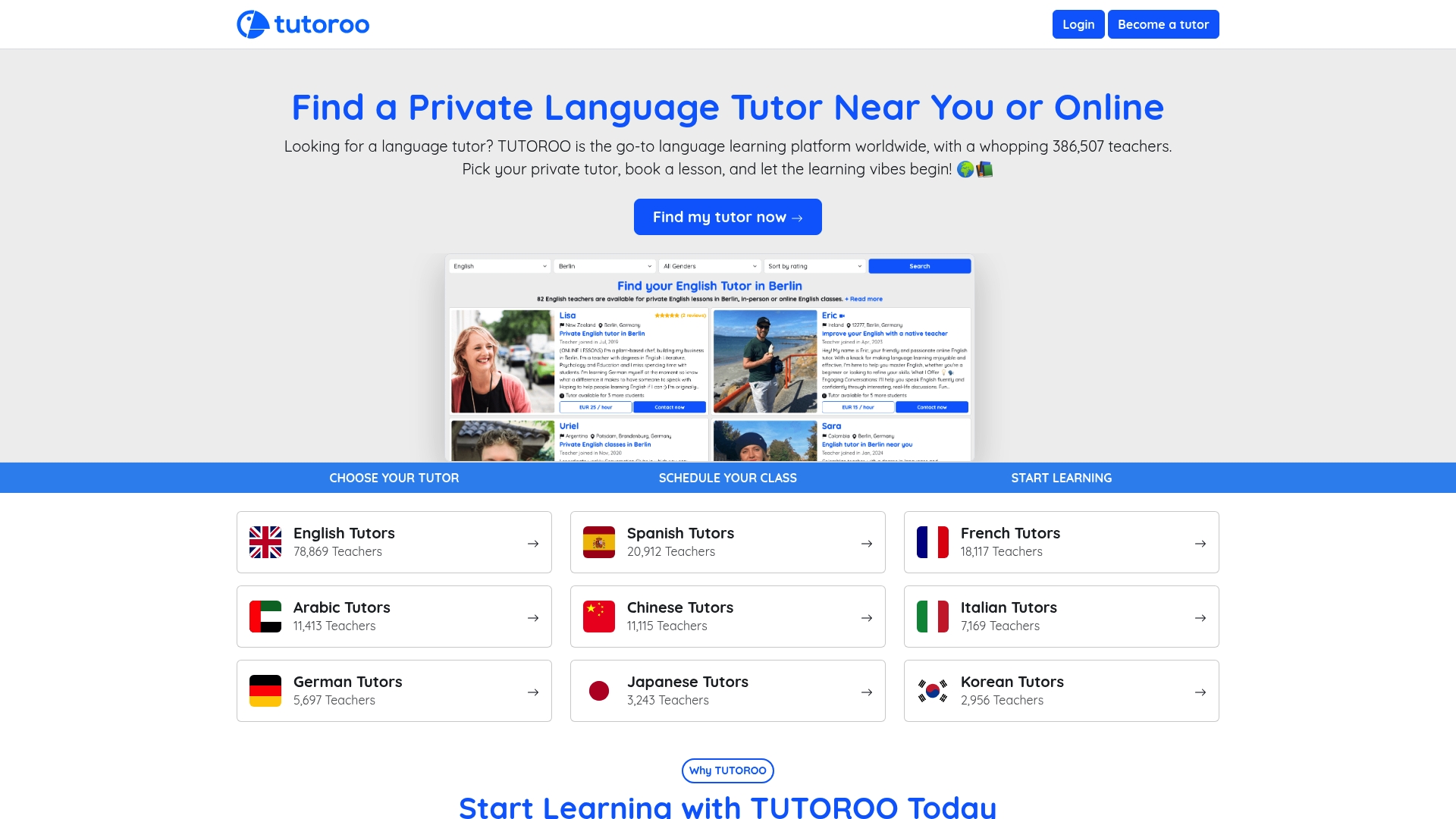
Ready to move beyond apps and textbooks? Tutoroo connects you with expert private tutors for personalised, one-on-one lessons in your language of choice, online or in person, anywhere in Australia. Find your tutor and start building real fluency today.
Keeping motivation alive for the long haul
Motivation tends to be high at the start and fragile in the middle. The learners who reach their goals are the ones who build systems that carry them through the flat stretches.
Treat your study sessions like appointments you cannot reschedule. Block them in your calendar, set reminders, and keep the sessions short enough that skipping feels harder than just doing them. Five focused minutes on a difficult day is worth more than a two-hour session you keep postponing. Consistency, not intensity, is what compounds into fluency over months.
Cultural curiosity is one of the most durable sources of motivation. Following social media accounts, watching films, or cooking recipes in your target language connects your study to something genuinely enjoyable. When the language becomes a window into a culture you find fascinating, practice stops feeling like a chore. That shift in perspective, from obligation to curiosity, is often what separates learners who quit at the intermediate stage from those who keep going.
Key takeaways
A structured daily habit, honest self-assessment against CEFR benchmarks, and a balance of speaking, listening, reading, and writing are the three pillars of successful independent language learning.
| Point | Details |
|---|---|
| Daily practice beats cramming | Study 20–45 minutes daily; distributed practice produces stronger long-term retention than occasional long sessions. |
| High-frequency words first | About 70% of spoken language comes from a few hundred common words; mastering these early maximises communication payoff. |
| CEFR levels guide your goals | Use A1 to C1 benchmarks to set realistic targets and measure genuine progress at each stage. |
| Speaking starts on day one | Fluency is a motor skill built through repetition; shadowing and voice notes from the start build the habit early. |
| Tutoring accelerates progress | A private tutor provides real-time feedback and accountability that self-study tools alone cannot replicate. |