

TL;DR:
- Extra-curricular language learning involves voluntary activities outside formal education, fostering authentic communication and cultural engagement. Combining interest-driven activities with structured support, such as private tutoring, enhances fluency, confidence, and long-term language development. These activities often have a greater impact on language success than classroom instruction alone by providing meaningful, interactive experiences.
Extra-curricular language learning is defined as voluntary language study and practice conducted outside formal school coursework, through activities such as clubs, conversation programmes, cultural events, and digital tools like Duolingo or Tandem. Unlike standard classroom instruction, these activities carry no academic credit and are chosen freely by the learner. Research confirms that extracurricular activities provide contexts for authentic, spontaneous language use that formal lessons rarely replicate. Platforms like Tutoroo extend this further by connecting learners with private tutors who tailor sessions to real interests and goals, making extra-curricular practice both structured and genuinely engaging.
What is extra-curricular language learning and why does it matter?
Extra-curricular language learning sits outside the standard curriculum but works in direct support of it. A 2025 study confirms that extracurricular activities compensate for the limits of classroom instruction by offering opportunities for natural, meaningful language use. That finding matters because classroom time is finite and heavily focused on grammar and assessment, leaving little room for the kind of spontaneous conversation that builds real fluency.
The distinction from purely personal, self-directed learning is worth noting. Researchers in informal digital language learning separate extracurricular activities (those connected to school goals, such as a language club run by a teacher) from extramural activities (those driven entirely by personal interest, such as watching foreign-language films for pleasure). Both are valuable, but they differ in motivation and how outcomes should be measured. Understanding where an activity sits on that spectrum helps learners and parents choose the right mix.
For students, this might mean joining a French conversation group after school. For adults, it could mean attending a Spanish cultural festival or booking weekly sessions with a private tutor. The common thread is voluntary participation and authentic engagement with the language beyond what any textbook requires.

How does extra-curricular learning compare to classroom and extramural learning?
These three learning contexts differ in setting, motivation, and the degree of learner control. The table below maps the key distinctions clearly.
| Learning type | Setting | Motivation | Learner control | Typical examples |
|---|---|---|---|---|
| Formal classroom | School or institution | External (grades, requirements) | Low | Grammar lessons, exams |
| Extra-curricular | School-adjacent, organised | Mixed (school-linked + interest) | Moderate | Language clubs, drama, debates |
| Extramural | Fully outside school | Intrinsic (personal interest) | High | Gaming, social media, films |
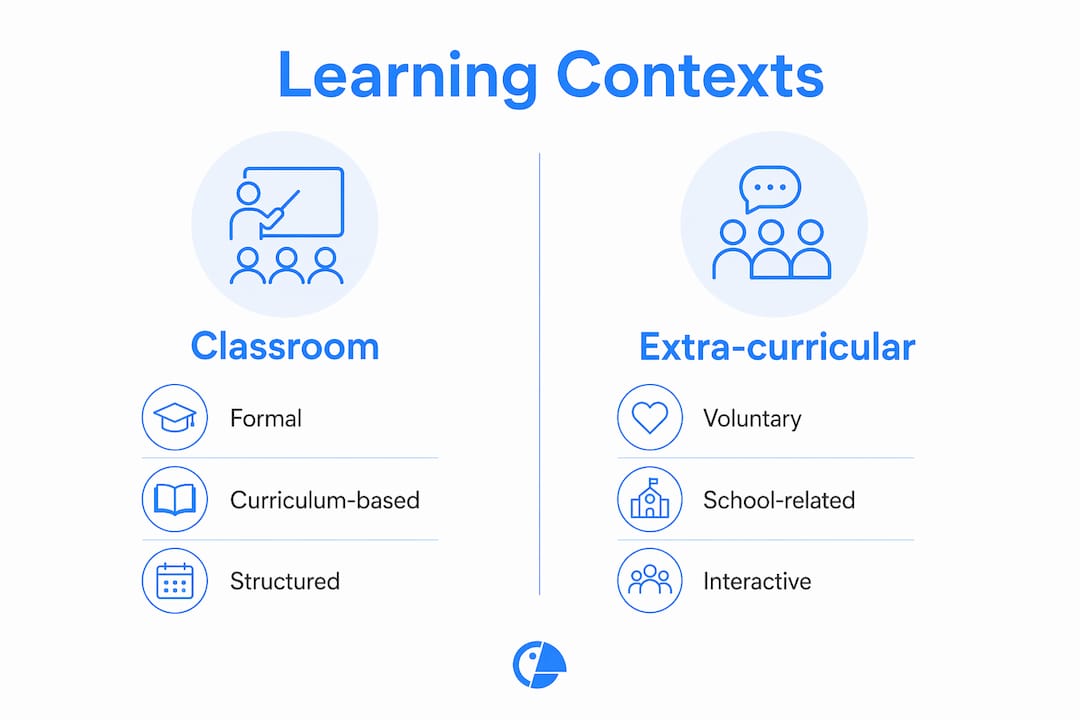
A 2025 Springer study notes that learner psychological experience, specifically enjoyment and anxiety, mediates how effective each context is. Extramural activities tend to generate higher enjoyment because the learner chooses them freely, while extra-curricular activities benefit from some structure and peer interaction that purely self-directed learning lacks.
The practical implication is that neither type replaces the other. A student who attends a school debate club (extra-curricular) and also watches Korean dramas for fun (extramural) is drawing on two distinct motivational sources. Combining both with formal study creates a learning environment that addresses fluency, accuracy, and cultural understanding simultaneously.
Pro Tip: When evaluating an extra-curricular programme for a child or yourself, ask whether it involves active communication with feedback. Passive exposure, such as watching a performance without speaking, builds familiarity but not fluency.
What types of activities support effective language learning outside class?
The range of extra-curricular language activities is wider than most learners realise, and the best choice depends on age, proficiency level, and personal interest. Here are the main categories worth considering.
- Language clubs and conversation groups. These are among the most accessible options, often run through schools, community centres, or online platforms. They provide regular, low-pressure speaking practice with peers at similar levels.
- Cultural and creative events. Language festivals, poetry readings, theatre productions in the target language, and cooking classes tied to a culture all build vocabulary and cultural literacy simultaneously. Attending a Lunar New Year celebration, for instance, exposes learners to Mandarin in a context no textbook can replicate.
- Competitions and academic contests. Debates, spelling bees, public speaking competitions, and language olympiads push learners to perform under pressure. Research on extracurricular speaking programmes found significant improvements in speaking performance and psychological well-being among university students who participated in structured speaking activities.
- Project-based activities. Creating a bilingual blog, producing a short film in the target language, or presenting a research project to a community audience builds both language skills and confidence in ways that test preparation cannot.
- Digital and online activities. Language exchange apps like Tandem, virtual conversation meetups, and online writing communities connect learners with native speakers globally. These fall into the extramural category when self-initiated, but schools and tutors increasingly incorporate them into structured programmes.
The quality of interaction matters more than the format. Research comparing out-of-school experiences shows that interaction opportunities and the sociolinguistic environment explain more variance in vocabulary development than input quantity alone. Choosing an activity where you speak, respond, and receive feedback will always outperform one where you simply listen or observe. For a broader look at engaging formats, Tutoroo's guide to language practice activities offers practical starting points.
How can learners and parents make the most of extra-curricular language programmes?
Choosing the right activity is only the first step. Getting genuine results from extra-curricular language learning requires a deliberate approach to selection, consistency, and quality of engagement.
- Match the activity to the learner's goals and interests. A teenager passionate about music will thrive in a Spanish songwriting workshop far more than in a formal grammar club. Aligning the activity with existing interests sustains motivation over the long term.
- Balance formal study with extra-curricular practice. Extra-curricular activities are most effective when they complement, not replace, structured learning. A learner who attends a weekly conversation group but never reviews grammar will plateau. Pairing both creates the conditions for lasting language success.
- Prioritise interaction quality over hours spent. A 2025 study confirms that anxiety and enjoyment mediate learning outcomes in extracurricular contexts. An activity that generates stress without support will undermine progress regardless of how many hours are logged.
- Use private tutors as a bridge. One-on-one sessions with a tutor who understands the learner's extra-curricular activities can reinforce vocabulary, correct patterns, and prepare the learner for real conversations. Tutoroo connects learners with over 386,000 tutors across languages including English, Spanish, French, Arabic, and Mandarin, making it straightforward to find someone who fits the learner's specific context.
- Track confidence and communication gains, not just test scores. Progress in extra-curricular settings often shows up as reduced speaking anxiety, willingness to initiate conversations, and cultural curiosity before it appears in formal assessments.
Pro Tip: Avoid activities that are purely performative, such as reciting memorised lines in a school play without any improvisation or conversation component. These build performance skills but do little for spontaneous language use.
A 2026 MDPI study on bilingual learners in Singapore found that mother-tongue enrichment classes significantly improved word-reading skills, while dominant-language enrichment had no measurable effect. The lesson for parents is that the sociolinguistic context of an activity shapes its impact. An enrichment programme in a language the child rarely hears outside class will deliver stronger gains than one in a language already saturating their environment.
Key takeaways
Extra-curricular language learning delivers its strongest results when learners choose interaction-rich activities that align with personal interests and are supported by consistent, structured practice.
| Point | Details |
|---|---|
| Clear definition | Extra-curricular language learning is voluntary, school-adjacent activity outside formal curriculum, distinct from purely self-directed extramural learning. |
| Interaction quality counts | Research shows quality of peer interaction predicts vocabulary gains more reliably than total hours of exposure. |
| Psychological factors matter | Enjoyment and low anxiety in extracurricular settings directly improve language learning outcomes. |
| Match activity to learner | Aligning activities with personal interests sustains motivation and produces stronger long-term results. |
| Combine with structured support | Pairing extra-curricular activities with private tutoring or formal study accelerates progress and fills skill gaps. |
Why extra-curricular experiences often shape language success more than classrooms do
At Tutoroo, we have seen a consistent pattern across thousands of learner journeys: the students who make the most striking progress are rarely the ones who simply study harder in class. They are the ones who find a reason to use the language outside it. A learner who joins a Mandarin conversation group because they love Chinese cinema, or a teenager who starts a Spanish podcast because they want to connect with family abroad, develops an intrinsic motivation that no curriculum can manufacture.
What surprises many parents and learners is how quickly confidence shifts once the pressure of grades is removed. Extra-curricular settings create permission to make mistakes, and that permission is where real fluency begins. We have observed learners who struggled with speaking anxiety in class become genuinely expressive in a relaxed cultural event or a weekly language exchange.
The rise of digital formats has expanded access considerably. A learner in regional Australia can now join a live Arabic conversation group, attend a virtual French film discussion, or work with a native-speaking tutor in Tokyo, all without leaving home. This is not a minor convenience. It fundamentally changes who can access authentic language experiences and how early they can start building real communicative confidence.
Our honest view is that extra-curricular language learning is not supplementary. For most learners, it is where the language actually comes alive.
— Tutoroo
Find the right tutor to support your language learning journey
Whether you are a student looking to practise Spanish conversation, a parent seeking Mandarin enrichment for your child, or an adult building French skills for travel or work, private tutoring is one of the most direct ways to extend your extra-curricular language practice.
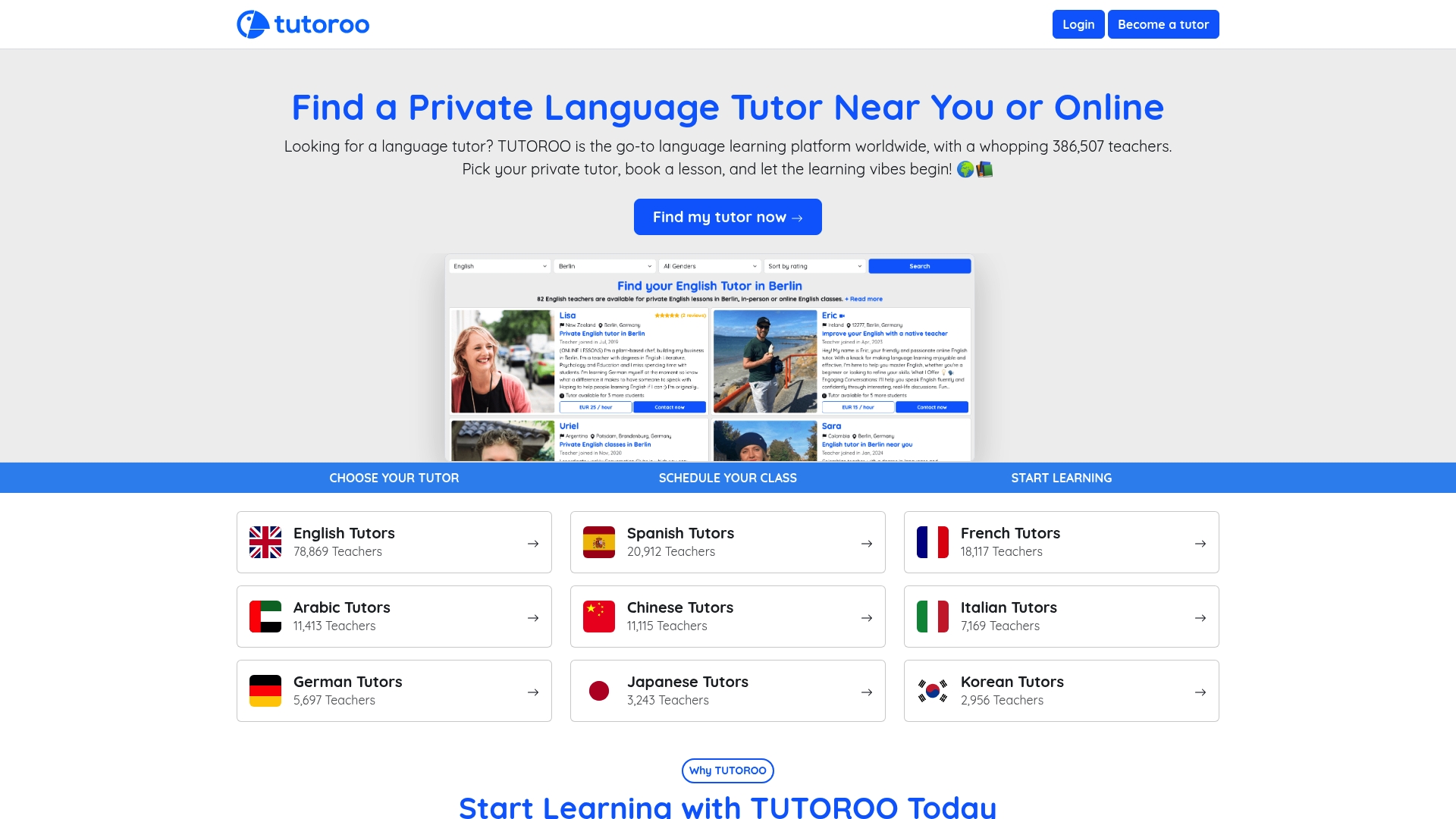
Tutoroo connects learners with over 386,000 private language tutors worldwide, offering flexible online and in-person sessions across English, Spanish, French, Arabic, Mandarin, and many more languages. Every session is personalised to your goals, your pace, and your interests, so your extra-curricular practice builds on what you are already doing rather than starting from scratch. Find your tutor today and take the next step in your language learning.
FAQ
What is extra-curricular language learning?
Extra-curricular language learning refers to voluntary language activities conducted outside formal school coursework, such as language clubs, conversation programmes, cultural events, and digital exchanges. These activities carry no academic credit and are chosen freely by the learner to build authentic communication skills.
How is extra-curricular learning different from extramural learning?
Extra-curricular activities are connected to school goals and involve some level of organisation, while extramural activities are driven entirely by personal interest with no school link. A 2025 Springer study notes that both types influence language outcomes through different motivational pathways.
What types of extra-curricular activities are most effective for language learning?
Activities that involve active communication and structured feedback produce the greatest gains. Research on speaking programmes found that extracurricular speaking activities improved performance, social interaction, and psychological well-being significantly more than passive exposure.
How can parents choose the right extra-curricular language programme for their child?
Parents should look for programmes that prioritise speaking and interaction over performance or passive listening. A 2026 MDPI study also highlights that the sociolinguistic context matters. Enrichment in a language the child rarely encounters outside class tends to deliver stronger results.
How do private tutors support extra-curricular language learning?
Private tutors provide personalised, one-on-one practice that reinforces vocabulary, corrects patterns, and prepares learners for real conversations in their chosen extra-curricular context. Tutoroo offers access to over 386,000 tutors globally, making it straightforward to find someone aligned with your specific language goals and interests.