
TL;DR:
- Learning a language through immersive, real-world practice enhances fluency, confidence, and cultural understanding more effectively than passive study. Engaging in conversation groups, travel, hobby activities, or language exchanges shifts the learner from passive recipient to active communicator, reinforcing skills through real problems and emotional memory. Combining experiential practice with formal study accelerates long-term retention, cultural fluency, and career advantages in a globalized world.
Most people assume the classroom is where real language learning happens. It is a reasonable belief, but the evidence tells a different story. The strongest argument for why learn languages outside classrooms is not theoretical. It is lived experience. Immersive, real-world practice builds communicative confidence, cultural fluency, and cognitive strength in ways that textbooks simply cannot replicate. This article looks at what outside-classroom learning actually involves, why it works so powerfully, and how you can start weaving it into your daily life right now.
Table of Contents
- Key takeaways
- Why learn languages outside classrooms
- The real benefits of learning languages
- How immersion speeds up fluency
- Practical strategies for learning informally
- Common myths about informal language learning
- My perspective on immersive learning
- Take your learning further with Tutoroo
- FAQ
Key takeaways
| Point | Details |
|---|---|
| Real-world use beats passive study | Active participation in conversations and cultural settings accelerates authentic fluency far faster than memorising rules alone. |
| Cognitive rewards are significant | Multilingualism protects brain function and supports memory, attention, and cognitive resilience across life. |
| Career advantages are measurable | Bilingual professionals earn 10 to 20% more and access broader global opportunities. |
| Start social practice early | Engaging with native speakers as a beginner builds intercultural agility and communicative confidence from the ground up. |
| Embrace the struggle | Cognitive effort in language tasks strengthens memory networks. Mistakes are the mechanism, not the obstacle. |
Why learn languages outside classrooms
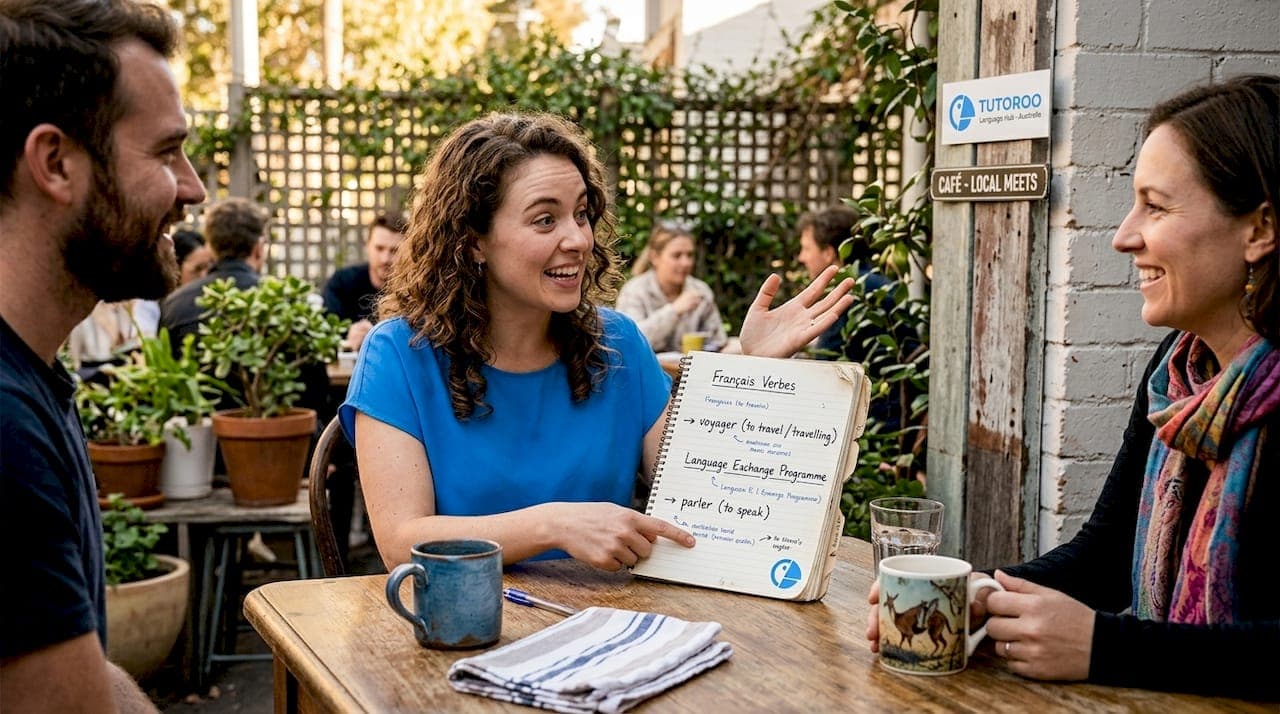
Language learning outside school is not a single method. It is a whole category of experiences that put you in direct contact with a language as it is actually used. Think of language cafés where strangers gather weekly over coffee to practise conversation. Think of hobby groups where a shared passion for cooking or hiking creates natural, low-stakes dialogue. Think of travel that forces you to order food, read signs, and ask for help in a language you are still figuring out.
The defining difference between these settings and a classroom is the shift from passive learner to active participant. In a classroom, you study language. Outside it, you use language to do something else entirely. That shift changes everything about how your brain processes and retains what it hears.
Here is what language learning outside school can look like in practice:
- Language cafés and conversation clubs where mixed-level learners practise together in casual settings
- Hobby and interest groups conducted in your target language, whether it is a film club, a community garden, or a sports team
- Travel and cultural immersion programmes that place you inside a language for days or weeks at a time
- Tandem language exchange partnerships with native speakers who want to learn your language in return
- Community volunteering with cultural organisations or migrant support groups
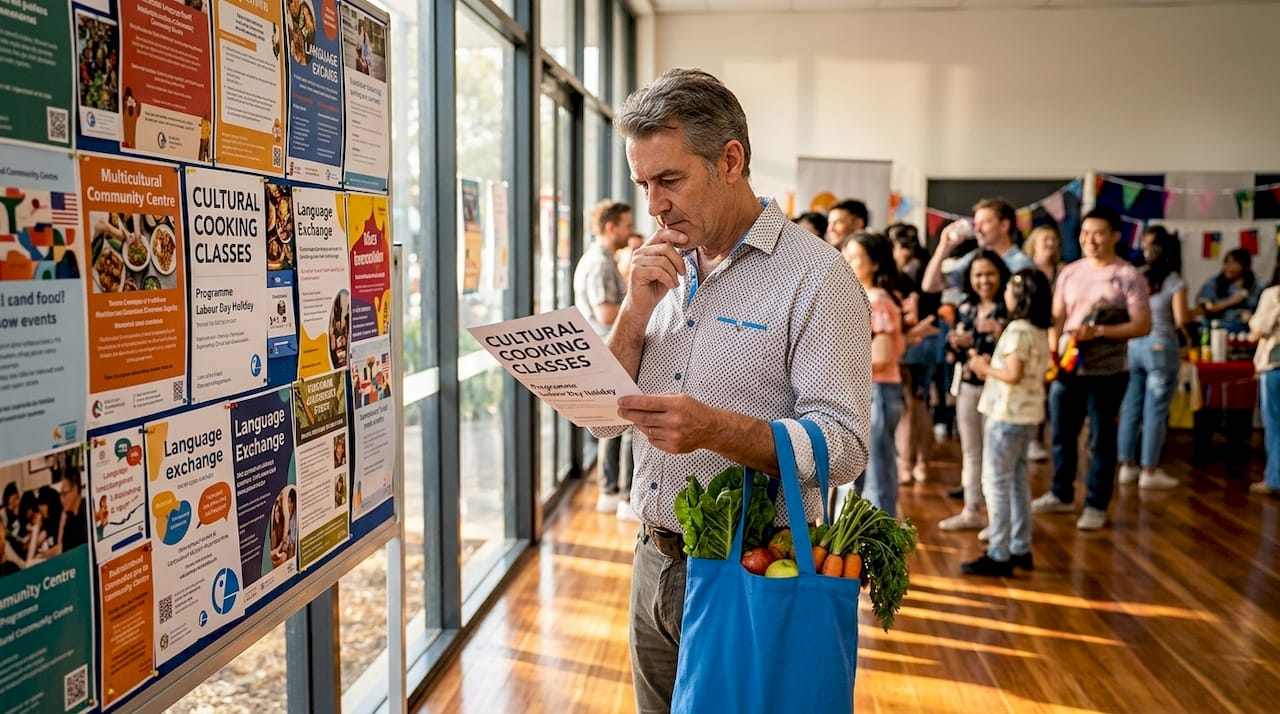
Pro Tip: You do not need to live abroad to find immersion. Most cities have multicultural community centres, international student groups, and language exchange meetups that open their doors to curious beginners.
The psychological shift that happens in these settings is worth understanding. When you are solving a real problem with language, whether it is finding a pharmacy or negotiating a market stall, your brain is not treating it as an exercise. It is treating it as survival. That urgency, even in a gentle form, is precisely what immersion transforms language study into lived experience, producing skills that stick.
The real benefits of learning languages
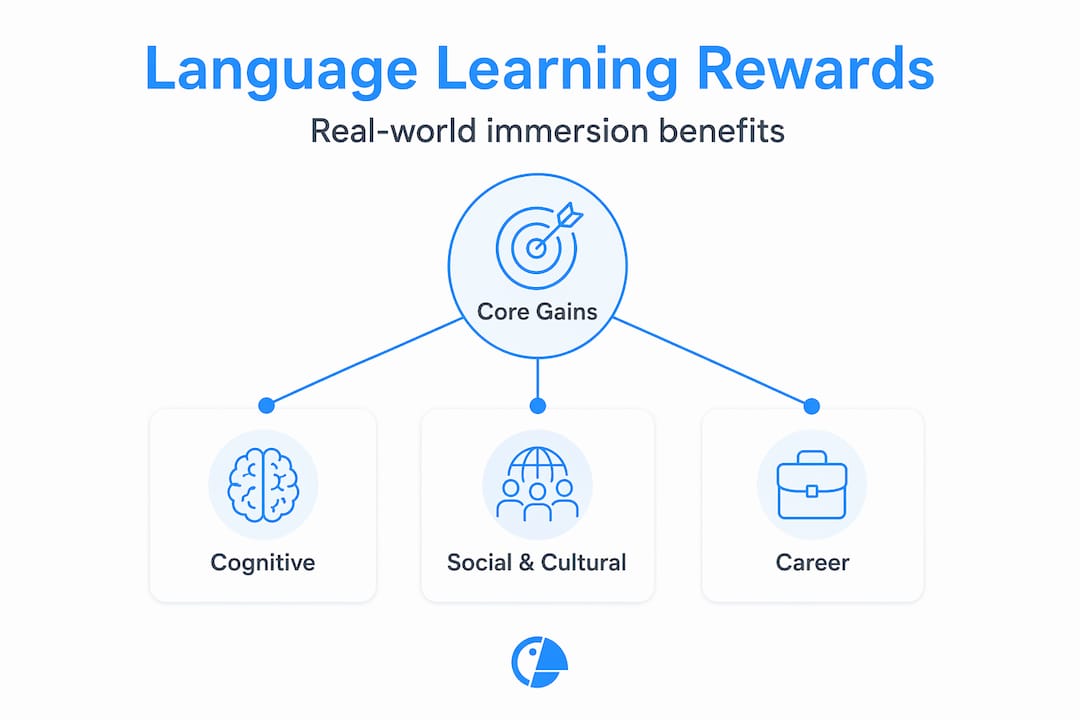
The benefits of learning languages through immersive, real-world settings touch three distinct areas of your life: your brain, your relationships, and your career.
Cognitive rewards
Speaking multiple languages is one of the most well-documented ways to protect your brain long-term. Research shows that multilingualism slows brain ageing and reduces the risk of neurodegenerative disease. Beyond that, language socialisation boosts executive function and multitasking, because managing two linguistic systems simultaneously trains your brain to switch focus rapidly and efficiently.
These cognitive benefits are not reserved for those who learned two languages in childhood. Adults who pursue immersive language practice see measurable gains in memory, attention, and mental flexibility.
Social and cultural rewards
Outside-classroom learning builds intercultural agility, which is the ability to read situations, adjust communication style, and connect meaningfully with people from different backgrounds. This is a skill that classroom grammar exercises do not develop. It comes from real conversation, real misunderstanding, and real repair.
Early social engagement in a new language, even at beginner level, builds communicative competence that pure study cannot replicate. You learn how people actually talk, not just how grammar books say they should.
Career rewards
The professional case for language learning is compelling. Bilingual professionals report salary premiums of 10 to 20% over monolingual counterparts, and employers consistently rate cross-cultural communication as one of the most valued workplace skills. For those seeking global roles or working in multicultural organisations, fluency gained through real-world practice carries far more weight than a language certificate alone.
How immersion speeds up fluency
The mechanism behind immersion learning is not mysterious. It is about necessity and frequency combined. When you are in a real situation that requires language, your brain adapts at a pace that structured lessons rarely match.
Consider this comparison:
| Approach | How language is processed | Retention over time |
|---|---|---|
| Classroom study | Abstract rules and written exercises | Moderate, often fades without use |
| Immersive real-world practice | Contextual, problem-solving situations | Strong, reinforced by emotional memory |
| Combined approach | Structured foundation plus active use | Highest long-term retention and fluency |
Immersive travel experiences produce stronger retention and cultural sensitivity than classroom-only methods precisely because they create emotional connections. When you remember the moment you successfully got directions in Italian from a local in Rome, that memory is encoded with feeling, context, and sensory detail. That encoding makes it durable.
Cultural nuances and natural pronunciation are also mastered through interaction, not instruction. The rhythm of a language, the way humour lands, the pauses that signal politeness — none of these live in textbooks. They live in authentic fluency development through real conversation with real people.
Pro Tip: Do not wait until you feel "ready" to speak. The discomfort of early conversation is not a sign you need more study. It is the feeling of your brain building new pathways.
Low-pressure social environments provide the kind of safe experimentation that accelerates communicative competency. When nobody is grading you, you take more risks. You try sentences you are not sure about. You discover what works. That experimentation is where fluency is actually forged.
Practical strategies for learning informally
Getting started with language learning informally does not require a plane ticket or a dramatic life change. The following strategies are designed for people with regular lives, busy schedules, and a genuine desire to make progress.
-
Find a local language café or conversation group. Search community noticeboards, Meetup groups, or cultural centres in your city. Many run weekly sessions that welcome all levels and cost nothing to attend.
-
Join a hobby group conducted in your target language. Whether it is a cooking class, a book club, or a football team with a multicultural membership, shared activity creates natural conversation without the awkwardness of a formal exchange.
-
Use travel intentionally. If you have the opportunity to travel to a country where your target language is spoken, resist the habit of retreating to English-speaking hotels and tour groups. Learning through travel means staying in local guesthouses, shopping in local markets, and making deliberate mistakes in public.
-
Set up a language exchange partnership. Finding a native speaker who wants to learn your language in return creates a genuinely mutual, low-pressure environment. For ideas on how to structure this, explore language exchange examples that go beyond awkward small talk.
-
Use apps and media to supplement, not replace, real practice. Podcasts, streaming platforms, and language apps are excellent preparation tools. They build vocabulary and listening comprehension. They are not a substitute for actual conversation.
Key principles to remember across all of these strategies:
- Start before you feel ready. Waiting for confidence before you speak is a trap.
- Prioritise comprehension over perfection. Being understood matters more than being grammatically flawless.
- Build consistency. Twenty minutes of real conversation three times a week outperforms a single intensive two-hour session.
- Celebrate small wins. Successfully buying coffee in another language is a genuine milestone. Treat it as one.
Common myths about informal language learning
Several persistent misconceptions stop people from pursuing language learning outside school. Each one is worth addressing directly.
Myth one: You need to be advanced before you can practise socially. This is backwards. Starting social use early, even as a beginner, is precisely what builds genuine communicative competence. Waiting until you are "good enough" delays the very experiences that would make you good enough.
Myth two: Making mistakes is embarrassing and counterproductive. The opposite is true. Mistakes are the engine of acquisition. Struggling through language tasks activates the brain networks responsible for memory, attention, and cognitive flexibility. Every stumble is productive.
Myth three: AI translation tools make language learning unnecessary. Translation tools are pattern-matching machines. They lack cultural context, emotional register, and lived meaning. AI cannot replace the cognitive and cultural engagement that comes from learning a language directly. They are a convenience tool, not a learning tool.
Myth four: Passive exposure is enough. Watching foreign films without actively engaging, listening to music without understanding the lyrics, or sitting in a bilingual environment without speaking — none of these produce fluency on their own. Real-world language use demands active participation.
"Language exists fundamentally for communication and connection, not grammar mastery. Engagement with real speakers is what builds authentic fluency."
Persistence through initial struggle is not optional. It is the mechanism. The discomfort you feel searching for a word, constructing an unfamiliar sentence structure, or mishearing a native speaker is your brain doing exactly what it needs to do to learn.
My perspective on immersive learning
I have seen thousands of learners move through language programmes, and the pattern is consistent. The ones who make the most meaningful progress are almost never the most diligent grammar students. They are the ones who go and talk to people.
What surprises most learners is how quickly the mental shift happens. The moment you stop thinking "I am a student performing language" and start thinking "I am a person communicating," your acquisition rate changes dramatically. It is not subtle. You can feel it.
The practical struggles matter more than any lesson plan. Searching for a word in a real conversation activates memory consolidation in a way that completing a worksheet does not. Misunderstanding someone and having to repair the conversation builds sociolinguistic intuition that no textbook chapter can teach.
My honest advice: find the most uncomfortable version of immersive practice you can tolerate, and do it regularly. Embrace imperfection as the price of admission, not a sign of failure. The classroom gives you the map. The world outside it is where you actually learn to navigate.
— TUTOROO
Take your learning further with Tutoroo
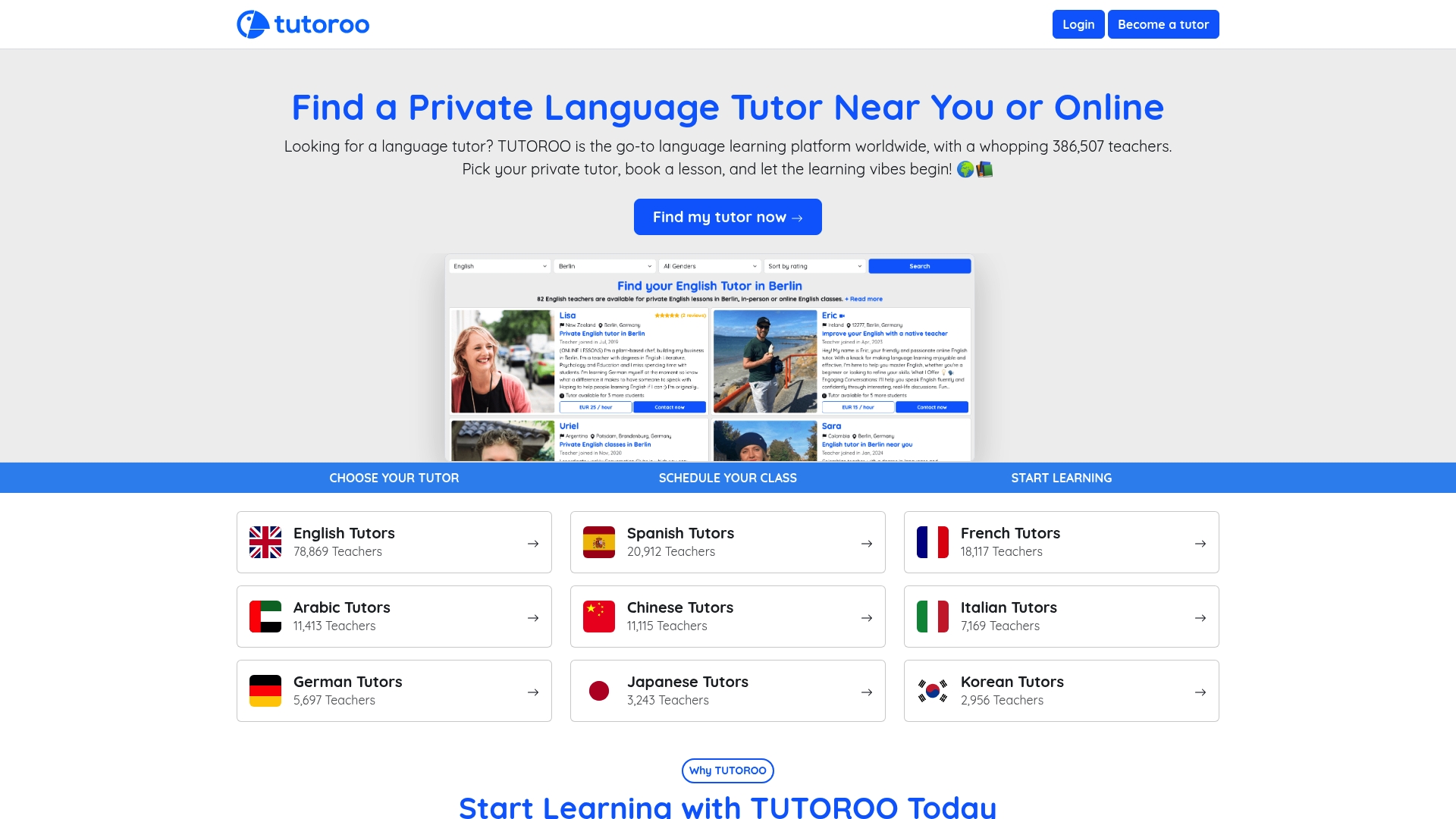
If you are ready to combine the power of real-world immersive practice with personalised guidance, Tutoroo connects you with experienced private tutors who go well beyond textbooks. Whether you want to build conversational confidence in Spanish, prepare for travel in Japanese, or refine your professional Arabic, Tutoroo's community of over 386,000 tutors offers private language tutoring tailored to your pace, goals, and learning style. Sessions run online or in person, fitting around your schedule. Tutors bring cultural context, authentic conversation practice, and the kind of flexible, responsive teaching that complements everything you explore outside the classroom. Find your tutor and start practising the language as it is actually lived. You can also explore best language practice activities to get the most from every session.
FAQ
What does language learning outside classrooms involve?
Language learning outside classrooms includes any practice that puts you in direct contact with real language use, such as conversation clubs, language cafés, travel immersion, hobby groups conducted in your target language, and tandem partnerships with native speakers.
Is immersive learning better than classroom study?
Research shows that combining both approaches produces the highest long-term retention and fluency. Immersive real-world practice builds cultural sensitivity and communicative confidence that formal instruction alone does not develop.
Can beginners practise with native speakers?
Yes, and experts recommend it. Starting social use early builds genuine communicative competence from the beginning. Waiting until you are advanced delays the experiences that actually accelerate your progress.
Does making mistakes slow language learning down?
No. Cognitive effort from searching for words and constructing meaning consolidates deep learning. Mistakes activate memory and attention networks in ways that passive study cannot match.
How do I find informal language learning opportunities near me?
Search Meetup groups, community centre noticeboards, and cultural organisations in your city. Many language cafés, conversation clubs, and multicultural community events are free, welcoming to beginners, and run regularly throughout the year.