

If you are applying to Canada and want a test built around North American English, CELPIP is a strong fit. If you need a test that universities, employers and immigration bodies accept in many countries, or you would rather speak to a person than a microphone, IELTS is usually the better choice. Neither test is objectively easier. The right one depends on where your results will be used, how you handle speaking, and what is on offer near you in the United States.
We see this question every week from learners preparing for Canadian Express Entry, study permits and work visas. This guide sets the two tests side by side, explains the scores that matter for Canada, and shows how personalised tuition can shape your preparation for either one.
TL;DR
- CELPIP is fully computer-based and centred on Canadian English. IELTS offers computer-delivered testing and a face-to-face Speaking interview with an examiner.
- For CLB 7 on IELTS General Training you need 6.0 in each skill. On CELPIP-General you need 7 in each skill.
- IELTS is recognised far more widely, including by more than 3,400 institutions in the USA. CELPIP is aimed mainly at Canadian purposes.
- In the US, the standard IELTS test costs US$280 to US$340 depending on location. CELPIP pricing outside Canada is set separately, so check the official booking page.
- Choose by purpose first, then by comfort: accent, speaking format and test centre access.
Table of Contents
- The main differences at a glance
- Format and test day experience
- Which is easier, CELPIP or IELTS?
- Where each test is accepted
- Scores and CLB 7 explained
- What the tests cost in the United States
- How to choose: a quick decision guide
- Preparing for either test with a private tutor
- Find an English tutor for test preparation
- FAQ
- Sources
The main differences at a glance
Both tests assess the same four skills: Listening, Reading, Writing and Speaking. The difference lies in how they deliver them and who they are designed for. According to IDP's comparison of the two tests, CELPIP is available only on computer and leans on North American language and Canadian content, while IELTS includes a range of listening accents and a face-to-face Speaking interview.
| Feature | CELPIP | IELTS |
|---|---|---|
| Delivery | Computer only | Computer-delivered, with paper testing for some test takers in the US |
| Speaking | Spoken answers to on-screen prompts | Live interview with an examiner |
| Accents and content | North American, with Canadian settings | A variety of accents |
| Scoring | 1 to 12 | Bands 0 to 9 |
| Recognition | Mainly Canadian immigration and citizenship | Study, work and immigration worldwide |
The scoring scales are one more practical difference. CELPIP reports levels from 1 to 12, and IELTS reports bands from 0 to 9, so you cannot compare raw numbers directly. You need the CLB conversion, which we cover below.
Format and test day experience
Delivery: computer or person
CELPIP is taken entirely on a computer, in one sitting. That suits people who type quickly, are comfortable with screens and like a predictable, standardised environment. Your Speaking answers are recorded as you respond to prompts on screen.
IELTS in the United States is delivered on computer, and IELTS in the USA notes that paper-based testing is available for some test takers who need access arrangements. IELTS Speaking is a face-to-face interview with an examiner, which the British Council describes as a real-life conversational experience, unlike speaking to a computer.

Which Speaking format suits you
Some learners freeze when they talk into a microphone with no listener. For them, a friendly examiner who reacts, nods and follows up can bring out more natural speech. Others prefer the privacy of a screen, with no one watching their face. Be honest about which group you belong to. It is one of the most useful things you can know before booking.
Accents and cultural content
CELPIP uses Canadian settings, accents and idioms. If you have lived in Canada or watched a lot of Canadian media, this can feel familiar. If your English comes from other regions, IELTS's mix of accents may feel more natural. Either way, exposure matters, and a tutor who speaks the variety you are aiming for can help you train your ear in a way a textbook cannot. Our guide on British and American English shows how much spelling, vocabulary and rhythm can differ.
Which is easier, CELPIP or IELTS?
Neither test is objectively easier. The British Council's own comparison says the answer depends on the person: IELTS may feel more candidate-friendly if you get anxious speaking into a computer microphone or prefer paper testing, while a computer-based format with Canadian accents suits people comfortable with that setting.
In practice, learners tend to feel easier with one test for these reasons:
- You may find CELPIP easier if you type fast, you like on-screen tasks, and you are used to Canadian English.
- You may find IELTS easier if you speak better to a person, you are used to a range of accents, or you prefer a format with a long track record and lots of published practice material.
- Your preparation matters more than the label. A learner who knows the task types, manages time well and has practised speaking aloud weekly will usually outperform one who picked the test that sounded simpler.
A sensible way to decide is to take a short diagnostic in each format, note which skills drop, and then pick the one where your weakest skill holds up best. A tutor can run that diagnostic with you and give feedback on pronunciation, structure and vocabulary, which no practice score can do alone.
Where each test is accepted
Canada
For Canadian immigration, both tests are used to prove English ability. Canada measures results through the Canadian Language Benchmarks, or CLB. IRCC's guidance on finding your language results for a post-graduation work permit lists the equivalents: CLB 7 on IELTS General Training is 6.0 in Reading, Writing, Listening and Speaking, and CLB 7 on CELPIP-General is 7 in each ability.
If your goal is Canadian permanent residence or citizenship and nothing else, either test can serve you. Check the official page for your specific programme to confirm which test version it accepts. IELTS General Training is designed for work, training and immigration, while IELTS Academic is for university admissions, according to IELTS in the USA.
The United States and beyond
If you live in the US and might apply to study, work or move to other countries later, IELTS gives you more options. It is recognised by more than 3,400 institutions in the USA, and it is accepted across many countries for study, work and immigration. CELPIP, by contrast, is built mainly around Canadian use. If your plans are still open, one IELTS result keeps more doors open.
For US university admissions in particular, many applicants also consider other English tests. Our piece on when TOEFL tutoring pays off explains how a focused study plan can work for that route.
Scores and CLB 7 explained
CLB 7 is the threshold that comes up most often. IDP's guide explains that CLB 7 is the minimum level for the Federal Skilled Worker Program and corresponds to an IELTS score of 6.0 in all four skills.
| CLB level | IELTS General Training (each skill) | CELPIP-General (each skill) |
|---|---|---|
| CLB 7 | 6.0 | 7 |
Two points deserve attention:
- Every skill counts. Reaching CLB 7 means meeting the level in Listening, Reading, Writing and Speaking. A strong Reading score will not make up for a weak Speaking score.
- Higher CLB levels can add points. Express Entry rewards stronger language results, so if you are close to the next level, extra preparation can pay off. Check the IRCC site for the current Comprehensive Ranking System tables, as they are revised from time to time.
If your target is higher than the minimum, think about which test lets you show your best performance in your weakest skill. A learner who writes well but speaks hesitantly may score higher on the format that suits their speaking style.
What the tests cost in the United States
Fees depend on the provider and the place, so treat any figure as a guide and confirm it at booking.
IELTS. The British Council's official US page lists the standard Academic or General Training test at US$280 to US$340, depending on location. It also lists IELTS for UK Visas and Immigration at USD 305 and IELTS for UKVI Life Skills at USD 195. IELTS testing is offered in over 20 locations across the US through independent test providers.
CELPIP. The official CELPIP overview states the Canadian price for CELPIP-General is $299 CAD plus taxes, and says international pricing varies. One 2026 guide reports that CELPIP-General in the United States is listed at US$255 in CELPIP's booking listings, and advises reading the total on the checkout screen, because that is what your card is charged.
Since prices change, the fair way to compare is this: look up the current fee for your city on each official booking page, add travel if the nearest centre is far, and then weigh it against how many attempts you might need. A well-prepared first attempt is usually the cheapest route.

How to choose: a quick decision guide
Work through these questions in order:
- Where will you use the result? If an employer, university or immigration programme names one test only, take that one. If you plan to apply to several countries, IELTS gives wider recognition.
- Is it for Canada only? Then both are valid for most programmes. Move to comfort and cost.
- How do you feel about speaking? A live examiner or a microphone? Pick the one where you speak more freely.
- Which accents do you know best? Canadian media and daily contact favour CELPIP. A broader mix favours IELTS.
- What is available near you? In the US, check how far the nearest centre is and how soon sessions are open.
- What is your timeline? Allow time for preparation, the test and the wait for results, then for your application.
If you are applying for a life skills visa route, read our plain answer on whether IELTS Life Skills tutoring is worth it. For an overview of tests used in other countries, see our examples of language proficiency tests.
If you also need French for Canada, our comparison of TEF and TCF walks through the French options in the same spirit.
Preparing for either test with a private tutor
The two tests share the same core: clear spoken English, organised writing, quick reading and careful listening. A tutor can help with each, and personalised tuition is where learners often see the most change, because you practise exactly the tasks you will face.
A simple weekly pattern many learners follow:
- Speaking: one or two live sessions of timed answers, with feedback on fluency, pronunciation and structure. If you choose IELTS, practise with a person. If you choose CELPIP, practise speaking aloud to a screen with a timer, then review the recording with your tutor.
- Writing: one timed task per week, corrected line by line, with a focus on the structure each test rewards.
- Listening and Reading: short daily sessions, with your tutor explaining the mistakes you keep repeating.
- Mock tests: a full run every few weeks to build stamina, since each test takes about three hours.
Learners preparing for Canada often benefit from a tutor who knows the accents and everyday expressions they will meet. Our English tutoring guide shares ways to build that daily habit.
Our perspective
We believe the test you choose matters less than the way you prepare for it. A result is a snapshot of how you use English under pressure, and the best way to improve that is regular, personal practice with someone who listens to you and corrects you in the moment.
That is why we built TUTOROO around one-on-one lessons. Learners can search by language, location and availability, message tutors directly and arrange lessons online or locally. Whether you are aiming for CLB 7 for Canada or an IELTS band for study, a tutor can focus your hours on your weakest skill instead of a generic course.
Our community includes more than 386,000 language teachers, so you can look for a tutor whose accent, teaching style and schedule suit you. Authentic conversation with a real person is, in our experience, the surest way to build confidence before test day.
TUTOROO
Find an English tutor for test preparation
If you have chosen your test, the next step is a tutor who can build a plan around it. On TUTOROO you can browse English tutors, compare profiles, message them and agree lessons that fit your week. You can also start from our main page to look across all the languages we cover.
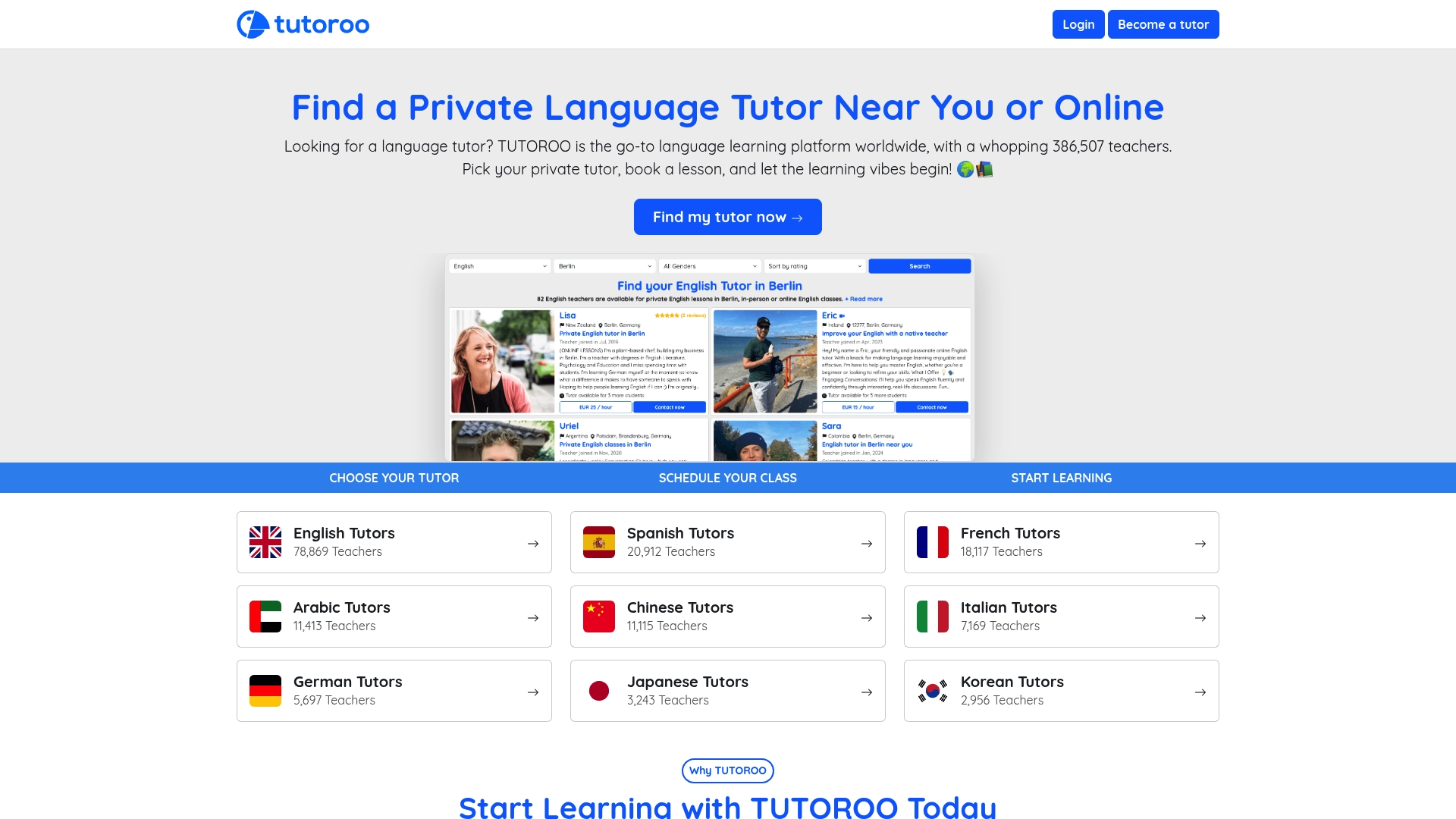
Tell a prospective tutor which test you are taking, your target score and your test date, so the first lesson can start with a plan.
FAQ
Is CELPIP or IELTS easier?
Neither is objectively easier. IELTS can feel friendlier if you prefer speaking to a live examiner or testing on paper, while CELPIP suits people who are comfortable with computers and Canadian accents. Take a practice section from each and see where your scores hold up best.
What is CLB 7 in IELTS and CELPIP?
CLB 7 equals 6.0 in each of the four skills on IELTS General Training, and 7 in each of the four skills on CELPIP-General, according to IRCC's guidance. It is the minimum level for the Federal Skilled Worker Program.
How much does IELTS cost in the United States?
The British Council's US page lists the standard Academic or General Training test at US$280 to US$340, depending on location. UKVI versions have their own fees, so check the booking page for your test type and city.
Can I take CELPIP in the United States?
Yes, CELPIP-General has a US listing, but the fee and availability differ from Canada. The official CELPIP overview says international pricing varies, so confirm current details on the booking page before you plan.
Which test is better for US study or work?
IELTS is the more widely recognised option, with acceptance at more than 3,400 US institutions according to IELTS in the USA. Always confirm with the institution or employer which tests they accept.
Sources
- IELTS or CELPIP: Which test is best for study, work and migration (IDP)
- IELTS in the USA
- CELPIP vs IELTS: Which Is Easier and Which Should You Take? (British Council)
- IELTS in the United States (British Council)
- CELPIP Test Overview
- Post-graduation work permit: How to find your language results (IRCC)
- IELTS to CLB: Canadian Language Test (IDP)
- CELPIP test price: fees, refunds, and retake costs