

TL;DR:
- Digital literacy for tutors encompasses more than technical skills; it includes pedagogical judgment and guiding students through digital spaces. Developing ongoing, practical competence improves student engagement, personalization, and ability to handle digital misinformation effectively. Building digital skills through frameworks like UNICEF's Pathways enhances teaching confidence and fosters authentic online learning experiences.
Most language tutors think digital literacy means knowing which button to press on Zoom. That assumption is costing their students. The role of digital literacy for tutors goes far deeper than technical know-how. In 2026, it sits at the heart of effective pedagogy, shaping how you design lessons, guide learners through misinformation, manage online sessions, and personalise instruction. This article unpacks what digital literacy actually means for language educators, why it matters more than ever, and how you can build it in practical, achievable ways.
Table of Contents
- Key takeaways
- The role of digital literacy for tutors defined
- Why digital literacy matters for online language tutoring
- Challenges tutors face with digital skills
- Practical steps to build digital competency
- Integrating digital literacy into everyday tutoring
- What I've learnt from moving beyond the tools
- Build your tutoring practice with Tutoroo
- FAQ
Key takeaways
| Point | Details |
|---|---|
| Digital literacy is a pedagogical skill | It includes critical thinking guidance and student support, not just tool proficiency. |
| Data literacy drives teaching competence | Tutors who read digital dashboards confidently report stronger teaching outcomes after training. |
| Continuous learning beats one-off training | Ongoing, context-aware development produces more lasting results than single workshops. |
| Frameworks make upskilling achievable | Modular tools like UNICEF's Pathways let tutors build competence step by step. |
| Engagement depends on active digital spaces | Shared workspaces and session management tools keep learners involved, not passive. |
The role of digital literacy for tutors defined
The term "digital literacy" gets used broadly in education, but its recognised industry counterpart is digital competency for teaching, a term that captures the full scope of what modern tutors need. It is not a single skill. It is a cluster of connected capabilities that span technical proficiency, pedagogical judgement, and the ability to guide students through a complex online world.
For language tutors specifically, these capabilities break down into three layers:
- Technical proficiency: Operating platforms, video conferencing tools, shared documents, and learning management systems with confidence.
- Pedagogical capacity: Using digital tools to design learning experiences that suit individual students rather than simply replicating classroom methods on a screen.
- Critical thinking facilitation: Helping students identify misinformation, manage information overload, and navigate digital spaces safely.
The 2026 European Commission guidance for educators reinforces this last point strongly, highlighting that tutors play a direct role in shaping how learners engage with online content. For language tutors, this is especially relevant. Students often use digital sources — social media, news sites, podcasts, apps — to practise their target language. Guiding them to do so critically is part of the job.
There is also a fourth element that many tutors overlook: data literacy. This means reading and interpreting the digital information your platforms generate, whether that is session attendance patterns, quiz performance, or progress metrics. Understanding this data helps you adapt your teaching in real time rather than relying on gut instinct alone.
Pro Tip: If your current platform offers a student progress dashboard, spend fifteen minutes each week reviewing it before sessions. Patterns you notice there will shape your next lesson far more precisely than memory alone.
Why digital literacy matters for online language tutoring
The benefits of tech skills for tutors are not abstract. They show up directly in the quality and depth of every lesson you deliver.

Research makes this clear. An EU public consultation found that 90% of respondents agree teachers need digital skills to support their students effectively. That figure is not surprising when you consider how much of language learning now happens through digital channels.
Here is how strong digital competency changes outcomes for both tutors and learners:
-
Personalised instruction becomes possible. Digital literacy enables tutors to assign tailored resources through platforms, creating learning paths that suit a beginner differently from an advanced speaker. This kind of differentiated instruction is far easier to sustain when you can navigate your tools confidently. See how personalised tutoring accelerates progress across proficiency levels.
-
Student engagement grows in active digital environments. Shared digital workspaces and interactive session tools shift students from passive viewers to active participants. This distinction matters enormously in language learning, where production and interaction drive acquisition.
-
Misinformation becomes a teachable moment. When tutors understand how to evaluate digital sources, they can model those skills for students. Language learners who consume authentic online content benefit from a tutor who can help them read it critically.
-
Session management improves measurably. Scheduling tools, progress records, and asynchronous resources keep learning moving between live sessions. Tutors who manage these well give students a more consistent, structured experience.
-
Equity and adaptability increase. The UNICEF Pathways framework was designed for low-resource contexts, emphasising practical capability over technical perfection. This approach serves tutors working across varying connectivity conditions and device limitations, making digital teaching resilient rather than fragile.
The phrase "enhancing student engagement through digital literacy" is often used, but what it really means is this: when you know your tools, you stop managing them and start teaching with them.
Challenges tutors face with digital skills
Acknowledging the obstacles is not pessimism. It is preparation. The importance of digital skills for educators is widely accepted, but the path to developing them is rarely straightforward.
Common challenges include:
- Limited prior experience: Many experienced language tutors built their craft in classrooms and never needed digital tools professionally. Transitioning online without structured support can feel overwhelming.
- Platform complexity: Tools that promise simplicity often have steep learning curves. Managing breakout rooms, screen sharing, and annotation simultaneously during a lesson is genuinely demanding.
- Data interpretation: Most tutors receive access to dashboards they do not know how to use. A 2026 study found that data interpretation and dashboard use were among the hardest challenges tutors faced before practice-based digital training.
- Passive screen-sharing habits: Without a deliberate approach, online tutoring can collapse into a tutor talking at a screen while a student watches. This is a pedagogy problem that digital literacy solves.
- Balancing tools with teaching: Technology should serve the lesson, not consume it. Tutors without a clear framework often spend session time troubleshooting rather than teaching.
Pro Tip: Choose one new digital tool per month and integrate it fully before adding another. Depth of use matters far more than the breadth of your toolkit. Strong tutor-client communication will also help you manage student expectations when trialling something new.
Understanding these challenges is the starting point. What tutors need next is a practical path forward.
Practical steps to build digital competency
Building digital competency for teaching does not require a formal degree or a month-long course. It requires structured, repeated practice and a willingness to learn alongside your students. The UNESCO ICT Competency Framework provides a strong foundation, guiding tutors through continuous capacity building that covers both ethical practice and inclusive teaching.
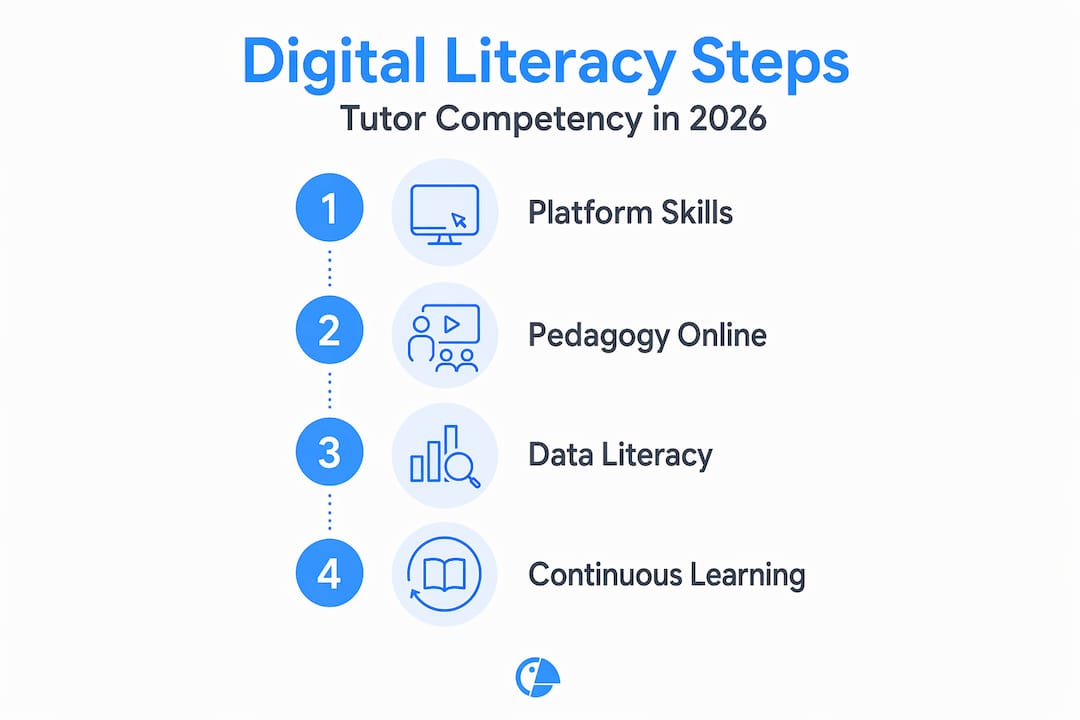
Here is how to approach it practically:
| Approach | What it involves | Best suited to |
|---|---|---|
| Modular frameworks | Work through UNICEF's Pathways or similar step-by-step competency tools | Tutors with limited prior digital experience |
| Practice-based training | Repeated hands-on use of dashboards, tools, and platforms | All tutors seeking to move from theory to confidence |
| EU digital literacy toolkit | Lesson plans and resources designed specifically for educators | Tutors wanting ready-made classroom guidance |
| Peer learning communities | Sharing strategies and troubleshooting with fellow tutors | Those who learn well through dialogue and feedback |
| Continuous professional development | Structured ongoing learning rather than one-off workshops | All tutors committed to long-term improvement |
The UNICEF Pathways framework deserves special mention. It breaks digital competence into modular, achievable steps tailored to different educator roles and levels of resource access. Rather than assuming reliable internet or high-end devices, it meets tutors where they are. That makes it genuinely applicable across the global community of language educators.
Data literacy warrants its own dedicated focus within your development plan. Tutors who invest time understanding how to read and respond to platform data report significantly stronger confidence in their digital teaching. Explore online tutoring examples that demonstrate how data-informed adjustments lift student fluency outcomes in practice.
A systematic review of 32 peer-reviewed articles confirms that digital literacy development works best when it is ongoing and aligned with your actual teaching context, not treated as a box to tick. Build your skills around the tools you already use, then expand deliberately.
Integrating digital literacy into everyday tutoring
Knowing the theory is one thing. Putting it into your weekly sessions is where the real change happens. The digital literacy best practices for tutors that produce lasting results are those woven into regular teaching habits, not reserved for special occasions.
Here is what that looks like across different session elements:
| Session element | Without digital literacy | With digital literacy |
|---|---|---|
| Lesson delivery | Tutor reads from slides or talks at camera | Interactive whiteboard, annotations, shared docs keep student active |
| Progress tracking | Relies on memory or handwritten notes | Platform dashboard reveals trends across multiple sessions |
| Resource sharing | Email attachments before or after sessions | Shared learning space with curated links, tasks, and recordings |
| Asynchronous support | No contact between live sessions | Voice notes, short tasks, and messaging keep learning continuous |
| Student autonomy | Tutor controls all content selection | Student co-selects digital texts relevant to their goals and interests |
The shift from "screen sharing" to "shared learning space" is one of the most powerful changes a language tutor can make. Effective online tutoring moves well beyond video calls into an ecosystem where students have ongoing access to resources, records of their progress, and meaningful input into their learning path.
Monitoring student cues in a digital environment also requires specific attention. Physical signals are harder to read on screen, so digitally literate tutors learn to use check-ins, reaction tools, and brief written reflections to stay connected to how their students are experiencing the lesson. Read more about how feedback shapes tutoring success and why those digital signals matter as much as spoken responses.
What I've learnt from moving beyond the tools
I have worked with language tutors across many contexts, and the pattern I see most often is this: tutors invest in learning a platform and then stop. They can host a session. They can share their screen. And they wonder why their online lessons feel flat compared to their in-person work.
The tools were never the gap. The pedagogy was. The strongest digital literacy outcomes come when tutors treat digital skills as an extension of their teaching philosophy, not a separate technical category.
What has consistently impressed me is the difference that data literacy makes. Tutors who learn to read their dashboards stop guessing about student progress and start responding to it. That shift, from intuition to evidence, is where digital competence genuinely transforms teaching.
The other lesson I keep returning to is about rapport. Building genuine connection through a screen requires deliberate effort. Digitally literate tutors create that connection by designing sessions where students are active, heard, and visible in the digital space. It does not happen by default. It happens by design.
My honest advice: do not wait for a formal training programme. Start with one tool, one framework, and one commitment to reflect on what the data tells you after each session. That consistency, compounded over months, is what separates tutors who use technology from tutors who teach with it.
— TUTOROO
Build your tutoring practice with Tutoroo
Whether you are refining your digital teaching skills or looking to connect with motivated language learners around the world, Tutoroo is built for exactly that.
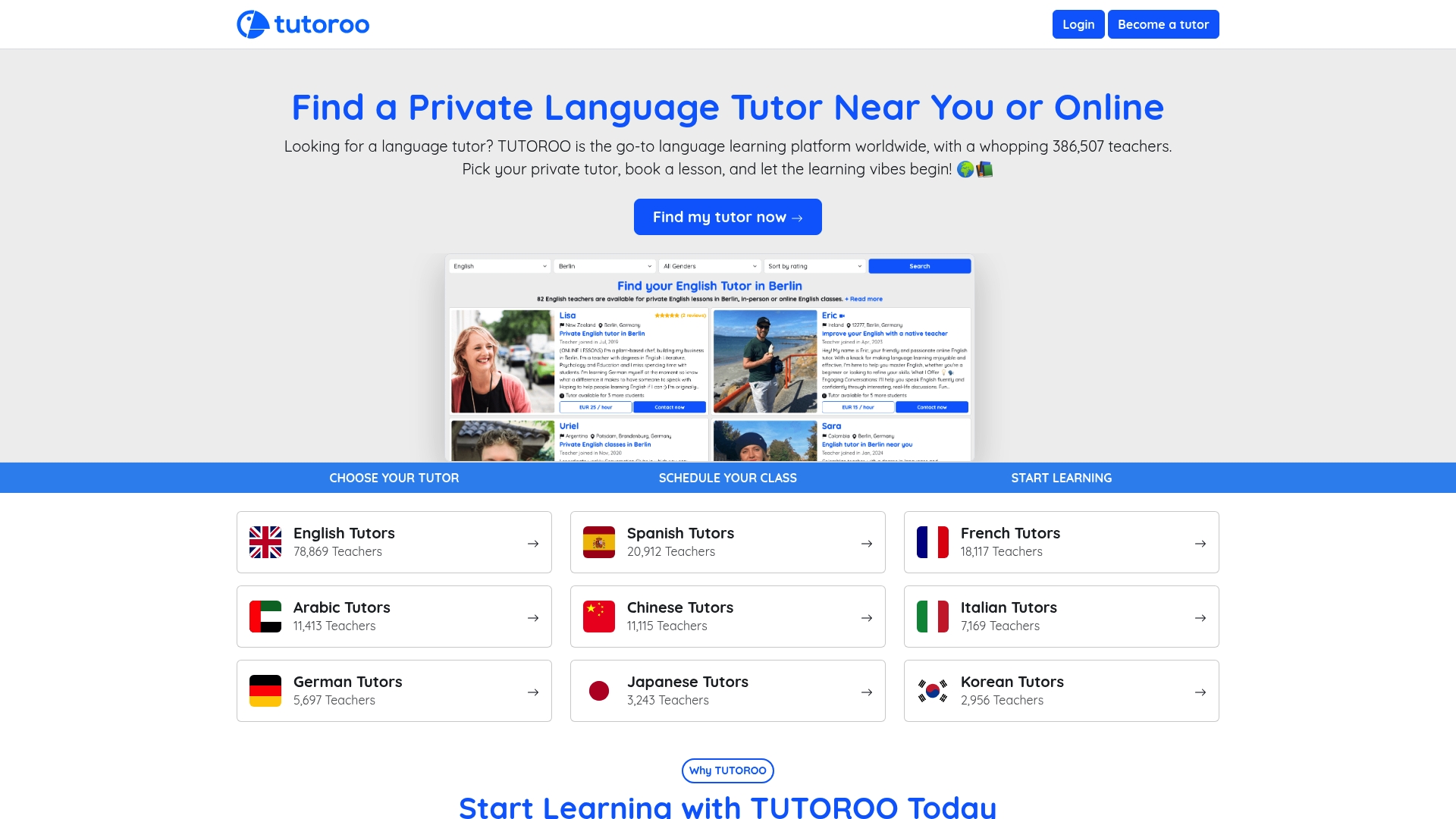
Tutoroo brings together more than 386,000 language tutors across dozens of languages, from English and Spanish to Arabic, Mandarin, and beyond. The platform makes it straightforward to set your own schedule, receive direct payments from students, and conduct sessions online or in person. For tutors committed to quality language instruction, it opens doors to a global community of learners who are actively seeking personalised, authentic tuition. Whether you teach one language or several, Tutoroo offers the reach and flexibility to grow a tutoring practice that genuinely reflects your expertise.
FAQ
What does digital literacy actually mean for tutors?
Digital literacy for tutors, also called digital competency for teaching, covers technical proficiency, pedagogical use of digital tools, data interpretation, and the ability to guide students through online information critically. It goes well beyond knowing how to use video call software.
How does digital literacy improve student engagement?
Digitally literate tutors create active, shared learning environments rather than passive screen-sharing sessions. Research shows that interactive digital workspaces and session management tools significantly improve learner participation and outcomes.
What is the best way to build digital literacy as a tutor?
Continuous, practice-based learning is most effective. Frameworks like UNICEF's Pathways offer modular steps tailored to different experience levels, while the UNESCO ICT Competency Framework supports ongoing professional development aligned with real teaching contexts.
Why is data literacy important for language tutors?
Data literacy allows tutors to interpret platform dashboards and track student progress with accuracy. A 2026 study found it to be the strongest predictor of tutors' perceived digital teaching competence following practical training.
Do tutors need prior tech experience to develop digital competency?
No. The 2026 European Commission guidelines for educators were specifically designed for those with little prior digital experience, offering practical tools, lesson plans, and glossaries to support tutors starting from any level.