

Choose a Mandarin tutor if you want broad practical reach across mainland China, a structured path toward exams like the HSK or wider access to business and media opportunities. Choose a Cantonese tutor if your daily life, family or local community runs on Cantonese, particularly in Hong Kong or Guangdong diaspora circles. Either way, a private tutor turns that choice into real, usable speaking skill far faster than solo study.
TL;DR:
- Shared characters do not make spoken Mandarin and Cantonese mutually intelligible, so choose a tutor who teaches the exact variety you need.
- Cantonese lessons usually spend more early time on fine tone distinctions, while Mandarin learners can move sooner into vocabulary and sentence structure.
- Regular lessons can build survival conversation in several months and familiar social conversation in several months to about a year; reading and writing take longer.
- Exam or travel preparation may call for three weekly sessions over a short period, while steady conversational progress usually suits one or two sessions weekly.
Table of Contents
- Who benefits most from Mandarin versus Cantonese tutoring
- Tones, intelligibility and writing: what actually changes in a lesson
- How hard is each language, and how long will it realistically take
- What to ask before you book a trial lesson
- Dialect prevalence and what it means for language vitality
- Finding tutors for each variety on a global platform
- Regional context and why it shapes your learning payoff
- Why private tutoring works for both Mandarin and Cantonese
- Start your trial lesson with a Mandarin or Cantonese tutor
- FAQ
- Sources
Who benefits most from Mandarin versus Cantonese tutoring
The right variety depends less on which language sounds more useful in the abstract and more on where you will actually use it. Mandarin suits learners chasing broad utility: it has official status across mainland China and Taiwan, dominates business communication, and underpins formal study pathways such as the HSK-aligned syllabus that builds listening, speaking, reading and writing in staged progression. Cantonese suits learners whose motivation is relational or regional: speaking with grandparents, understanding Hong Kong film and television, or settling into a Cantonese-speaking neighbourhood.
A few quick comparisons help clarify the decision:
- Reach: Mandarin is the official language across a far larger geographic area and government, education and media system.
- Official status: Mandarin is the standard in mainland China and Taiwan; Cantonese holds strong status in Hong Kong and Macau without the same national reach.
- Media and culture: Cantonese opens direct access to Hong Kong cinema, Cantopop and Guangdong regional media; Mandarin opens mainland Chinese film, television and news.
- Immediate practical gain from tutoring: Mandarin tutoring tends to pay off fastest for travel, study and career goals; Cantonese tutoring pays off fastest for family conversation and community integration.
If your goal sits across both (say, business in southern China plus family in Hong Kong), many learners start with Mandarin for formal utility and add Cantonese later for the relationships that matter most to them.
Tones, intelligibility and writing: what actually changes in a lesson
The two varieties differ in ways that directly shape how a tutor plans your sessions. Cantonese carries a larger tonal inventory than Mandarin, which usually means more time spent on fine-grained tone drills early on, while Mandarin's smaller tone set lets lessons move to vocabulary and sentence structure a little sooner.
Spoken Mandarin and Cantonese are not mutually intelligible, even though they share a written character system. Someone fluent in reading Chinese characters cannot necessarily follow spoken Cantonese if they only speak Mandarin, and vice versa, so a tutor will treat listening and speaking as skills that need variety-specific practice regardless of any reading overlap.
Lexical tone carries different weight in each language, and experimental research on intelligibility shows tone becomes especially important for word recognition when audio quality drops, which is one reason tutors push tone accuracy early rather than leaving it for later.
In practice, tutors structure lessons around these building blocks:
- Tone drills paired with minimal-pair listening tasks to train the ear before the mouth.
- Shadowing exercises, repeating native audio immediately after hearing it, to build natural rhythm.
- Targeted vocabulary sets tied to your stated goal (travel phrases, family vocabulary, business terms).
- Separate character study sessions when reading and writing matter to your goals, kept distinct from spoken practice.
How hard is each language, and how long will it realistically take
The US Department of State's Foreign Service Institute places both Mandarin and Cantonese among the languages requiring the most intensive study for native English speakers, which sets honest expectations before you book your first lesson.
That classification does not mean progress is slow in every sense. Recent speech prosody research found that speakers who already know a tonal language can sometimes perceive Mandarin tones more easily, showing that a complex native tone system does not automatically make new tones harder to pick up. Prior tonal experience helps, but it does not replace variety-specific training with a tutor.
Realistic milestones with regular tutoring, adjusted for your background and effort, tend to look like this:
- Consistent weekly lessons over several months for basic survival conversation (greetings, directions, simple transactions).
- Several months to about a year of regular practice for comfortable social conversation on familiar topics.
- Longer timelines for reading and writing fluency, since characters are learned separately from speaking.
Learners with prior exposure to any tonal language, including each other's variety, often progress faster in tone perception, but everyone still needs dedicated speaking practice to turn recognition into production.
What to ask before you book a trial lesson
Finding the right tutor matters as much as choosing the right language. A fluent native speaker of "Chinese" is not automatically equipped to teach tone contrasts or correct your pronunciation systematically, so it pays to vet skill rather than assume it.
Before committing to regular lessons, work through this checklist:
- Ask for a short demonstration of tone correction, ideally a recorded sample showing how they identify and fix a tone error.
- Request a sample 30-minute lesson plan so you can see how they sequence listening, speaking and vocabulary.
- Confirm which variety they teach natively and how they handle learners mixing up Mandarin and Cantonese sounds.
- Ask how they measure progress, through recordings, checklists or informal conversation benchmarks.
- Check lesson format options, online or face-to-face, and whether their availability matches your schedule.
Our guide on choosing a Chinese tutor who gets you speaking walks through a practical sampling approach for narrowing down candidates quickly.
Lesson cadence should match your goal. Intensive learners preparing for travel or an exam often benefit from three sessions a week over a short window, while learners building steady conversational skill usually do well with one or two weekly sessions sustained over months. Exam candidates benefit from a structured 90-day study workflow that paces vocabulary and grammar alongside tutoring.
Pro Tip: Ask your prospective tutor for a five-minute live demo of tone correction in the first trial. It tells you more about their teaching skill than any credential on their profile.
Dialect prevalence and what it means for language vitality
Mandarin's position as the standardised national language of mainland China and Taiwan, reinforced through education and media since the mid-20th century, has given it by far the broadest speaker base among Chinese varieties. Cantonese remains the dominant everyday language in Hong Kong and Macau and retains deep roots among Guangdong communities and diaspora populations across Southeast Asia, Australia, Canada and beyond.
That difference in prevalence shapes how each language is used today. Mandarin's reach into government, broadcast media and formal education means learners encounter it almost everywhere in mainland Chinese contexts. Cantonese's vitality is sustained less by administrative reach and more by cultural continuity: Cantonese cinema, Cantopop, Hong Kong television and strong diaspora communities keep it a living, actively used language rather than one confined to the home.
For tutoring purposes, this means Mandarin tutors can usually assume a learner will encounter standard Mandarin in almost any mainland Chinese setting, while Cantonese tutors often tailor lessons toward the specific community, whether Hong Kong, Guangzhou or an overseas diaspora network, where the learner expects to use the language.
Finding tutors for each variety on a global platform
Tutor availability differs between the two varieties, simply as a reflection of speaker numbers and global demand. Searching for a Mandarin tutor tends to surface a larger pool of candidates, including tutors based in mainland China, Taiwan and sizeable diaspora communities, which generally gives you more flexibility in finding someone who matches your schedule, budget and teaching style.
Cantonese tutors are a smaller but still accessible pool, concentrated among tutors connected to Hong Kong, Macau and Guangdong, as well as diaspora communities in cities with established Cantonese-speaking populations. If your goal is specifically Cantonese, filtering by variety early saves time compared with browsing a general "Chinese tutor" category and hoping for a match.
On a marketplace like ours, you can filter by language variety, lesson format (online or local in person) and availability, then review tutor profiles before messaging anyone. That filtering step matters more for Cantonese than Mandarin, since mislabelled or general "Chinese" listings can sometimes blur the two varieties together. Starting with a trial lesson, regardless of which variety you choose, remains the most reliable way to confirm a tutor's teaching style suits you before committing to a regular schedule.

Regional context and why it shapes your learning payoff
The benefit you get from learning either language depends heavily on where and with whom you expect to use it. Mandarin opens doors across a vast geographic and administrative area, useful for travel throughout mainland China and Taiwan, for business dealings tied to mainland Chinese markets, and for formal study pathways built around standardised exams.
Cantonese delivers a more concentrated but often more personal payoff. For someone with family roots in Hong Kong or Guangdong, learning Cantonese means being able to speak directly with relatives in their own voice rather than through translation. For someone drawn to Hong Kong cinema, Cantopop or Cantonese-language media, the language unlocks cultural content that loses nuance in subtitles or dubbing.
Neither context makes one language more valuable than the other in any absolute sense. They simply reward different learners differently, which is why matching the variety to your actual use case matters more than chasing whichever language seems to have more global prestige.
Why private tutoring works for both Mandarin and Cantonese
Tonal languages reward focused, corrective feedback that generic apps and group classes rarely provide. A tutor who hears your tone slip in real time and fixes it on the spot builds accuracy far faster than passive listening alone, a point our guide to private tutoring benefits explores in more depth.
With a large community of tutors on our marketplace, we have seen that clear goals paired with a well-matched trial lesson consistently beat vague ambition. Pick the language you will actually use, then book a trial and judge the fit for yourself.
— TUTOROO
Start your trial lesson with a Mandarin or Cantonese tutor
Once you know which variety fits your goals, finding a tutor through us takes a few straightforward steps. Search either "Chinese / Mandarin tutors" or "Cantonese tutors" depending on your decision, browse short tutor profiles showing their teaching focus and availability, then message a few candidates directly to arrange a trial lesson.
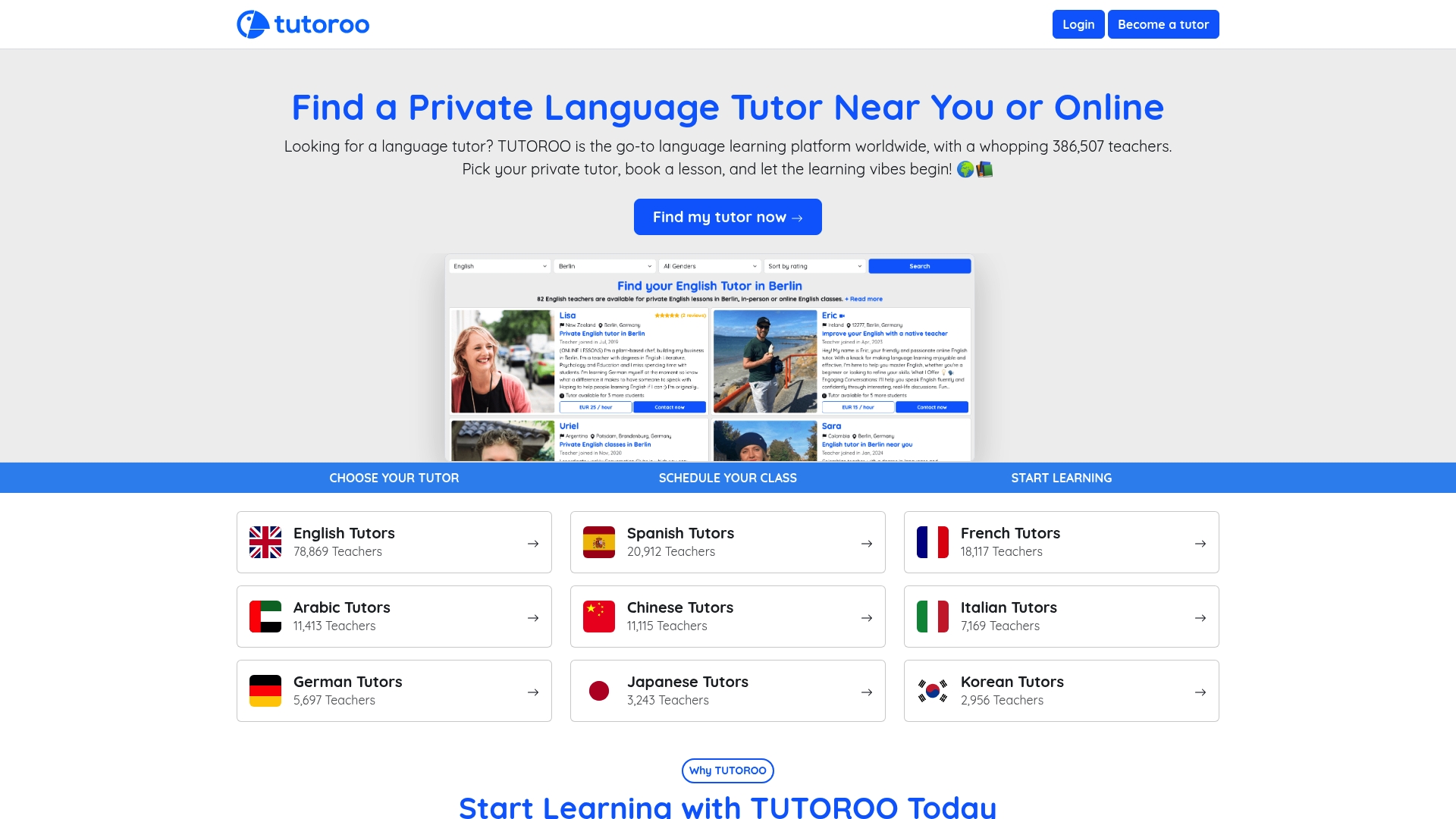
A few features make this easier for Mandarin and Cantonese learners specifically:
- Filter by language variety so you are matched with tutors who actually teach the one you need.
- Choose online or local in-person lessons depending on what suits your routine.
- Book a trial lesson first to test tone correction and teaching style before committing to a regular schedule.
If broad utility and formal progression are your priority, start with our Chinese / Mandarin tutors page. If family, community or Hong Kong and Guangdong culture are driving your decision, our Cantonese tutors page is the better starting point. Either way, messaging a tutor today is the fastest way to turn a decision into a conversation.
FAQ
Is it more beneficial to learn Cantonese or Mandarin?
It depends on your goal: Mandarin offers broader reach across mainland China, Taiwan, business and formal study, while Cantonese offers deeper value for family, Hong Kong and Guangdong community life, and Cantonese-language media. Neither is more beneficial in general; the better choice is whichever one matches where you will actually use it.
Does Jackie Chan speak Mandarin or Cantonese?
Jackie Chan is a native Cantonese speaker from Hong Kong and also speaks Mandarin, reflecting how many Hong Kong-born entertainers work across both varieties for regional and mainland audiences.
Does Mark Zuckerberg speak Mandarin or Cantonese?
Mark Zuckerberg learned and has publicly spoken Mandarin, demonstrating in a 2014 appearance that focused adult study can reach a usable conversational level. His case is often cited as an example of achievable progress with sustained practice.
Can you understand Cantonese if you speak Mandarin?
No, spoken Mandarin and Cantonese are not mutually intelligible despite sharing a written character system, so fluency in one does not transfer to understanding the other when spoken. Tone perception research shows Mandarin speakers can partially recognise some Cantonese tones through native-category assimilation, but this falls well short of genuine comprehension.
Sources
- Daily Chinese - HSK | Confucius Institute | NTU Singapore
- The more complex the better? Mandarin tone perception by Cantonese and Hakka speakers
- Foreign Language Training - United States Department of State
- ICPhS 2011 proceedings on lexical tone and intelligibility in Mandarin and Cantonese