

The right Gulf Arabic tutor is a native or near-native Khaleeji speaker who teaches the dialect you will actually hear, builds lessons around your goal, and lets you hear them in a trial lesson before you commit. Whether you are moving to Kuwait City or Dubai, preparing for work with Gulf colleagues, or reconnecting with family, one-on-one lessons online give you the fastest route into everyday spoken Arabic. Below we explain what Gulf Arabic is, how to match a tutor to your goal, what to ask before the first session, and how to make steady progress.
TL;DR
- Gulf Arabic (Khaleeji) is a group of closely related spoken dialects, so pick a tutor from the country or region you care about, such as Kuwait, the UAE or Qatar.
- Decide first whether you want conversation only or conversation plus Modern Standard Arabic (MSA) for reading and formal settings, and tell your tutor.
- Use a short trial lesson to test pronunciation, teaching style and how the tutor plans your first month.
- Agree goals, schedule and rates in writing, and avoid large payments through peer-to-peer apps before you have met the tutor.
- On TUTOROO you can browse Arabic tutors, message them directly and arrange lessons that suit your timetable.
Table of Contents
- What Gulf Arabic is, and how it differs from MSA
- Is Gulf Arabic the right dialect for you?
- How to find a Gulf Arabic tutor who matches your goals
- Questions to ask before you book
- What a good lesson looks like
- Perspective: why one-to-one lessons suit Gulf Arabic
- Find your Gulf Arabic tutor on TUTOROO
- Looking for a Serbian tutor too?
- Making the most of your first three months
- FAQ
- Sources
What Gulf Arabic is, and how it differs from MSA
Gulf Arabic, often called Khaleeji, is the spoken Arabic of the Arabian Gulf: Kuwait, Bahrain, Qatar, the UAE, Oman and eastern Saudi Arabia. It is the language of offices, family gatherings, markets and talk shows. Modern Standard Arabic is the shared written and formal register used in news, books, official documents and speeches.

The practical difference is simple. MSA is what you read, and Khaleeji is what people say over coffee. Textbooks in the United States have traditionally put MSA first and spoken varieties second, although recent teaching trends advocate combining both. For a learner who wants to chat with Gulf colleagues, that matters: starting with the dialect gets you speaking sooner, and MSA can be layered in later.
Khaleeji is also not one single, uniform variety. It is a set of closely related dialects with differences between settled (hadari) and Bedouin (badawi) speakers, and between countries such as Kuwait, Qatar and the UAE. Vocabulary, a few sounds and some everyday phrases shift from place to place. The differences are rarely a barrier, because Gulf speakers understand one another easily, but they explain why tutor choice matters.
Gulf Arabic versus other dialects
Egyptian and Levantine Arabic are the dialects most often taught in courses, because of the size of their media industries. Gulf Arabic has its own rhythm and vocabulary, so a tutor who mainly teaches another dialect will pull you toward it. If you are unsure which dialect suits you, our guide to picking an Egyptian or Levantine Arabic tutor with four trial questions shows how to compare dialect tutors, and the same questions work for Khaleeji.
Is Gulf Arabic the right dialect for you?
The answer is almost always yes if one of these describes you:
- You are relocating or working in the Gulf. Daily life in Kuwait, Qatar, the UAE and Bahrain runs on Khaleeji. Even a few weeks of lessons change how you are received in shops, taxis and meetings.
- You work with Gulf clients or teams. Healthcare, energy, finance, hospitality and aviation all involve Gulf partners. Greeting people and handling small talk in their dialect builds trust.
- You have family or heritage ties. Learners from Gulf families often understand more than they can say. A tutor helps you convert listening into speaking.
- You love the culture. Khaleeji poetry, television drama and music reward learners who can follow the spoken language.
If your goal is to read newspapers or take an academic Arabic exam, you will need MSA as well. Good tutors can run both tracks, and many learners alternate: dialect for speaking, MSA for reading.
How to find a Gulf Arabic tutor who matches your goals
Search results for this topic are full of social posts, classified-style ads and directory listings that promise fluency in a fixed number of months. Treat promises like that with caution. Progress depends on your starting point, how often you practise and how well the lessons are structured. Instead, work through these steps.
1. Start with the country, not just the dialect
Decide where you will use your Arabic. A learner heading to Kuwait benefits from a Kuwaiti or Kuwait-based tutor, and a learner heading to Dubai benefits from a tutor familiar with Emirati and the mixed expatriate Arabic of the UAE. On TUTOROO you can browse tutors by location, including pages for Arabic tutors in Kuwait City and Arabic tutors in Dubai, and you can also look through online Arabic tutors who teach from wherever they live.
2. Write down your goal in one sentence
A clear goal shapes everything else. Compare these:
- "I want to hold a ten-minute conversation with my neighbours in six months."
- "I need to understand site meetings with Gulf colleagues."
- "I want to read and write, and I will pick up the dialect later."
Each implies different material, pace and tutor profile. Share the sentence with candidates in your first message and see how they respond. A strong tutor will ask follow-up questions about your level, your schedule and how you learn.
3. Check teaching ability as well as native speech
Being a native speaker is a real advantage for pronunciation, idiom and cultural context. Teaching is a separate skill. Look for a tutor who explains why something is said a certain way, corrects you kindly, and moves between English and Arabic sensibly. A communicative approach that uses English where it helps is well supported in US Arabic teaching research, because it lets beginners understand explanations without slowing down speaking practice.
For reference, the standards for US teacher candidates preparing to teach Arabic say they should show at least Intermediate High interpersonal speaking proficiency and work across interpersonal, interpretive and presentational modes. Private tutors are not all trained teachers, so ask what experience a tutor has, how long they have taught and which kinds of learners they have worked with.
4. Ask about materials and structure
Universities give a useful picture of what structured study looks like. Indiana University's Arabic Flagship Program offers Gulf Arabic I and II as dialect-course options and pairs them with individualised tutoring for grammar and vocabulary and one-to-one conversation practice. Stanford's Arabic program relies on communicative, interactive approaches and authentic audio, video and text. You do not need a university timetable, but you can borrow the ideas: a tutor should combine speaking practice with listening to real Gulf speech, and should tie grammar to things you want to say.
Questions to ask before you book
A trial lesson is the best filter. Many tutors on TUTOROO offer an introductory session, and our guide to choosing an Arabic tutor by booking a trial walks through what to look for in that first call. Bring these questions:
- Which dialect and country are you from, and which do you teach? You want a direct answer, not "all Arabic".
- How will you plan my first four weeks? Listen for a concrete plan: greetings, introductions, numbers and prices, directions, food and common work phrases.
- How much of the lesson will I speak? The majority of the time, as a rule of thumb.
- Do you use Arabic script, transliteration or both? Neither is wrong. Some learners like to see script from the start; others want transliteration for the first weeks. Agree on it.
- What will you do when I make mistakes? Look for gentle correction and repetition, not silence or lecturing.
- How do we measure progress? A tutor might use short role-plays, recorded dialogues or a checklist of tasks you can now do.
- What are your availability, cancellation policy and rate? Settle these before the second lesson.
The advice from consumer and education bodies lines up with this. The Better Business Bureau suggests asking for referrals and references, discussing availability and pricing, and agreeing on goals and how to measure success. Reading Rockets, writing about tutors for children, recommends checking educational background and teaching experience, meeting several candidates and requesting references, which is just as sensible for adults and for parents choosing a tutor for a teenager.
Keep payments safe
The BBB also warns about online tutoring scams, including requests for large payments through peer-to-peer apps. Avoid paying for a block of lessons up front with someone you have not spoken to. Start with one lesson, confirm that the person matches their profile, and pay for further sessions as you go.
What a good lesson looks like
Whatever your level, a well-run one-hour Gulf Arabic lesson tends to follow a pattern:
- Warm-up (5 to 10 minutes). Greetings and a quick chat about your day, in Arabic from the first week.
- New language (15 to 20 minutes). A small set of phrases or a grammar point linked to a real situation, such as ordering at a restaurant or arranging a meeting.
- Practice (20 minutes). Role-plays, questions and answers, or listening to a short clip of authentic speech and discussing it.
- Review (10 minutes). The tutor summarises what you learned, corrects recurring errors and sets a small task for the week.
Practice between lessons is where progress happens. Record yourself saying the new phrases, listen to Gulf podcasts or dramas, and ask your tutor for a short voice message each week to copy. Conversation outside the lesson helps too, whether that is a language exchange or informal conversation meetups where you can practise speaking with other learners in a relaxed setting.
Realistic expectations
Arabic is among the harder languages for English speakers. The US government language-difficulty groupings used in ACTFL material put languages such as Serbo-Croatian in Group III, and outcomes after 480 or 720 hours of study vary with aptitude. Arabic dialects sit in a harder tier than that, so give yourself time. The good news is that survival-level spoken Arabic comes faster than full fluency: a few months of regular lessons can get you through greetings, shopping, directions and polite small talk. Beyond that, depth comes from months and years of listening and speaking.
Be cautious with any advertisement that promises a precise percentage of comprehension within a set number of months. Nobody can guarantee that, and a tutor who talks about your goals and your weekly routine is more trustworthy than one who quotes a headline figure.
Perspective: why one-to-one lessons suit Gulf Arabic
Gulf Arabic is learned by ear and by voice, and that is exactly what a private lesson is built for. In a group class, a learner might speak for a few minutes per session. With a personal tutor, you speak for most of the hour, hear a native rhythm up close and get corrections while the sentence is still fresh.
That is why we built TUTOROO around direct contact. Students find a tutor by language, location and availability, message them to talk through goals, and agree a lesson plan that fits. Tutors set their own schedules and are paid directly by students for ongoing lessons, so the relationship stays between learner and teacher.
Our network spans a very large community of language teachers across the world, which means a learner in the United States can reach a Kuwaiti, Emirati or other Gulf-connected tutor without a long commute or a fixed class timetable. We encourage every learner to use a trial to check fit, because the right match is the thing that keeps people learning.
Language opens doors to culture, connection and opportunity. Khaleeji, with its warmth and humour, opens some of the most welcoming ones.
TUTOROO
Find your Gulf Arabic tutor on TUTOROO
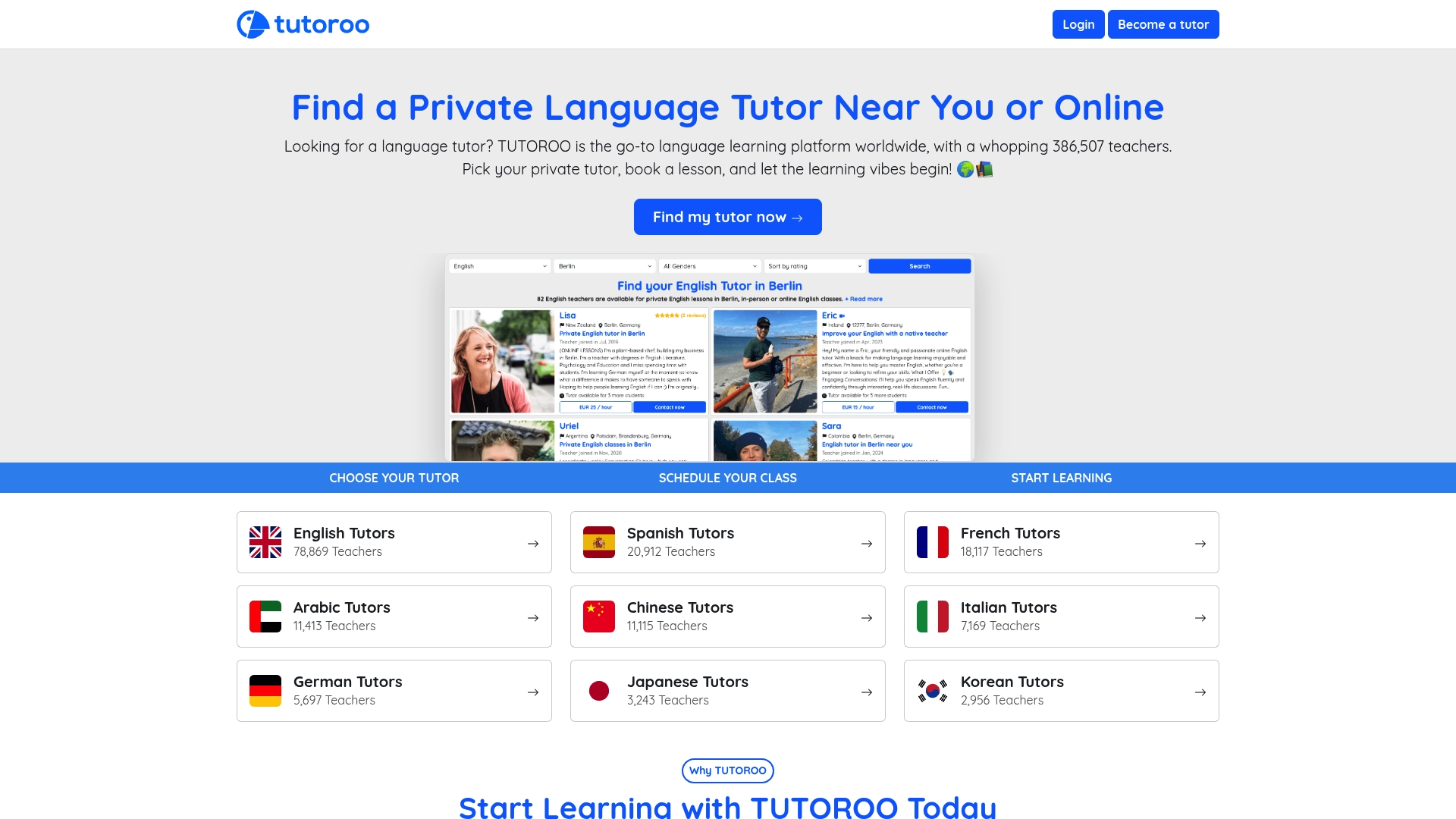
TUTOROO is a global marketplace that connects students with private language tutors for one-to-one lessons, online or in person. Choose a tutor by location and availability, message them directly and decide together how your lessons will run. If you are heading to Kuwait or the UAE, start with the pages for Arabic tutors in Kuwait City and Dubai. You can also browse every language we cover from the TUTOROO home page.
Tutors teaching on the platform keep their own schedules, so you can often find early-morning or evening slots that fit around work, a useful advantage when your tutor lives in a Gulf time zone.
Looking for a Serbian tutor too?
Some learners who search for Gulf Arabic lessons are also building a second language, and Serbian comes up often. The comparison points are the same. Look for a tutor with real teaching experience, ask whether lessons are customised to your goals, check how materials and booking work, and compare schedule flexibility and fees. Online Serbian schools and individual tutors both teach private lessons shaped around the student, so the deciding factor is fit, which a trial lesson reveals quickly. Because Serbian is spoken by a relatively small community, search by language first and by country second, and be flexible about time zones.
Making the most of your first three months
A simple plan keeps momentum high:
- Month one: sounds, greetings, introductions, numbers, polite phrases and the most useful 100 words for your situation. Focus on pronunciation of the Arabic sounds that English lacks, such as the throaty ʿayn and ḥā.
- Month two: daily routines, food, transport, shopping and asking for help. Start understanding short clips of Gulf speech.
- Month three: talk about your work, family and plans. Practise phone-style conversations and handle misunderstandings by asking people to repeat or slow down.
At the end of each month, ask your tutor to run a short role-play that matches your goal and compare it with the first one. That is a better measure than a vague sense of improvement.
If you are learning for a child or teenager, sit in on the trial lesson and agree how progress will be reported. Parents often find that a short weekly summary from the tutor keeps everyone aligned.
FAQ
How is a Gulf Arabic tutor different from a general Arabic tutor?
A Gulf Arabic tutor teaches the spoken Khaleeji dialect used in the Gulf states, while a general Arabic tutor may focus on Modern Standard Arabic or another dialect such as Egyptian or Levantine. Ask any tutor which dialect they speak at home and which they teach. If your goal is conversation in Kuwait, Qatar or the UAE, a tutor from that region is the better fit.
Do I need to learn Modern Standard Arabic first?
Not necessarily. US programs have often started with MSA, but current thinking supports combining formal and spoken Arabic. If your aim is to talk with people in the Gulf, starting with the dialect is practical, and you can add MSA for reading and writing when you are ready.
How much does a Gulf Arabic tutor cost?
Rates depend on the tutor's experience, location and lesson length. On TUTOROO you can see tutor profiles, message them and agree rates before you commit. Ask about the price of a trial, cancellation terms and whether rates change for longer packages.
How do I avoid tutoring scams?
Ask for references, speak to the tutor before paying and agree goals and pricing in writing. The BBB advises caution with large payments through peer-to-peer apps, so begin with a single lesson and pay as you go until you trust the match.
Can I learn Gulf Arabic online?
Yes. Video lessons suit spoken languages well, because you can hear the tutor clearly, share notes on screen and record sessions to review pronunciation. Choose a quiet space, a decent microphone and a regular weekly time, and online one-to-one lessons can work as well as meeting in person.
Sources
- Integrating L1 in L2 Classrooms: The Case of Arabic as a Foreign Language
- Gulf Arabic (Wikipedia)
- Arabic Flagship Program curriculum, Indiana University
- Arabic, Stanford Language Center
- BBB Tip: Hiring a tutor
- ACTFL/CAEP Program Standards for the Preparation of Foreign Language Teachers
- Four Steps to Finding an Excellent Tutor, Reading Rockets
- How Long Does it Take to Learn a Language, ACTFL