

Set a specific Can-Do goal, filter tutors by that goal, availability and budget, then book a trial lesson before committing to anything longer. Three tutors is usually enough to compare fairly. Matching and messaging tools on tutor marketplaces can make this shortlist quicker to build, but the filters matter more than the platform.
TL;DR:
- Choosing a Hindi tutor requires setting a specific Can-Do goal, matching with tutors who have relevant experience, and checking their teaching style and credibility signals.
- Use large online marketplaces to compare tutors based on goal fit, availability, rates, and trial performance, prioritizing structured trial lessons to assess teaching style.
- Schedule two or three trial lessons within a week to reliably compare teaching methods, feedback quality, and schedule compatibility before committing.
- The cost of a Hindi tutor depends on experience and specialization; treat price as a filter and compare profiles carefully rather than always choosing the cheapest option.
- Building a clear, measurable goal before starting simplifies the selection process and ensures lessons are focused on achieving specific language milestones.
Table of Contents
- How do you choose a Hindi tutor?
- Where can you find a private Hindi tutor?
- What does a Hindi tutor cost, and how should a trial lesson work?
- How do you set measurable Hindi learning goals?
- Why a large tutor marketplace reduces your selection risk
- What's the process from first message to trial lesson?
- How do you compare several tutors fairly?
- What we think matters most in this decision
- Ready to book your first Hindi trial lesson?
- Sources
- FAQ
How do you choose a Hindi tutor?
Every strong tutor search starts with the same three filters: what you want to learn, when you can realistically study, and what you're willing to pay. Skip any of these and you'll end up trialling tutors at random, which wastes both your time and theirs.
Start with your learning goal, written as a Can-Do statement. Vague goals like "get better at Hindi" don't help a tutor plan anything. The NCSSFL‑ACTFL Can‑Do statements frame goals as "I can" performance statements tied to real tasks, and they exist precisely so a tutor can build a lesson plan around a measurable outcome rather than a feeling. "I can order food and ask for directions in Hindi" gives a tutor something to teach toward. "I want to improve" doesn't.
Once the goal is clear, the rest of the checklist falls into place fast.
Teaching experience and specialism
Not every tutor suits every learner. A tutor who has spent years teaching absolute beginners might struggle with a heritage speaker who understands spoken Hindi but has never read Devanāgarī. Look for tutors who name their specialism directly on their profile:
- Beginner conversational Hindi (travel, daily life, basic grammar)
- Heritage learner support (spoken fluency already present, formal structure or script missing)
- Script literacy (Devanāgarī reading and writing from scratch)
- Exam preparation or academic Hindi
- Business or professional Hindi
A tutor who lists "10 years teaching heritage learners to read and write" is telling you something specific. A profile that just says "experienced tutor, all levels" is telling you very little.
Teaching style signals worth checking
You can usually tell a lot about how someone teaches before you ever speak to them. Check whether the tutor describes a lesson structure (warm up, target skill, practice, review) or just offers "conversation practice." Ask whether they use their own materials, a textbook, or build lessons around your goals each week. Notice how they describe feedback: do they correct errors as they happen, or save them for a review at the end?
None of these approaches is wrong, but they suit different learners. If you're the type who freezes up mid sentence when corrected immediately, a tutor who saves feedback for later will feel far more comfortable.
Availability, cancellation terms and timezone fit
A brilliant tutor who's only free at 3am your time isn't a brilliant tutor for you. Check their stated availability against your actual weekly schedule, not the schedule you wish you had. Also check the cancellation policy before you book anything recurring. Look for tutors who commit to structured trial lessons and clear replacement or refund terms; that kind of policy is a genuine indicator of accountability and takes real pressure off your first booking decision.
Credibility markers to look for
Certifications aren't mandatory for native speakers on most marketplaces, but they're a useful tiebreaker between two otherwise similar profiles. Beyond certificates, check for:
- Sample lesson videos or audio clips showing the tutor actually teaching
- Written reviews that mention specifics (not just "great tutor!")
- A rating built on a reasonable number of completed lessons, not two reviews from friends
- Response time and communication style in early messages
Questions to ask before you book a trial
Send a short message before committing to a paid trial. Ask directly:
- "Can you help me reach [your specific Can-Do goal] and roughly how many sessions do you think that takes?"
- "How do you structure a typical lesson?"
- "What happens if I need to cancel or reschedule?"
- "Do you focus on spoken Hindi, script, or both?"
Pro Tip: Save every tutor's answers to these four questions in a simple note or spreadsheet. When you're comparing three or four candidates a few days apart, you'll forget who said what, and side-by-side answers make the decision almost automatic.
Red flags worth walking away from
A tutor who can't describe how they'd teach toward your specific goal, who dodges questions about cancellation policy, or whose only reviews are vague and generic deserves caution. So does a profile with no sample content at all when everyone else in your shortlist has some.
Keep this checklist open on a second screen the first time you browse tutor profiles. It turns an overwhelming list of strangers into a short, comparable shortlist within twenty minutes.
Where can you find a private Hindi tutor?
Most learners default to the first tutor marketplace they find, but the right channel depends on what kind of learner you are. Three main routes exist, and each rewards a slightly different reading of a tutor's profile.
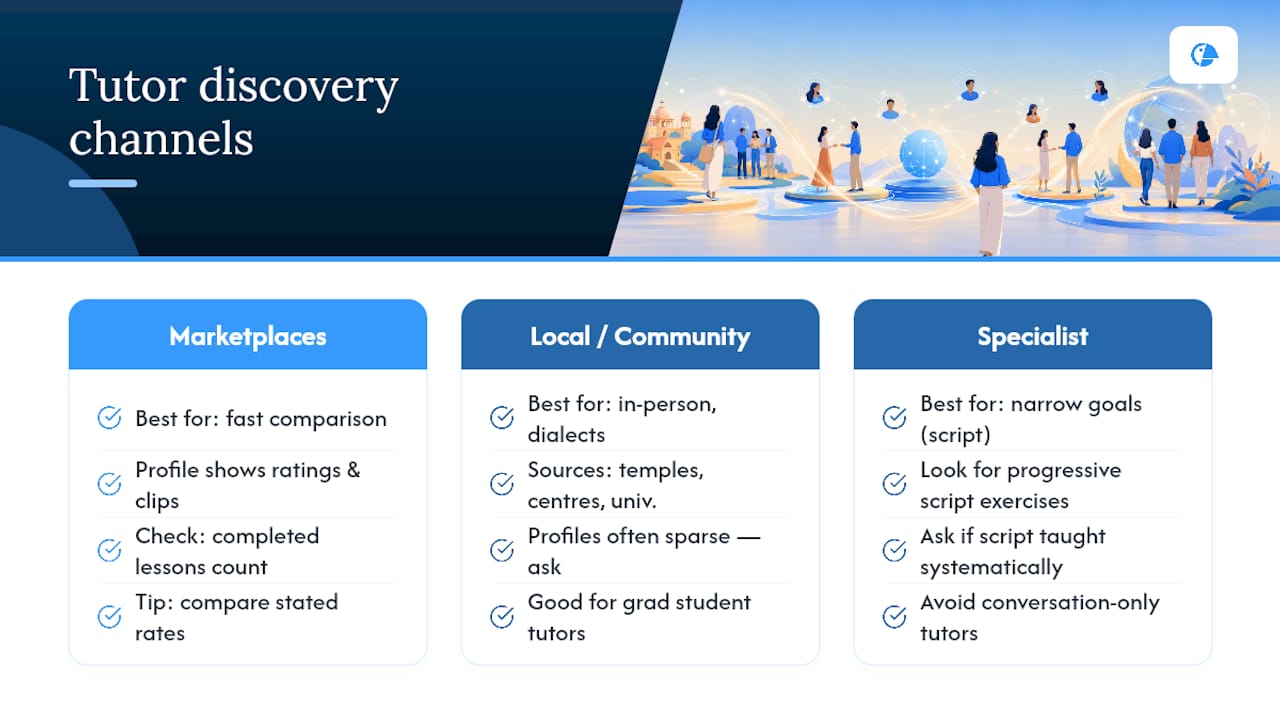
Online marketplaces are the fastest route for most learners, and they're built specifically for the comparison job. A dedicated Hindi tutor page lets you filter by location or online availability and message multiple tutors before committing. On any marketplace listing, read past the star rating. Check the number of completed lessons behind that rating, look for a sample lesson clip if one exists, and compare stated rates against what similar tutors in the same specialism charge. A tutor charging noticeably less than everyone else with comparable experience is worth a closer look, not an automatic pick.
Local and community channels suit learners who want in-person lessons or a connection to a specific regional dialect. Heritage associations, cultural centres, temples with community boards, and university South Asian studies departments often have tutors who aren't listed on any marketplace at all. These tutors tend to have less formal profile documentation, so you'll need to ask the credibility questions directly rather than reading them off a page. University bulletin boards (physical or digital) are particularly good for finding graduate students who tutor casually and charge less than full-time professional tutors.
Specialist tutors matter most when your goal is narrow. If literacy is the actual target, a general conversational tutor won't get you there efficiently. Look specifically for tutors who structure lessons around progressive script exercises. A Practical Guide to Hindi Script shows what proper progressive Devanāgarī instruction looks like: exercises that build from individual characters to full sentences in a deliberate sequence. Ask any prospective tutor whether they teach script this way, or whether it's an afterthought bolted onto conversation practice.
Whichever channel you use, run the same checklist across every candidate. A community centre tutor and a marketplace tutor should be judged on identical criteria: goal fit, availability, teaching style, and credibility signals. The channel changes where you look; it shouldn't change what you're looking for.
What does a Hindi tutor cost, and how should a trial lesson work?
Private tutoring rates vary by experience, specialism and whether the tutor teaches locally or online, with more experienced and specialist tutors (exam prep, business Hindi, script literacy) generally sitting at the higher end of whatever range a marketplace displays. Rather than chasing the cheapest listing, treat price as one filter among three, alongside goal fit and availability.
A trial lesson is where all your research gets tested against reality. Structure it deliberately rather than letting it drift into a general chat:
- First five minutes: state your Can-Do goal directly and ask the tutor how they'd approach it.
- Next fifteen minutes: run a short sample activity together, ideally something close to a real early lesson, not just small talk.
- Next ten minutes: ask the tutor to correct two or three things you got wrong, and watch how they deliver that feedback.
- Final five to ten minutes: discuss scheduling, typical homework, and what progress might look like after six to eight lessons.
That structure reveals teaching fit far more reliably than a single unstructured conversation, because it forces the tutor to actually demonstrate their method rather than just describe it.
After the trial, expect a reasonable tutor to follow up with a short homework task or a simple progress note, and possibly a small discount for booking a multi-lesson package upfront. Neither is mandatory, but their presence suggests organisation.
Pro Tip: Book two trials in the same week rather than one trial followed by a long gap before the next. Comparing two tutors while the first lesson is still fresh in your memory makes the differences in teaching style far easier to spot.
Two or three trials is plenty for most learners. Beyond that, you're usually delaying a decision rather than improving it.
How do you set measurable Hindi learning goals?
The ACTFL Proficiency Guidelines break language ability into four domains, listening, speaking, reading and writing, and five broad levels running from Novice to Distinguished. That framework matters here because it turns "I want to improve" into something a tutor can actually plan lessons against.
Try building your own goal as a specific, time-bound Can-Do statement:
- Beginner: "In eight weeks, I can introduce myself, order food, and ask basic directions in Hindi."
- Heritage learner: "In three months, I can read a simple Devanāgarī text aloud and write short messages to family."
- Business traveller: "Before my trip in six weeks, I can handle small talk and simple negotiations in a work setting."
Hand this goal to a prospective tutor and ask them to map lessons directly against it, including how they'll check progress along the way.
For a quick progress check after six to twelve sessions, ACTFL's own framework suggests a simple test across four areas: can you complete the target function, is your accuracy acceptable for the level, can you handle the context and content involved, and what text types can you manage unassisted. This is sometimes called the FACT approach (Function, Accuracy, Context and content, Text type), drawn from the ACTFL proficiency guidelines. Run through those four questions honestly and you'll know within minutes whether the last dozen lessons actually moved the needle, or whether it's time for a different tutor or a different approach.
Why a large tutor marketplace reduces your selection risk
Choosing blind is the biggest risk in this whole process, and it's exactly what a large, well-organised marketplace is designed to remove. TUTOROO's community includes more than 386,000 language teachers across dozens of languages, which means Hindi learners aren't choosing from three or four available profiles but from a genuinely comparable pool.
That scale matters in a few concrete ways:
- Faster matching by location or online preference can reduce wait times for a suitable tutor.
- Direct messaging may allow you to ask credibility and trial questions before booking.
- Tutors typically manage their own schedules and receive payments directly, so availability listings often reflect current capacity rather than outdated entries.
None of that replaces the checklist. A large pool of tutors still contains a wide range of experience and teaching styles, and the filters covered earlier are what turn that pool into a shortlist worth trialling.
What's the process from first message to trial lesson?
The path from browsing to booking follows a fairly consistent rhythm, whichever channel you use. Expect roughly this sequence, spread over a few days to a week.
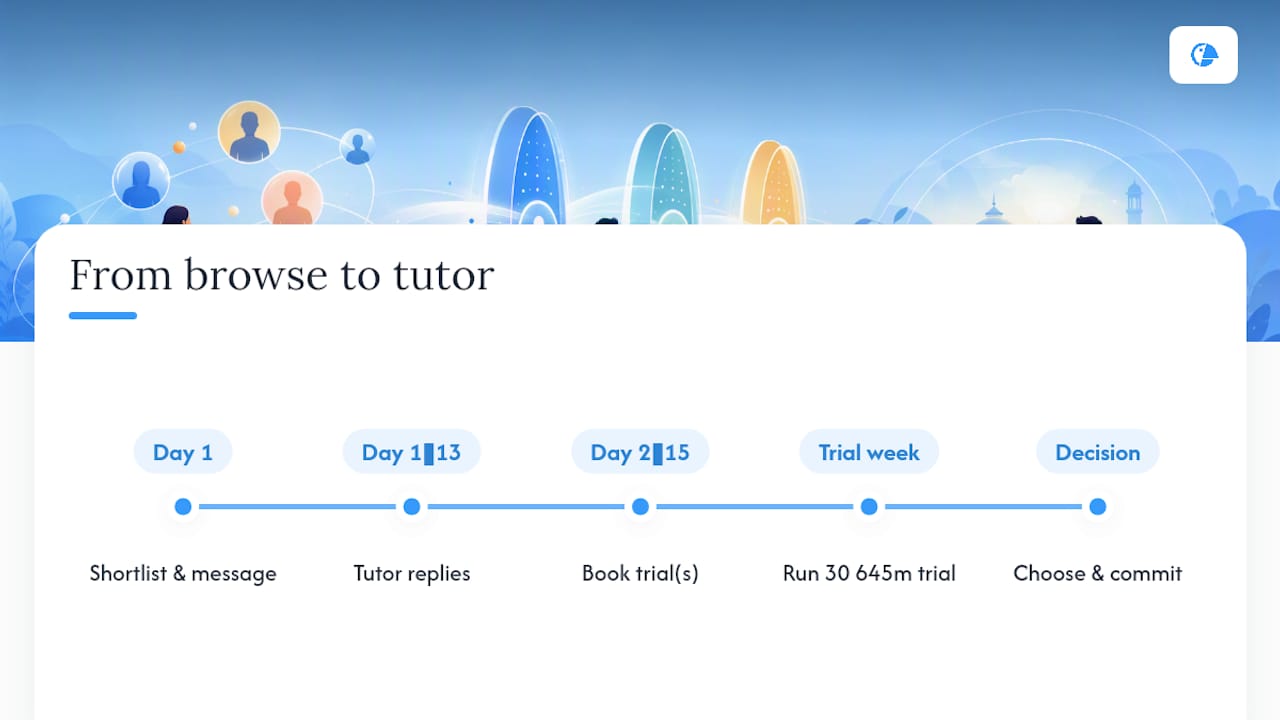
Day one: browse profiles against your written Can-Do goal and shortlist three to five tutors whose specialism, availability and rate all fit. Send your first message to each, asking the four questions covered earlier.
Day one to three: most active tutors reply within a day or two. Response speed and clarity here is itself useful information; a tutor who takes a week to answer a simple question is telling you something about how lessons might get scheduled later.
Day two to five: compare answers, narrow to your top two or three, and book trial lessons. Most marketplaces let you book directly once a tutor confirms availability, sometimes with an instant calendar booking and sometimes with a short back-and-forth to settle on a time.
Trial week: run the structured 30 to 45 minute trial described earlier. Take notes immediately afterward, while details are fresh.
Decision point: compare your notes across trials and commit to a package with the tutor who best matched your goal, communication style and schedule. Most tutors offer flexible single-lesson booking before you commit to anything longer, so there's rarely pressure to sign up for a large block upfront.
Total elapsed time from first browse to a confirmed regular tutor is usually somewhere between a few days and two weeks, depending on how quickly tutors respond and how many trials you choose to run.
How do you compare several tutors fairly?
Comparing tutors properly means judging every candidate against the same fixed criteria, not a general impression of who seemed nicest. Build a simple table before you message anyone, with columns for goal fit, specialism, availability, rate, and trial notes. Fill it in as you go rather than trying to remember details after the fact.
| Criterion | What to check | Why it matters |
|---|---|---|
| Goal fit | Does their profile mention your specific need (script, exam, conversation)? | Avoids paying for lessons that don't target your actual goal |
| Availability | Do their listed hours genuinely overlap your week? | A perfect tutor with no overlapping time slots is not usable |
| Rate | Is the price in line with similar specialists? | Flags outliers worth questioning in either direction |
| Trial performance | Did they structure the trial, give clear feedback, address your goal directly? | The single strongest predictor of ongoing fit |
Score each tutor on the same four rows and the comparison becomes almost mechanical rather than emotional. It's easy to be swayed by a warm first message or a polished profile photo; a written comparison keeps the decision anchored to what actually matters for your learning.
Limit your active shortlist to three or four tutors at a time. More than that and the comparison itself becomes the time sink you were trying to avoid.
What we think matters most in this decision
Most advice on choosing a tutor focuses on credentials: certificates, years of experience, native speaker status. Those things help, but they're not what predicts whether lessons actually work. What predicts it is goal clarity going in and structured feedback coming out of a trial lesson.
The conventional advice undersells the trial lesson itself. Too many learners treat it as a formality before signing up for a package, rather than as the single most useful piece of evidence in the entire decision. A tutor with fifteen years of experience who can't clearly explain how they'd get you from A to B is a worse choice than a newer tutor who ties every activity back to your stated goal.
If there's one thing worth doing differently, it's writing your goal down as a specific Can-Do statement before you look at a single tutor profile. That one step reframes every other filter, availability, price, teaching style, around a target you can actually measure. Everything else on the checklist exists to serve that goal, not the other way around.
— TUTOROO
Ready to book your first Hindi trial lesson?
Such a platform can give you direct access to a large tutor pool, allowing you to compare real, currently available specialists rather than a handful of local options with a long waiting list. You message tutors yourself, ask trial questions, and book a lesson with the person who best fits your goal, not just the first result that appears.
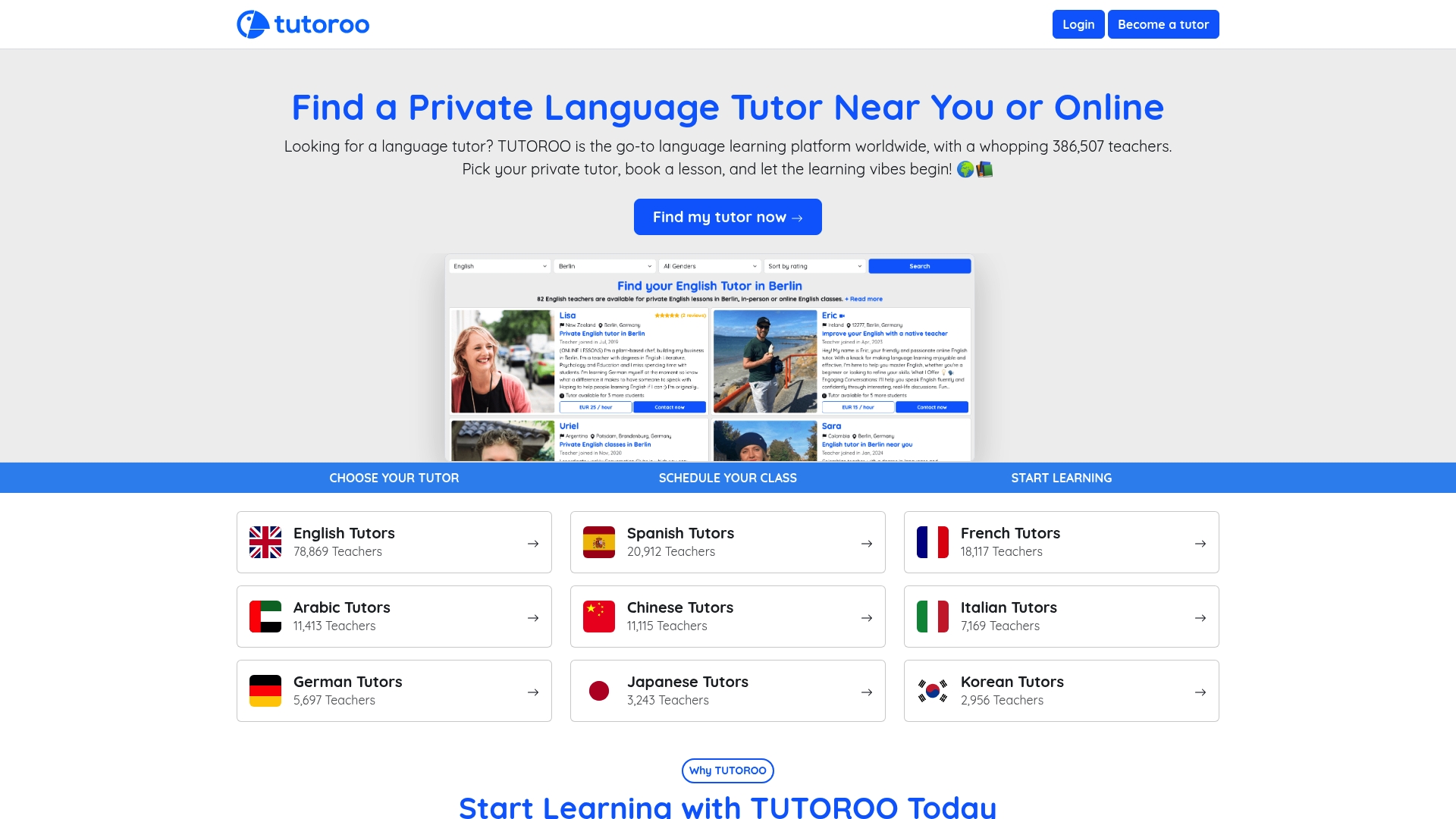
Head to the Hindi tutor page on TUTOROO and shortlist three tutors using the checklist above: goal fit, availability, and a clear answer to how they'd get you there. Message each one directly through the platform, run your structured 30 to 45 minute trial, and compare notes before committing to a regular booking. If a family member or friend is learning a different language alongside you, TUTOROO's main tutor marketplace covers everything from Spanish to Japanese, so you can set both of you up with a proper trial lesson in the same afternoon.
Sources
FAQ
What is the most effective way to learn Hindi?
Combining regular one-on-one tutoring with a clear, written Can-Do goal is more effective than general study alone, because lessons can be built directly around the outcome you actually want. Pairing that with structured script practice, using a resource like A Practical Guide to Hindi Script, speeds up reading and writing specifically.
Where can I find online Hindi teachers for private classes?
Marketplaces built for tutor discovery are the fastest route, letting you filter by availability, rate and specialism in one place. TUTOROO's Hindi tutor page lists profiles you can message directly before booking a trial lesson.
How long does it take to learn Hindi fluently?
It depends heavily on your starting point, weekly lesson frequency and how the ACTFL proficiency levels define your target, since "fluent" means very different things at Intermediate versus Advanced. A realistic short-term target, like handling daily conversation and basic reading within a few months of regular lessons, is far more useful to plan against than an open-ended fluency goal.
What is the best app for learning Hindi?
Apps are useful for vocabulary drills and casual practice, but they can't replace the corrective feedback and goal-specific planning a private tutor provides during a live lesson. A structured trial with a tutor, run against your written Can-Do goal, will tell you far more about your actual progress than any app score.
How much should I expect to pay for a Hindi tutor?
Rates vary by tutor experience, specialism and whether lessons are local or online, with specialist tutors in areas like exam preparation or script literacy typically charging more. Current tutor rates and availability are listed directly on the TUTOROO Hindi tutor page, where you can compare several profiles before booking a trial.